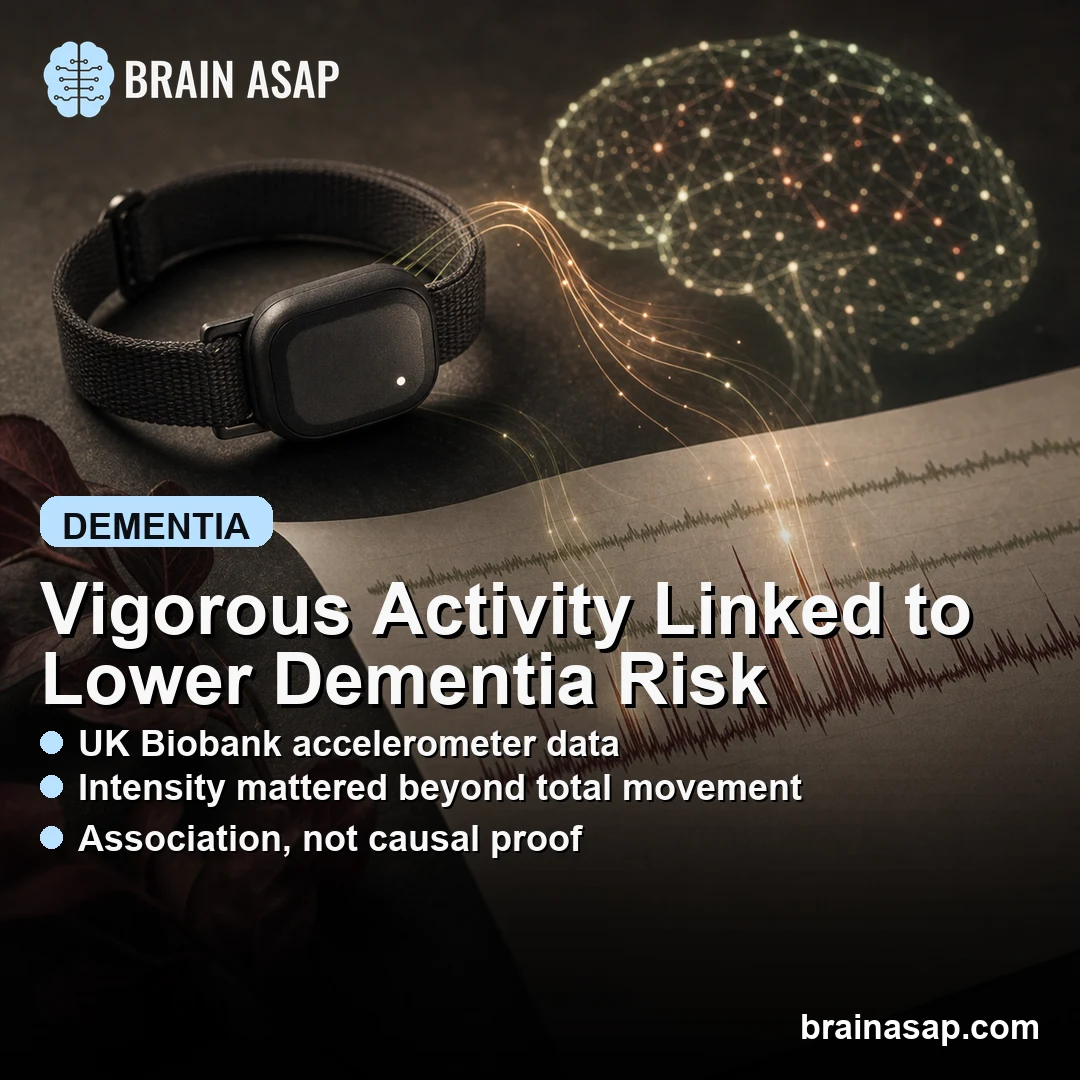
Vigorous Activity Linked to Lower Dementia Risk in UK Biobank TL;DR: In UK Biobank accelerometer data, the vigorous share of daily movement accounted for 32% of dementia’s population-attributable fraction versus just 8% for total activity volume — suggesting b…
Read article ↗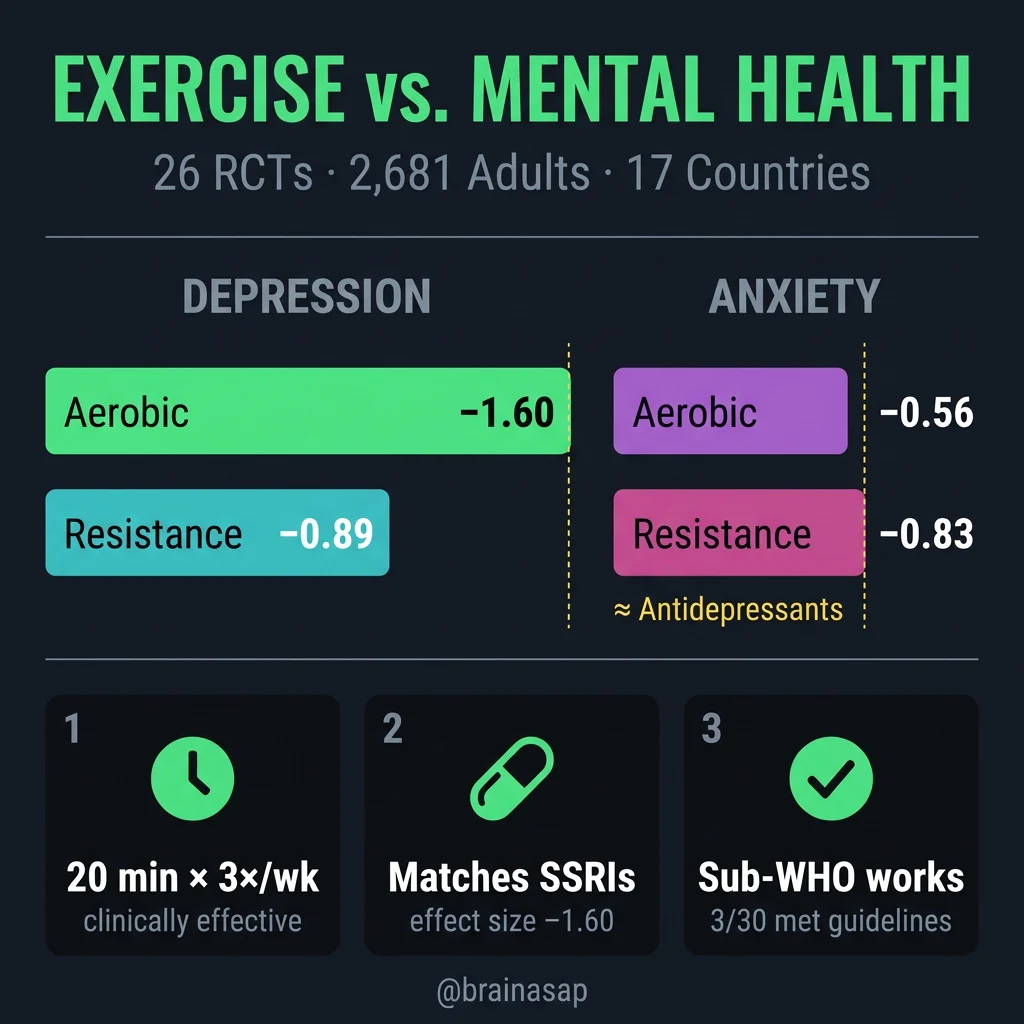
Exercise Beats Medication for Depression, But Which Type Matters Most? TL;DR: Aerobic exercise matches antidepressant efficacy for depression with effect size −1.60, resistance training slightly edges aerobic for anxiety, and neither requires meeting WHO guide…
Read article ↗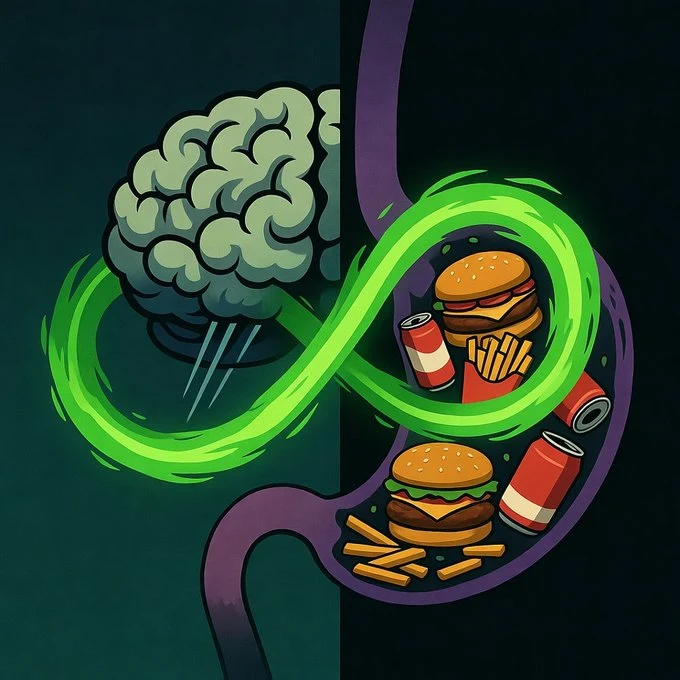
Obesity and Depression Share Five Converging Biological Pathways Obesity and depression represent two of the world’s fastest-growing epidemics. By 2030, over 1 billion people will have obesity, while depression will affect more than 350 million. Yet they are r…
Read article ↗
High-intensity exercise (HIIE) leads to significant changes in brain activity, specifically in regions linked to dopaminergic and μ-opioidergic neurotransmission, which are associated with a mood boost. Highlights: Positive Mood Effects: Both low- and high-int…
Read article ↗
Researchers reviewed the potential impacts of physical exercise on the glymphatic system and its implications for neurodegenerative diseases, focusing on the mechanisms involved and the interplay between exercise and sleep quality. Highlights: The glymphatic s…
Read article ↗
Hypertension in older adults leads to poorer cognitive and walking performance due to the need for more brain resources to manage dual tasks. Highlights: Older adults with hypertension show higher brain activation in motor and sensory areas when performing dua…
Read article ↗
Aerobic exercise reduces depressive symptoms by decreasing inflammation, boosting dopamine transmission, and enhancing motivation and cognitive control. Highlights: Depression & Dopamine: Depression is linked to disrupted dopamine transmission, affecting rewar…
Read article ↗
Depression is one of the most common mental health issues, affecting over 320 million people globally. Research shows that exercise may be an effective treatment option for many battling this disabling condition. Key Facts: Exercise has comparable antidepressa…
Read article ↗
New research finds that regular running is just as effective as antidepressants for treating depression and anxiety, and leads to better physical health outcomes. Key Facts: In a study of 141 patients, running therapy and antidepressant medication had comparab…
Read article ↗
Researchers have uncovered concerning links between excessive exercise and psychiatric problems like depression, ADHD, and childhood trauma. This sheds new light on the concerning phenomenon of exercise addiction. Key Facts: Individuals at risk for exercise ad…
Read article ↗