
TL;DR: A 2026 medRxiv preprint found that hospital stakeholders saw a need for CARES, a Comprehensive Addiction Risk Evaluation System combining genetic and behavioral/environmental risk information, but warned that provider burden, substance-use stigma, and w…
Read article ↗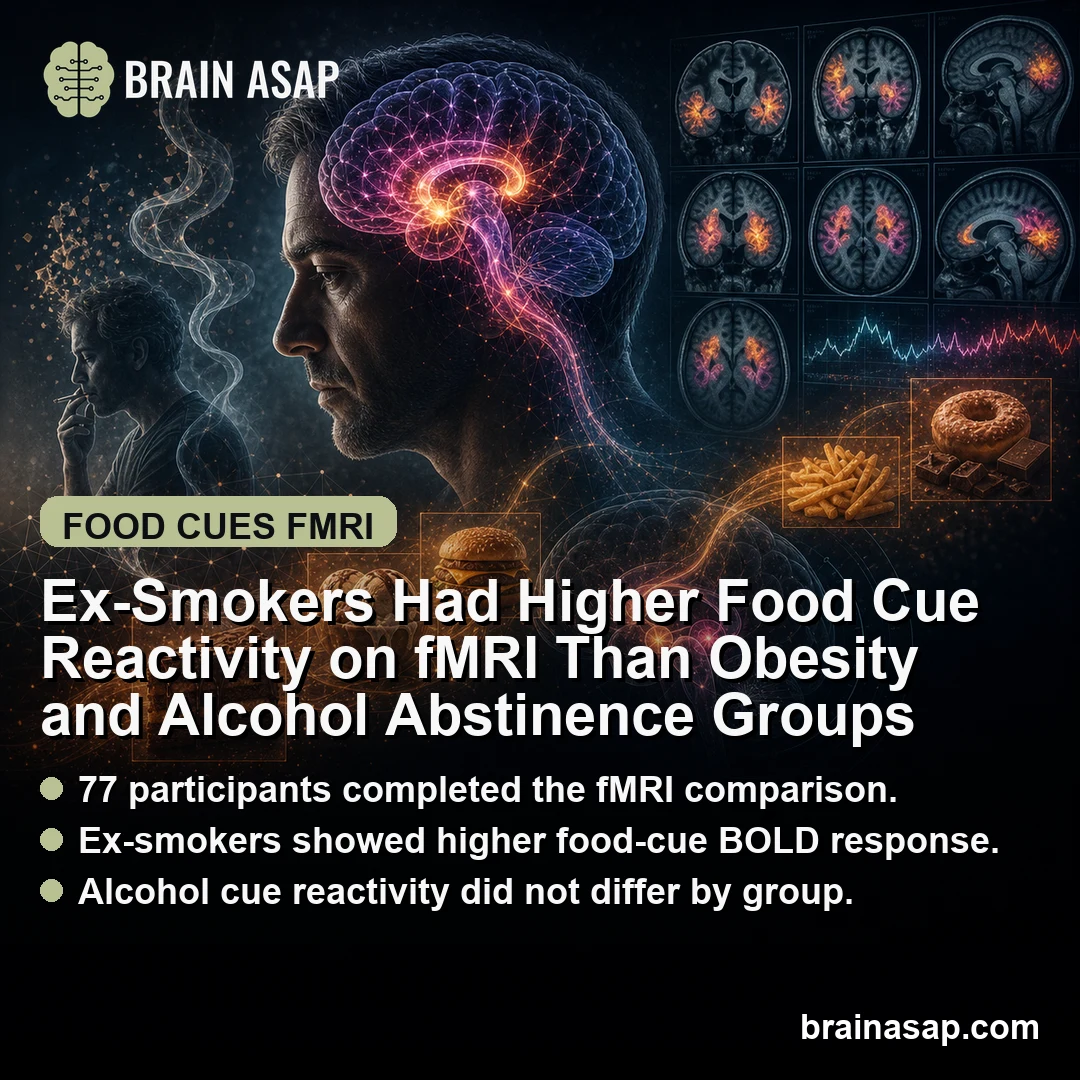
TL;DR: A 2026 medRxiv preprint found that ex-smokers had higher fMRI blood oxygen level dependent (BOLD) responses to high-energy food pictures than adults with obesity or abstinent alcohol dependence, suggesting a brain reward route for post-quitting weight g…
Read article ↗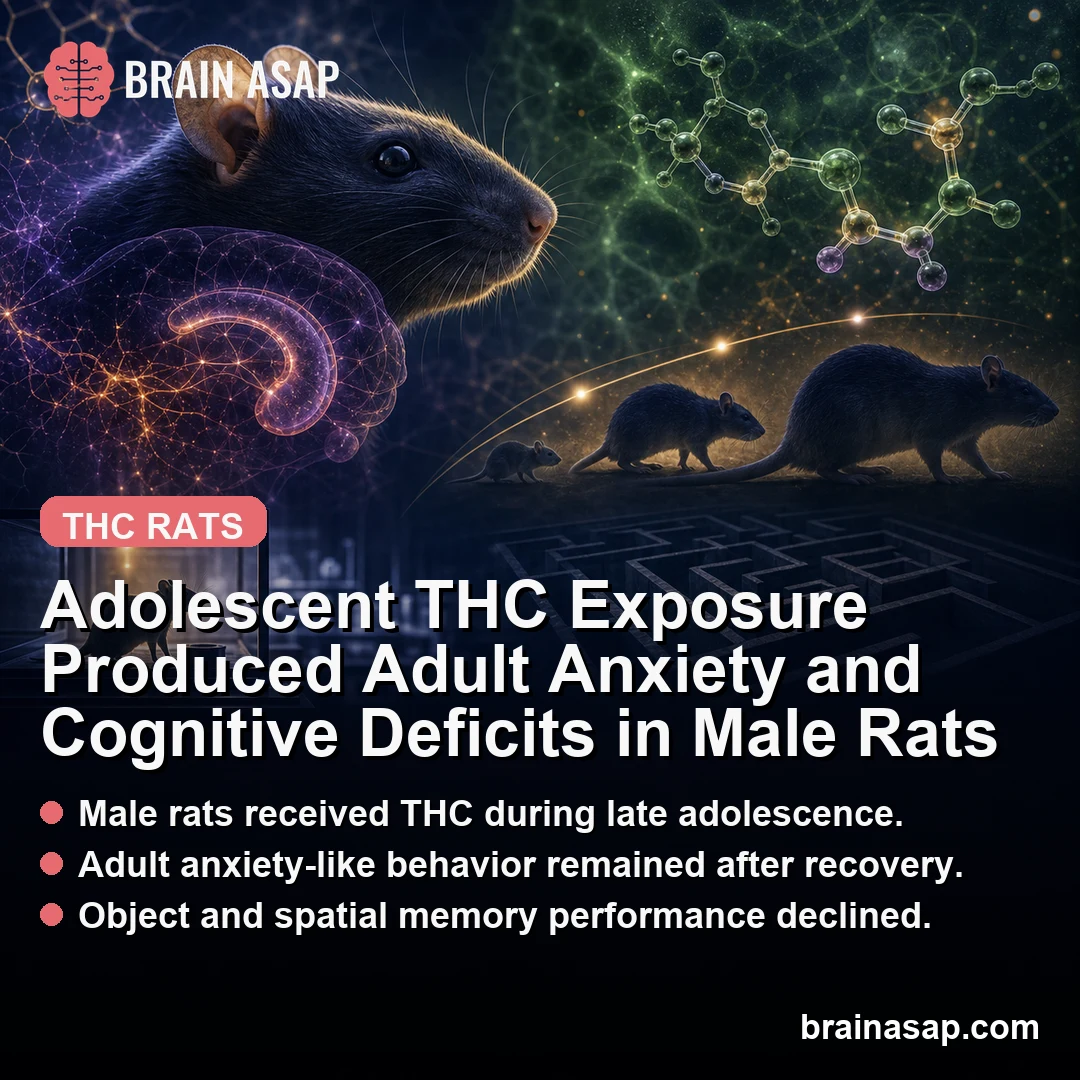
TL;DR: A 2026 rat study in Psychopharmacology found that THC exposure during late adolescence left adult animals with elevated anxiety-like behavior and impaired object-recognition and spatial-memory performance after a drug-free recovery period. Key Findings…
Read article ↗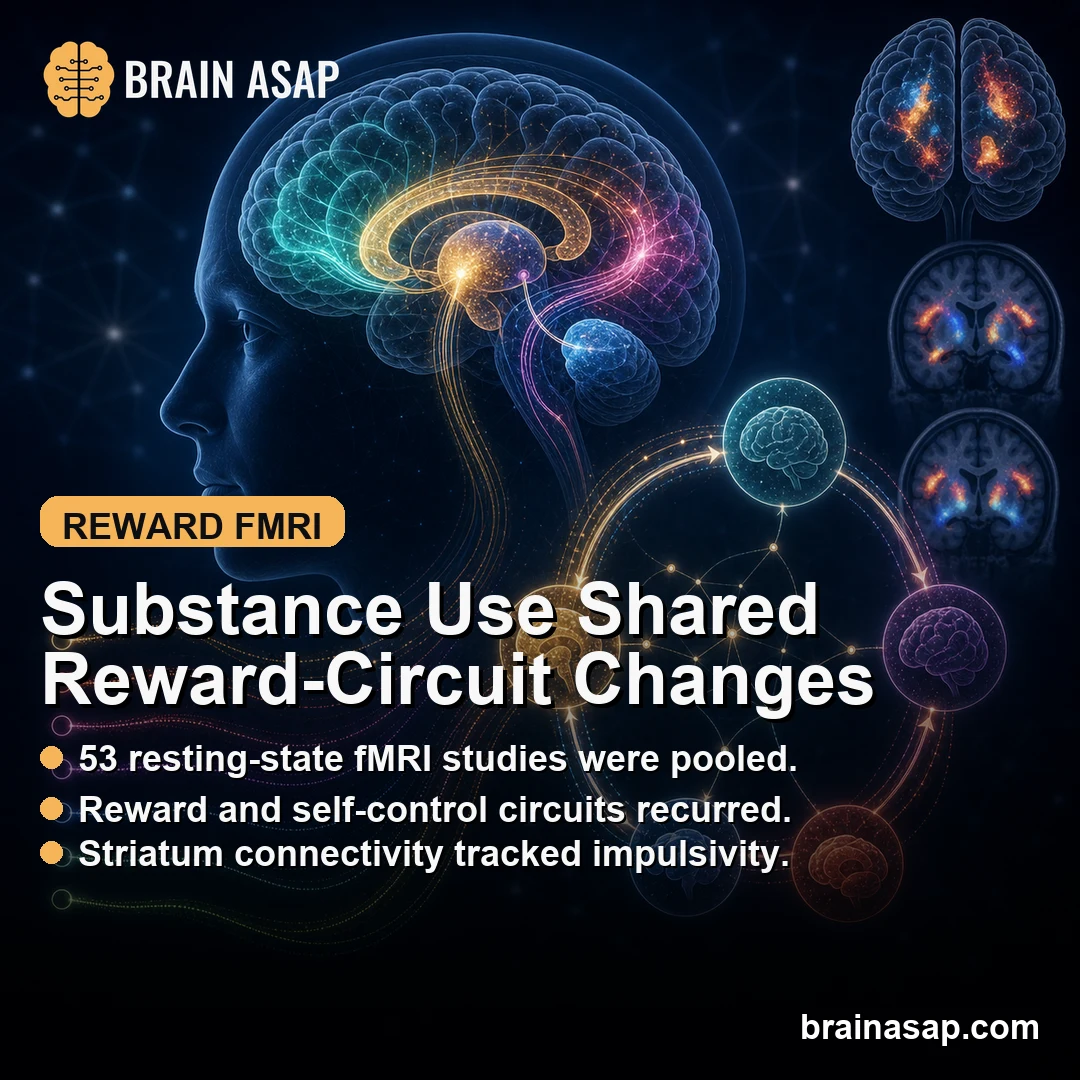
TL;DR: A 2025 systematic review in Translational Psychiatry found that substance use disorder was associated with recurring resting-state functional MRI (rs-fMRI), a scan of spontaneous brain-network communication, abnormalities in reward and self-control circ…
Read article ↗
Cannabinoids Had Weak Evidence for Mental Disorders TL;DR: A Lancet Psychiatry review of randomized trials found little support for routine cannabinoid treatment in common mental disorders, despite possible weak signals in a few narrower conditions. Key Findin…
Read article ↗
Video game addiction (VGA) is associated with significant deficits in response inhibition and preparatory processes, reflected by more commission errors and reduced N2 amplitudes in the cued Go/NoGo task. Highlights: Increased Commission Errors: Individuals wi…
Read article ↗
Individuals at risk for cannabis use disorder (CUD) exhibit increased dynamic fluidity and altered connectivity patterns in brain networks, suggesting early changes in brain function that may contribute to cannabis addiction risk. Highlights: At-risk individua…
Read article ↗
Cocaine Use Disorder (CUD) patients exhibit widespread gray matter atrophy, with specific brain volume deficits associated with crack-cocaine use and relapse outcomes. Highlights: Widespread Gray Matter Atrophy: CUD patients show significant gray matter volume…
Read article ↗
Repetitive transcranial magnetic stimulation (rTMS) on the left dorsolateral prefrontal cortex (dlPFC) improves decision-making and reduces cravings in individuals with methamphetamine use disorder (MUD). Highlights: Improved Decision-Making: rTMS treatment en…
Read article ↗
Deep brain stimulation (DBS) in the nucleus accumbens reduces cocaine seeking in male rats but is ineffective in female rats, regardless of their estrous cycle phase. Highlights: No FDA-Approved Treatments: There are currently no FDA-approved treatments for co…
Read article ↗