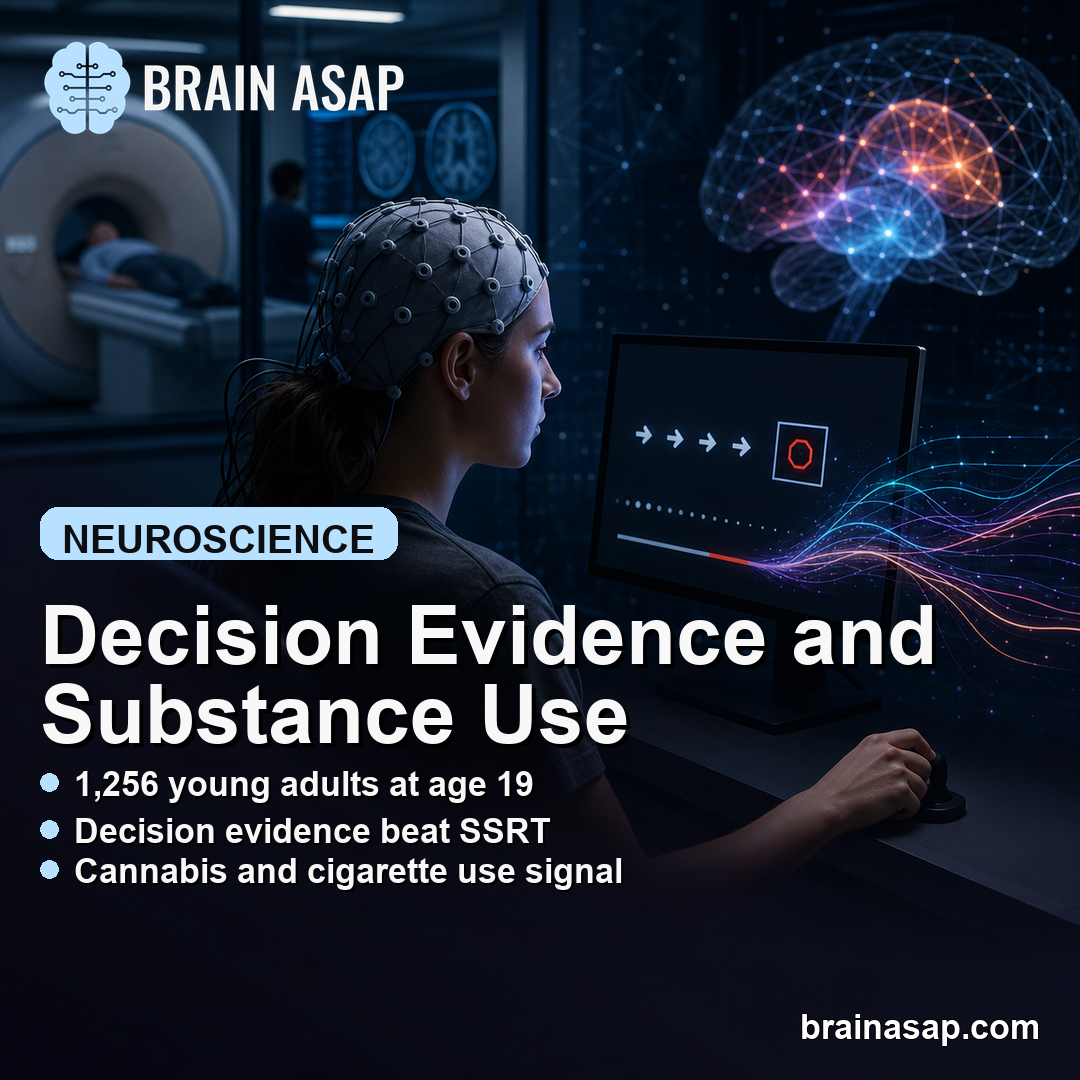
Evidence Accumulation Predicted Cigarette and Cannabis Use

Evidence Accumulation Predicted Cigarette and Cannabis Use

TL;DR: A 2026 study in Neuropsychopharmacology found that decision-making measures from a stop-signal task, especially evidence accumulation, predicted cigarette and cannabis use better than stop-signal reaction time (SSRT), a common estimate of response inhibition. Key Findings More than 1,000 young adults: The analysis used IMAGEN cohort stop-signal task data from 1,256 participants at age 19 …

Read more

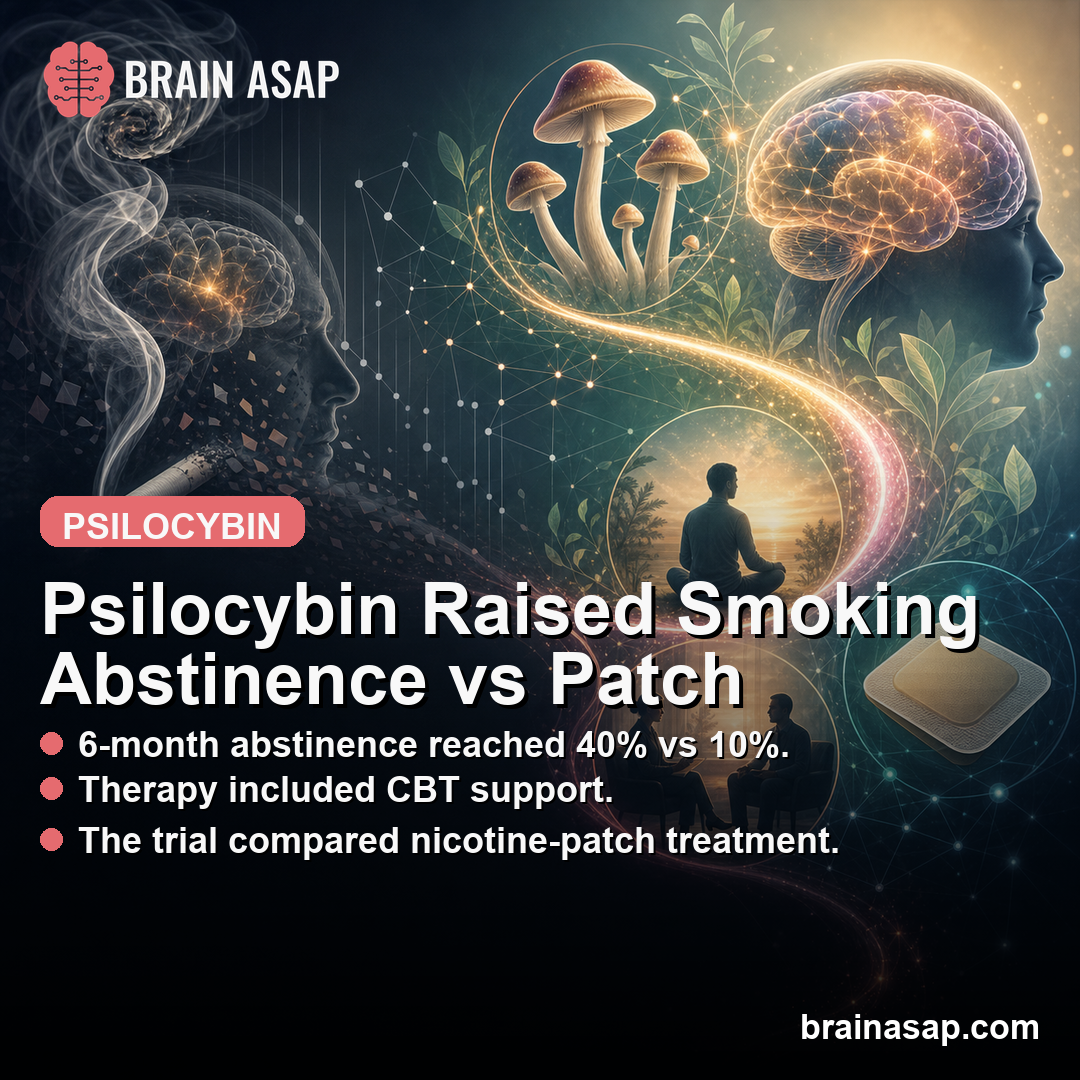
Psilocybin Increased 6-Month Smoking Abstinence to 40% vs 10% on Nicotine Patch

Psilocybin Increased 6-Month Smoking Abstinence to 40% vs 10% on Nicotine Patch

TL;DR: A 2026 randomized clinical trial in JAMA Network Open found that one supervised 30 mg/70 kg psilocybin dose plus cognitive behavioral therapy produced 40.5% six-month smoking abstinence versus 10.0% with a nicotine patch plus the same therapy. Key Findings 40.5% vs. 10% prolonged abstinence at 6 months: 17 of 42 psilocybin participants stayed biochemically …

Read more

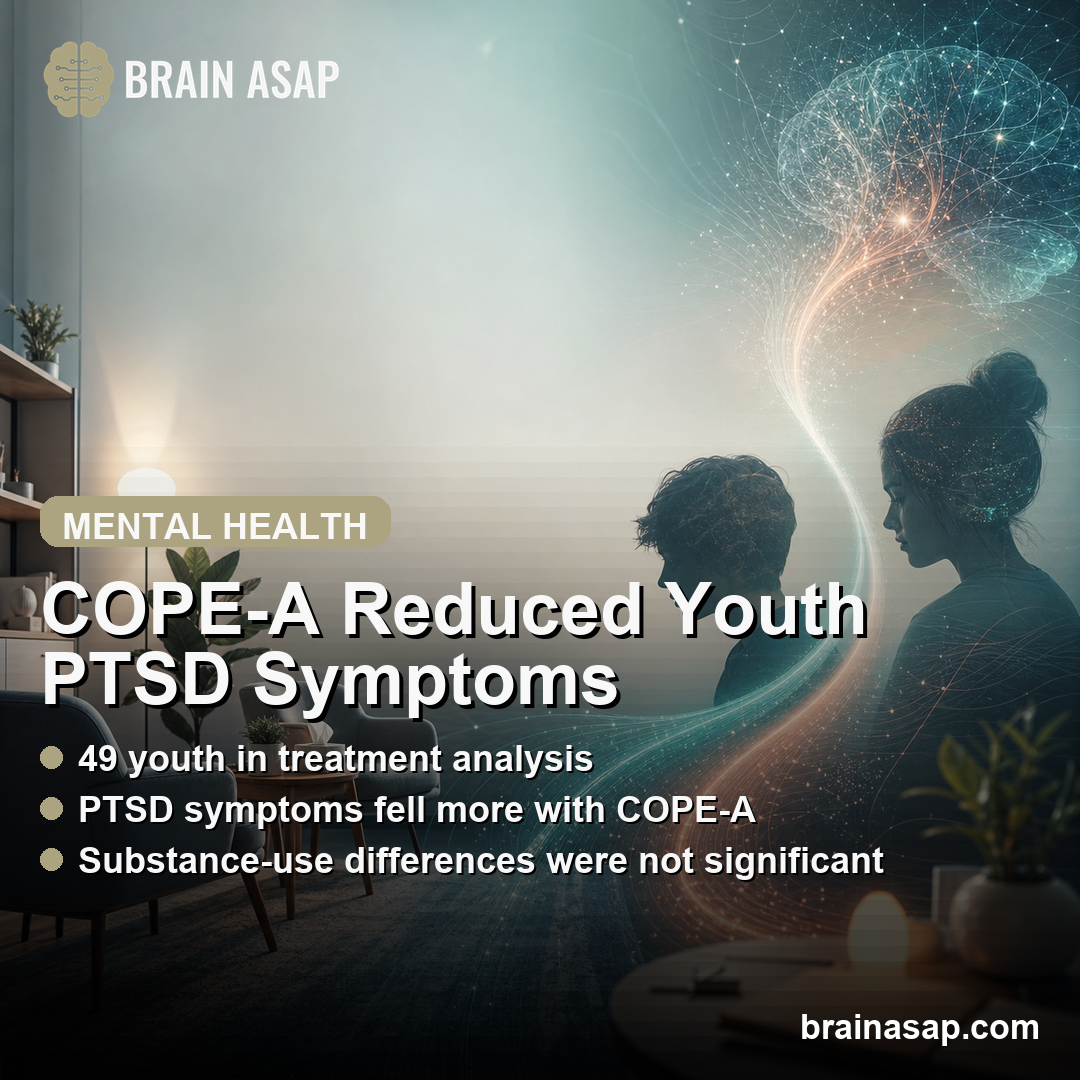
COPE-A Reduced Youth PTSD Symptoms, But Substance Use Did Not Drop More Than Counseling

COPE-A Reduced Youth PTSD Symptoms, But Substance Use Did Not Drop More Than Counseling

TL;DR: A 2026 randomized trial analysis in European Journal of Psychotraumatology found that COPE-A, an integrated exposure-based therapy for youth with posttraumatic stress disorder (PTSD) and substance use disorder (SUD), reduced PTSD symptoms more than supportive counseling, but substance-use reductions were not significantly stronger than counseling. Key Findings 49 treated participants were analyzed: Youth aged …

Read more

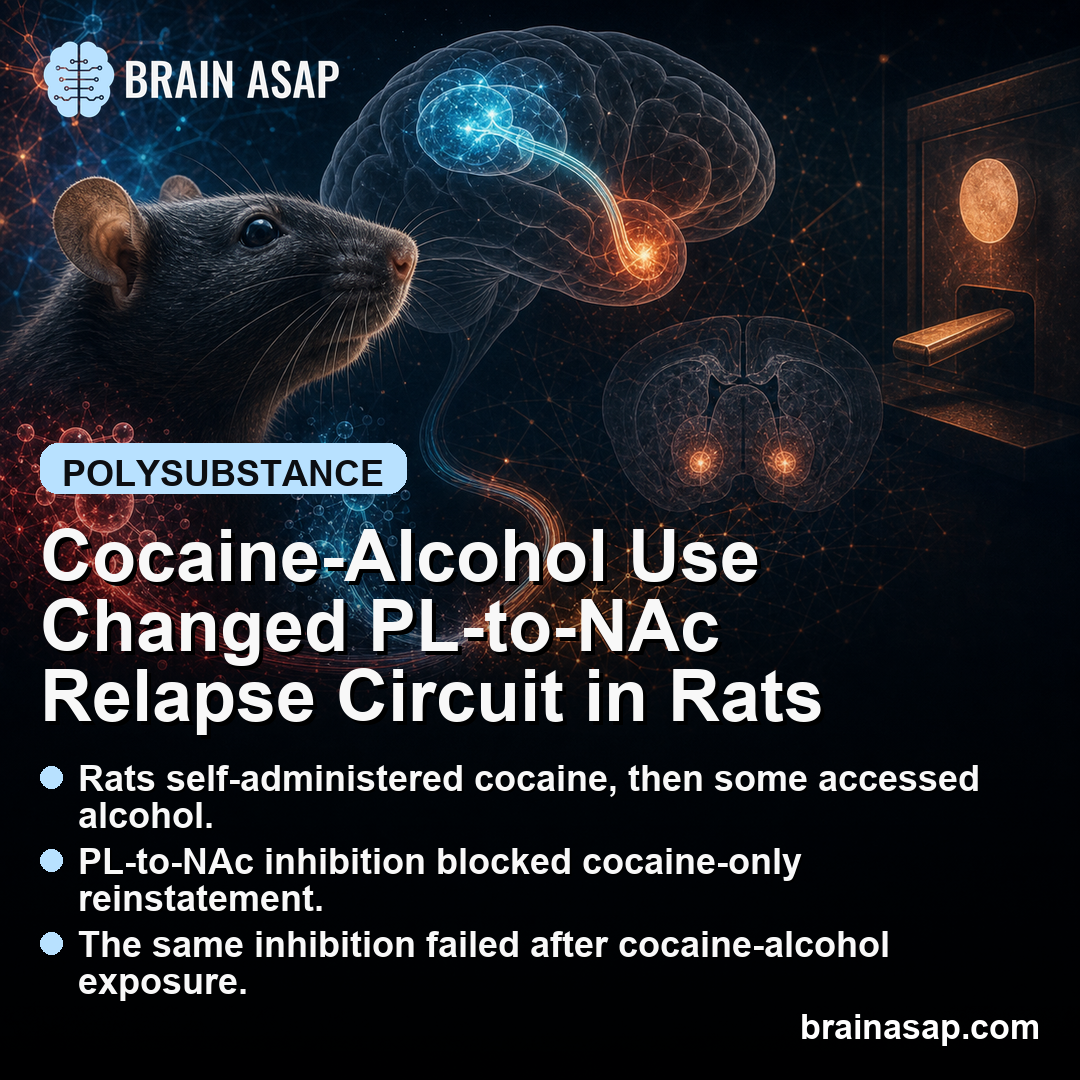
Cocaine-Alcohol Use Changed PL-to-NAc Relapse Circuit in Rats

Cocaine-Alcohol Use Changed PL-to-NAc Relapse Circuit in Rats

TL;DR: A 2026 rat study in Neuropsychopharmacology found that chemogenetically inhibiting a prelimbic cortex to nucleus accumbens core pathway blocked cue-triggered cocaine seeking after cocaine alone, but did not block relapse-like behavior after sequential cocaine and alcohol use. Key Findings The model tested sequential polysubstance use: rats self-administered cocaine, then some received access to 20% …

Read more

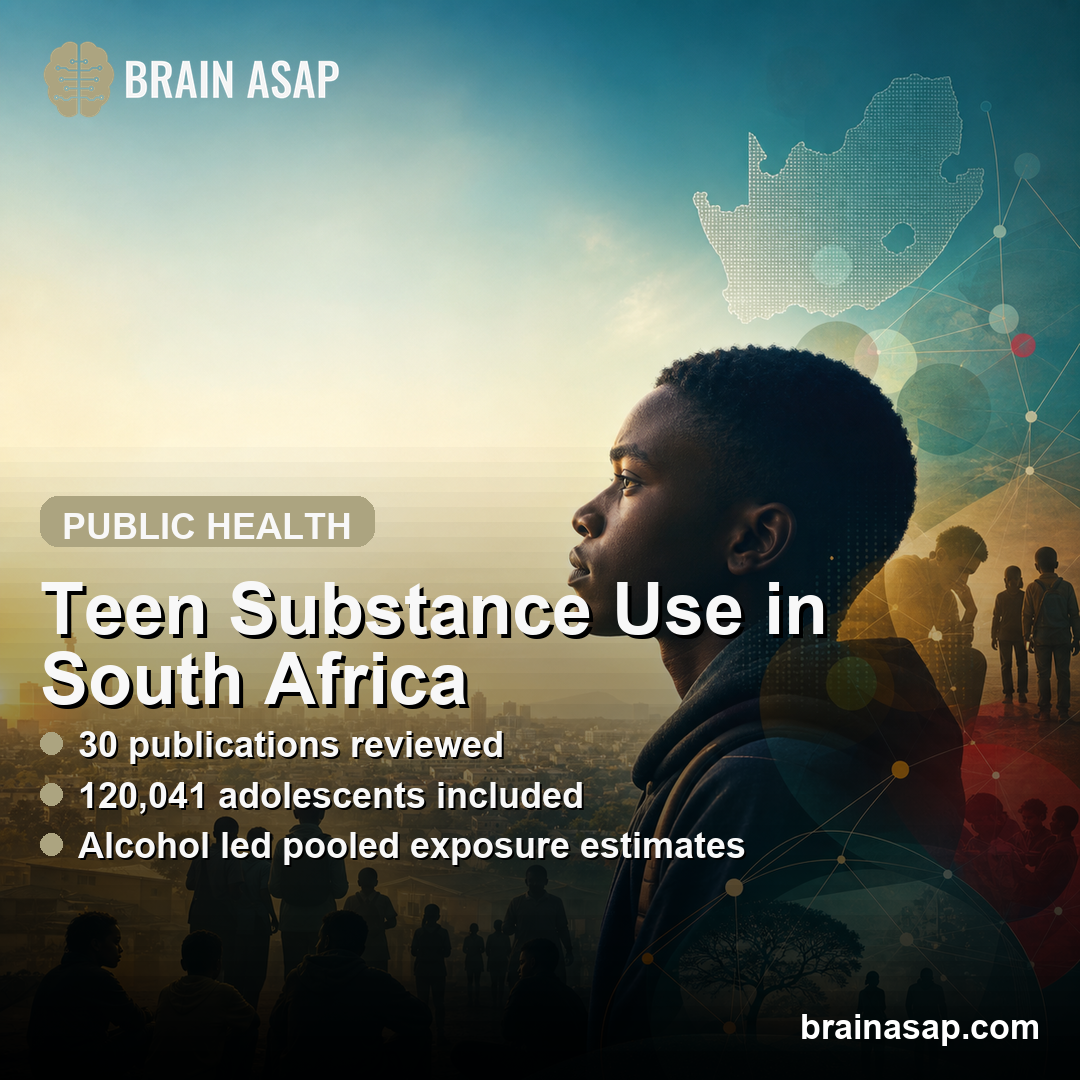
South African Adolescent Substance Use Was High in 30-Study Meta-Analysis

South African Adolescent Substance Use Was High in 30-Study Meta-Analysis

TL;DR: A 2026 systematic review and meta-analysis in Drug and Alcohol Review estimated high adolescent substance-use exposure in South Africa, with lifetime alcohol use at 35.09%, tobacco at 25.47%, and cannabis at 10.47% across community and school-based studies. Key Findings 30 publications were included: Researchers synthesized 202 prevalence estimates from South African adolescent samples. Total …

Read more

CARES Addiction Risk Tool Faced Workflow and Stigma Barriers

CARES Addiction Risk Tool Faced Workflow and Stigma Barriers

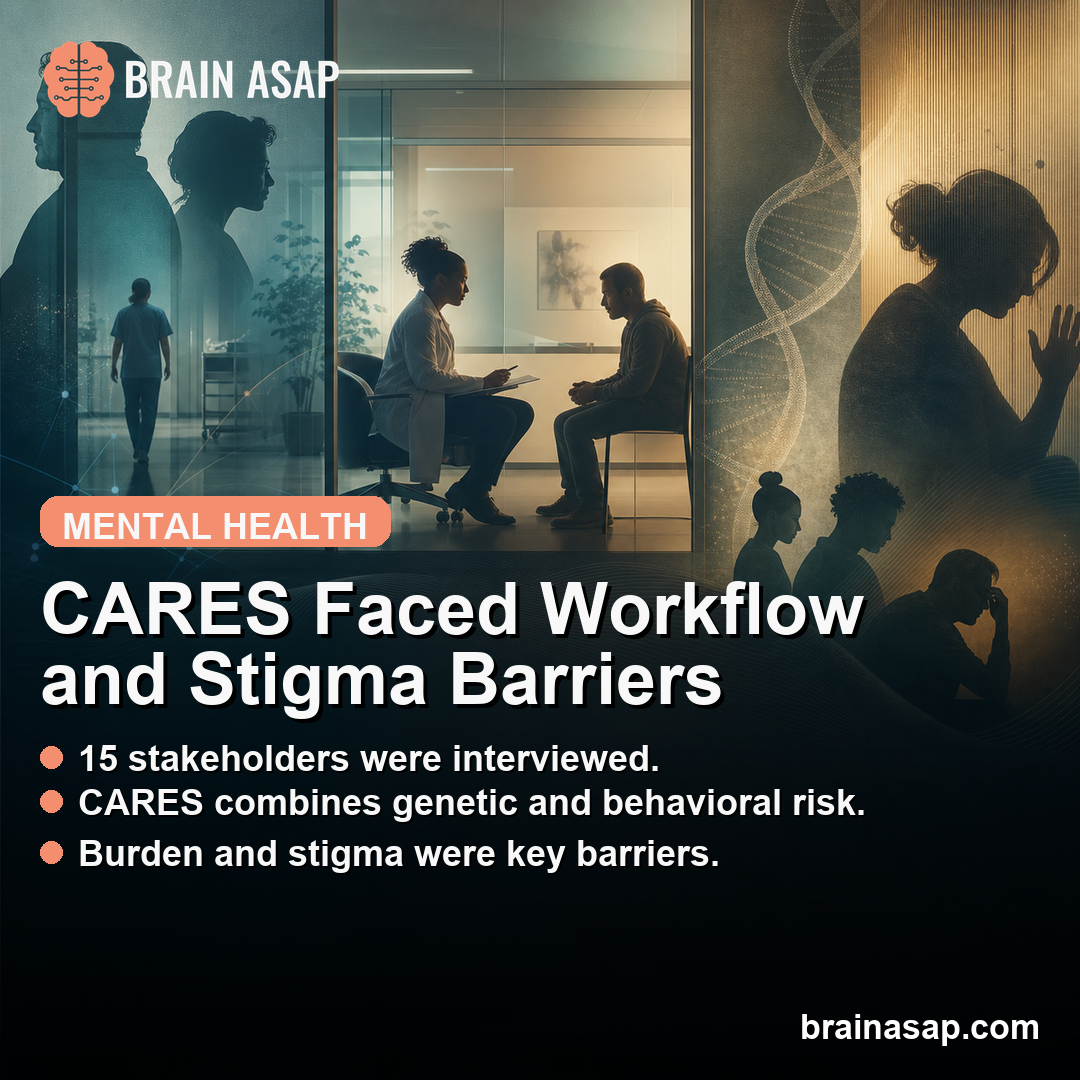
TL;DR: A 2026 medRxiv preprint found that hospital stakeholders saw a need for CARES, a Comprehensive Addiction Risk Evaluation System combining genetic and behavioral/environmental risk information, but warned that provider burden, substance-use stigma, and workflow integration could limit adoption. Key Findings 15 stakeholder interviews: Researchers conducted semi-structured interviews using the Consolidated Framework for Implementation Research. …

Read more

Ex-Smokers Had Higher Food Cue Reactivity on fMRI

Ex-Smokers Had Higher Food Cue Reactivity on fMRI

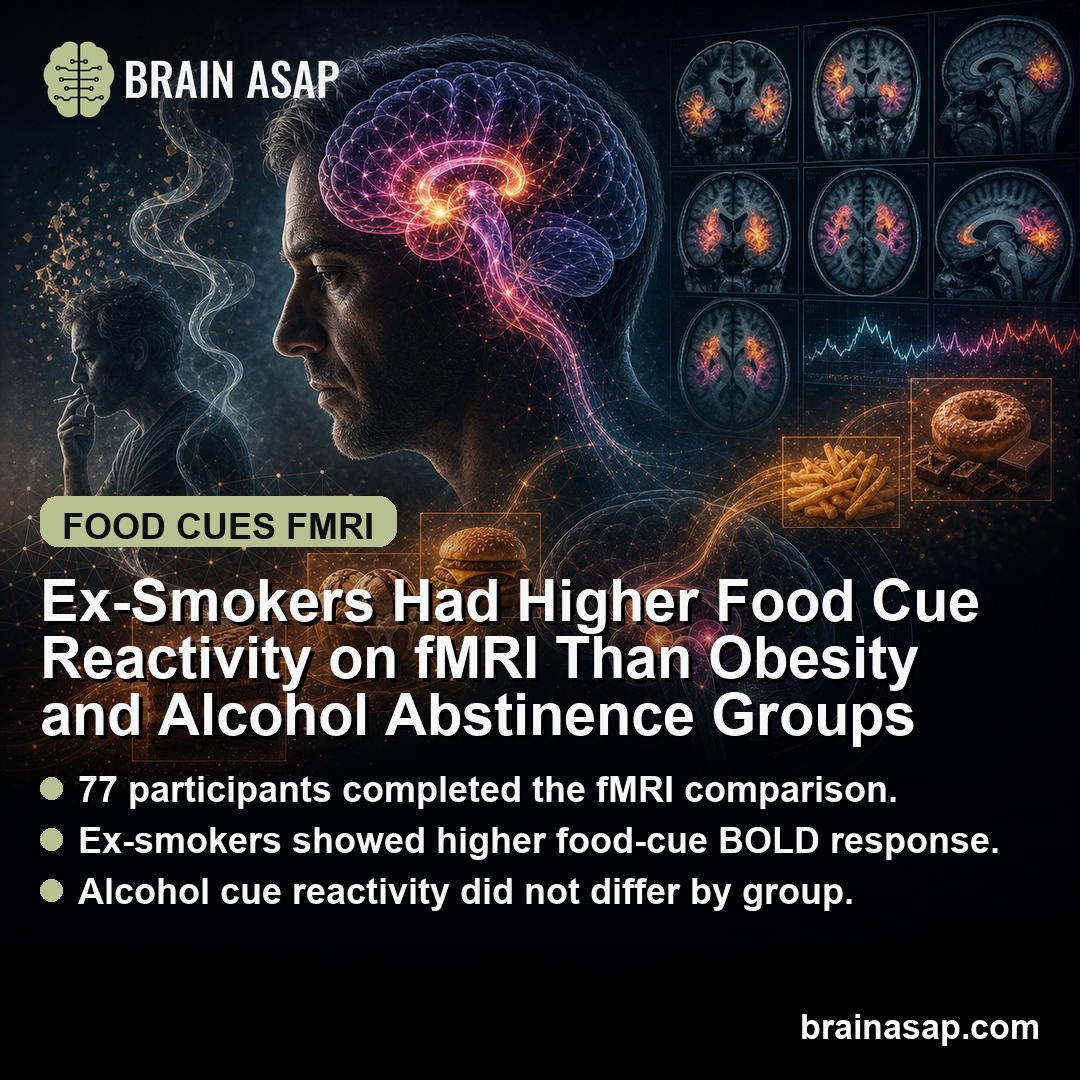
TL;DR: A 2026 medRxiv preprint found that ex-smokers had higher fMRI blood oxygen level dependent (BOLD) responses to high-energy food pictures than adults with obesity or abstinent alcohol dependence, suggesting a brain reward route for post-quitting weight gain. Key Findings 77-person fMRI comparison: Researchers compared 25 ex-smokers, 26 abstinent adults with alcohol dependence, and 26 …

Read more

Adolescent THC Exposure Produced Adult Anxiety and Cognitive Deficits in Male Rats

Adolescent THC Exposure Produced Adult Anxiety and Cognitive Deficits in Male Rats

TL;DR: A 2026 rat study in Psychopharmacology found that THC exposure during late adolescence left adult animals with elevated anxiety-like behavior and impaired object-recognition and spatial-memory performance after a drug-free recovery period. Key Findings Adolescent THC exposure produced lasting anxiety-like behavior in adulthood: Rats given THC (5 mg/kg/day) from postnatal day 42 to 62 (late …

Read more

Substance Use Disorder Shared Reward-Circuit fMRI Abnormalities

Substance Use Disorder Shared Reward-Circuit fMRI Abnormalities

TL;DR: A 2025 systematic review in Translational Psychiatry found that substance use disorder was associated with recurring resting-state functional MRI (rs-fMRI), a scan of spontaneous brain-network communication, abnormalities in reward and self-control circuits across 53 studies. Key Findings 53-study meta-analysis: Researchers pooled whole-brain rs-fMRI studies covering 1,700 people with substance use disorder and 1,792 healthy …

Read more

Medical Cannabis for Anxiety, PTSD, and Sleep: Cannabinoid Evidence Remains Weak

Cannabinoids Had Weak Evidence for Mental Disorders

Cannabinoids Had Weak Evidence for Mental Disorders TL;DR: A Lancet Psychiatry review of randomized trials found little support for routine cannabinoid treatment in common mental disorders, despite possible weak signals in a few narrower conditions. Key Findings 54 randomized controlled trials were reviewed: The analysis covered 2,477 participants across mental disorders and substance-use disorders. Routine …

Read more