TL;DR: A study in Communications Biology found that environmental enrichment, richer housing with objects, running space, and novelty, reduced early-life-stress-linked visceral pain and depression-like behavior in rats while normalizing a CB1 receptor-sensitiv…
Read article ↗
TL;DR: A 2026 study in Computers in Human Behavior grouped 1,316 U.S. adults by when they first saw sexually explicit media and when regular viewing began; the highest distress appeared in people who moved into regular viewing early, while late regular engagem…
Read article ↗
TL;DR: A 2026 paper in Current Therapeutic Research described an acute PGAD-like genital arousal episode after self-initiated duloxetine withdrawal, with symptoms resolving within 5 hours after emergency admission and no recurrence over 36 months. Key Findings…
Read article ↗
TL;DR: A 2026 longitudinal study in Acta Sociologica found that partnered fathers who perceived a higher risk of divorce showed greater declines in political trust over time, especially when the worry persisted. Key Findings Father-specific link: Perceived div…
Read article ↗
TL;DR: A 2026 study in Nature Communications used resting-state functional MRI (fMRI) to link major depressive disorder to more frequent but shorter visits to a salience-dominated brain state. Key Findings Resting-state fMRI compared depression with controls:…
Read article ↗
TL;DR: A 2026 methylome-wide study in Clinical Epigenetics found that genetically inferred CYP2C19 metaboliser status, a pharmacogenomic marker relevant to antidepressant handling, was associated with DNA methylation patterns in a large Scottish cohort. Key Fi…
Read article ↗
TL;DR: A 2026 Research Square preprint followed 120 college students with a smartphone app and found that a higher share of positive emoji check-ins was the most consistent digital marker tied to lower depression, lower anxiety, and higher flourishing. Key Fin…
Read article ↗
TL;DR: A 2026 study in BMC Psychiatry found that structural MRI of the cerebellum separated first-episode bipolar depression from unipolar depression with 76.3% exploratory model accuracy, mainly because several cerebellar gray-matter regions were smaller in b…
Read article ↗
TL;DR: A 2026 MRI preprint on medRxiv found that patients with catatonia were less likely to have a left paracingulate sulcus (PCS), a stable anterior cingulate cortex fold, than psychiatric patients without catatonia. Key Findings 523 MRI scans: Researchers c…
Read article ↗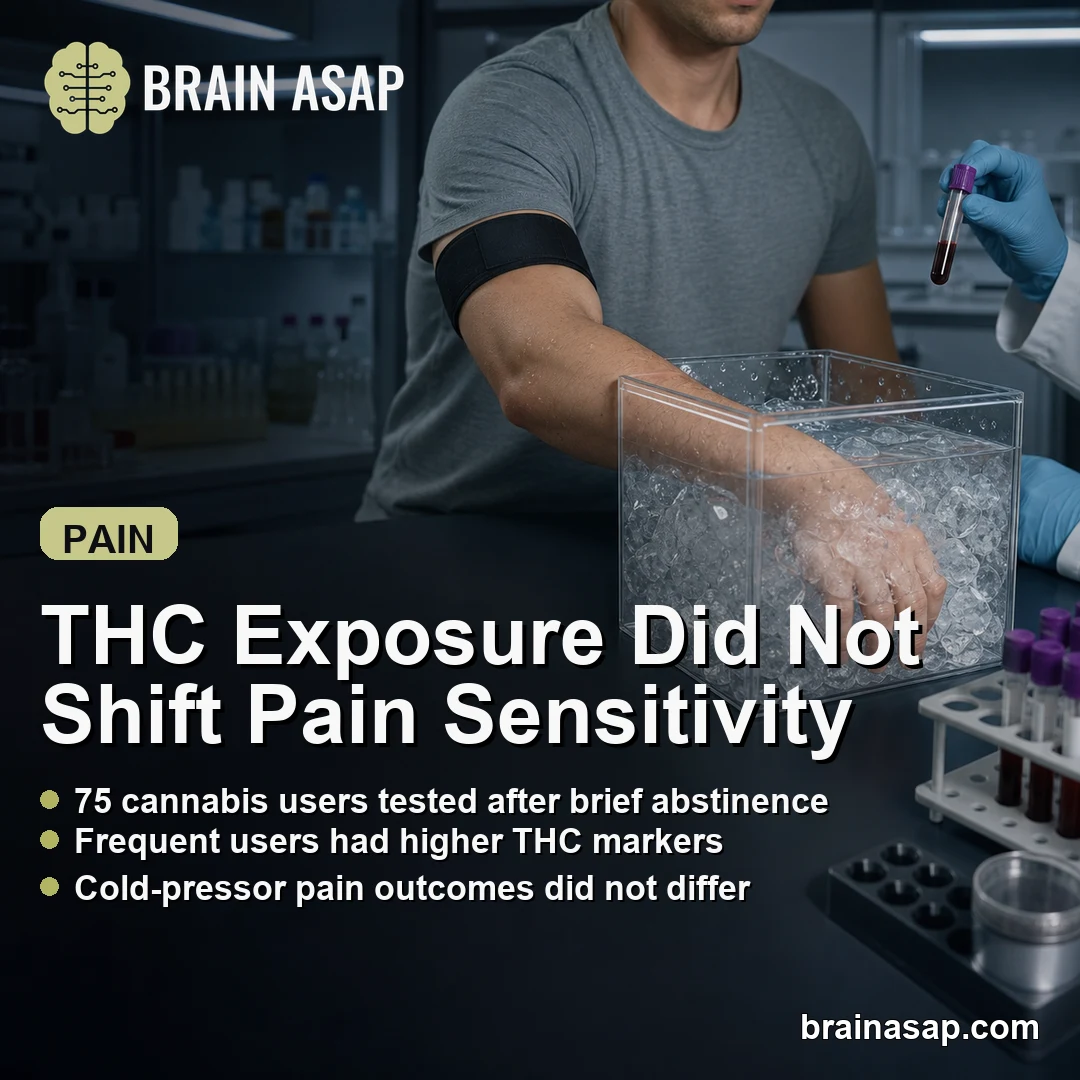
TL;DR: A 2026 study in Psychopharmacology found that healthy adults who used cannabis frequently had higher circulating THC markers after at least 12 hours of verified abstinence, but their cold-pressor pain threshold, pain tolerance, and pain ratings did not…
Read article ↗