TL;DR: A 2026 randomized trial in PLOS One found that one week of Bhagavad Gita learning, alone or paired with yoga, was associated with lower Generalized Anxiety Disorder-7 (GAD-7) scores in Indian healthcare workers, with the strongest 45-day responder rate…
Read article ↗
TL;DR: A 2026 BMC Psychiatry study found that antipsychotic dose was not associated with Montreal Cognitive Assessment (MoCA), a brief cognitive screening test, in clinically stable schizophrenia patients under 40, while higher symptom scores and longer illnes…
Read article ↗
TL;DR: A 2026 study in Scientific Reports found that 300 high-risk pregnant women in Egypt reported much lower pregnancy anxiety and stress scores after 4 weeks of daily AI chatbot emotional support, although the pre-post design cannot prove the chatbot caused…
Read article ↗
TL;DR: A 2026 cross-sectional study in Scientific Reports found that attention-deficit/hyperactivity disorder (ADHD) symptom screening was linked to extremely severe chronic pain in 958 adults at Japanese pain centers, while autism spectrum disorder (ASD) scre…
Read article ↗
TL;DR: A 2026 qualitative study in BMC Psychology reported that the For Baby’s Sake whole-family domestic violence and abuse programme was linked to parents’ perceived changes in abuse recognition, emotion regulation, and parenting behavior across pregnancy-to…
Read article ↗
TL;DR: A 2026 study in BJGP Open found no clear cohort-level increase in major bleeding outcomes when selective serotonin reuptake inhibitors (SSRIs) were used with direct oral anticoagulants (DOACs), but the self-controlled analysis still pointed to extra cau…
Read article ↗
TL;DR: A 2026 uncontrolled pilot study in BJPsych Open found that SMART, a personalized text-message program for metabolic health in people with schizophrenia spectrum disorders, improved patient activation, diabetes self-management confidence, health literacy…
Read article ↗
TL;DR: A 2026 study in PNAS from Oregon Health & Science University and Anhui University used optogenetics in mice to map a specific serotonin-producing brain circuit that runs straight to the auditory system, showed that activating this circuit produced tinni…
Read article ↗
TL;DR: A 2026 scoping review in Sleep Science linked seasonal timing, daylight exposure, daylight saving time (DST), sleep-wake rhythm disruption, and driver drowsiness to traffic-crash risk, but found that few studies directly integrate seasonality with chron…
Read article ↗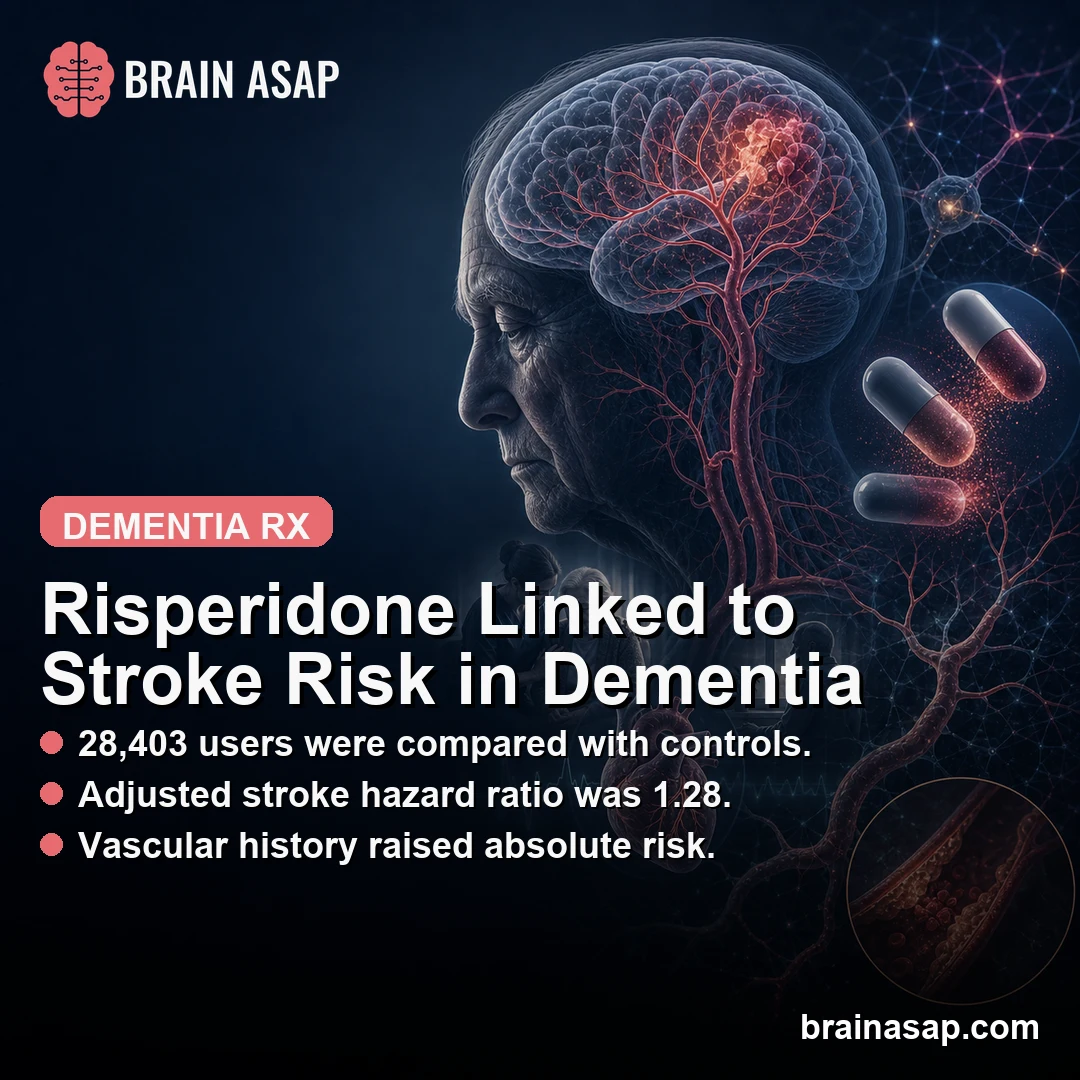
TL;DR: A 2026 population-based matched cohort study in British Journal of Psychiatry found that risperidone use was associated with increased stroke risk, adjusted hazard ratio 1.28, while absolute stroke incidence was especially high in people with prior stro…
Read article ↗