Cariprazine Linked to Obsessive-Compulsive Symptom Flare in Bipolar II Case Report
Cariprazine Linked to Obsessive-Compulsive Symptom Flare in Bipolar II Case Report

TL;DR: A 2026 case study in Biomedical Reports described a 28-year-old woman with bipolar II disorder whose stable subclinical counting compulsion worsened and expanded into new obsessive-compulsive symptoms within 3 days of starting cariprazine, then returned near baseline within 7 days after the drug was stopped. Key Findings Single case report: The source described one …
Read more

Repeated Psilocybin Doses Reduced OCD Severity

Repeated Psilocybin Doses Reduced OCD Severity

TL;DR: A 2026 trial in Journal of Psychopharmacology found that repeated supervised psilocybin sessions reduced Yale-Brown Obsessive Compulsive Scale (YBOCS) scores, a standard measure of obsession and compulsion severity, in 15 adults with OCD. Key Findings 73.3% met responder criteria: At the end of the 8-week treatment, 11 of 15 participants had at least a …

Read more

OCD DBS Response Linked to Lower GPe Alpha-Band Activity

OCD DBS Response Linked to Lower GPe Alpha-Band Activity

TL;DR: A 2026 preprint in medRxiv found that deep brain stimulation for severe obsessive-compulsive disorder was followed by lower globus pallidus externus alpha-band activity in clinically responsive patients, suggesting a possible brain readout of sustained DBS response. Key Findings 10 severe OCD patients: Researchers recorded local field potentials from the anterior globus pallidus externus (GPe) …

Read more

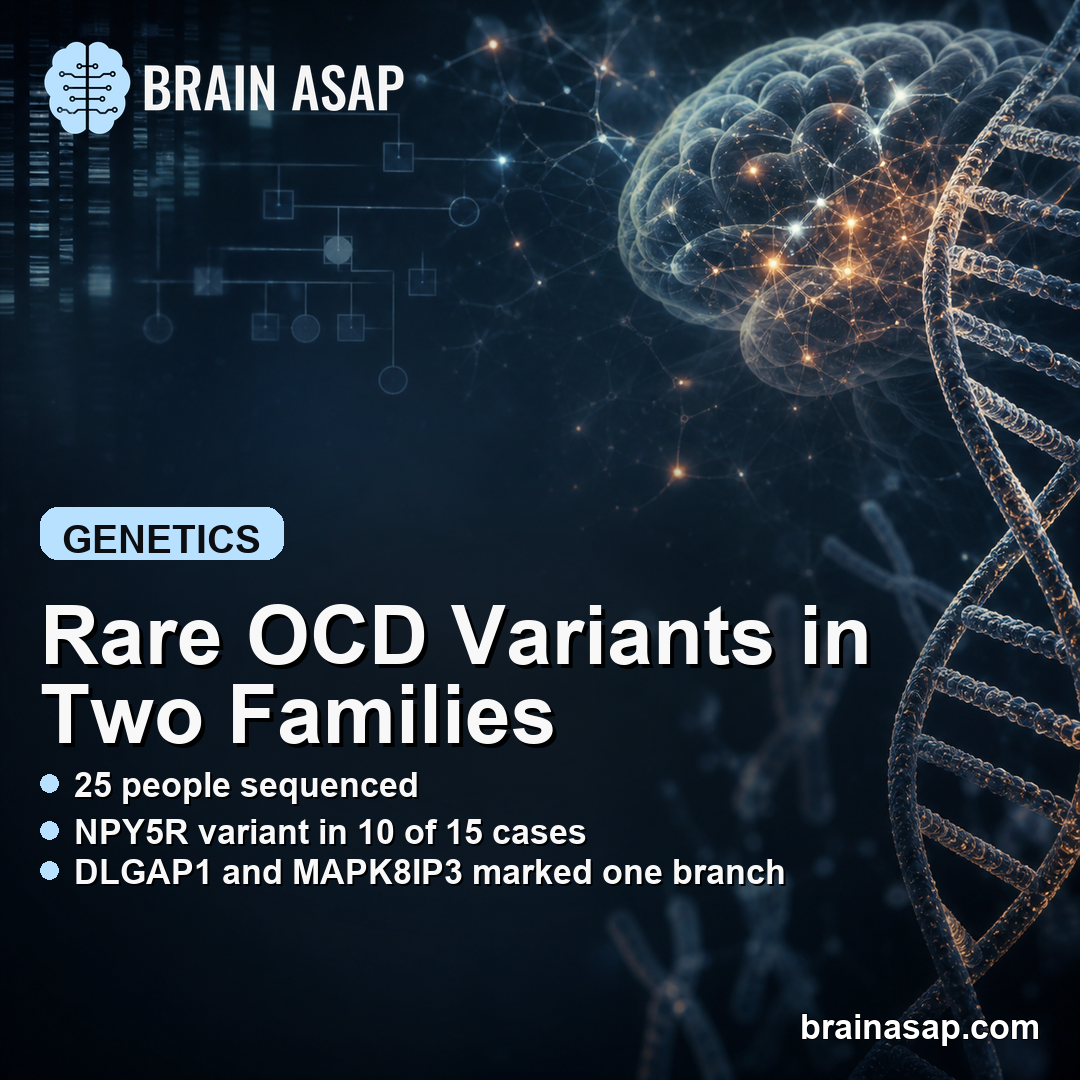
Rare OCD Variants in NPY5R, DLGAP1, and MAPK8IP3 Tracked in Two Families

Rare OCD Variants in NPY5R, DLGAP1, and MAPK8IP3 Tracked in Two Families

TL;DR: A 2026 preprint in medRxiv used whole-genome sequencing in two families with many obsessive-compulsive disorder (OCD) cases and prioritized rare variants in NPY5R, DLGAP1, and MAPK8IP3, but the findings still need replication and functional testing. Key Findings Two densely affected families: Researchers sequenced 25 people from two multiplex OCD pedigrees, meaning families with several …

Read more

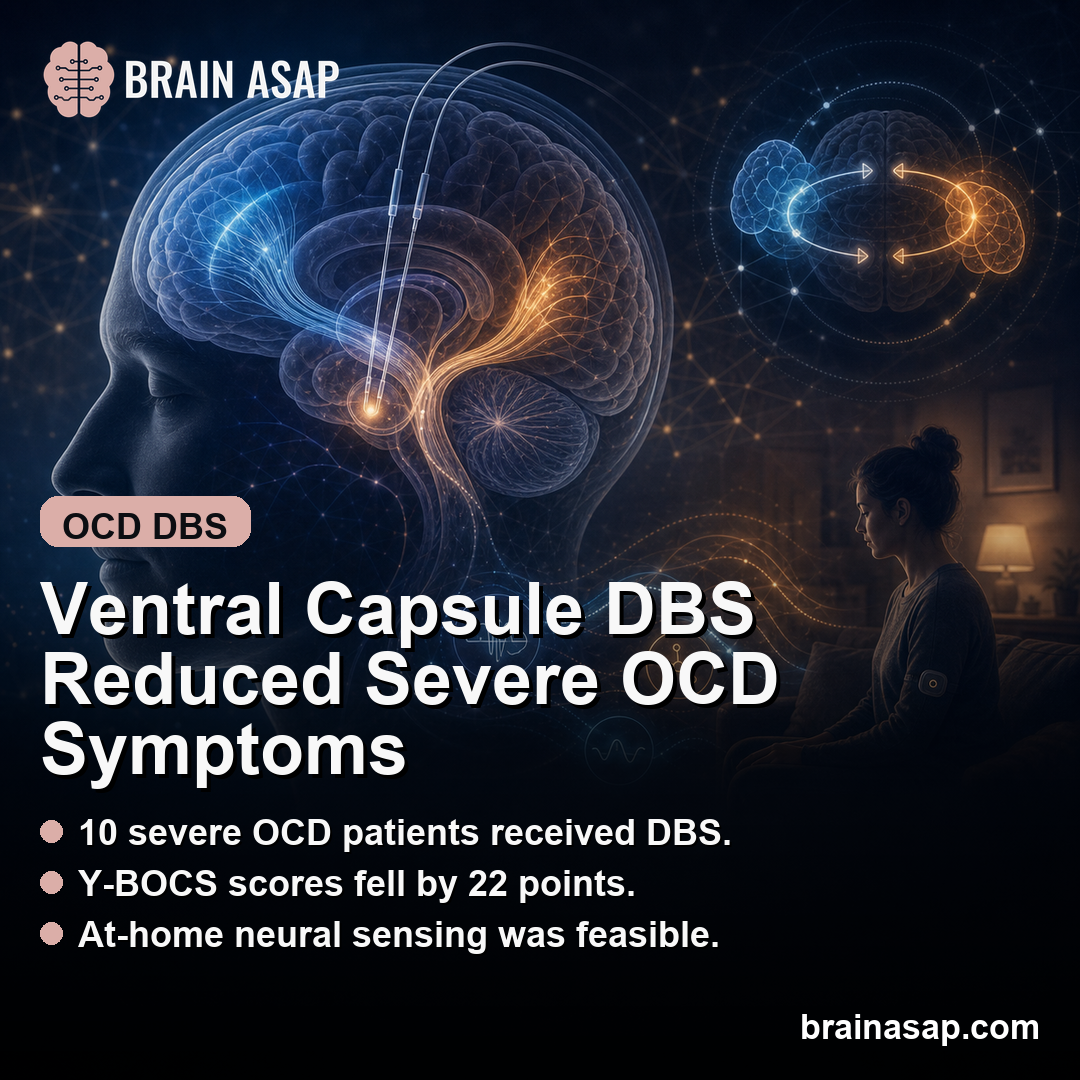
Ventral Capsule DBS Reduced Severe OCD Symptoms by 60%

Ventral Capsule DBS Reduced Severe OCD Symptoms by 60%

TL;DR: A 2026 medRxiv preprint reported that ventral capsule deep brain stimulation (DBS), an implanted brain-stimulation treatment, reduced severe treatment-resistant obsessive-compulsive disorder (OCD) symptoms by 22 Yale-Brown Obsessive-Compulsive Scale (Y-BOCS) points on average in 10 participants. Key Findings 10 severe OCD patients: Researchers implanted bilateral ventral internal capsule DBS leads in participants with intractable obsessive-compulsive …

Read more

OCD Treatment with Antidepressants (SSRIs) Alters Brain Structure & Functions (2024 Study)

Antidepressant treatment in OCD is linked to structural and functional brain changes, particularly in corticosubcortical areas, but these findings need further validation in larger, more homogeneous samples. Highlights: Antidepressant Use: Antidepressants, especially SSRIs, are a primary treatment for OCD, resulting in significant brain changes. Brain Structure Changes: Studies show volume alterations in the thalamus, amygdala, …

Read more

Newest OCD Treatments: Cutting Edge Advancements (2023)

Obsessive-compulsive disorder (OCD) is a chronic and debilitating mental health condition characterized by obsessive, anxiety-provoking thoughts and compulsive rituals aimed at reducing anxiety. Affecting 1-3% of adults worldwide, OCD often begins in childhood and impairs functioning across life domains. Advances are being made on multiple fronts to better understand and treat this complex disorder. Key …

Read more

TDCS for Trichotillomania: Brain Stimulation Shows Promise for Hair Pulling Disorder in 25-Year-Old Female

A new case study provides initial evidence that transcranial direct current stimulation (tDCS) may be an effective treatment option for trichotillomania, also known as hair pulling disorder. The study tested an intensified, repeated tDCS protocol targeting the supplementary motor area and dorsolateral prefrontal cortex in a 25-year-old woman with trichotillomania. After 16 sessions over 20 …

Read more

Autoantibodies & OCD Link: Targeting the Immune System

Obsessive-compulsive disorder (OCD) is a complex neuropsychiatric illness impacting approximately 2% of the global population. The disorder is characterized by intrusive, irrational thoughts (obsessions) and repetitive behaviors (compulsions) that patients feel driven to perform. OCD typically follows a chronic course and is associated with significant impairment and reduced quality of life. While effective therapies like …

Read more

Neuromodulation for OCD: Invasive & Non-Invasive Techniques (TMS, TDCS, DBS)

Obsessive-compulsive disorder (OCD) is a challenging psychiatric illness affecting 2% of the population. While some patients respond to therapy and medications, others continue to suffer from severe, treatment-resistant symptoms. Exciting new research shows that directly modulating brain activity through neuromodulation techniques can provide relief for these patients. Key Facts: OCD involves dysfunction in brain networks …

Read more