TL;DR: A 2026 qualitative study in BMC Psychiatry found that children interviewed 1 month after pediatric intensive care unit discharge described post-traumatic stress disorder (PTSD) symptoms tied to pain, sleep disruption, frightening procedures, sensory overload, and isolation.
Key Findings
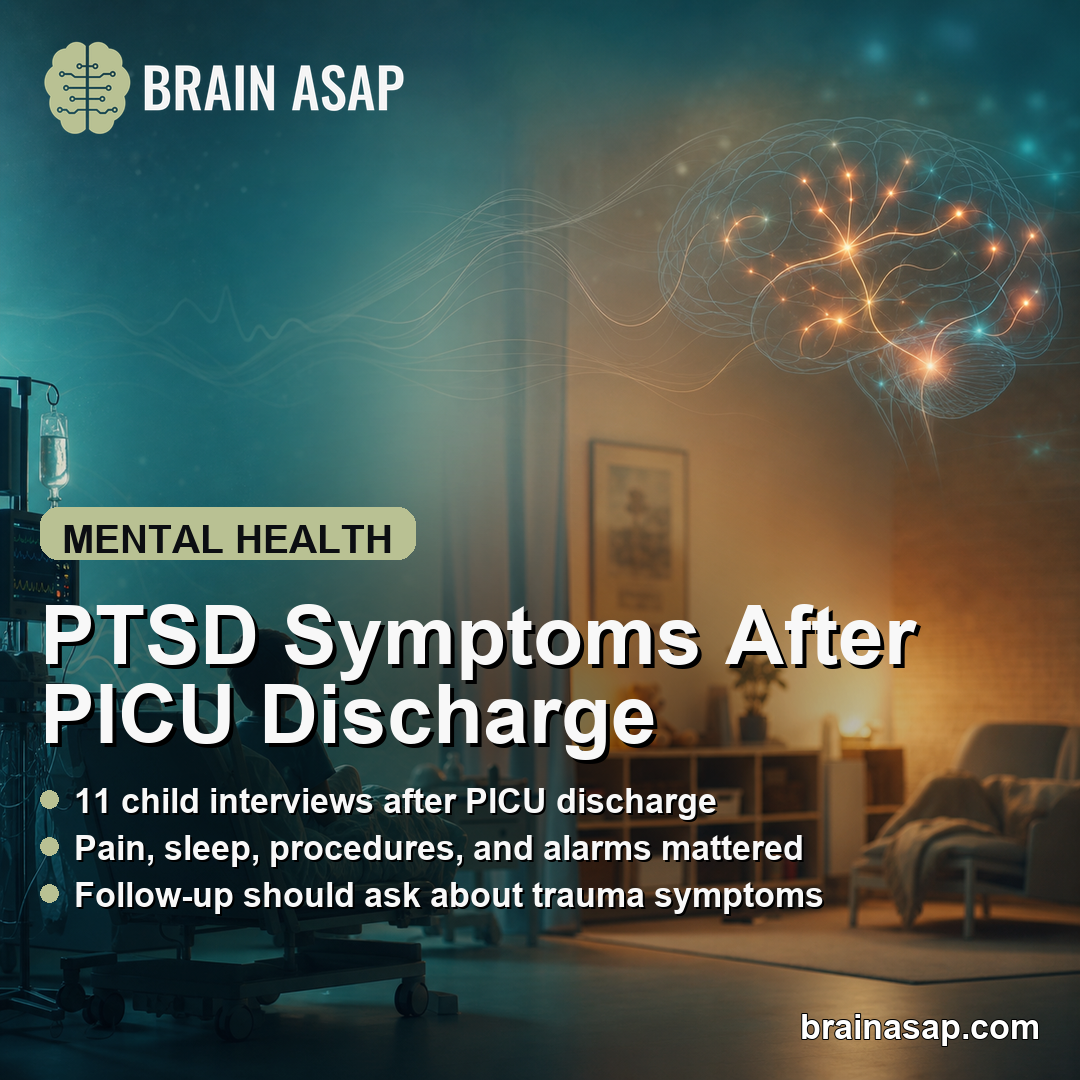
- Post-PICU interviews showed trauma symptoms: Researchers spoke with 11 children, including 6 boys and 5 girls aged 8-18 years, 1 month after discharge from pediatric intensive care units in Chengdu, China.
- PTSD symptoms centered on the hospital experience: Children described intrusive memories, sleep disruption, fear, emotional distress, and avoidance linked to PICU care.
- Physical symptoms and sleep problems mattered: Pain, throat discomfort, fatigue, nightmares, and disrupted sleep appeared alongside emotional stress.
- The care environment was itself stressful: Alarms, bright lights, equipment noise, emergency activity, and limited control left some children describing the PICU as threatening.
- Social isolation added to distress: Limited family contact, separation from peers, and reduced emotional support were described as part of the trauma pattern.
Source: BMC Psychiatry (2026) | Tang et al.
A pediatric intensive care unit can save a child’s life while also becoming the setting of a frightening memory. This study focused on that second part: what children said they remembered and felt after leaving the PICU.
Researchers interviewed 11 children in Chengdu, China, about 1 month after discharge. The children were 8 to 18 years old, old enough to describe parts of the experience but still developmentally different from adult ICU survivors.
The paper does not estimate how common PTSD is after PICU care. It is a qualitative interview study, meaning its value comes from mapping reported experiences and recurring themes rather than calculating population risk.
Children Described PTSD Symptoms After PICU Discharge
Post-traumatic stress disorder (PTSD) can include intrusive memories, nightmares, avoidance, heightened alertness, irritability, and sleep problems after a frightening or life-threatening event.
In this study, the traumatic event was not one single moment. Children described a cluster of experiences around illness, procedures, separation, alarms, uncertainty, and loss of control.
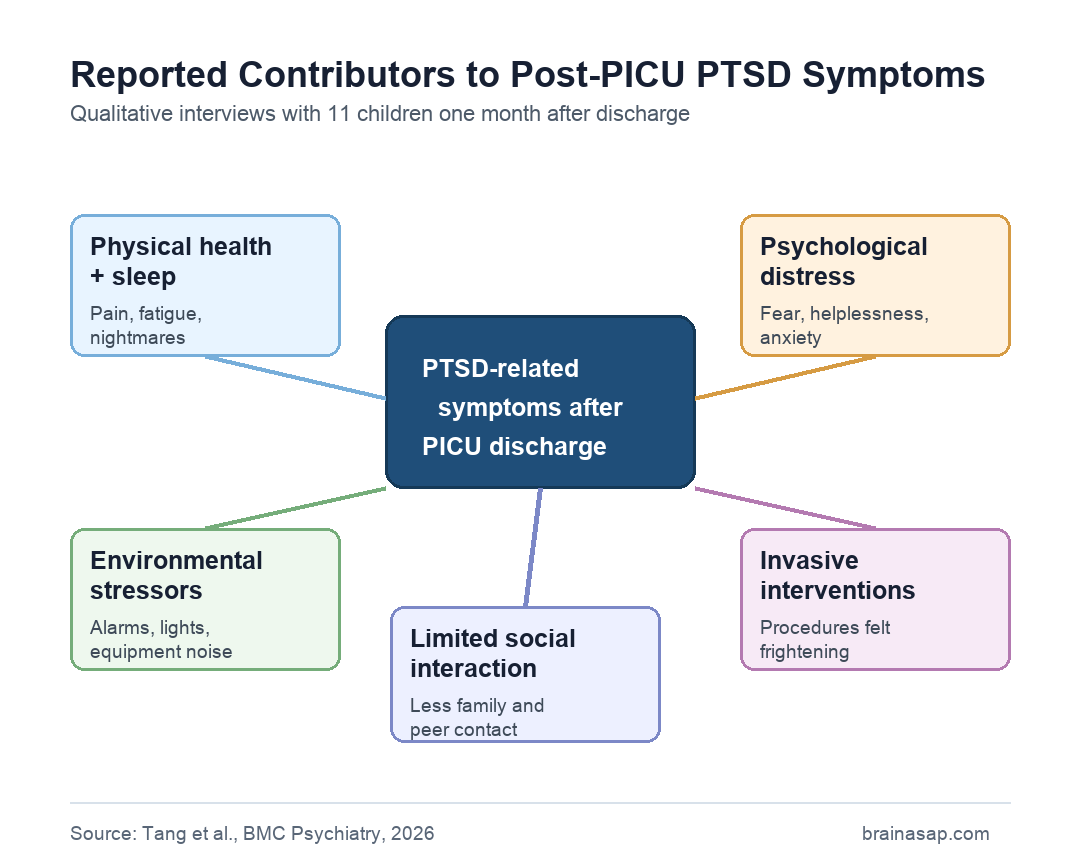
The researchers grouped the reported contributors into 5 broad areas:
- Physical health and sleep disturbance: Pain, breathing discomfort, fatigue, nightmares, and poor sleep after discharge.
- Psychological distress: Fear, worry, helplessness, and anxiety about treatment or recovery.
- Environmental stressors: Monitor alarms, equipment sounds, bright lights, and a busy clinical setting.
- Invasive interventions: Procedures such as injections, suctioning, tube placement, or other treatments experienced as painful or frightening.
- Limited social interaction: Separation from family or peers and a shortage of ordinary comfort during the hospital stay.
Those categories are important because they point beyond diagnosis. A child may not use the phrase PTSD, but the reported pattern can still show trauma-related distress.
Pain and Sleep Problems Were Part of the Trauma Pattern
The first theme linked body symptoms with mental stress. Children described painful procedures, physical discomfort, throat pain, weakness, or fatigue alongside disrupted sleep.
This clinical distinction is important because physical recovery can mask psychological distress. A child who is medically stable after PICU discharge may still be sleeping poorly, remembering painful moments, or feeling unsafe in ordinary settings.
Sleep disturbance is especially important in pediatric recovery. Nightmares, insomnia, and frequent waking can keep the hospital experience active after discharge and may worsen mood, attention, and family functioning.
The study also noted developmental differences. Younger children may express distress through body complaints or behavior changes, while older adolescents may be better able to describe fear, rumination, or avoidance.
Procedures and Equipment Added Threat During Care
The PICU environment was a recurring part of the reported stress. Children described alarms, infusion pumps, equipment movement, lights, and urgent activity as more than background noise.
For staff, those sounds and devices are part of routine care. For a child, they can become sensory reminders of danger.
Invasive care was another source of distress. The discussion section highlighted injections, suctioning, nasogastric tube insertion, and other procedures as frightening experiences that could leave children feeling helpless.
The practical takeaway is not that these interventions should be avoided when medically needed. The study suggests that trauma-sensitive care should keep unavoidable treatment more understandable and less isolating.
Several supports follow directly from the reported themes:
- Preparation: Explain procedures in child-friendly language before they happen when time allows.
- Control: Offer small choices, such as where to look, what to hold, or when to take a breath.
- Sensory protection: Reduce avoidable noise and light during rest periods.
- Reassurance: Repeat what is happening and why, especially during urgent or unfamiliar care.
Isolation and Limited Support Added Another Layer
Children also described a lack of social interaction. Separation from parents, limited contact with friends, and few ordinary comforting moments added loneliness to the PICU stay.
This point is easy to underestimate because PICU care is technically intensive. Monitors, medications, and procedures dominate the clinical record, while fear and isolation may be less visible.
Emotional support is not a cosmetic add-on in this context. The study frames connection as part of recovery, especially when children are trying to interpret frightening treatment while still physically vulnerable.
Family presence, structured reassurance, child-life support, and follow-up screening are not all tested as interventions in this paper. They are reasonable targets because they match the stressors children described.
The Study Supports Age-Appropriate Follow-Up
The strongest use of this study is as a guide for what clinicians and families should ask after discharge. A child may not volunteer a trauma narrative unless the conversation is made concrete and age-appropriate.
Follow-up questions can stay simple:
- Sleep: Is the child having nightmares, trouble falling asleep, or waking up scared?
- Reminders: Do hospital sounds, smells, medical equipment, or appointments trigger fear?
- Avoidance: Is the child refusing to talk about the PICU or avoiding care-related situations?
- Body complaints: Are headaches, stomachaches, fatigue, or pain appearing with anxiety?
- Connection: Has the child withdrawn from family, school, or peers?
The limitation is clear: 11 interviews from one setting cannot define every child’s post-PICU recovery. Translation, age differences, expressive ability, and recall all shape qualitative data.
Still, the finding is clinically useful. The study shows that children can connect trauma symptoms to specific parts of intensive care, and those details can help teams design follow-up that listens for pain, sleep, fear, sensory triggers, and isolation together.
Citation: DOI: 10.1186/s12888-026-08079-w. Tang et al. Post-traumatic stress disorder symptoms in children after PICU discharge: exploring contributing factors and the need for targeted interventions. BMC Psychiatry. 2026.
Study Design: Qualitative interview study using thematic analysis of post-discharge child interviews.
Sample Size: 11 children aged 8-18 years, interviewed 1 month after pediatric intensive care unit discharge.
Key Statistic: The sample included 6 boys and 5 girls and identified 5 broad contributors to PTSD-related symptoms.
Caveat: The study maps reported experiences rather than estimating PTSD prevalence or testing an intervention.