TL;DR: A 2026 mouse and cell study in Nature found that developing neurons can generate DNA double-strand breaks while moving through narrow brain tissue during migration, then usually repair those breaks without cell death. Key Findings Developing neurons: Th…
Read article ↗
TL;DR: A 2026 Neuron study proposed that developing brain cells can gain positional information partly from lineage, because cells descended from the same progenitor tend to stay near one another as tissue grows. Key Findings Lineage as position signal: The mo…
Read article ↗
TL;DR: A 2026 study in Human Brain Mapping found that full-term neonates already showed stronger structural and functional connectivity between cortical gyri than between sulci, with brain structure-function coupling shifting toward decoupling around 41 weeks…
Read article ↗
TL;DR: A 2026 mouse study in Nature Neuroscience found that glucose signaling through ATP-citrate lyase (ACLY), an enzyme that links sugar metabolism to gene regulation, helped oligodendrocyte progenitor cells multiply before they matured into myelin-forming c…
Read article ↗
TL;DR: A 2026 Research Square preprint linked DNA methylation (DNAm), an epigenetic mark measured in cord blood at birth, with default mode network-limbic brain development and age-13 anxiety symptoms in boys. Key Findings Birth-to-teen pathway tested: Researc…
Read article ↗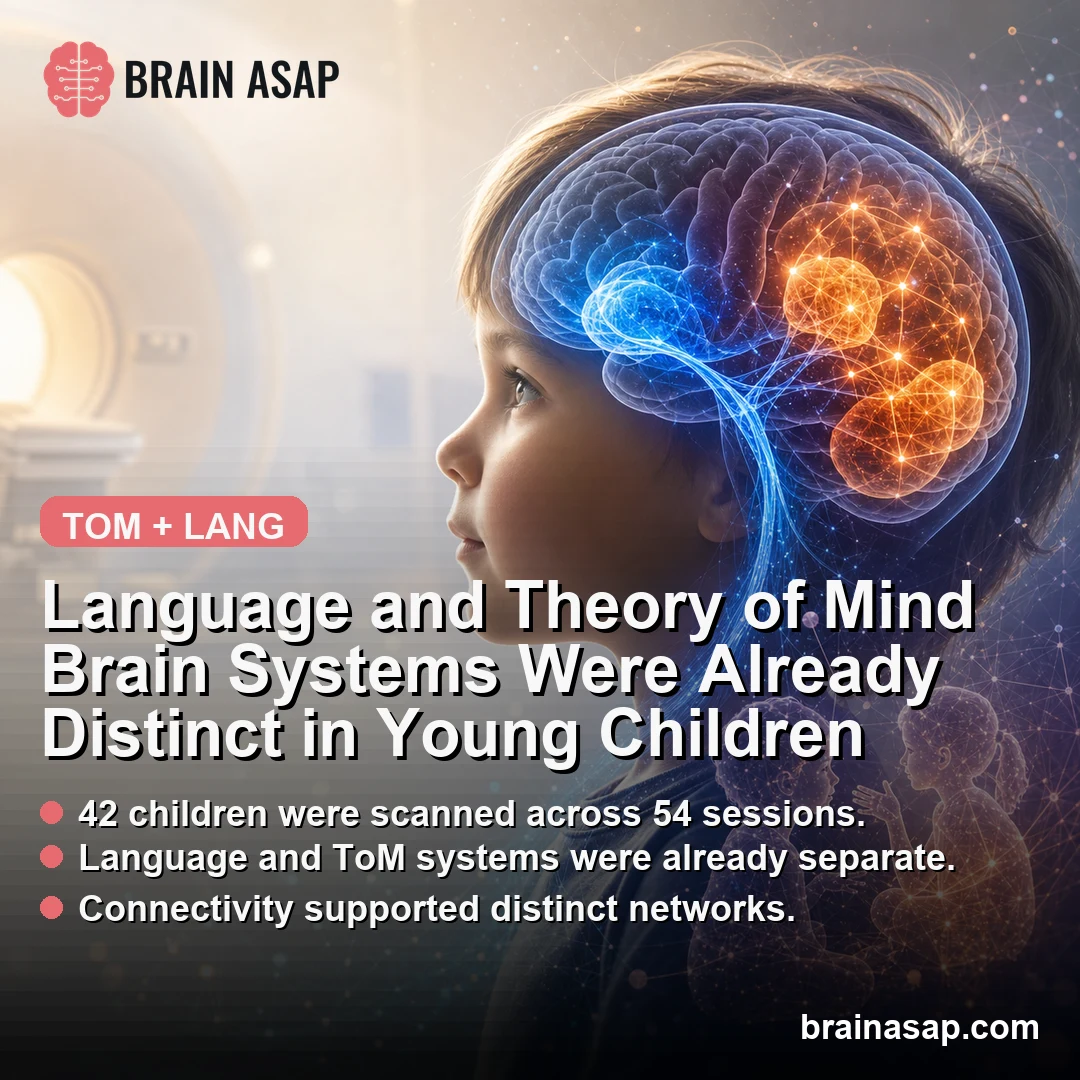
TL;DR: A 2026 Communications Biology fMRI study found that language and theory of mind, the ability to infer other people’s mental states, were already neurally distinct in children aged 3-9 rather than slowly separating during development. Key Findings Childr…
Read article ↗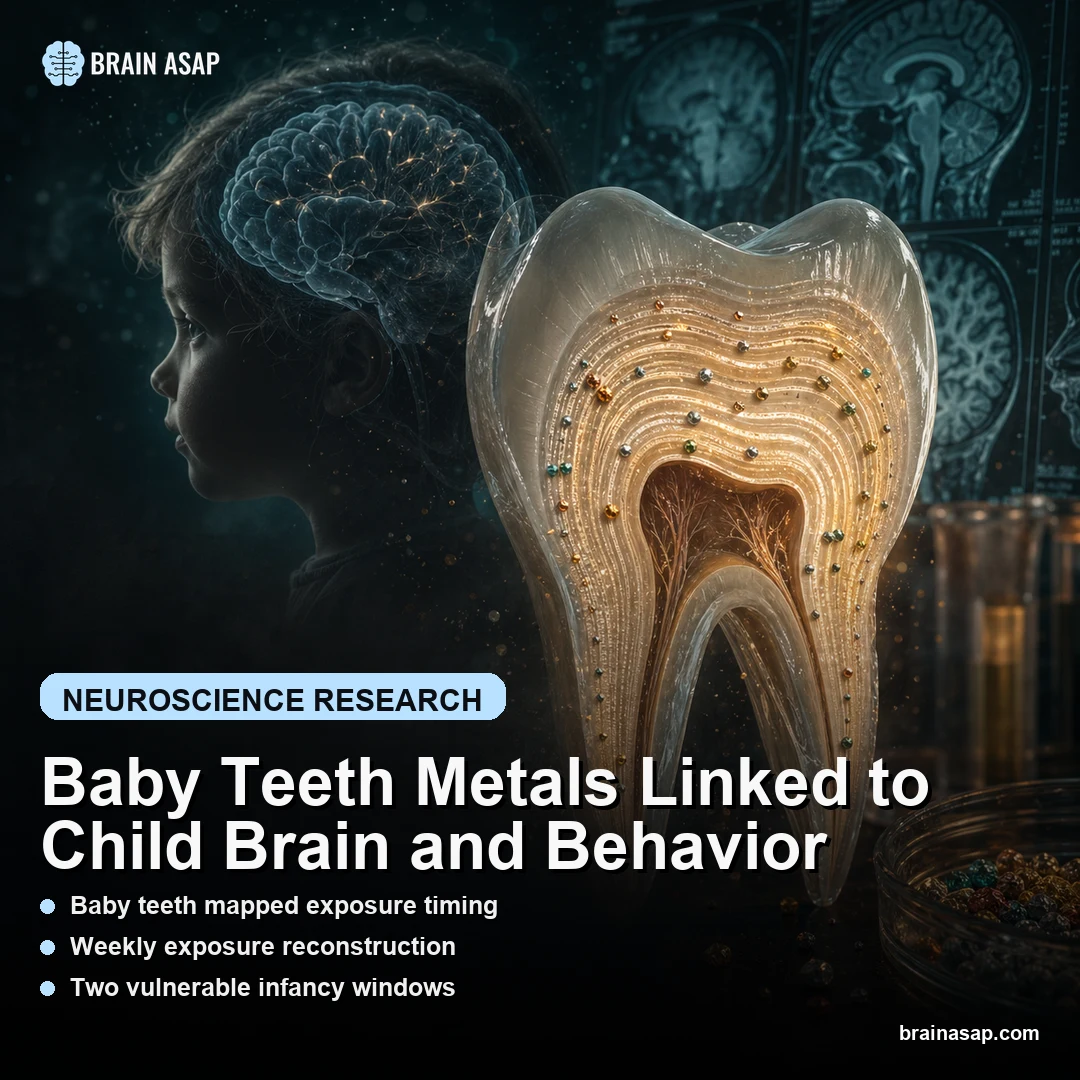
Baby Teeth Metals Linked to Child Brain and Behavior TL;DR: A Science Advances study used naturally shed baby teeth as biological time capsules and found that higher early-life metal mixtures, especially during two postnatal windows, tracked with later behavio…
Read article ↗
A new systematic review published in the International Journal of Environmental Research and Public Health suggests that chronic exposure to high levels of fluoride during pregnancy and childhood may be associated with adverse effects on cognitive development.…
Read article ↗
Fluoride is added to drinking water and dental products to help prevent tooth decay. However, emerging research suggests fluoride exposure in early childhood may have detrimental effects on brain development and other aspects of health. This raises concerns ab…
Read article ↗
A new review of research finds strong evidence that fluoride exposure, especially during fetal development and infancy, can lead to decreased IQ and other neurotoxic effects. While fluoride may help prevent dental cavities when applied topically, ingesting ele…
Read article ↗