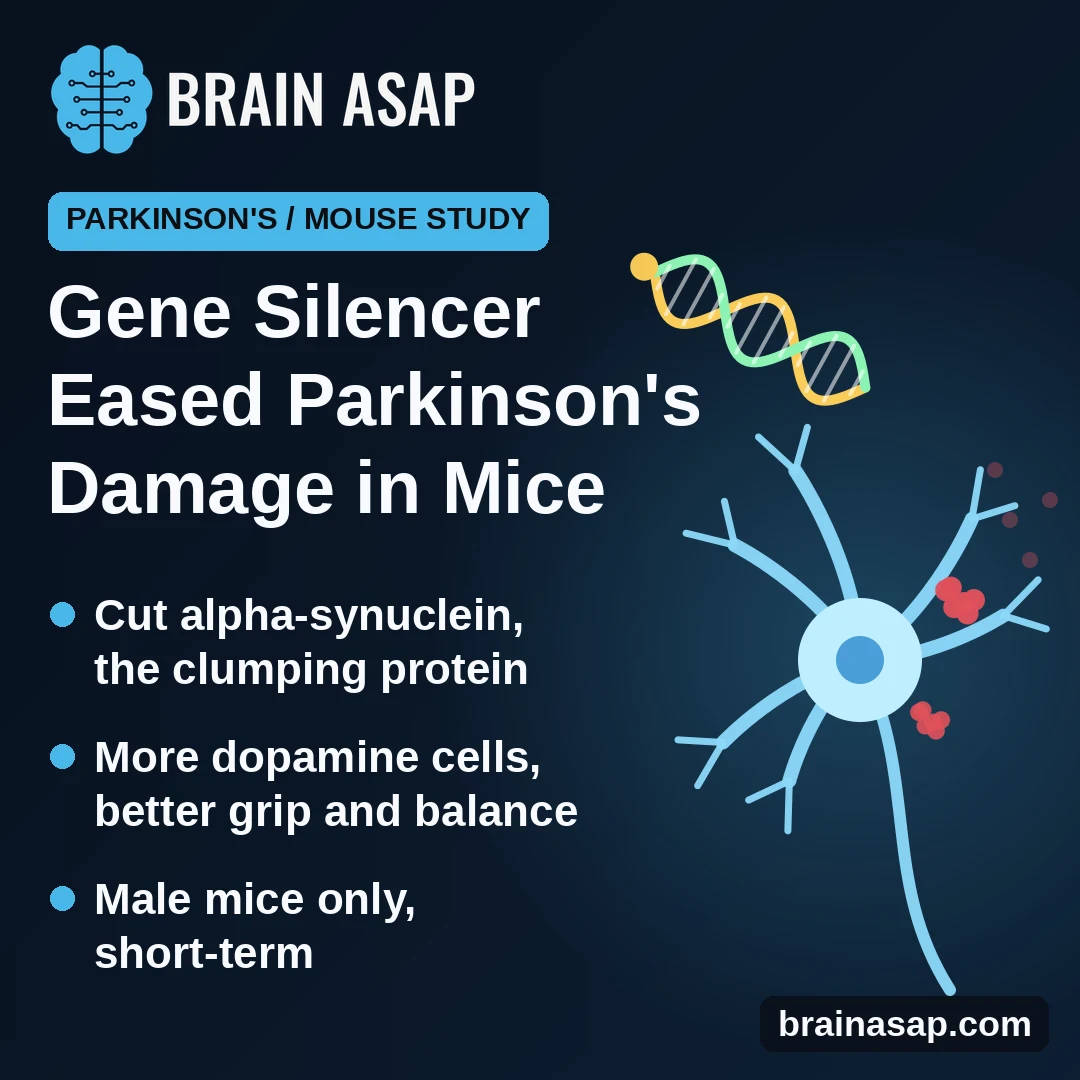
TL;DR: In mice, a new type of gene-silencing molecule lowered levels of alpha-synuclein, the protein that clumps in Parkinson’s. Mice given it kept more dopamine-making brain cells and did better on grip and balance tests than untreated mice with the same dise…
Read article ↗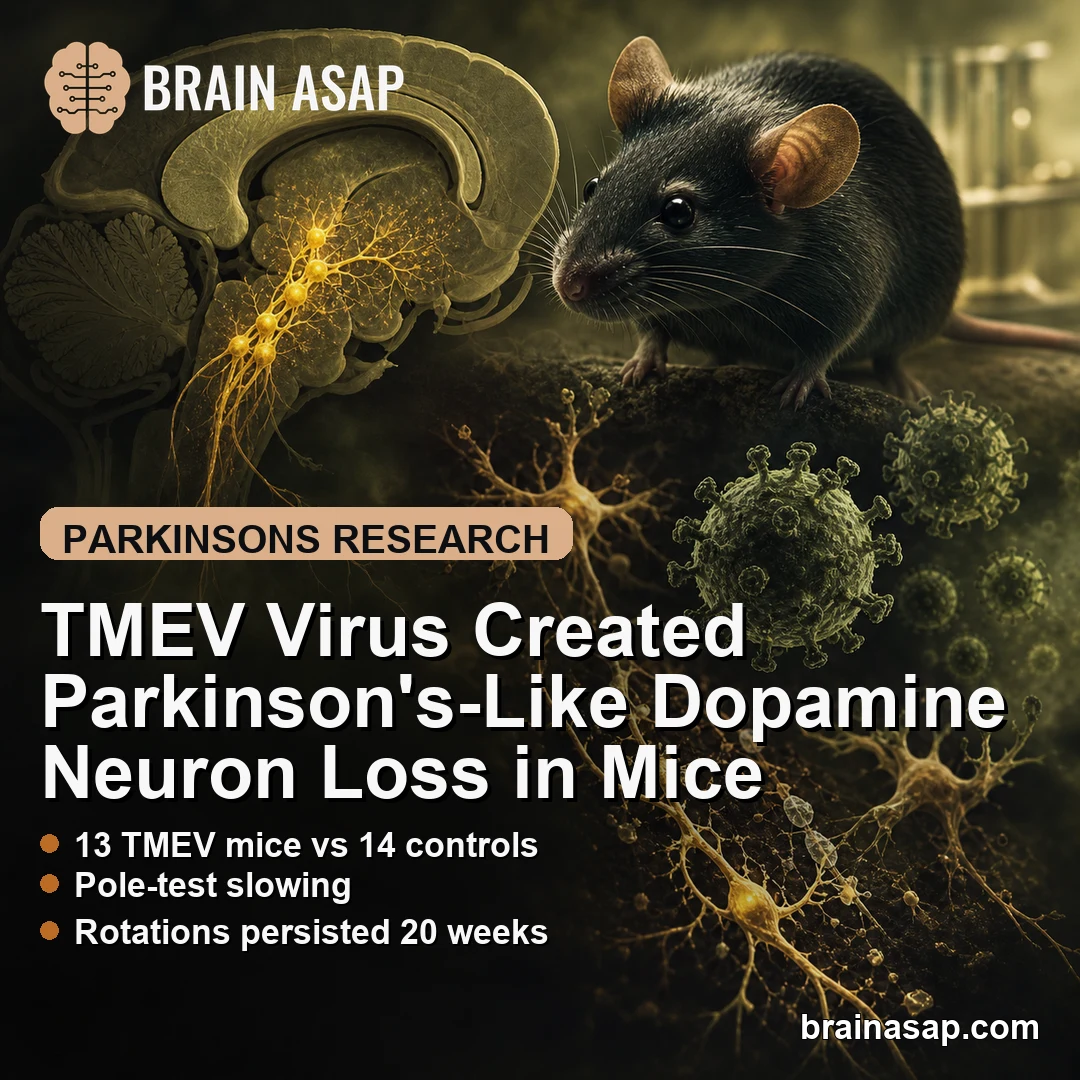
TL;DR: A 2026 study in Brain, Behavior, & Immunity – Health reported that Theiler’s murine encephalomyelitis virus (TMEV), a mouse neurotropic virus, infected substantia nigra dopamine neurons and produced Parkinson’s-like motor deficits in mice. Key Findings…
Read article ↗
TL;DR: A 2026 study in Genes & Diseases found that Il6 deficiency, meaning loss of the gene for interleukin-6, worsened Parkinson’s-like motor and dopamine-system injury in mice. Key Findings Il6 knockout worsened movement: Mice lacking Il6 performed worse aft…
Read article ↗
TL;DR: A 2026 study in Molecular Neurobiology found that Antrodia cinnamomea, a medicinal fungus extract, worked best when carried on citrate-stabilized silver nanoparticles in cell and rat models of Parkinson’s-like dopamine injury. Key Findings 6-OHDA create…
Read article ↗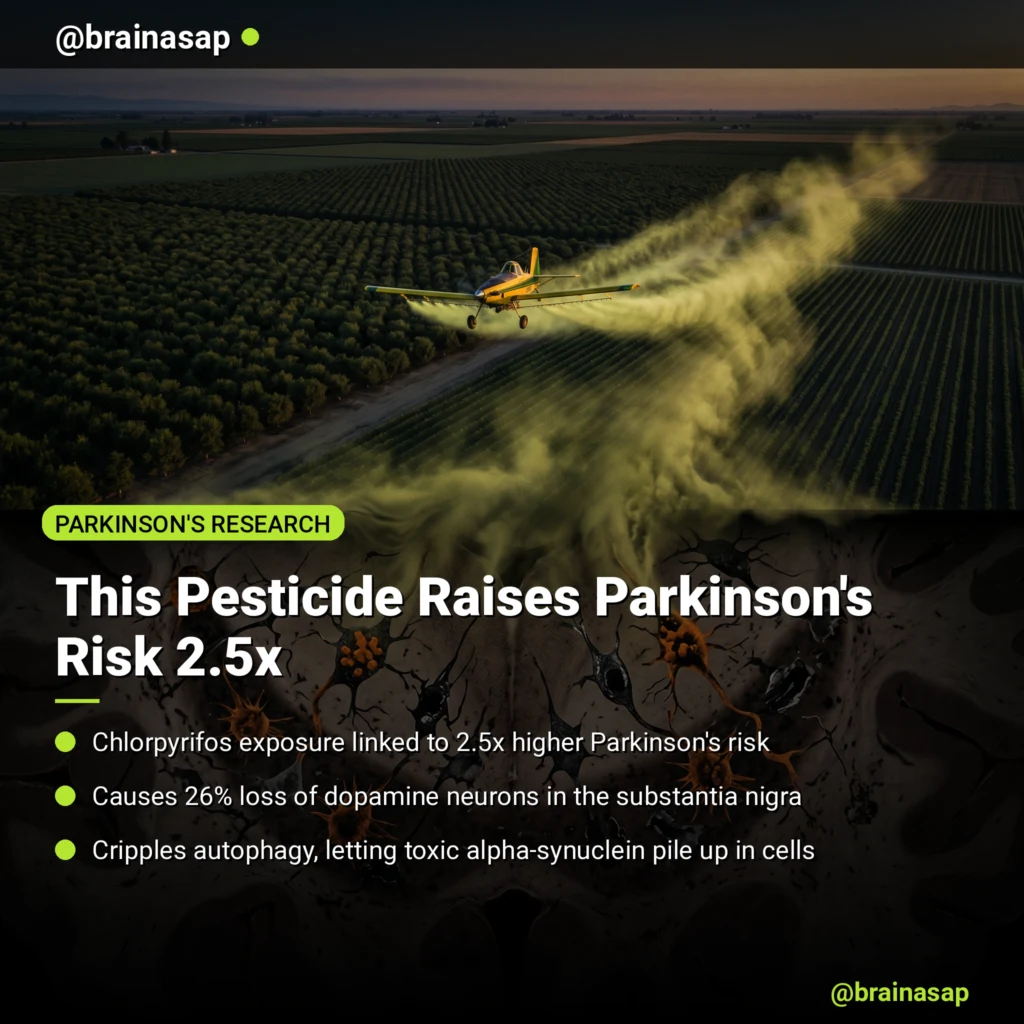
Chlorpyrifos Linked to 2.5x Higher Parkinson’s Risk TL;DR: A pesticide sprayed on US crops decades ago more than doubles your risk of Parkinson’s disease, and new research shows exactly how it damages dopamine neurons. You probably never heard of chlorpyrifos,…
Read article ↗