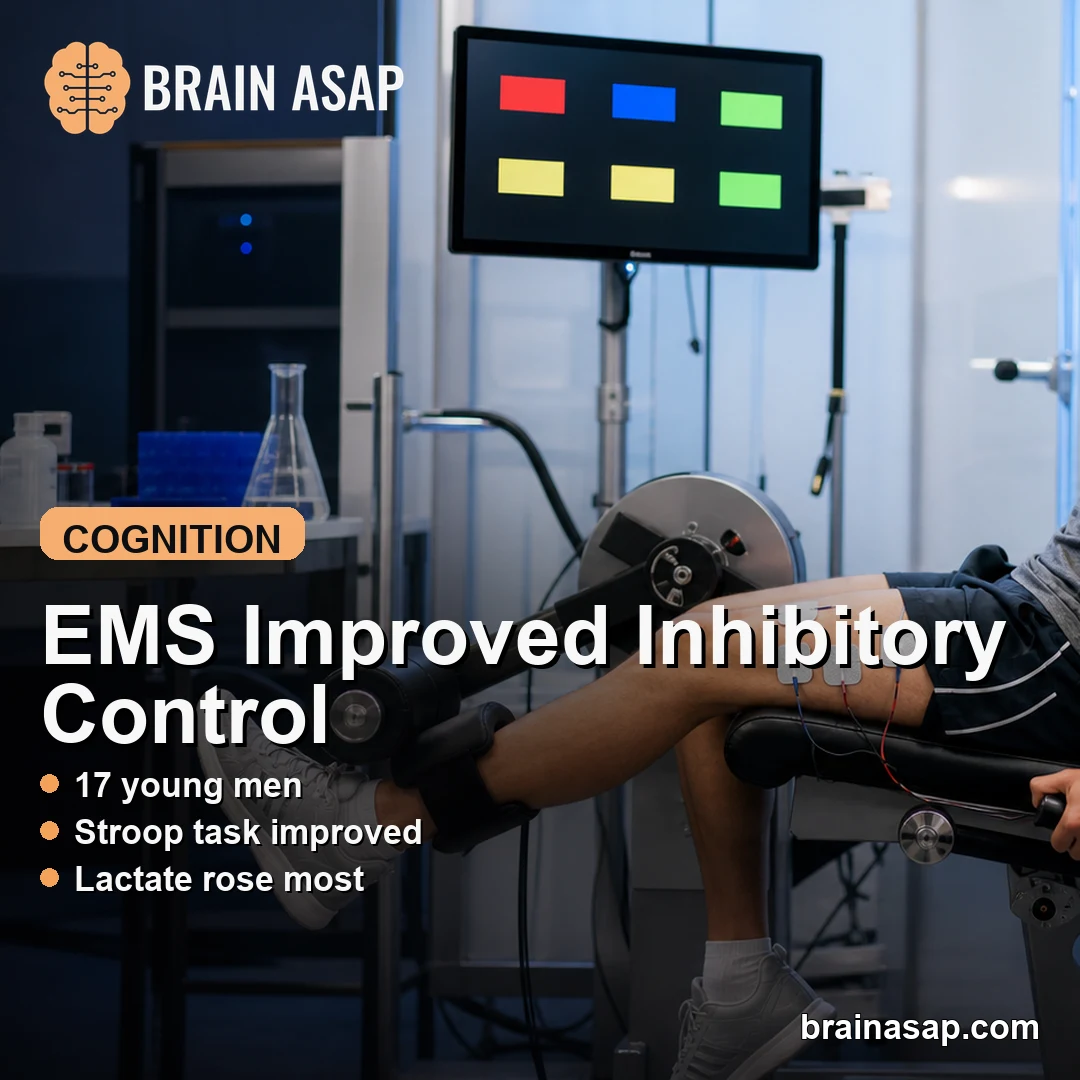
TL;DR: A 2026 crossover study in Clinical Physiology and Functional Imaging found that adding electrical muscle stimulation to low-intensity resistance exercise improved inhibitory control in young men, while stimulation alone showed a delayed 15-minute benefi…
Read article ↗
TL;DR: A 2026 medRxiv preprint linked greater attention-deficit/hyperactivity disorder (ADHD) symptom scores in college students to reduced stop-signal functional MRI (fMRI) activation in cannabinoid receptor 1 (CB1R)-rich brain regions, and that reduced activ…
Read article ↗
TL;DR: A 2026 preprint in medRxiv using ABCD Study data found that childhood poverty strengthened the link between early-life adversity and later behavioral problems, while inhibitory-control brain and temperament profiles separated higher- and lower-risk patt…
Read article ↗
TL;DR: A 2026 systematic review and meta-analysis posted as a medRxiv preprint found that mindfulness-based programs were linked to a small improvement in executive function, meaning inhibition, working memory, and flexible thinking, across 13 youth trials. Ke…
Read article ↗
TL;DR: A 2026 study in Cognitive, Affective, & Behavioral Neuroscience found that lower frontal midline theta, an EEG marker of cognitive-control engagement, partly explained why young adults with higher negative emotionality performed worse on a Go/No-Go inhi…
Read article ↗
TL;DR: A 2025 study in Computers in Human Behavior linked at-risk problematic gaming to weaker basic working memory, while recreational gaming was linked to better target detection on an attention-control task. Key Findings Three gaming groups: Researchers com…
Read article ↗
TL;DR: In Drosophila melanogaster, caffeine consumed at night impaired inhibitory control in an airflow task, especially in females. The effect was not explained by simple hyperactivity or sleep deprivation, and the study points to dopamine signaling in mushro…
Read article ↗
TL;DR: A 2026 longitudinal study in Appetite following 491 Quebec children found that infants breastfed for at least three to six months showed better inhibitory control — the ability to suppress an automatic response — at age three and a half than infants who…
Read article ↗
Video game addiction (VGA) is associated with significant deficits in response inhibition and preparatory processes, reflected by more commission errors and reduced N2 amplitudes in the cued Go/NoGo task. Highlights: Increased Commission Errors: Individuals wi…
Read article ↗