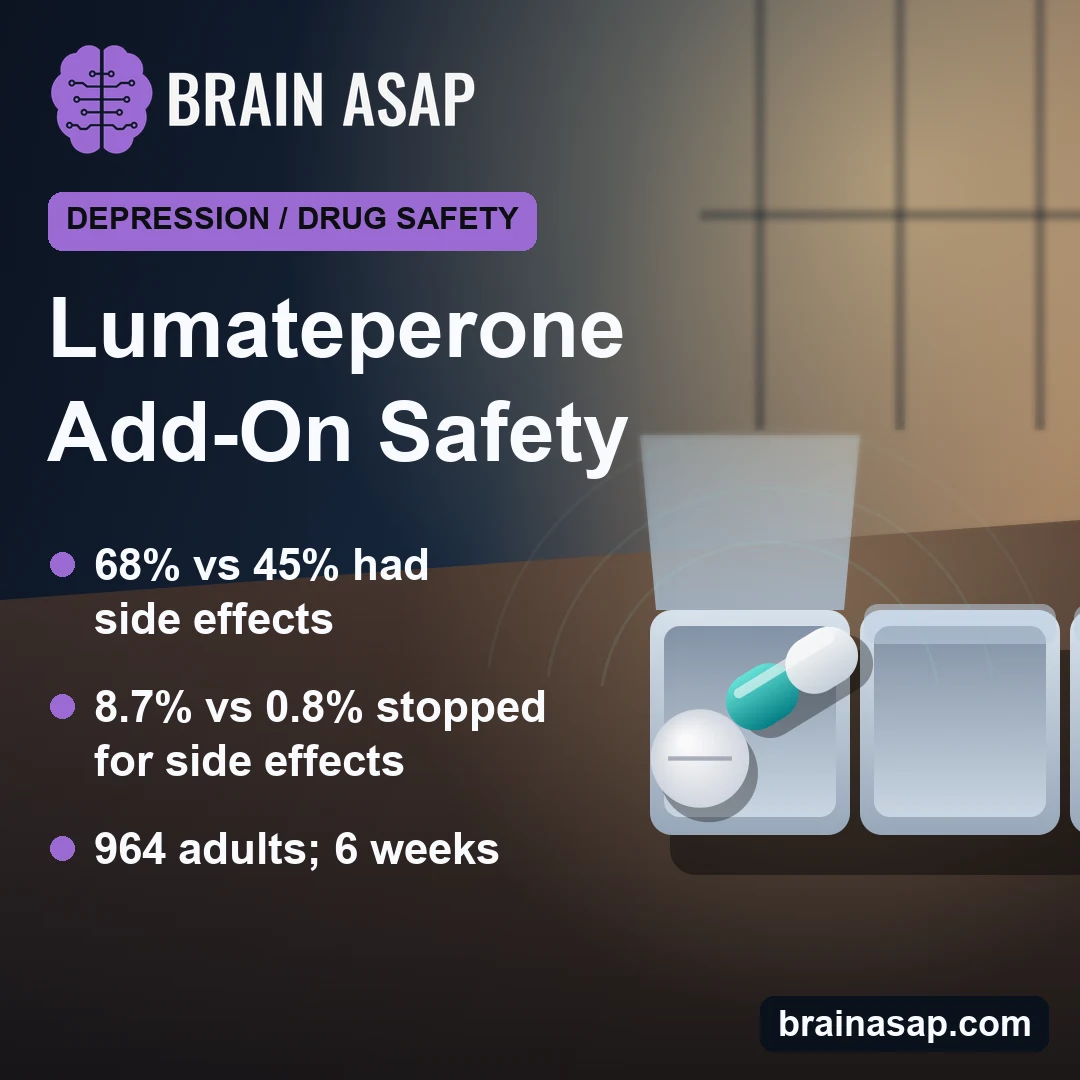
TL;DR: A 2026 pooled analysis in CNS Drugs combined two six-week trials of adults whose depression hadn’t responded well enough to an antidepressant. Adding the antipsychotic lumateperone instead of a placebo raised the share of people with side effects from 4…
Read article ↗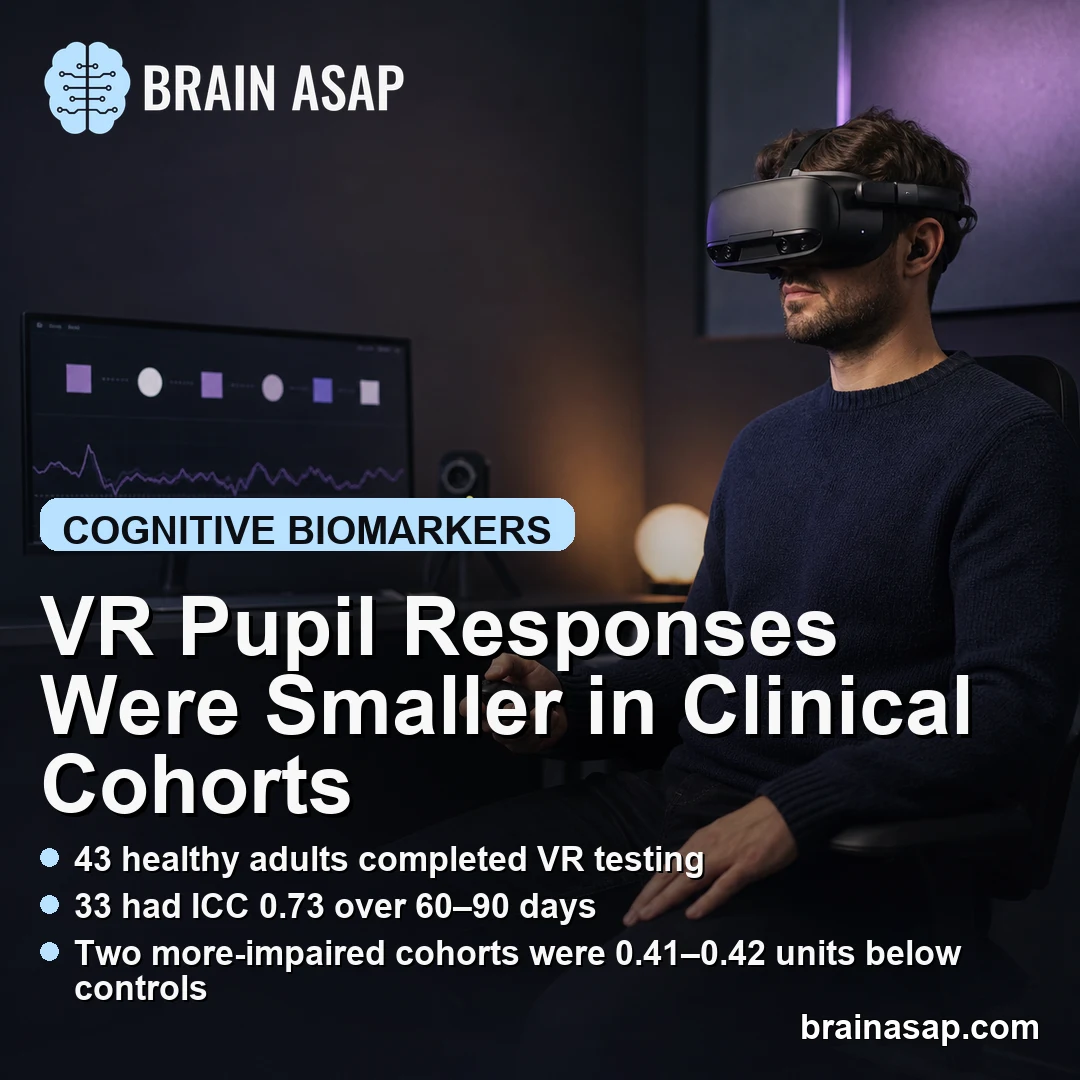
TL;DR: A 2026 medRxiv preprint found that pupil dilation measured inside a virtual reality (VR) headset increased as working-memory load rose in healthy adults, was reproducible 60–90 days later in 33 returnees, and was smaller under the highest load in cognit…
Read article ↗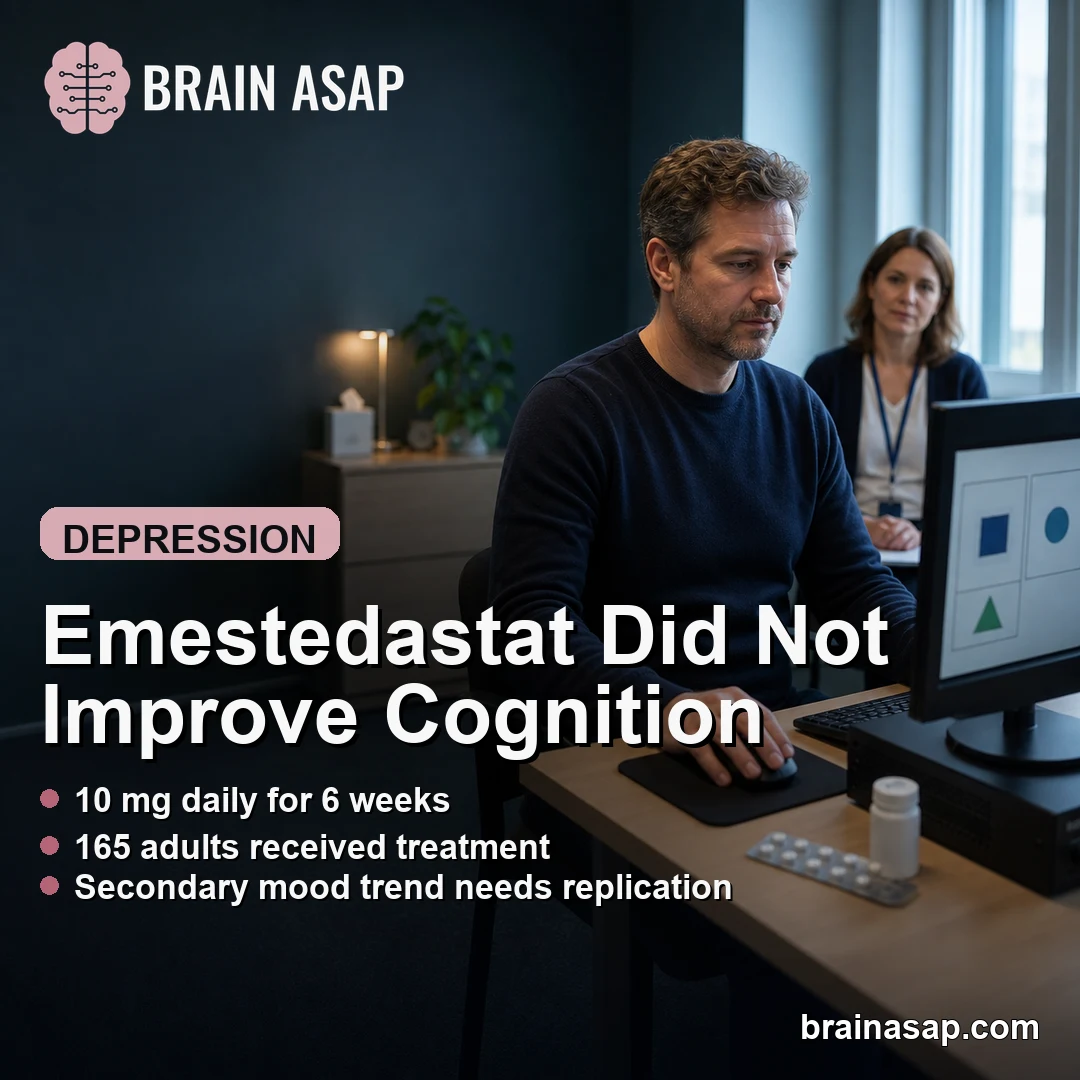
TL;DR: A 2026 Phase 2 trial in The British Journal of Psychiatry found that 10 mg emestedastat did not improve attention and working memory after six weeks in adults with major depressive disorder and objectively measured cognitive impairment. A nominal depres…
Read article ↗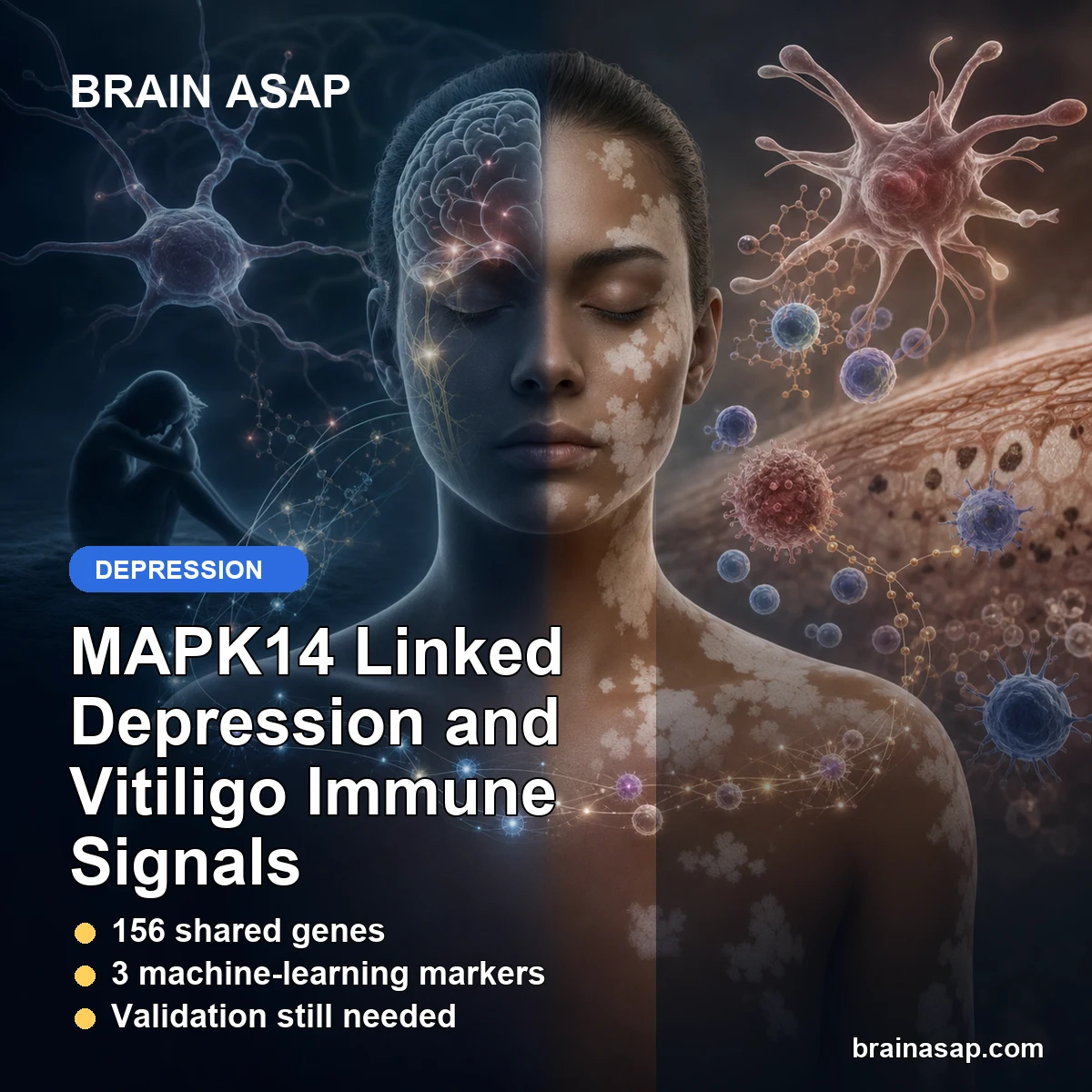
TL;DR: Major depressive disorder and vitiligo may share immune-inflammatory gene signatures. In PLOS One in 2026, the analysis frames MAPK14 as a preliminary candidate marker that still needs clinical and laboratory validation. Key Findings Two public disease…
Read article ↗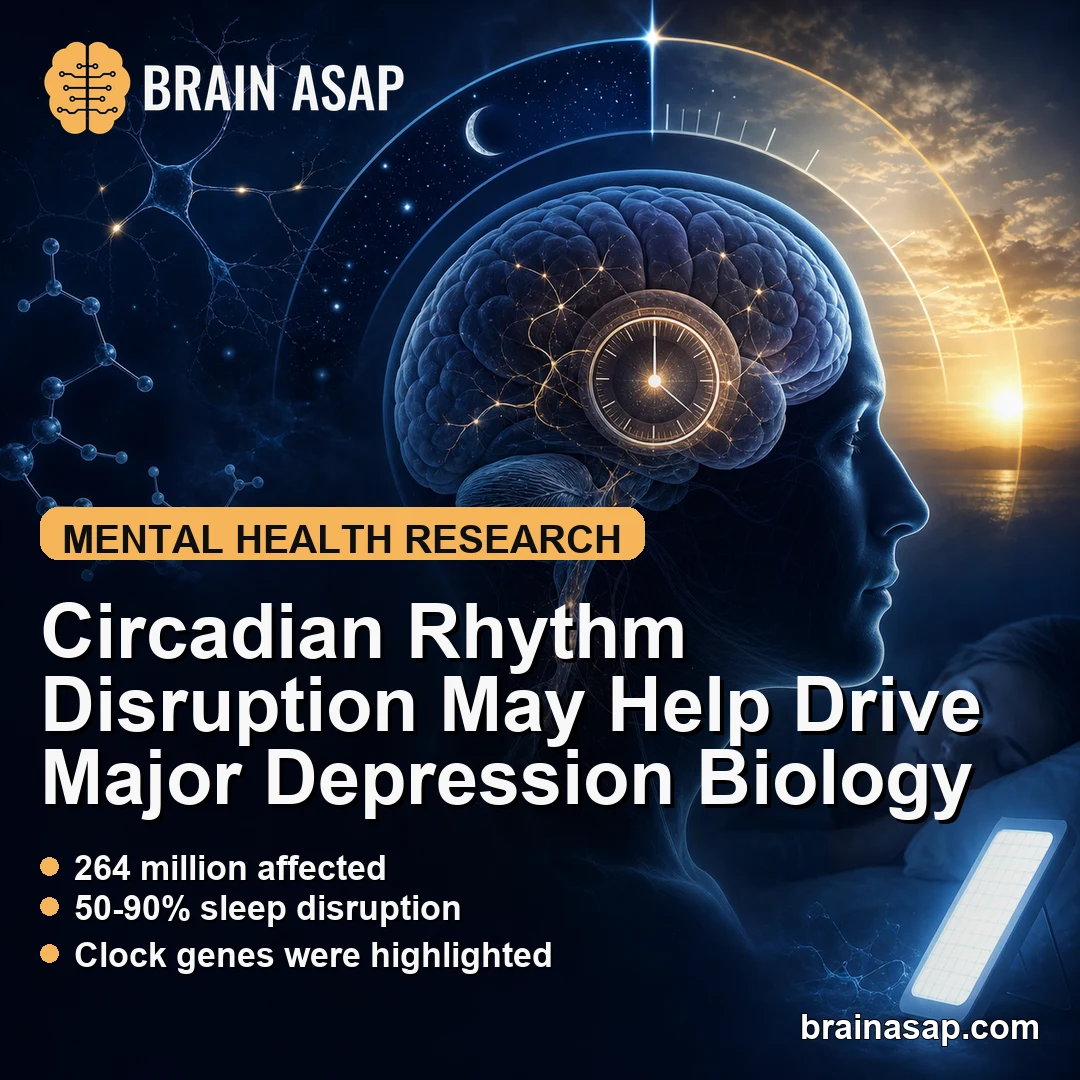
TL;DR: A 2026 review in Annals of Medicine argues that circadian rhythm disruption in major depressive disorder (MDD) reaches beyond poor sleep, linking clock-gene variation, sleep-wake timing, stress-hormone rhythms, melatonin signaling, and chronotherapy tar…
Read article ↗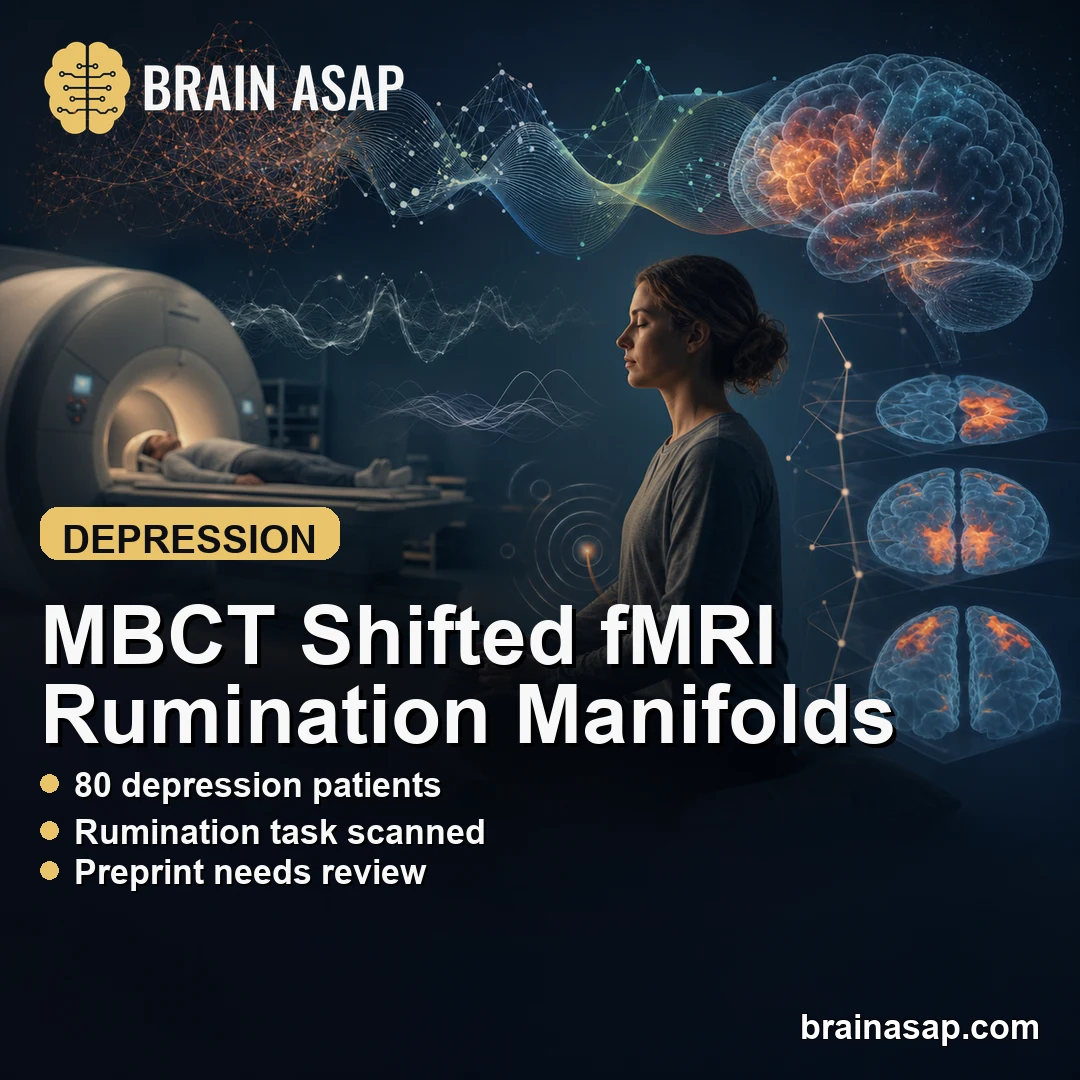
TL;DR: A 2026 medRxiv preprint used functional MRI (fMRI) and complex harmonics decomposition to study mindfulness-based cognitive therapy in 80 people with major depressive disorder, reporting post-treatment changes in whole-brain manifolds during rumination.…
Read article ↗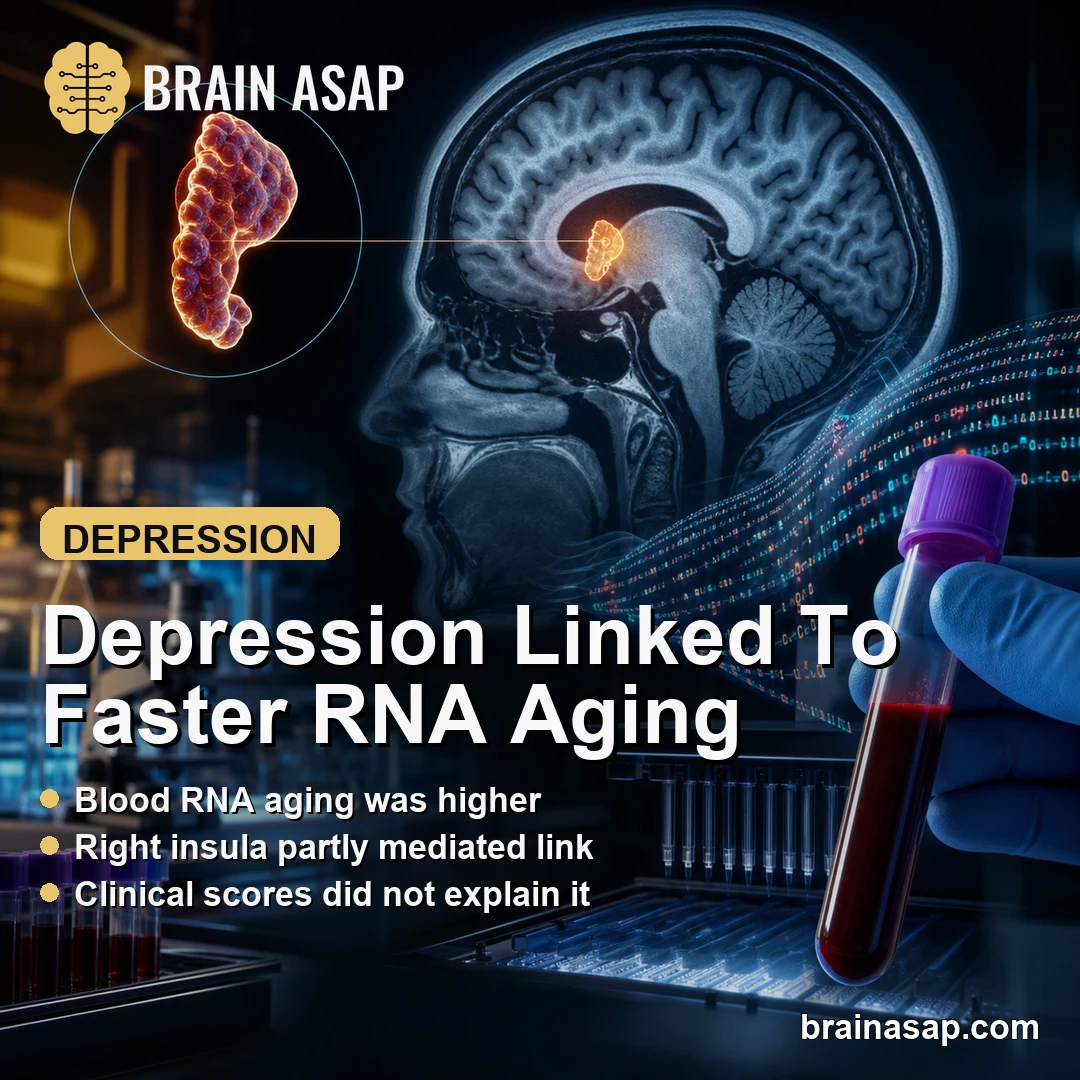
TL;DR: A 2026 case-control study in Psychological Medicine linked major depressive disorder to faster blood-based transcriptomic aging and found that right-insula brain changes partly explained the depression association. Key Findings Transcriptomic aging was…
Read article ↗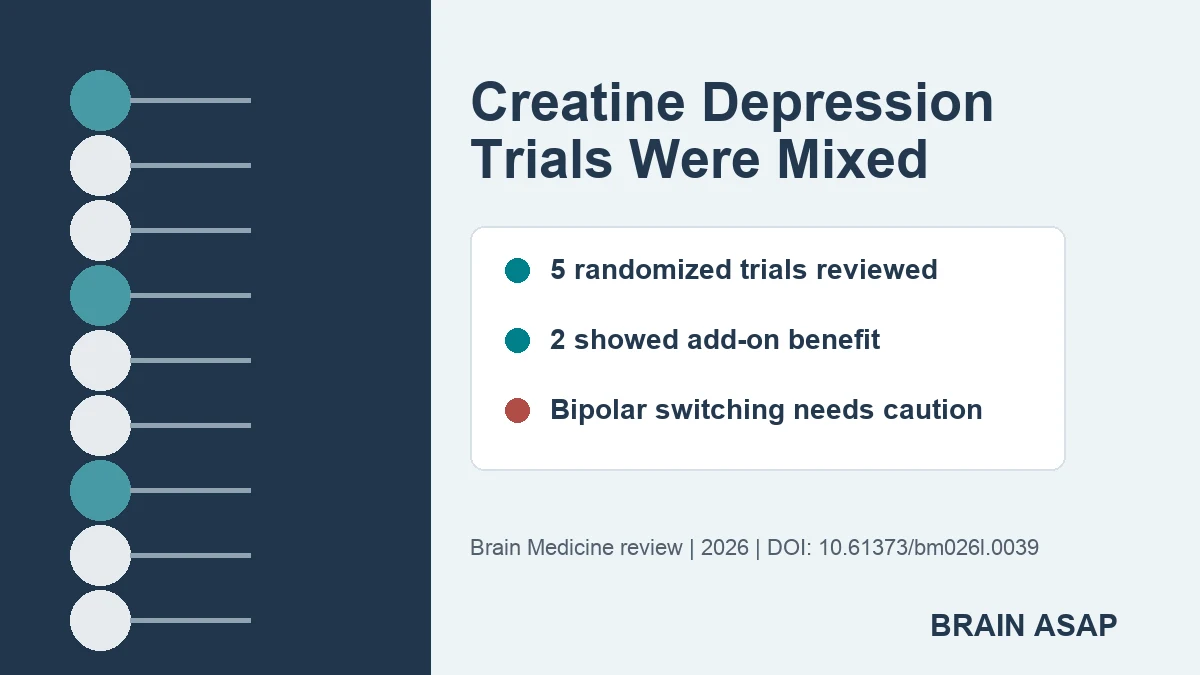
TL;DR: A 2026 review in Brain Medicine found mixed randomized-trial evidence for creatine monohydrate as an add-on depression treatment: 2 of 5 trials showed symptom benefits, while 3 did not find a clear advantage. Key Findings Five randomized trials were rev…
Read article ↗
TL;DR: A 2026 study in the European Journal of Nuclear Medicine and Molecular Imaging reported that adolescent bipolar II depression showed lower thalamic structural-functional connectivity coupling and glucose metabolism than adolescent major depressive disor…
Read article ↗
TL;DR: A 2026 narrative review in Clinical Drug Investigation argued that desvenlafaxine, a serotonin-noradrenaline reuptake inhibitor (SNRI), may be a first-line major depressive disorder option for selected patients, especially when fatigue, cognitive compla…
Read article ↗