TL;DR: A 2026 study in European Archives of Psychiatry and Clinical Neuroscience of 755 Korean adults with mood disorders found that three distinct childhood ADHD traits each tracked with different adult clinical features, suggesting ADHD’s influence on mood-d…
Read article ↗
TL;DR: A 2026 meta-analysis in Dialogues in Clinical Neuroscience pooled whole-brain functional MRI studies and found that anxious major depressive disorder (anxious MDD, depression with prominent anxiety symptoms) showed different brain-activity patterns from…
Read article ↗
TL;DR: A 2026 study in Annals of General Psychiatry found that, among 457 adults with recurrent major depressive disorder in Pakistan, escitalopram was the most common single antidepressant and reported side effects varied sharply by drug class. Key Findings C…
Read article ↗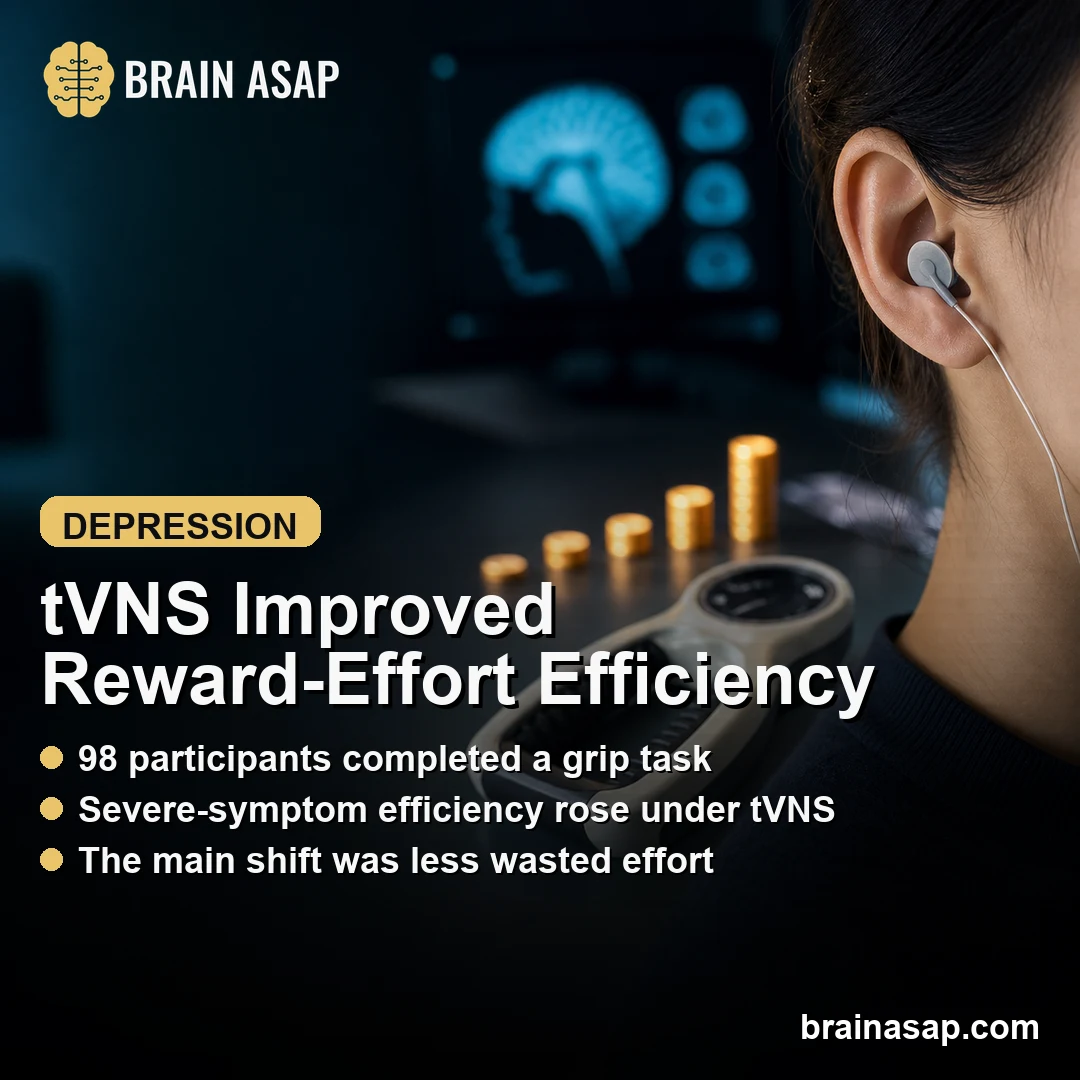
TL;DR: A 2026 preprint on medRxiv tested transcutaneous vagus nerve stimulation (tVNS), a noninvasive ear-based stimulation method, during a grip-strength reward task and found that people with severe depressive symptoms made more efficient effort choices unde…
Read article ↗
TL;DR: A 2026 study in Nature Communications used resting-state functional MRI (fMRI) to link major depressive disorder to more frequent but shorter visits to a salience-dominated brain state. Key Findings Resting-state fMRI compared depression with controls:…
Read article ↗
TL;DR: A 2026 functional MRI (fMRI) study in Psychological Medicine found that schizophrenia, bipolar disorder, and major depressive disorder shared some thalamus connectivity disruption, but each diagnosis showed a different subcortical network pattern across…
Read article ↗
TL;DR: A 2026 mouse study in Neurochemical Research found that 28 days of unpredictable chronic mild stress increased dopamine D1 receptor binding across the striatum and raised dopamine D2 receptor binding only in selected regions, regardless of fatty acid-bi…
Read article ↗
TL;DR: A 2026 randomized pilot trial in the Journal of Affective Disorders found that 30 minutes of moderate exercise before cognitive behavioral therapy (CBT) for major depressive disorder was linked to stronger therapy-process measures and higher exploratory…
Read article ↗
TL;DR: A 2026 systematic review and meta-analysis posted to medRxiv found that gamma-frequency non-invasive brain stimulation was linked to symptom improvement in schizophrenia and depressive-symptom reduction in major depressive disorder, but the evidence was…
Read article ↗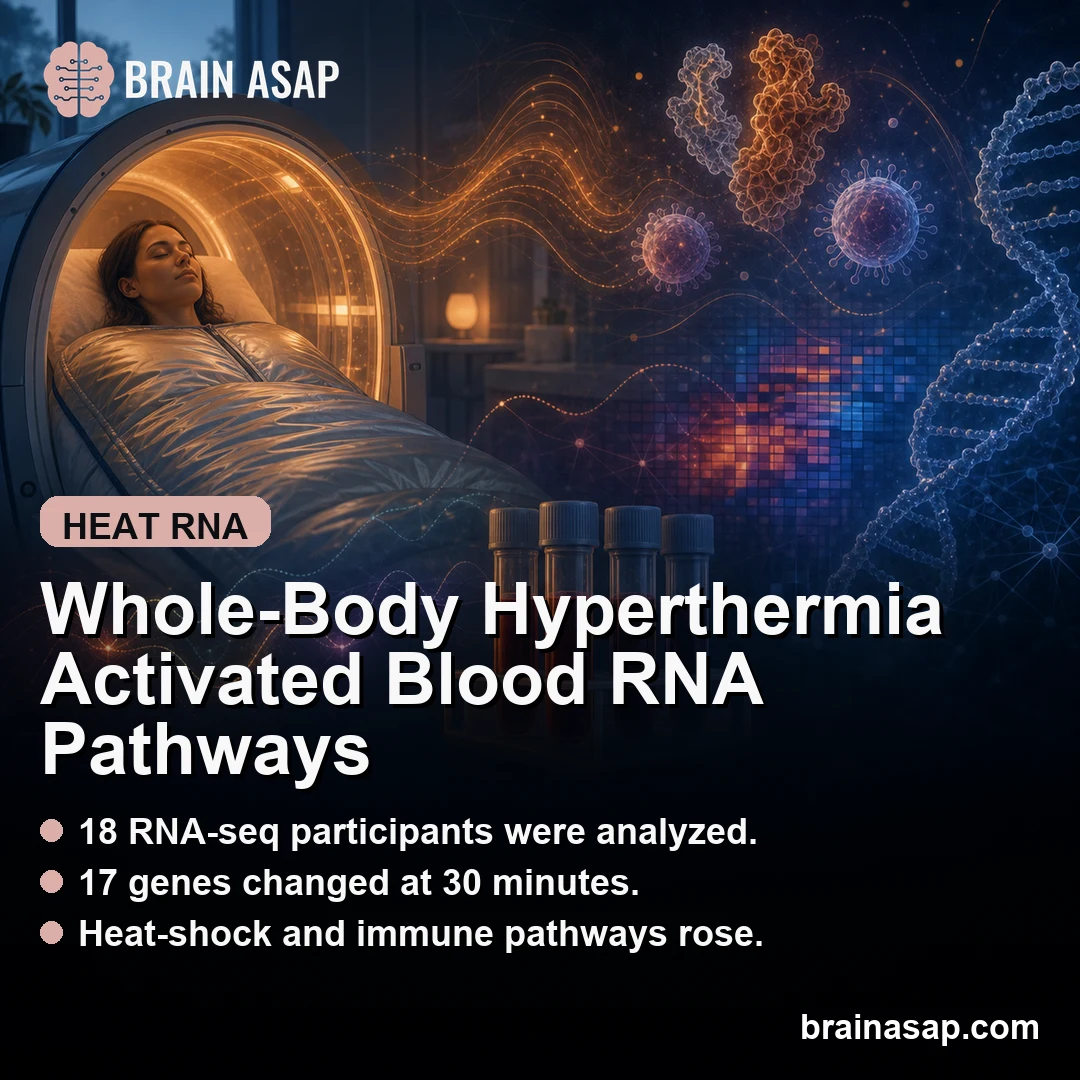
TL;DR: A 2026 study in Brain, Behavior, & Immunity – Health found that whole-body hyperthermia in adults with major depressive disorder triggered a 30-minute whole-blood RNA-seq response dominated by heat-shock genes and immune pathways, including IL-6 product…
Read article ↗