TL;DR: A 2026 randomized trial in Journal of Medical Internet Research gave adults with elevated depression symptoms the same coach-led group skills program through either a VR headset or a flat screen. Depression scores fell slightly faster in the VR group ov…
Read article ↗
TL;DR: Portable electroencephalography (EEG) recordings tracked perinatal anxiety most consistently in a preliminary medRxiv preprint, with delta power carrying the clearest longitudinal marker and alpha power appearing in visit-specific anxiety analyses. Key…
Read article ↗
TL;DR: A 2026 meta-analysis in Journal of Medical Internet Research did not find a statistically significant reduction in Patient Health Questionnaire-9 (PHQ-9) depression scores with AI-driven chatbots, but emotionally responsive, structured, and frequent int…
Read article ↗
TL;DR: A 2026 study in The Pharmacogenomics Journal tested pharmacogenomic (PGx) depression care, meaning medication guidance based on drug-gene interactions; targeting Veterans already taking antidepressants with common PGx interactions raised the actionable-…
Read article ↗
TL;DR: A 2026 nationwide study in PLOS One found that adults age 40 and older in Iceland often had psychiatric diagnoses and psychotropic medication fills, with 20.8% receiving a diagnosis in the prior year and 34.2% filling at least one psychotropic prescript…
Read article ↗
TL;DR: A 2026 study in Journal of Korean Medical Science found that resistance exercise was more consistently associated with lower depression and anxiety scores than aerobic exercise in Korean adults, but the cross-sectional design means the study cannot prov…
Read article ↗
TL;DR: A 2026 study in BMC Psychology found high rates of depression, anxiety, and recent self-harm thoughts among international students in Germany, with acculturative stress linked to worse mental health and mindfulness, optimism, self-efficacy, acceptance,…
Read article ↗
TL;DR: A 2026 randomized feasibility trial in JMIR Mental Health found both a structured AI therapy chatbot and ChatGPT reduced PHQ-9 depression scores versus assessment-only control, but neither AI condition improved anxiety significantly or beat the other. K…
Read article ↗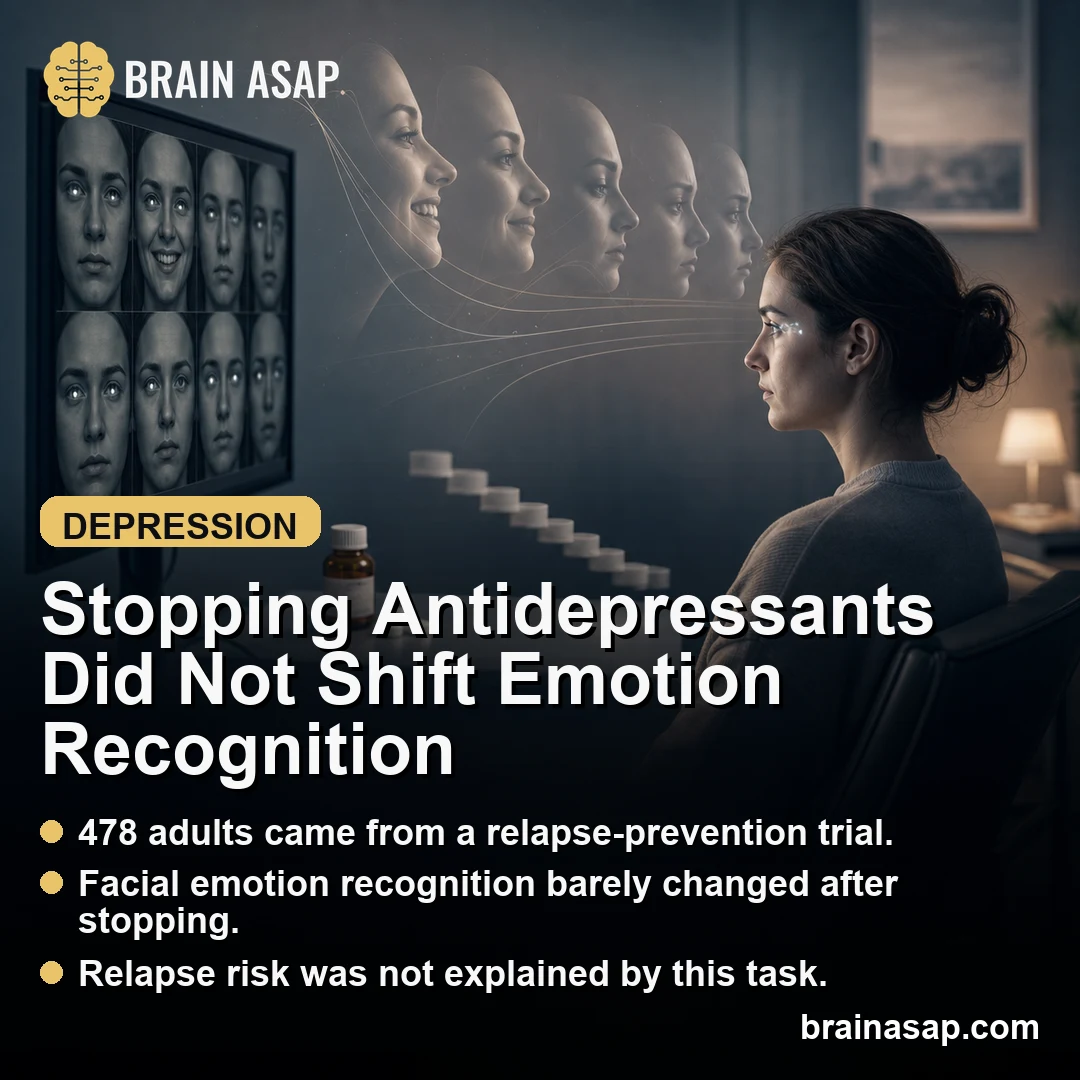
TL;DR: A 2026 study in Psychological Medicine found that stopping maintenance antidepressants did not meaningfully change facial emotion recognition over 12 or 52 weeks in adults with recurrent depression who were currently well. Key Findings Trial sample: The…
Read article ↗