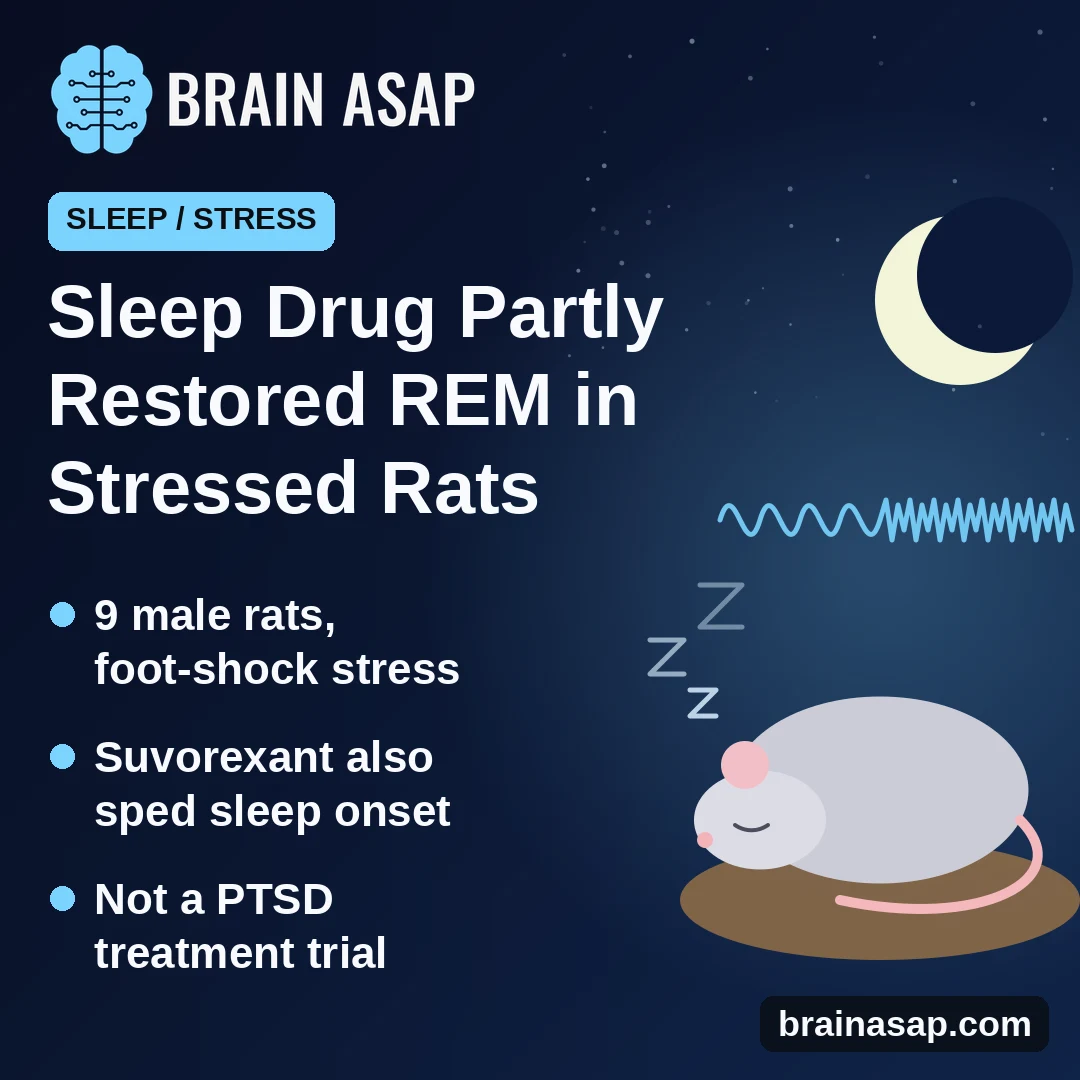
TL;DR: In rats stressed with mild foot shocks, REM sleep, the dream stage, dropped. The insomnia drug suvorexant and two related experimental drugs partly brought it back, and suvorexant also helped the rats fall asleep faster, but this was a small study in 9…
Read article ↗
TL;DR: A 2026 rat study in Hippocampus found that the dentate gyrus (DG), a hippocampal memory region, gained about 385,000 granule neurons from 2 to 18 months of age even though older development-born neurons were also being lost. Key Findings 385,000-cell ne…
Read article ↗
TL;DR: A study in Communications Biology found that environmental enrichment, richer housing with objects, running space, and novelty, reduced early-life-stress-linked visceral pain and depression-like behavior in rats while normalizing a CB1 receptor-sensitiv…
Read article ↗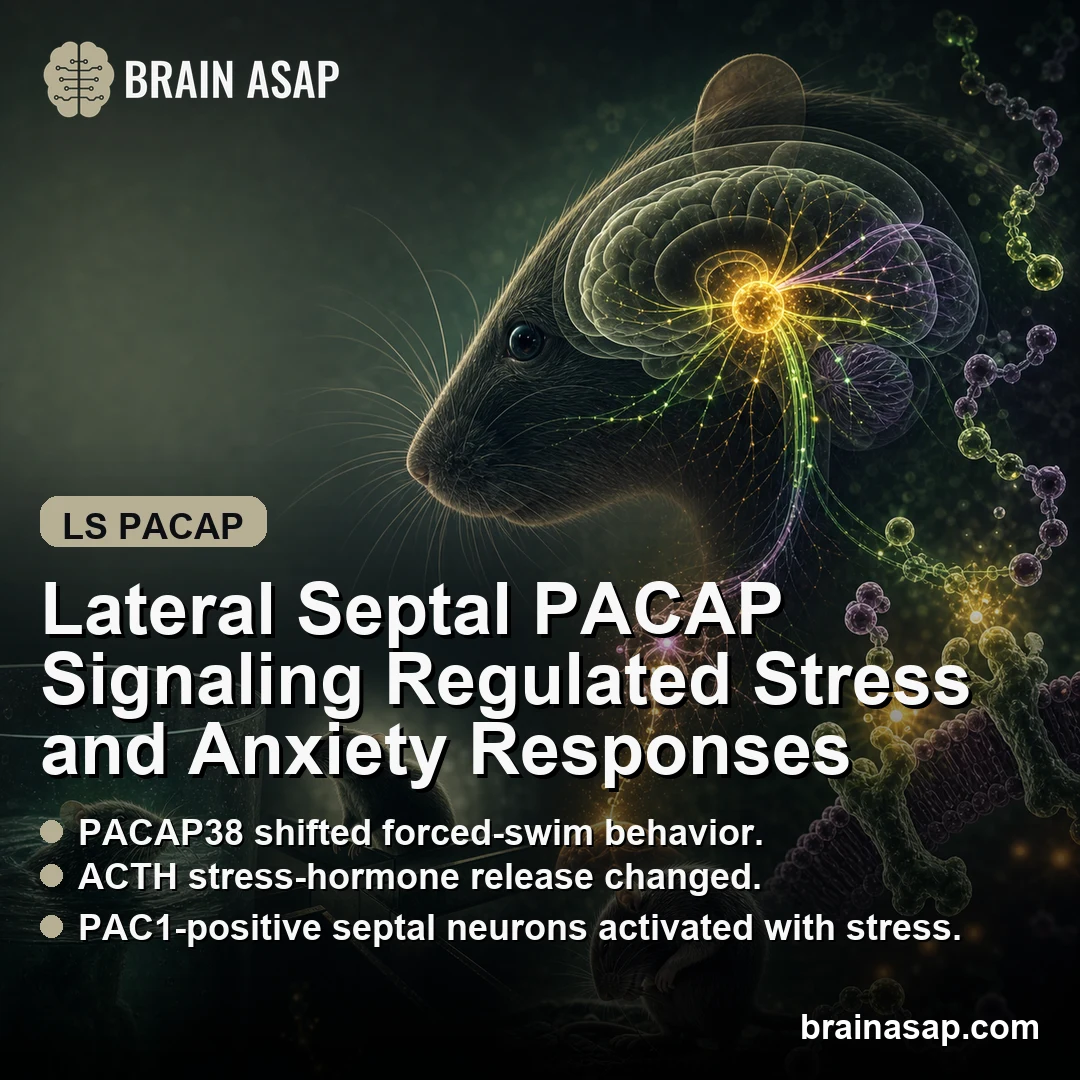
TL;DR: A 2026 rat study in Neuropsychopharmacology found that PACAP/PAC1 signaling in the lateral septum changed forced-swim coping, ACTH stress-hormone release, open-arm exploration, and grooming behavior. Key Findings Stress changed PACAP signals by brain re…
Read article ↗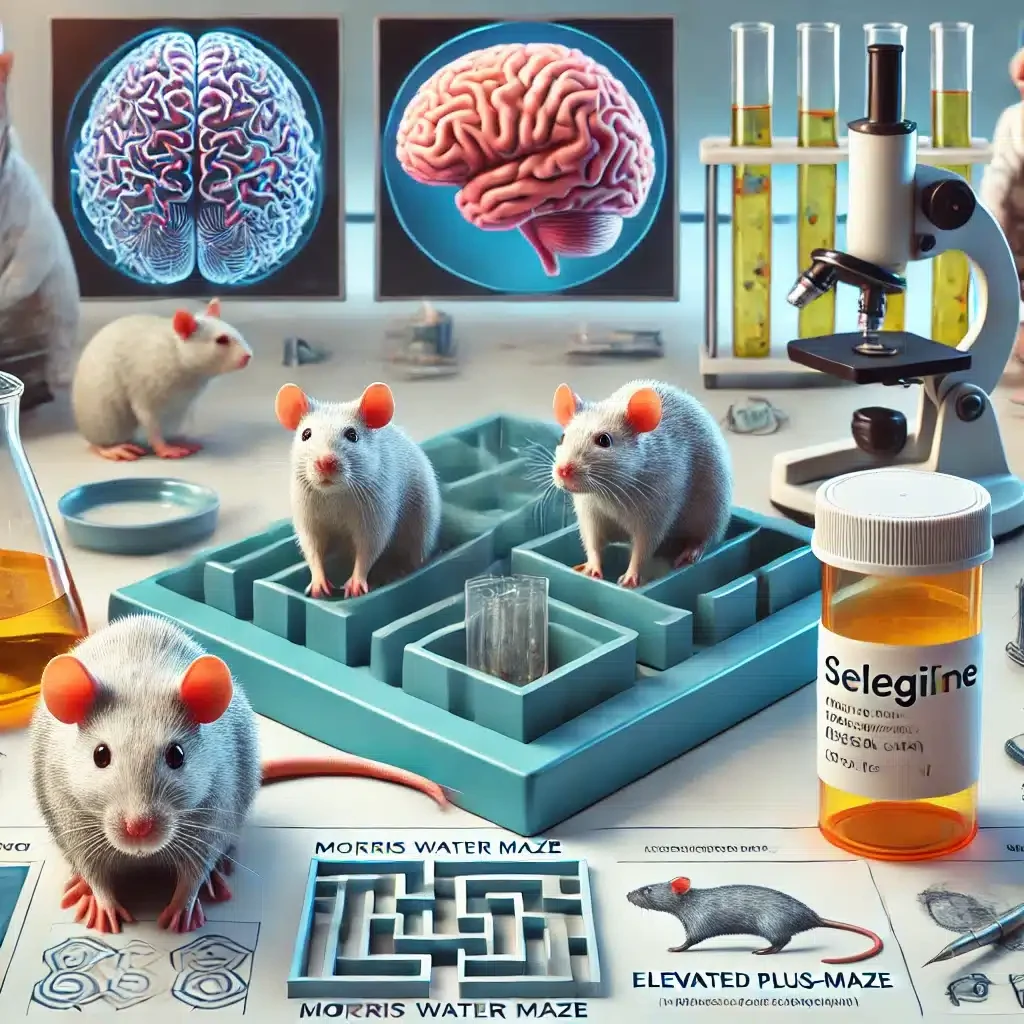
The study demonstrated that selegiline (SEL) improves memory performance, reduces anxiety, and modulates oxidative stress in an Alzheimer’s disease (AD) rat model. Highlights: Memory Improvements: SEL administration improved recognition memory, spatial memory,…
Read article ↗