TL;DR: Among 100 college students, those more distressed by unusual experiences like odd perceptions or suspicious thoughts made more jerky “catch-up” eye jumps while following a moving dot. The link was modest, and it was strongest when the dot briefly disapp…
Read article ↗
TL;DR: In a small pilot study, immune cells from people in an untreated schizophrenia episode made more of their energy by burning sugar than cells from healthy people or from patients stable on medication. There was no sign of higher inflammation in the blood…
Read article ↗
TL;DR: A meta-analysis pooling 63 studies and 265,079 people found that cannabis users had about twice the odds of committing violence as non-users (2.05 times in the general population, 2.49 times among psychiatric patients). The gap shrank to 1.17 times in s…
Read article ↗
TL;DR: A 2026 study in Nature Communications found that neuropsychiatric disorder risk did not map onto cognition as one general trait. Schizophrenia, bipolar disorder, ADHD, autism, and Alzheimer’s disease showed different genetic links with reaction time, fl…
Read article ↗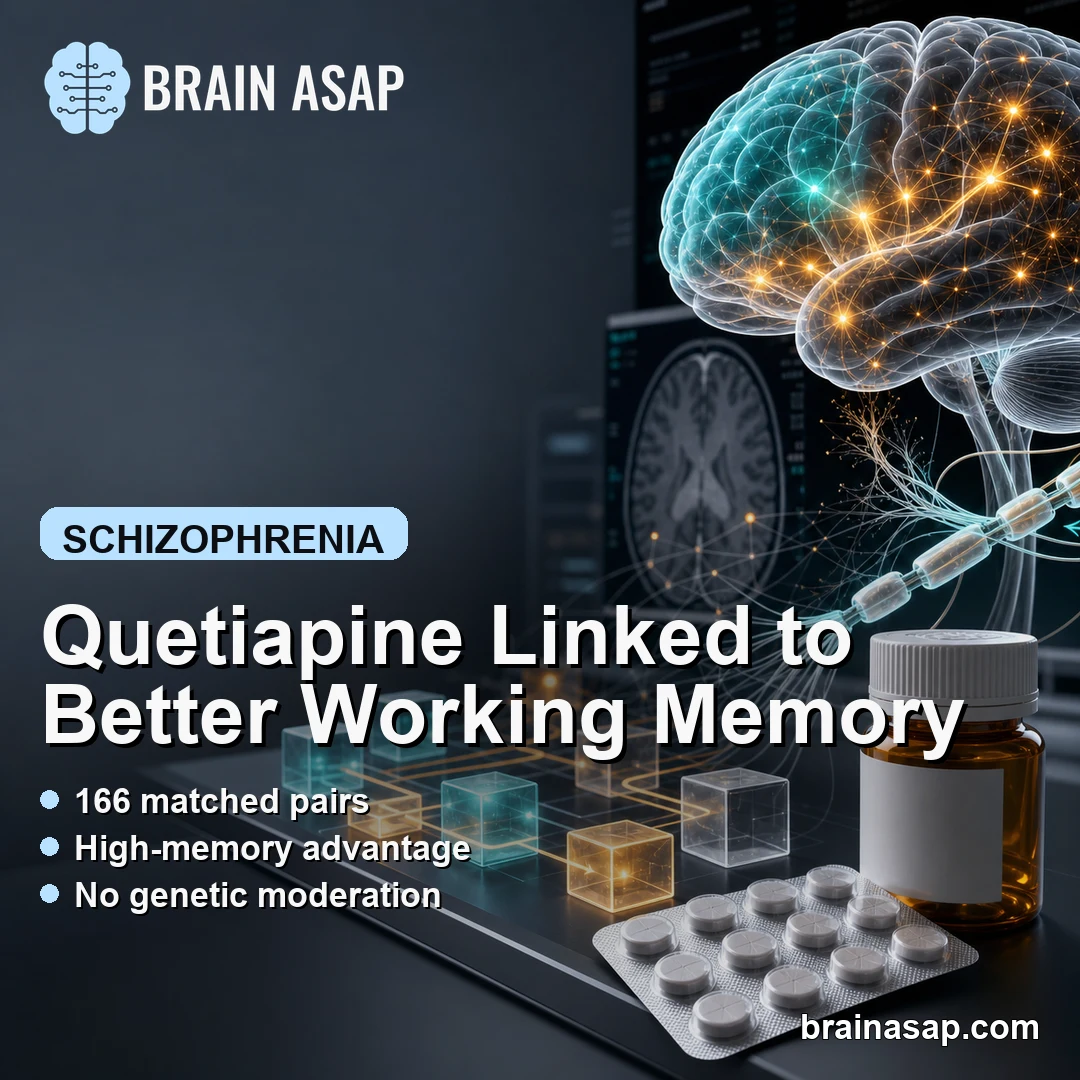
TL;DR: A 2026 study in European Archives of Psychiatry and Clinical Neuroscience linked sustained quetiapine treatment with better high-working-memory cognitive performance in schizophrenia spectrum disorder, but the genetic tests did not support the proposed…
Read article ↗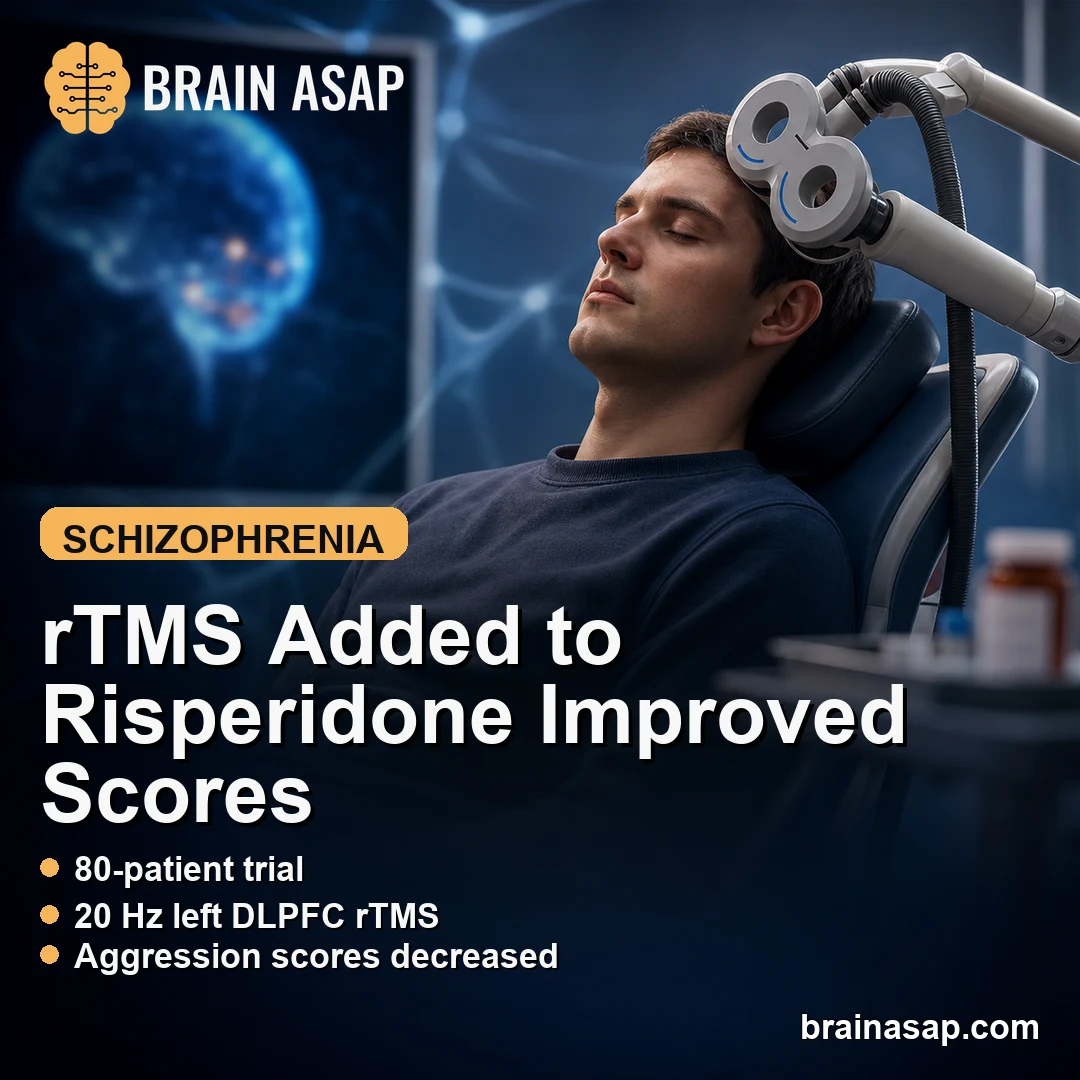
TL;DR: A 2026 randomized controlled study in Pakistan Journal of Pharmaceutical Sciences found that adding 20 Hz repetitive transcranial magnetic stimulation (rTMS) to risperidone was linked with lower cognitive-factor and aggression scores after 4 weeks in sc…
Read article ↗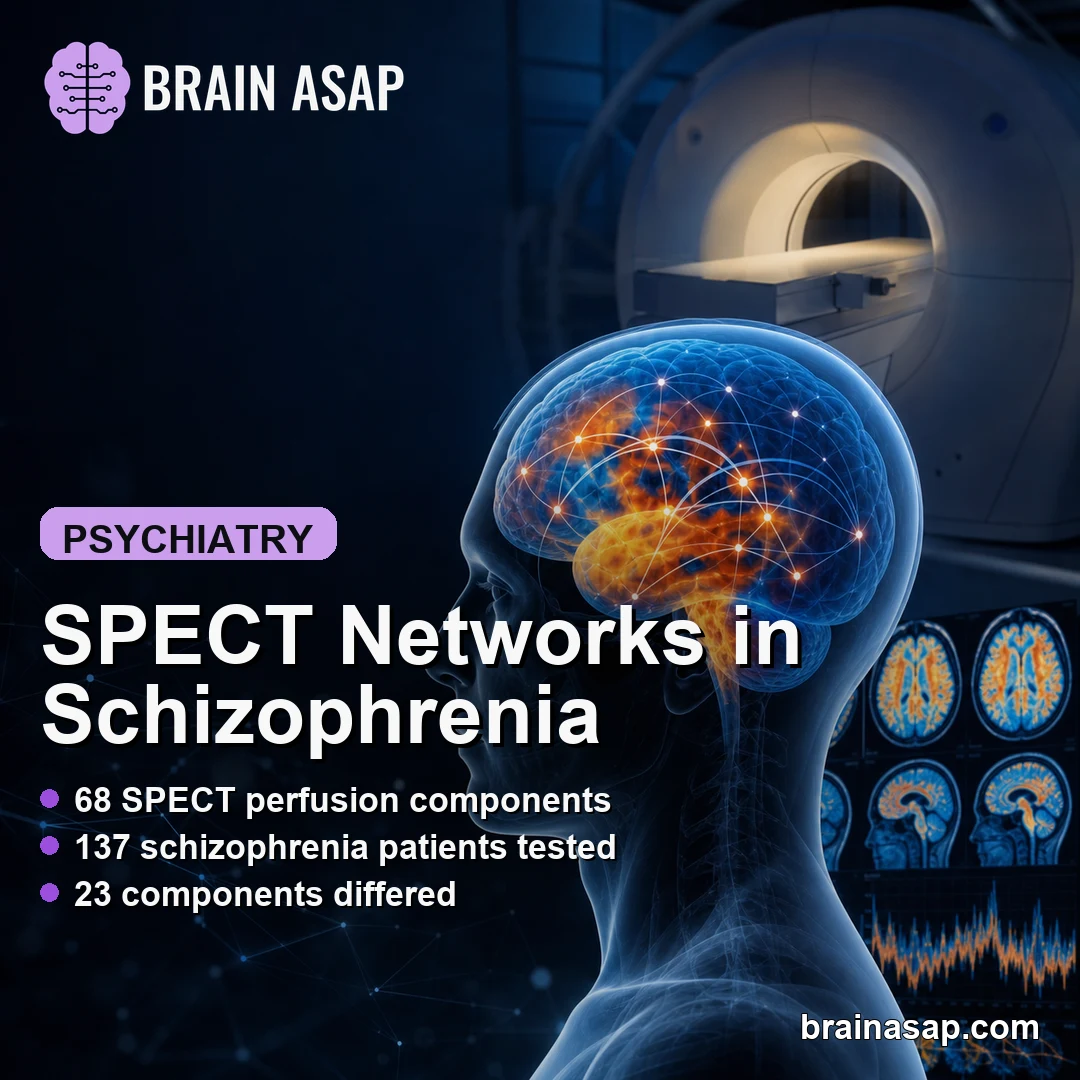
TL;DR: A 2026 medRxiv preprint introduced a 68-component NeuroMark template for single photon emission computed tomography (SPECT), a brain blood-flow imaging method, and found schizophrenia-related differences in cerebellar, subcortical, higher-cognition, vis…
Read article ↗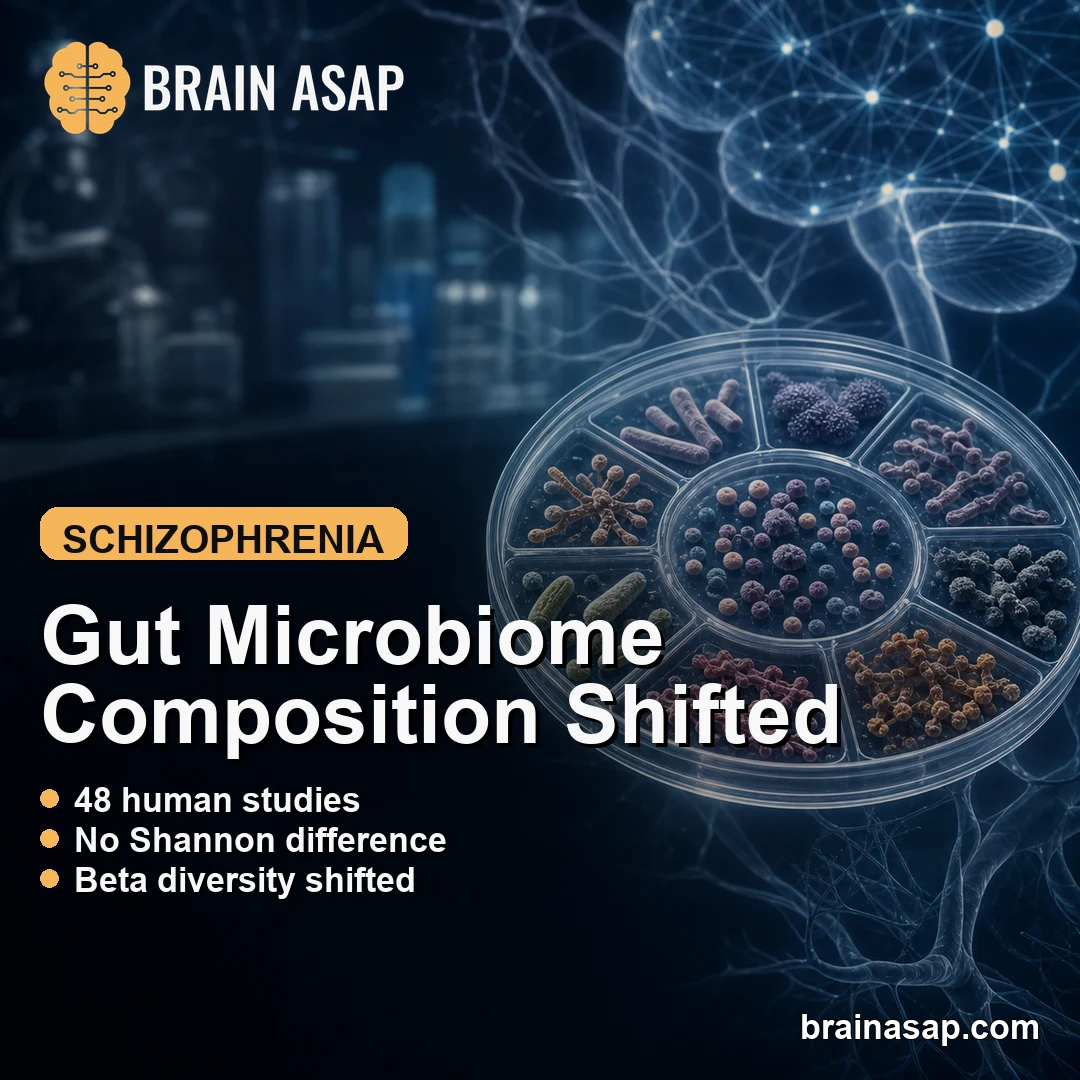
TL;DR: A 2026 systematic review and meta-analysis in International Journal of Molecular Sciences found no significant global gut-microbiome alpha-diversity difference in schizophrenia, but reported recurring community-composition and taxonomic shifts. Key Find…
Read article ↗
TL;DR: A 2026 preprint on medRxiv used multisite MRI data from 3,958 people with schizophrenia and 5,489 controls to map cortical network disruptions and identify two robust brain-structure subtypes. Key Findings 9,447 MRI participants: The analysis included 3…
Read article ↗
TL;DR: A 2026 systematic review in Molecular Psychiatry found that microglia-related findings across major depression, bipolar disorder, and schizophrenia were better explained by biological subgroups than by one uniform diagnosis-by-diagnosis inflammation pat…
Read article ↗