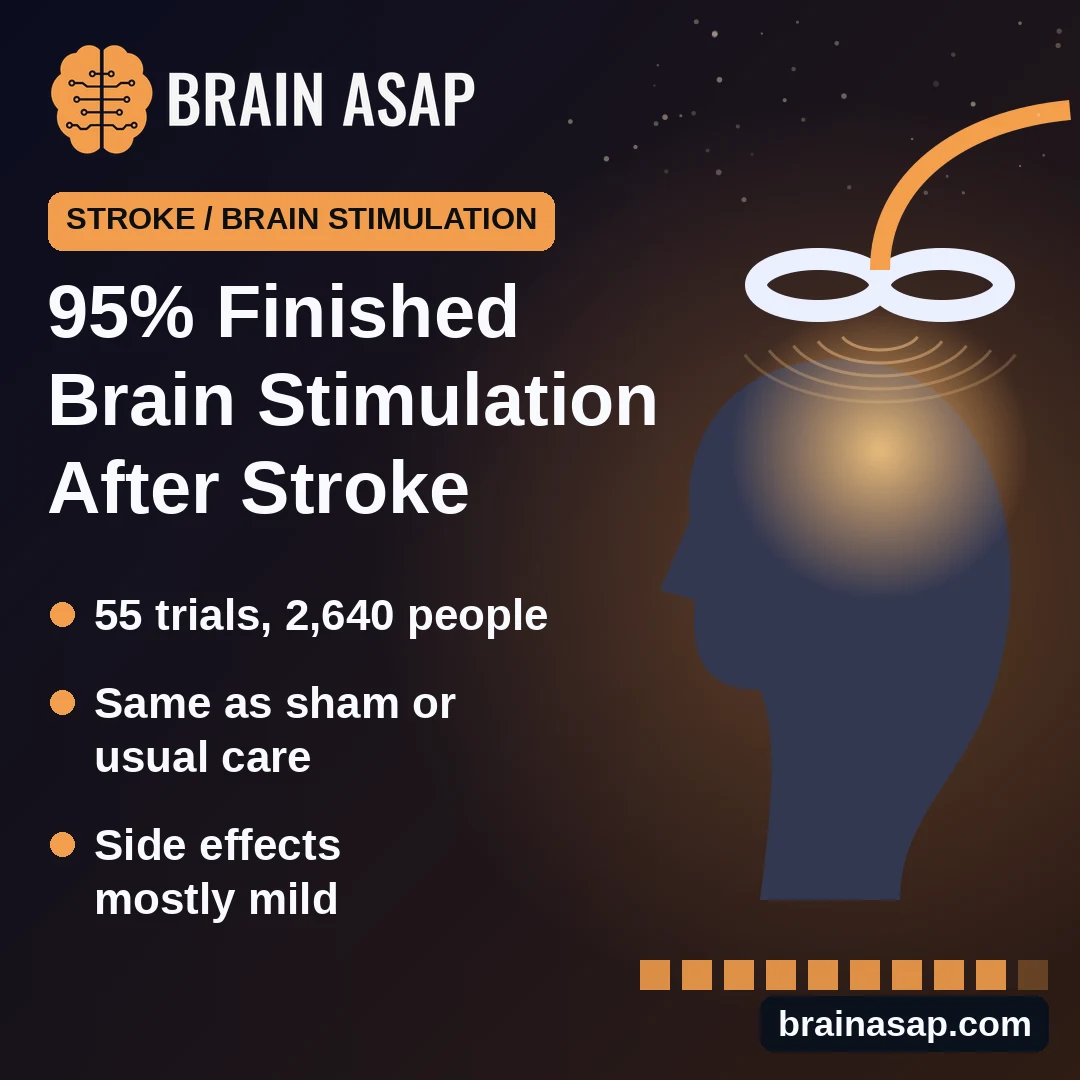
TL;DR: Across 55 trials of brain stimulation for arm recovery after stroke, about 95% of people finished treatment, the same share as those given fake stimulation or usual care. Side effects were mostly mild headaches and skin tingling. Key Findings 55 trials,…
Read article ↗
TL;DR: A 2026 study in Cognitive, Affective, & Behavioral Neuroscience found that visual working memory, the short-term holding of visual details, still showed a strong cardinal-versus-diagonal orientation bias under distraction, while transcranial direct curr…
Read article ↗
TL;DR: A 2026 study in Psychological Medicine found that transcranial direct current stimulation (tDCS), a weak electrical brain-stimulation method, affected empathy differently depending on whether researchers targeted the right temporoparietal junction or th…
Read article ↗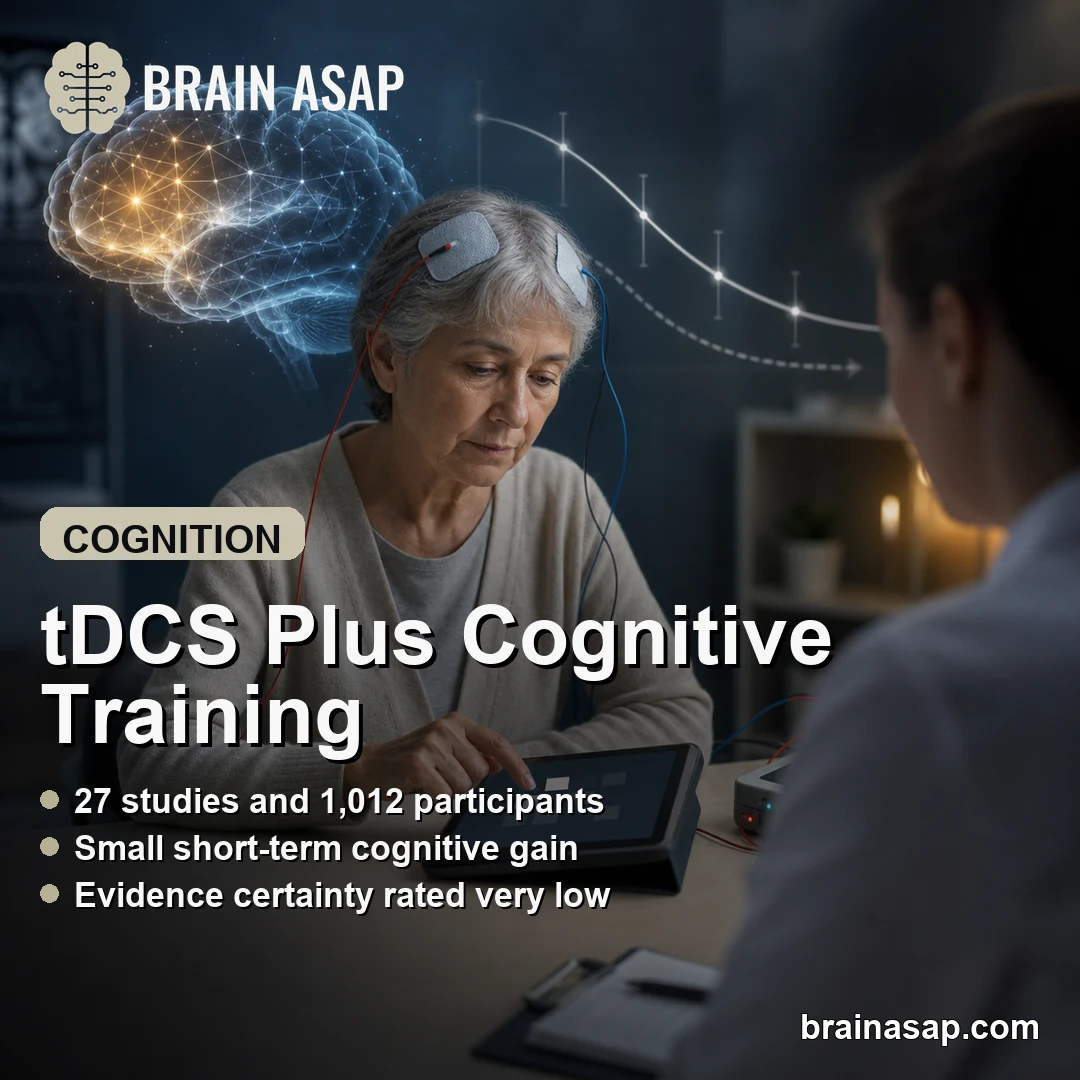
TL;DR: A 2026 systematic review posted on medRxiv found that transcranial direct current stimulation (tDCS), a weak noninvasive brain-stimulation method, added to cognitive training produced a small short-term cognitive benefit across 27 trials, but the effect…
Read article ↗
TL;DR: A 2026 sham-controlled study in BMC Psychiatry found that one 15-minute session of 1.5 mA anodal transcranial direct current stimulation (tDCS) over the right dorsolateral prefrontal cortex did not improve visuospatial or verbal working memory in clinic…
Read article ↗
TL;DR: A 2026 preprint on medRxiv used resting-state functional MRI (fMRI), a brain-connectivity scan taken while people are not doing a task, to divide older adults at Alzheimer’s risk into anxiety biotypes that responded differently to frontal-lobe tDCS stim…
Read article ↗
TL;DR: A 2026 study in Journal of Medical Case Reports described a 71-year-old breast-cancer survivor whose Montreal Cognitive Assessment (MoCA), a cognitive screening test, increased from 16 to 20 and whose 15-item Geriatric Depression Scale (GDS-15), a depre…
Read article ↗
Transcranial direct current stimulation (tDCS) targeting the left dorsolateral prefrontal cortex (DLPFC) at 2-mA intensity effectively alleviates depressive symptoms and shows promise in reducing anxiety symptoms across various clinical conditions. Highlights:…
Read article ↗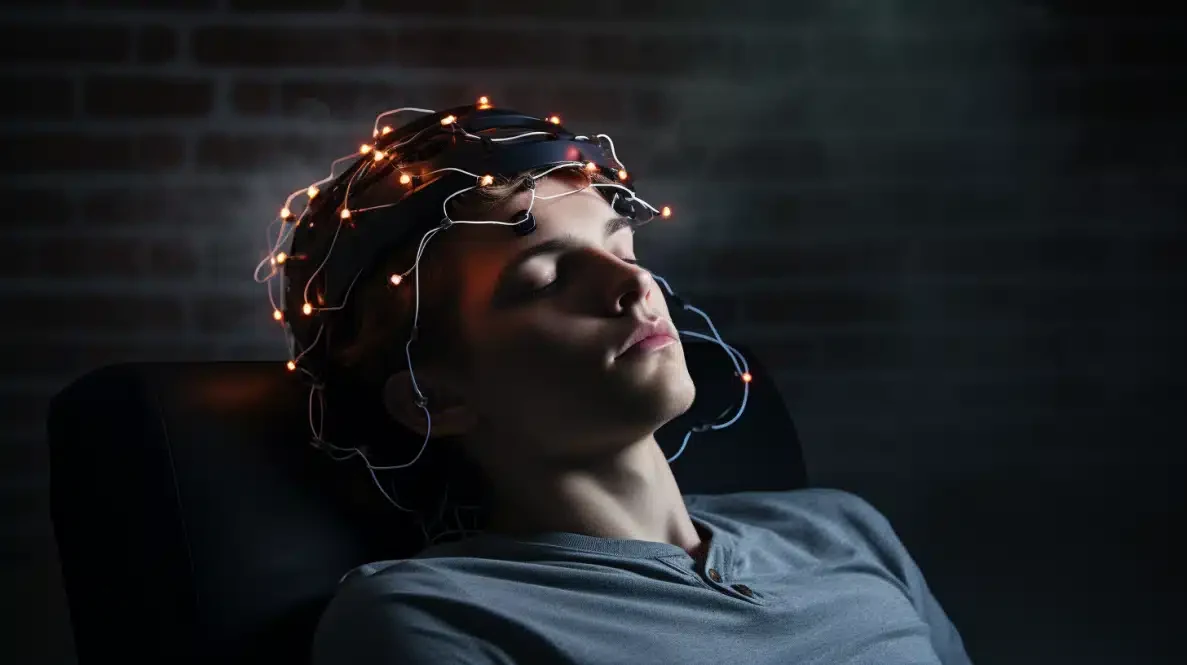
An innovative study aims to assess the feasibility of patients self-managing transcranial direct current stimulation (tDCS) therapy for depression at home. This digitally-supported model could greatly expand access if proven safe, reliable and effective. Key F…
Read article ↗
A new case study provides initial evidence that transcranial direct current stimulation (tDCS) may be an effective treatment option for trichotillomania, also known as hair pulling disorder. The study tested an intensified, repeated tDCS protocol targeting the…
Read article ↗