TL;DR: A 2026 randomized study in Psychological Medicine reported that 7–10 days of prucalopride improved word-learning recall and working-memory response speed versus placebo in adults with remitted recurrent depression, but the 49-person analysis did not tes…
Read article ↗
TL;DR: A 2026 study in European Archives of Psychiatry and Clinical Neuroscience linked sustained quetiapine treatment with better high-working-memory cognitive performance in schizophrenia spectrum disorder, but the genetic tests did not support the proposed…
Read article ↗
TL;DR: A 2026 Neuropsychopharmacology study of 11,036 ABCD participants found youth who initiated cannabis use showed flatter cognitive-development trajectories from ages 9 to 17, with hair-detected THC linked to worse episodic-memory change. Key Findings 11,0…
Read article ↗
TL;DR: A 2026 preprint posted to medRxiv found that adults with migraine had worse brain fog, more task forgetting, and slower smartphone cognitive-test performance on headache days, suggesting that migraine-related cognitive symptoms can be measured in daily…
Read article ↗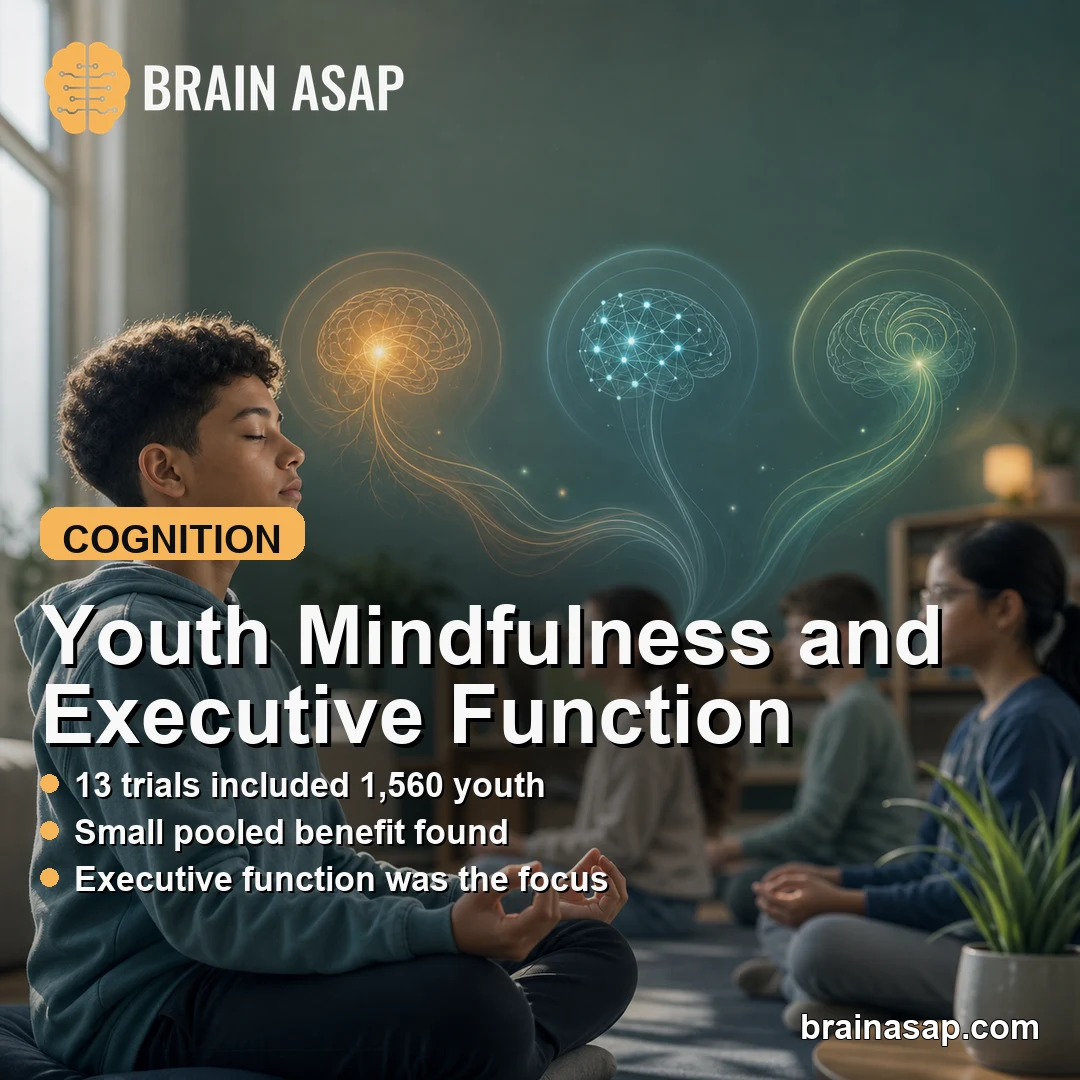
TL;DR: A 2026 systematic review and meta-analysis posted as a medRxiv preprint found that mindfulness-based programs were linked to a small improvement in executive function, meaning inhibition, working memory, and flexible thinking, across 13 youth trials. Ke…
Read article ↗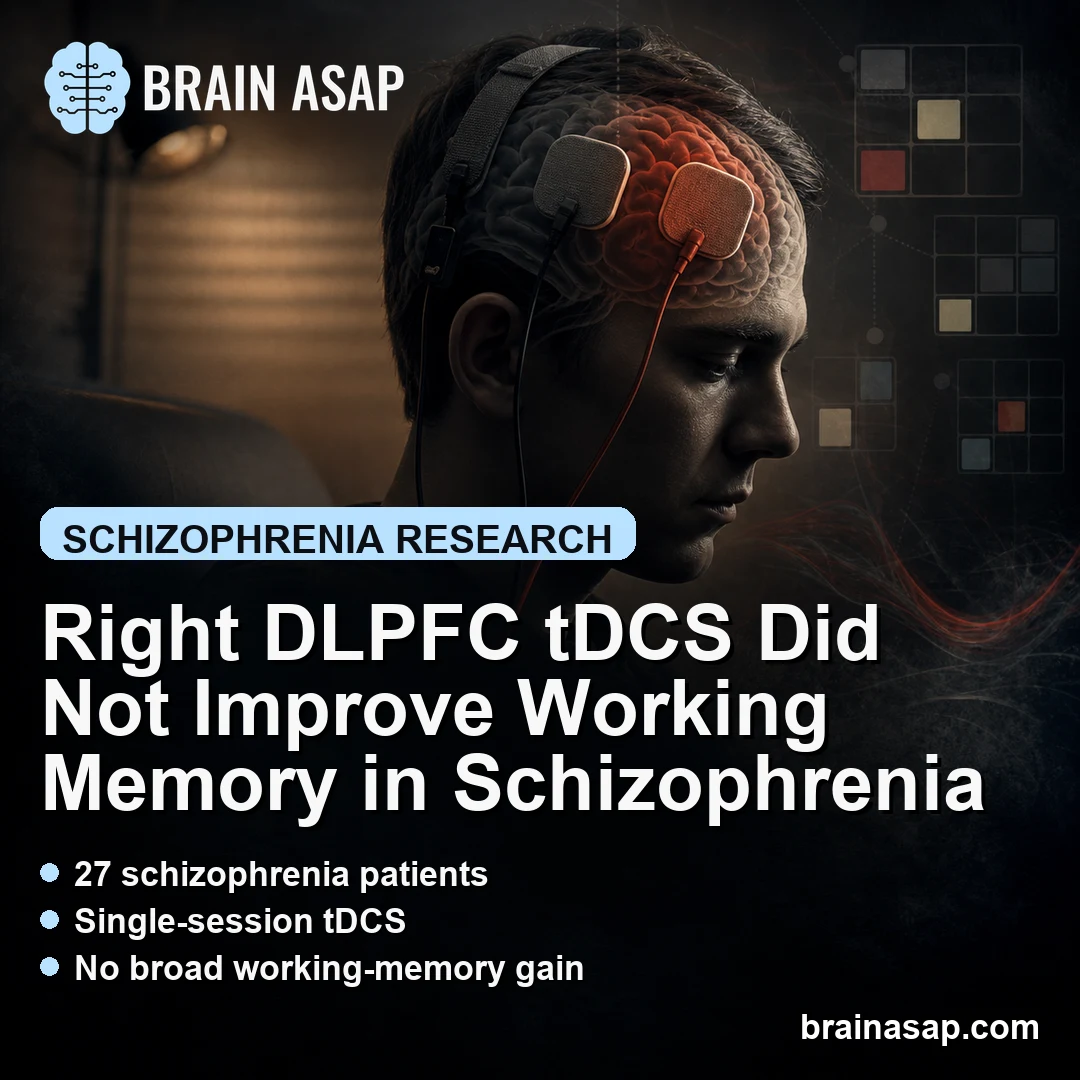
TL;DR: A 2026 sham-controlled study in BMC Psychiatry found that one 15-minute session of 1.5 mA anodal transcranial direct current stimulation (tDCS) over the right dorsolateral prefrontal cortex did not improve visuospatial or verbal working memory in clinic…
Read article ↗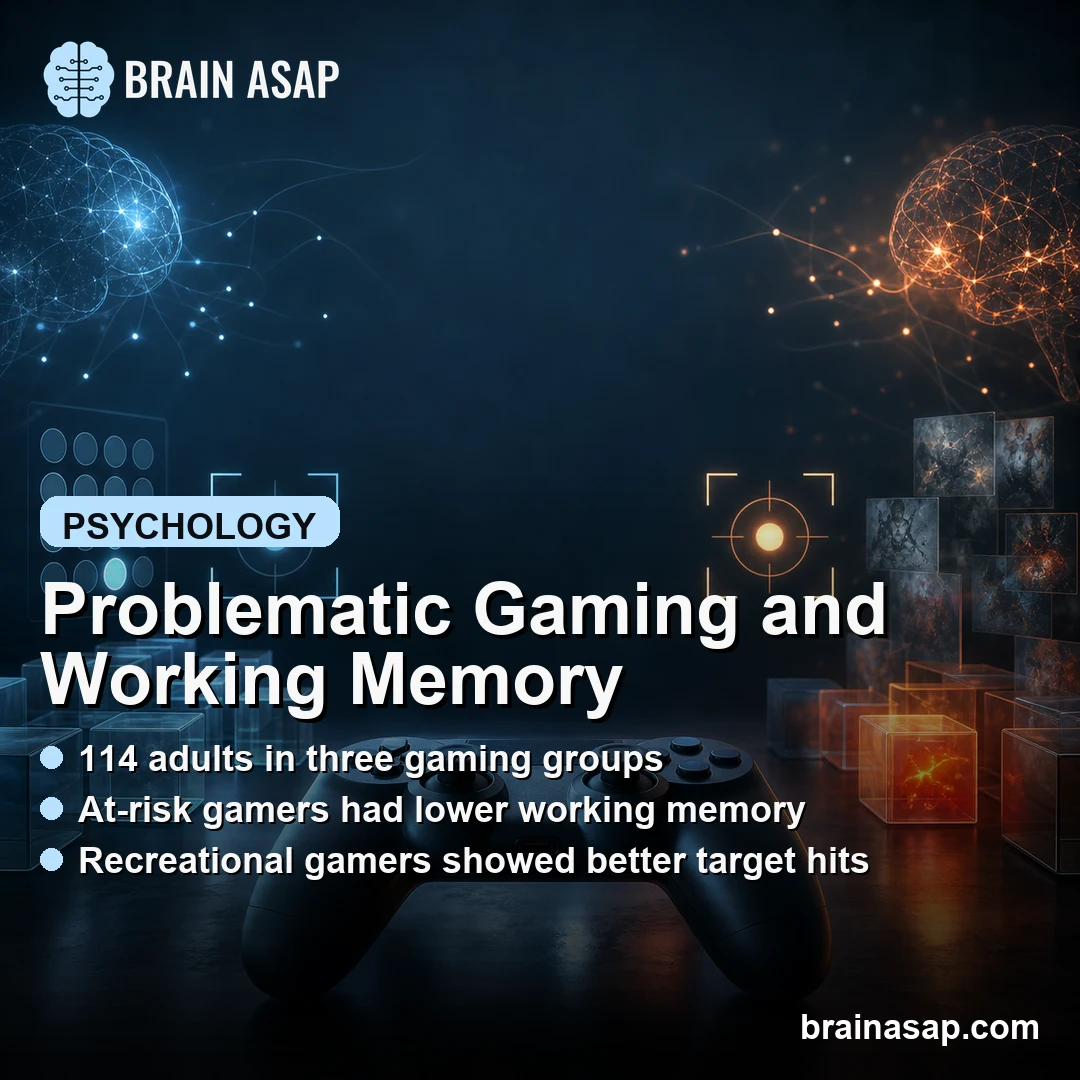
TL;DR: A 2025 study in Computers in Human Behavior linked at-risk problematic gaming to weaker basic working memory, while recreational gaming was linked to better target detection on an attention-control task. Key Findings Three gaming groups: Researchers com…
Read article ↗
Hypertension in older adults leads to poorer cognitive and walking performance due to the need for more brain resources to manage dual tasks. Highlights: Older adults with hypertension show higher brain activation in motor and sensory areas when performing dua…
Read article ↗
A new study published in PLOS One investigated whether adaptive dual n-back working memory training could enhance cognition in healthy adults aged 30-60. The randomized controlled trial found that 5 weeks of daily home-based dual n-back training did not improv…
Read article ↗
Working memory training has been shown to provide widespread cognitive benefits, but how exactly does it change our brains? New research reveals that a demanding “dual n-back” training program alters functional connectivity even during rest, shedding light on…
Read article ↗