TL;DR: A 2026 review in the Journal of Neuroinflammation argued that several parasitic infections may affect behavior and cognition through converging microbiota, immune, barrier, and glial pathways.
Key Findings
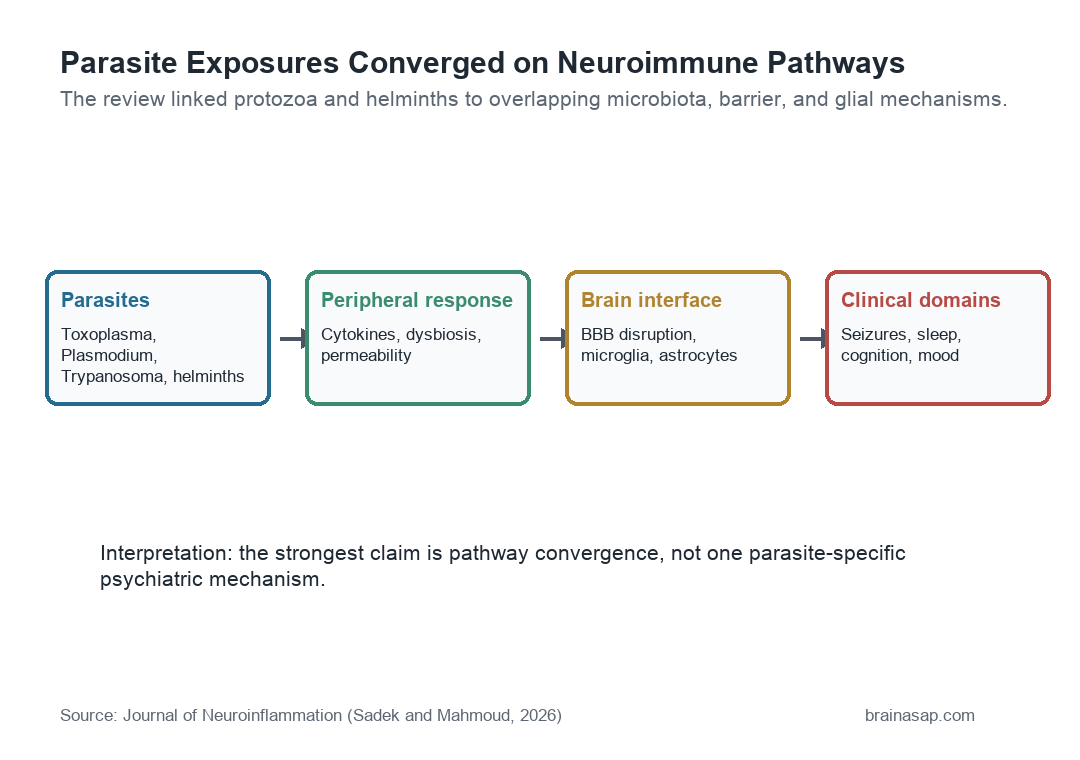
- Protozoa and helminths reviewed: The review covered neurotropic parasites such as Toxoplasma gondii, Plasmodium species, and Trypanosoma species, plus intestinal and tissue helminths.
- Five shared pathways: The model emphasized cytokine production, gut dysbiosis, intestinal permeability, blood-brain barrier dysfunction, and glial activation.
- Neurochemical systems: The review highlighted dopamine, serotonin, GABA-related signaling, tryptophan catabolism, epigenetic changes, and microRNA changes as possible downstream routes.
- Clinical domains: Reported consequences included seizures, sleep disturbance, cognitive impairment, mood and anxiety symptoms, and context-specific psychosis-like phenotypes.
- Evidence strength varied: Neurocysticercosis and cerebral malaria have stronger neurological evidence, while some mood and dopamine claims remain mixed or indirect.
Source: Journal of Neuroinflammation (2026) | Sadek and Mahmoud
Parasite-linked neuroinflammation is not one disease pathway. The 2026 review by Sadek and Mahmoud grouped several infections by shared routes from peripheral infection to altered brain function.
The core idea is convergence. Different parasites start in different tissues, but chronic immune activation, microbiota disturbance, barrier disruption, and glial activation can all push the nervous system toward similar stress states.
Parasites Can Reach the Brain Directly or Through Immune Signaling
The review separated direct neurotropism from indirect immune-to-brain signaling. Some infections can involve the central nervous system directly, while others may influence brain function through peripheral inflammation and gut-brain communication.
That distinction is clinically useful because a seizure disorder from neurocysticercosis is not the same as low mood after chronic sleep disruption or gut inflammation. Both can involve parasites, but the evidence and mechanisms are different.
- Direct involvement: Taenia solium neurocysticercosis can cause seizures and focal neurological symptoms when cysticerci affect the brain.
- Systemic inflammation: Chronic infections can raise cytokines such as IL-1 beta, IL-6, and TNF-alpha.
- Gut-brain route: Parasite-related dysbiosis may reduce short-chain fatty acids and alter tryptophan or serotonin-related signals.
The review’s strongest framing is not that every parasite produces the same psychiatric syndrome. It is that several infections can stress the same neuroimmune interfaces.
The review also separated organism-specific examples. Toxoplasma gondii was discussed mainly through immune, cyst, and neurotransmitter hypotheses.
Taenia solium was discussed through neurocysticercosis, where brain lesions and inflammation are directly relevant to seizures.
Microglia, Astrocytes, and the Blood-Brain Barrier Were Central Nodes
The review repeatedly returned to microglia, astrocytes, and blood-brain barrier function. These systems sit between peripheral immune activity and changes in brain circuits.
When peripheral cytokines persist, endothelial cells and immune cells can change how signals cross into the nervous system. Inside the brain, microglia and astrocytes may amplify inflammatory signaling, alter synaptic support, and affect neurotransmitter balance.
- Cytokine pressure: Sustained IL-1 beta, IL-6, TNF-alpha, and interferon-related signaling can change neural support environments.
- Barrier disruption: Intestinal and blood-brain barrier permeability can increase immune traffic and inflammatory signaling.
- Glial response: Activated microglia and astrocytes can contribute to seizure risk, cognitive symptoms, and mood-related circuit changes.
Seizures, Sleep, Cognition, and Mood Had Different Evidence Levels
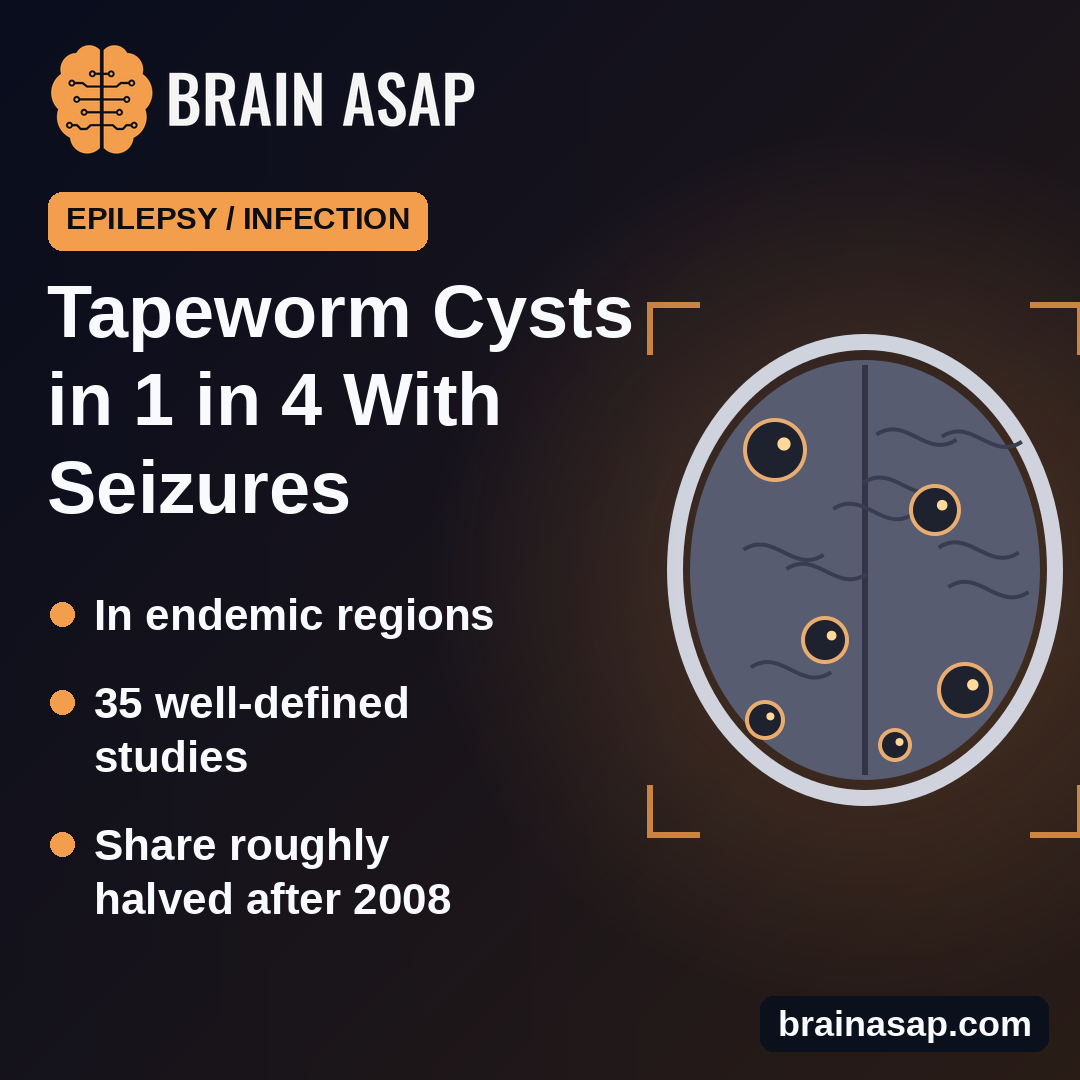
Some parasite-brain links are well established. Neurocysticercosis, caused by larval Taenia solium infection in the nervous system, is a major cause of acquired epilepsy in endemic regions.
Other links are more conditional. Cerebral malaria can leave persistent cognitive or behavioral deficits, especially when seizures, inflammation, and hypoxic injury occur during acute disease.
African trypanosomiasis is strongly tied to sleep-wake disruption after central nervous system involvement. Enterobius effects may be driven more by sleep fragmentation from itching than by direct neural invasion.
- Toxoplasma gondii: Associations with mood, anxiety, and psychosis-like outcomes exist, but dopamine-related claims are mixed and should not be treated as settled.
- Enterobius vermicularis: Behavioral effects may be mediated through itching and sleep fragmentation more than direct brain invasion.
- Schistosoma species: Cognitive and mood findings may reflect chronic inflammation, anemia, hepatic disease, socioeconomic context, and possible neuroimmune effects.
The evidence hierarchy prevents overclaiming. “Parasites cause depression” is too broad; the review points to mechanisms that are stronger in some infections and weaker in others.
That caution especially applies to dopamine claims around Toxoplasma. The review noted dopamine-related findings, but it also warned that a uniform dopamine-elevation mechanism is not settled across studies.
Host-Directed Treatments Would Need Better Biomarkers
The review proposed that shared neuroinflammatory nodes might become treatment targets, but it did not claim that anti-inflammatory or microbiome-directed therapies are ready for routine use.
Better biomarkers would be needed first. Researchers would have to connect parasite exposure, inflammatory markers, gut microbiome changes, barrier measures, neuroimaging or neurocognitive outcomes, and symptom trajectories in the same people over time.
Longitudinal designs would also help separate acute infection effects from long-term sequelae. Without timing, it is difficult to know whether a mood, sleep, or cognitive finding reflects active infection, prior injury, socioeconomic context, treatment effects, or another health burden.
- Biomarker need: Cytokines, glial markers, gut metabolites, and barrier markers could help separate mechanisms.
- Clinical need: Standardized cognitive, sleep, mood, and seizure outcomes would make studies easier to compare.
- Public-health need: In endemic regions, mental health and cognitive support should sit alongside infection control.
The review’s practical message is cautious. Parasitic infection can be part of a neuropsychiatric pathway, but the route depends on the organism, host context, disease stage, and the specific brain or behavior outcome being measured.
Citation: DOI: 10.1186/s12974-026-03804-4. Sadek and Mahmoud. From parasite-induced immune activation to neuroinflammation and behavioral dysfunction: convergent mechanisms across protozoa and helminths: a review. Journal of Neuroinflammation. 2026;23:129.
Study Design: Narrative mechanistic review of protozoan and helminth infection pathways linking immune activation, microbiota changes, neuroinflammation, and behavior.
Sample/Model: Human, animal, and mechanistic evidence across selected parasitic infections, including Toxoplasma, Plasmodium, Trypanosoma, Taenia, Schistosoma, Toxocara, and Enterobius.
Key Statistic: The review organized evidence around five convergent pathways: cytokine production, gut dysbiosis, intestinal permeability, blood-brain barrier dysfunction, and glial activation.
Caveat: Evidence strength differs by parasite and outcome, and many psychiatric or neurotransmitter claims remain associative or mechanistically incomplete.