TL;DR: A 2026 medRxiv preprint applied ChatGPT-4o-assisted Bayesian-frequentist hybrid inference to Alzheimer’s single-nucleus RNA-seq data and identified gamma-secretase and HP1 transcription pathways that a no-evidence frequentist setting did not recover. Ke…
Read article ↗
TL;DR: A 2026 preprint in medRxiv found that under-mattress sleep sensors associated lower nighttime respiratory rate and more unstable nighttime movement with higher odds of next-day agitation in dementia, while the same features did not predict how severe ag…
Read article ↗
TL;DR: A 2026 preprint on medRxiv used resting-state functional MRI (fMRI), a brain-connectivity scan taken while people are not doing a task, to divide older adults at Alzheimer’s risk into anxiety biotypes that responded differently to frontal-lobe tDCS stim…
Read article ↗
TL;DR: A 2026 mouse study in iScience found that blocking Itch, an E3 ubiquitin ligase involved in protein tagging, improved several memory-test readouts in an Alzheimer’s disease mouse model and reduced neuronal apoptosis, including when researchers used the…
Read article ↗
TL;DR: A 2026 study in Glia used human single-nucleus RNA sequencing datasets and mouse validation to identify a shared neurodegeneration-linked microglial transcription program, highlighting SPP1 as a disease-associated microglia marker. Key Findings Five dis…
Read article ↗
TL;DR: A 2026 medRxiv preprint linked higher blood inflammatory markers with diffusion MRI signs of altered white-matter microstructure in 457 dementia-free middle-aged and older adults, especially for a combined cytokine score and orientation dispersion index…
Read article ↗
TL;DR: A 2026 medRxiv preprint used total-body tau PET in Alzheimer’s disease and found stronger brain-organ network synchrony, a pattern that tracked cognitive impairment through cortical tau burden and MRI markers of glymphatic dysfunction. Key Findings Smal…
Read article ↗
TL;DR: A 2026 Nature Communications paper found that late-stage amyloid beta plaques in APP23 mice recruited CD8 T cells with a type I interferon program, linking Alzheimer-like amyloid pathology to a more adaptive immune response around plaques. Key Findings…
Read article ↗
TL;DR: A 2026 mouse study in Proceedings of the National Academy of Sciences found that deleting or inhibiting PTP1B improved memory behavior, reduced amyloid-beta burden, and pushed microglia toward an amyloid-clearing state. Key Findings Memory behavior impr…
Read article ↗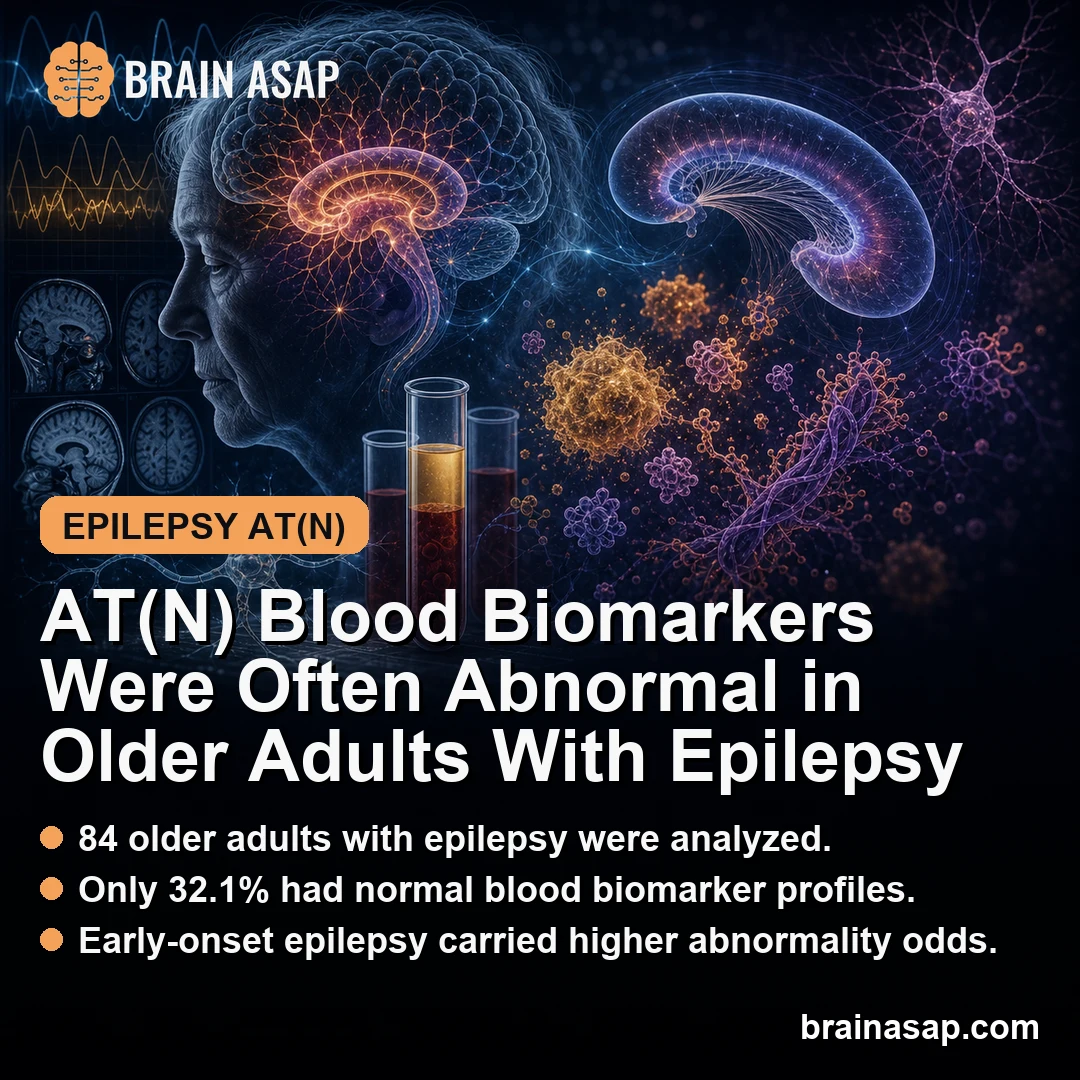
TL;DR: A 2026 medRxiv preprint applied the AT(N) framework, an Alzheimer’s disease biomarker system for amyloid, tau, and neurodegeneration, to 84 older adults with focal epilepsy and found that only 32.1% had normal blood biomarkers, while early-onset epileps…
Read article ↗