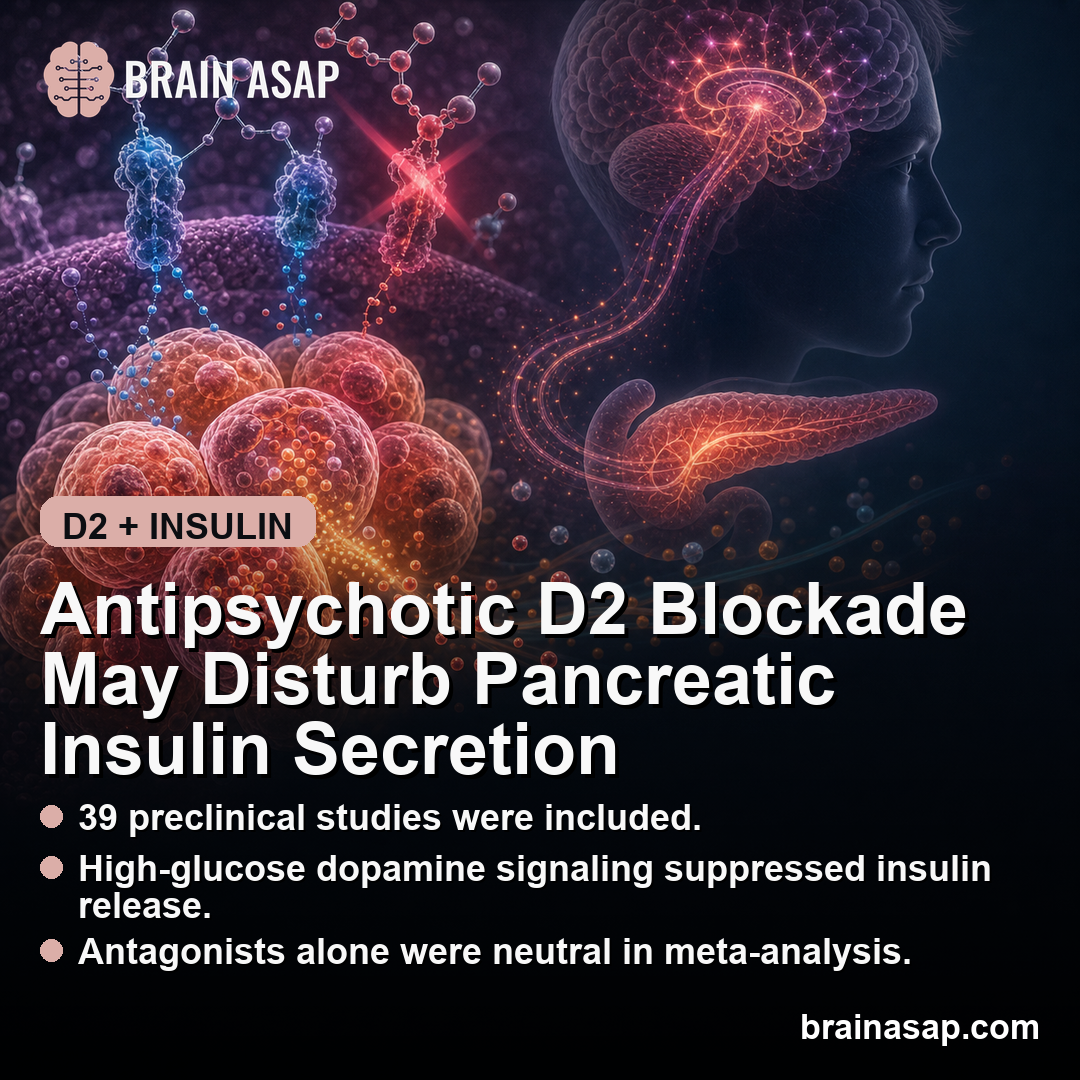
Antipsychotic D2 Blockade May Disturb Pancreatic Insulin Secretion

Antipsychotic D2 Blockade May Disturb Pancreatic Insulin Secretion

TL;DR: A 2026 systematic review and meta-analysis in Neuropsychopharmacology found that dopamine D2-like receptor activation suppressed glucose-stimulated insulin secretion (GSIS), insulin release after high glucose, in animal pancreatic cells, suggesting one peripheral route by which antipsychotic dopamine blockade can disturb glucose control beyond weight gain. Key Findings 39 eligible studies: Researchers screened 12,457 citations and …

Read more

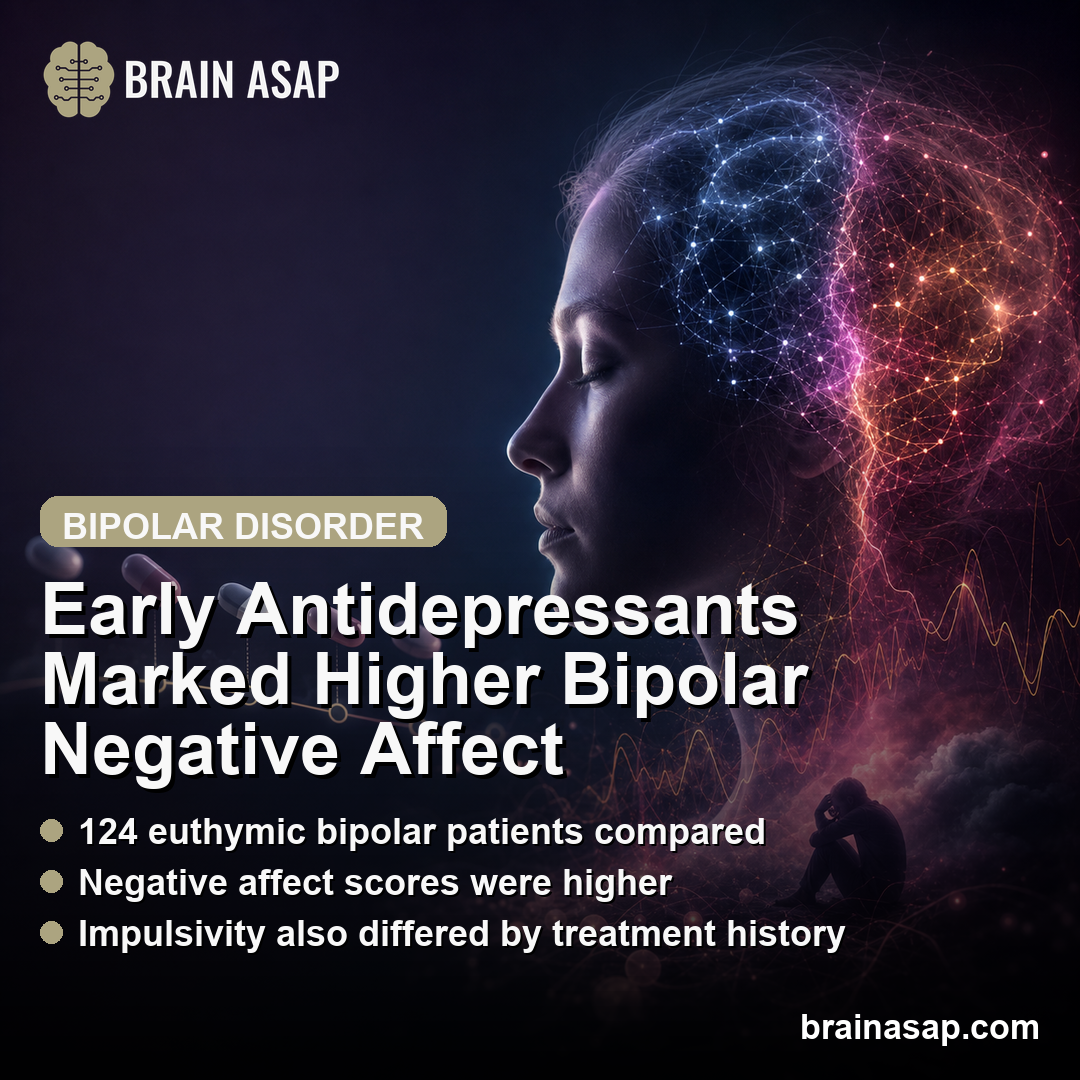
Early Antidepressant Treatment Linked to Higher Negative Affect and Impulsivity in Bipolar Euthymia

Early Antidepressant Treatment Linked to Higher Negative Affect and Impulsivity in Bipolar Euthymia

TL;DR: A 2026 cross-sectional study in PLOS One found that euthymic bipolar disorder patients with early systematic antidepressant treatment had higher negative affect and higher attentional, non-planning, and total impulsivity scores than matched patients without that early antidepressant history. Key Findings 124 bipolar patients studied: Researchers compared 62 patients with early systematic antidepressant treatment and …

Read more

Neurobiology of Bipolar Disorder: Genetic & Brain Imaging Links

Bipolar disorder, formerly known as manic depression, is a chronic mental illness characterized by dramatic shifts in mood and energy levels. It affects about 2-4% of the population worldwide. While we still don’t fully understand what causes bipolar disorder, research over the past couple decades has uncovered important clues into the biological mechanisms behind this …

Read more

Bipolar Mania & Brain Activation: Right Ventral PFC & Limbic Dysfunction

Mania is characterized by emotional dysregulation, sleep disturbances, and impaired judgment. Understanding its underlying brain circuitry could lead to improved diagnosis and treatment. Key Facts: Mania involves decreased activity in the right ventral prefrontal cortex (PFC) and increased activity in the left amygdala, left anterior cingulate cortex (ACC), and left basal ganglia. This lateralized limbic …

Read more

Antidepressants & Mania in Bipolar Disorder: 5-HTTPLR Gene Impacts Risk

Bipolar disorder is a mental illness characterized by extreme mood swings between depression and mania. While antidepressants are commonly prescribed to treat the depressive symptoms, they can also trigger manic episodes in some patients. New research suggests having a certain gene may increase this risk. Key Facts: Antidepressants can cause manic episodes, called treatment emergent …

Read more