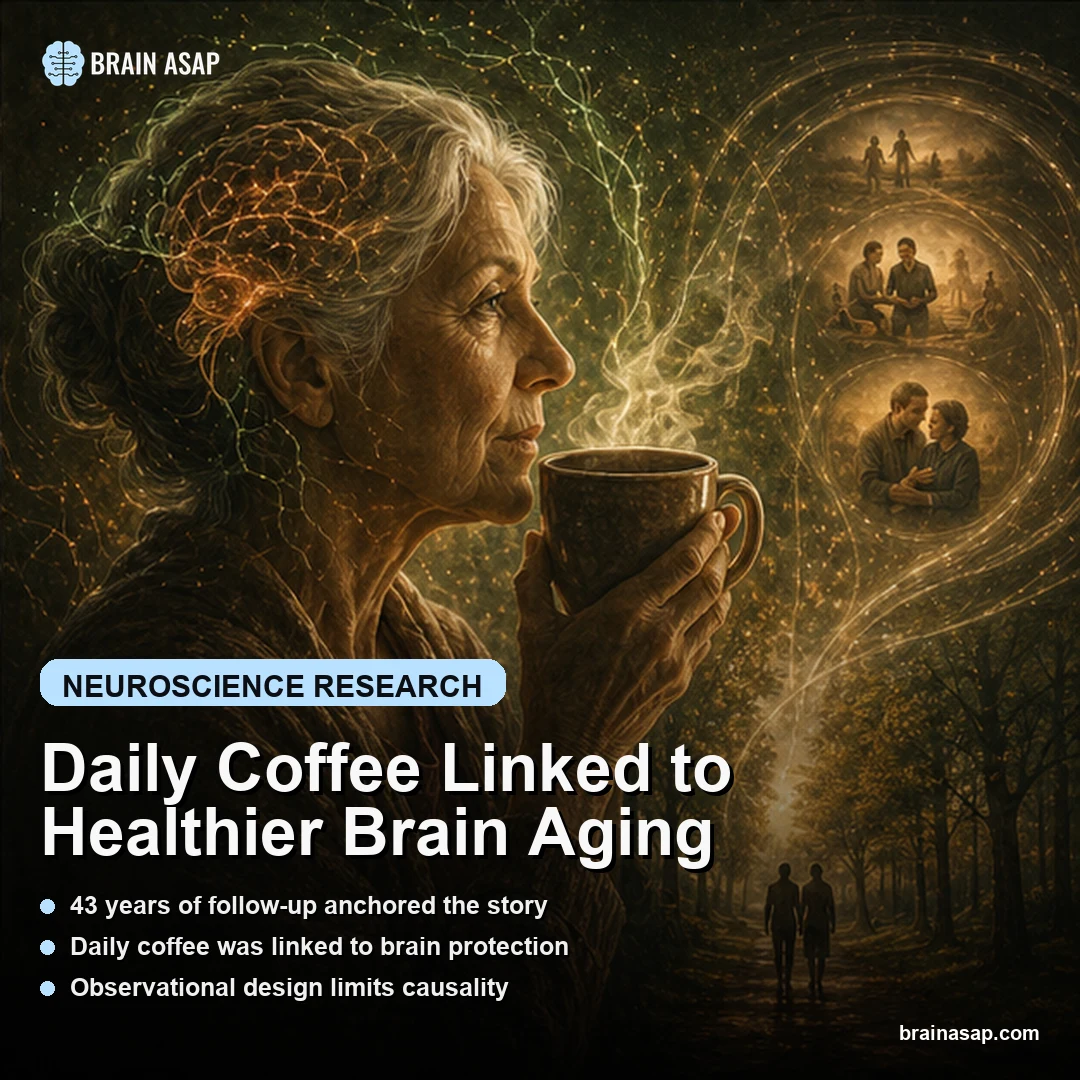
Caffeinated Coffee Linked to Lower Dementia Risk Over 43 Years TL;DR: Caffeinated coffee drinkers had 141 vs 330 dementia cases per 100,000 person-years in the highest versus lowest intake quartiles — across 131,821 adults followed up to 43 years. Decaf showed…
Read article ↗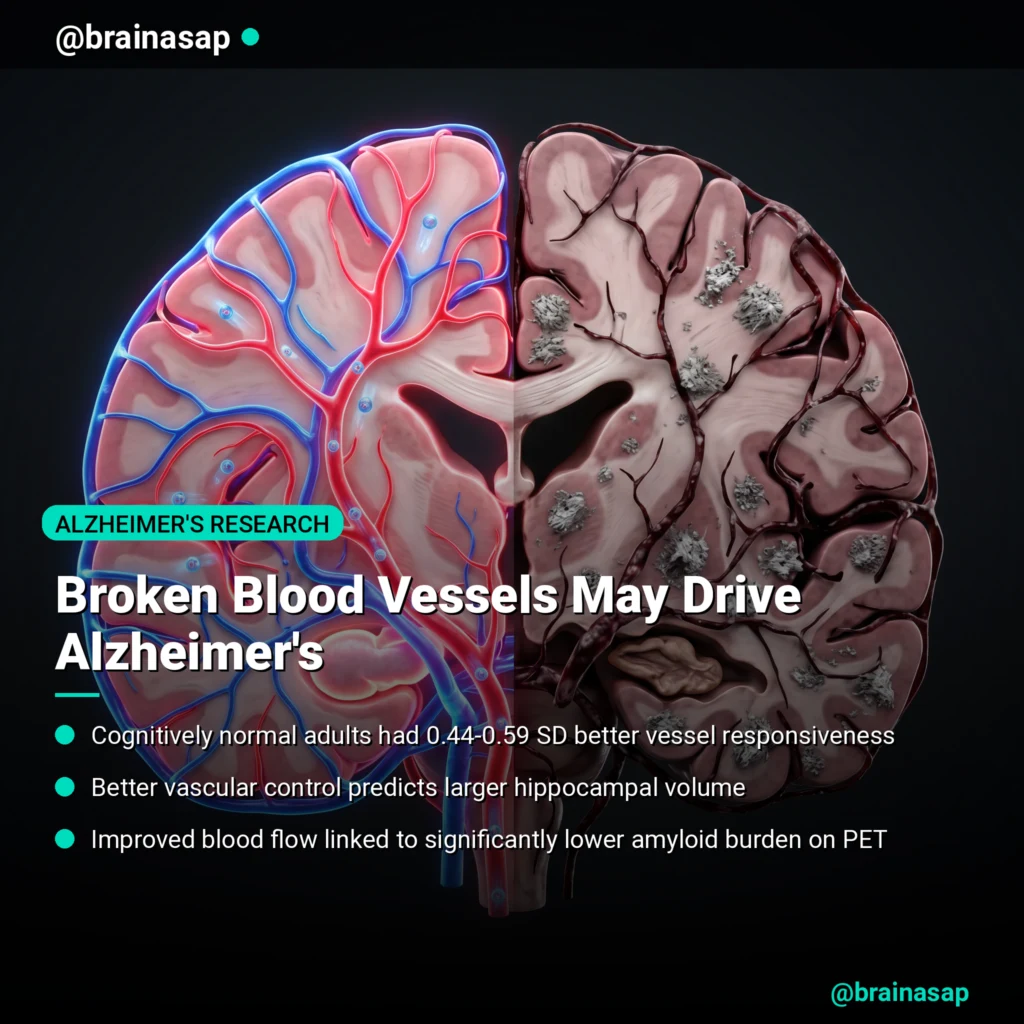
Broken Blood Vessels May Drive Alzheimer’s Decline TL;DR: A new study reveals that impaired cerebrovascular function—the brain’s ability to regulate blood flow—correlates strongly with Alzheimer’s symptoms, offering a potential non-invasive way to detect early…
Read article ↗
How Lecanemab Clears Brain Amyloid: The Microglia Key TL;DR: Lecanemab, the first Alzheimer’s antibody to slow cognitive decline, works by activating immune cells called microglia through a specific immune signaling pathway, with the molecule SPP1/osteopontin…
Read article ↗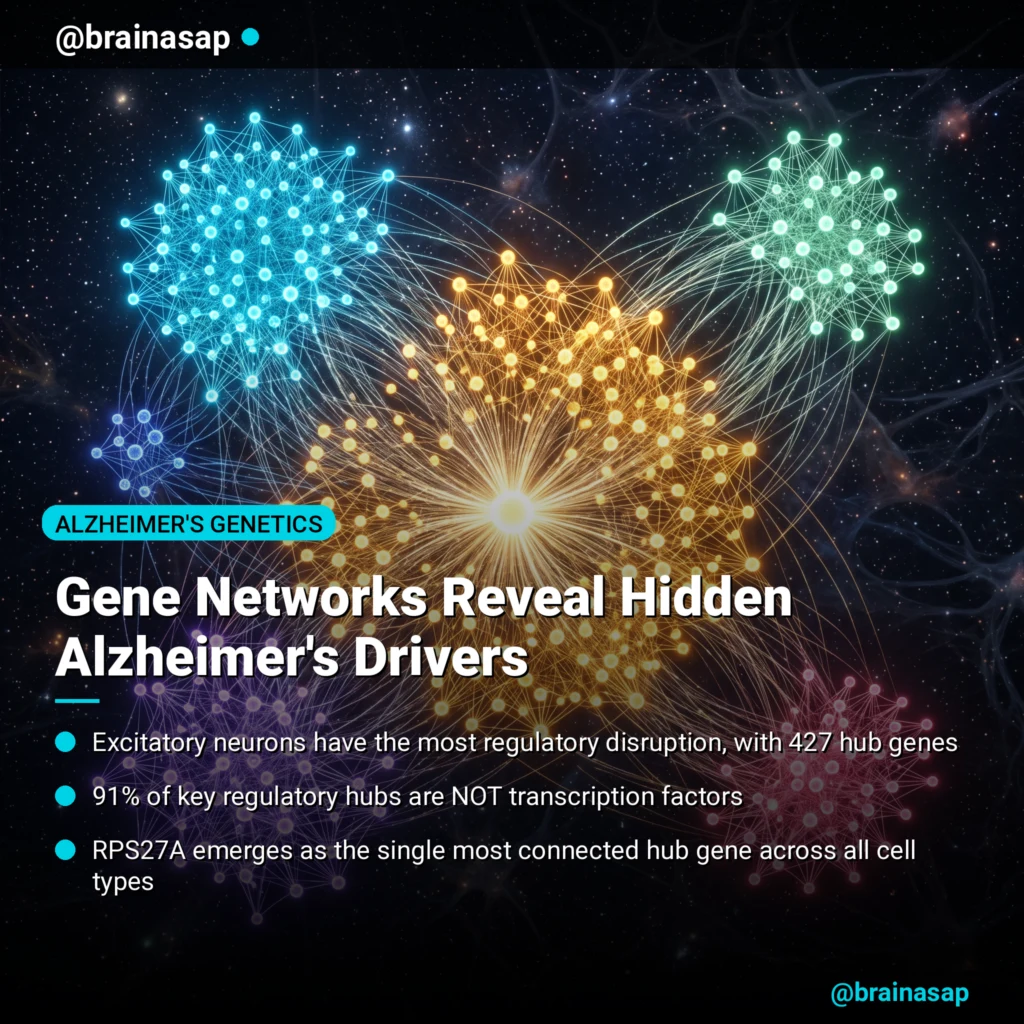
Cell-Type Gene Networks Reveal Hidden Causes of Alzheimer’s TL;DR: Researchers mapped how genes are regulated differently across six brain cell types in Alzheimer’s disease, discovering that excitatory neurons drive the most extensive regulatory disruptions—an…
Read article ↗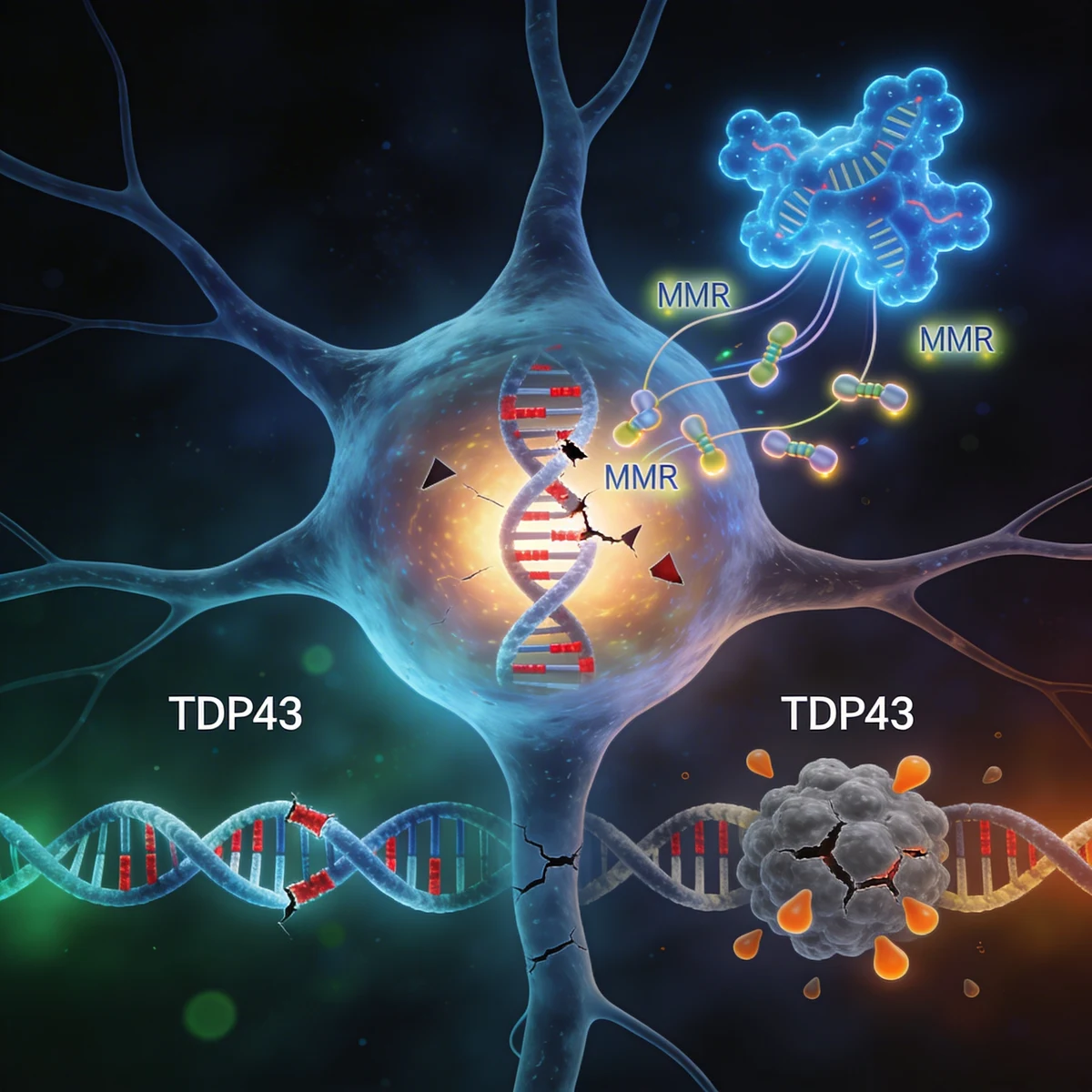
The Broken Repair Crew: How TDP43 Sabotages Genome Stability TL;DR: TDP43, the protein that misfires in ALS and FTD, secretly controls DNA repair genes—and when it breaks, mutations pile up in neurons, potentially explaining both neurodegeneration and the canc…
Read article ↗
Blood Test Detects Alzheimer’s with 83% Accuracy TL;DR: A new blood test using three misfolded plasma proteins can identify Alzheimer’s disease with 83.44% accuracy, outperforming conventional biomarkers and offering a non-invasive screening tool years before…
Read article ↗
Women experiencing midlife stress-related exhaustion have a higher risk of developing dementia at a younger age and exhibit long-term cognitive impairments. Highlights: Higher Dementia Risk: Women with midlife stress-related exhaustion had a nearly threefold i…
Read article ↗
Lecanemab shows promise in treating Alzheimer’s disease by reducing clinical deterioration and amyloid-beta plaques, but it has significant adverse effects and requires further research for confirmation. Highlights: FDA Approval: The US FDA authorized lecanema…
Read article ↗
TLDR: Herpes zoster vaccination is linked to a lower risk of dementia, but more studies are needed to confirm this association. Highlights: Five high-quality studies involving 103,615 vaccinated patients were analyzed. Herpes zoster vaccination was associated…
Read article ↗
TLDR: GLP-1 agonists were found to significantly reduce the risk of dementia in older individuals with type 2 diabetes mellitus (T2DM) compared to DPP-4 inhibitors and sulfonylureas. Highlights: A sequential trial emulation was conducted using data from Swedis…
Read article ↗