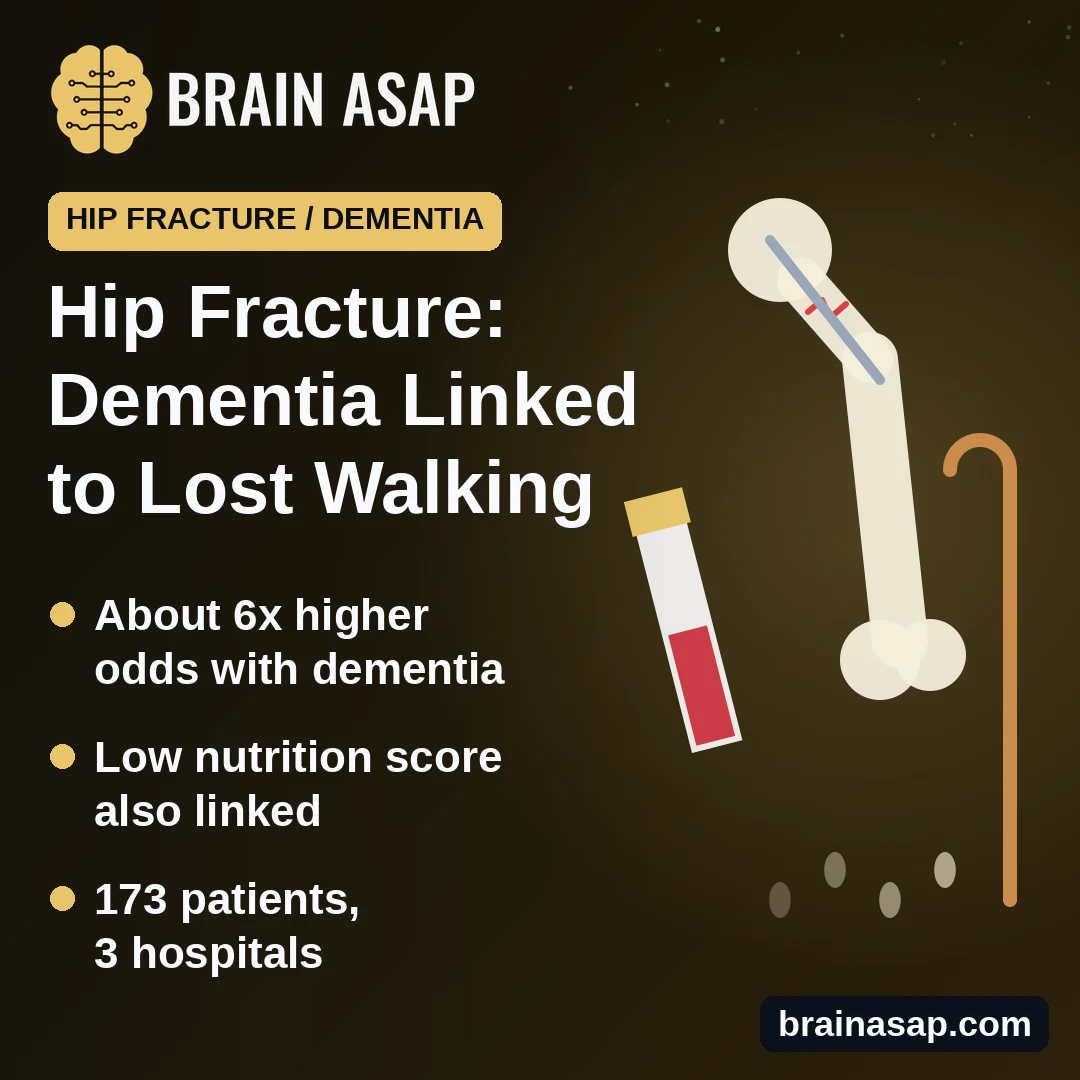
TL;DR: Among older adults who walked on their own before breaking a hip, those with dementia or a low blood-based nutrition score a week after surgery were less likely to be walking independently when they left the hospital. The nutrition score alone was only…
Read article ↗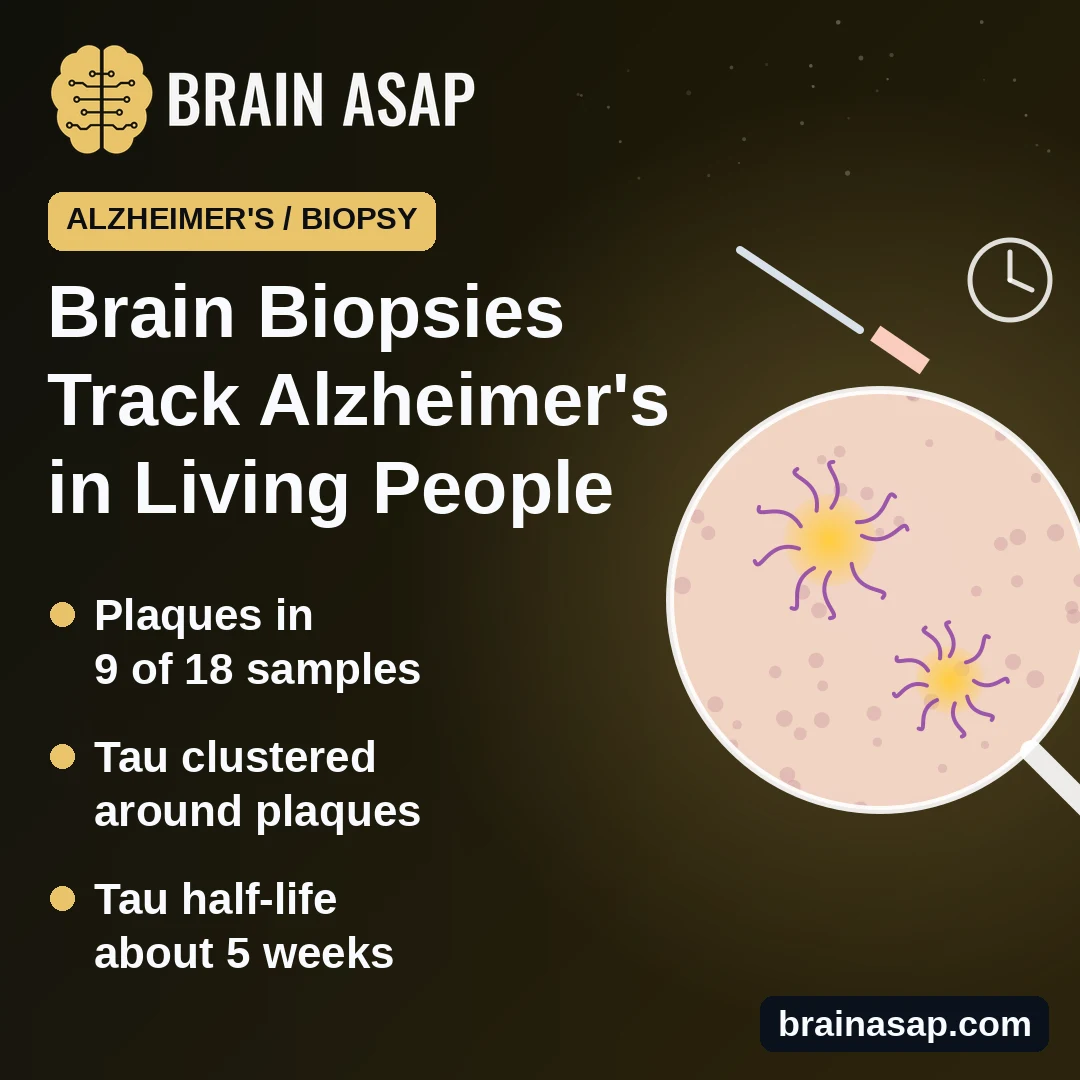
TL;DR: Tiny brain samples taken during routine shunt surgery let researchers study Alzheimer’s changes in living people. Half the samples had amyloid plaques, tau clustered around them, and brain tau had a half-life of about five weeks. Key Findings 18 living…
Read article ↗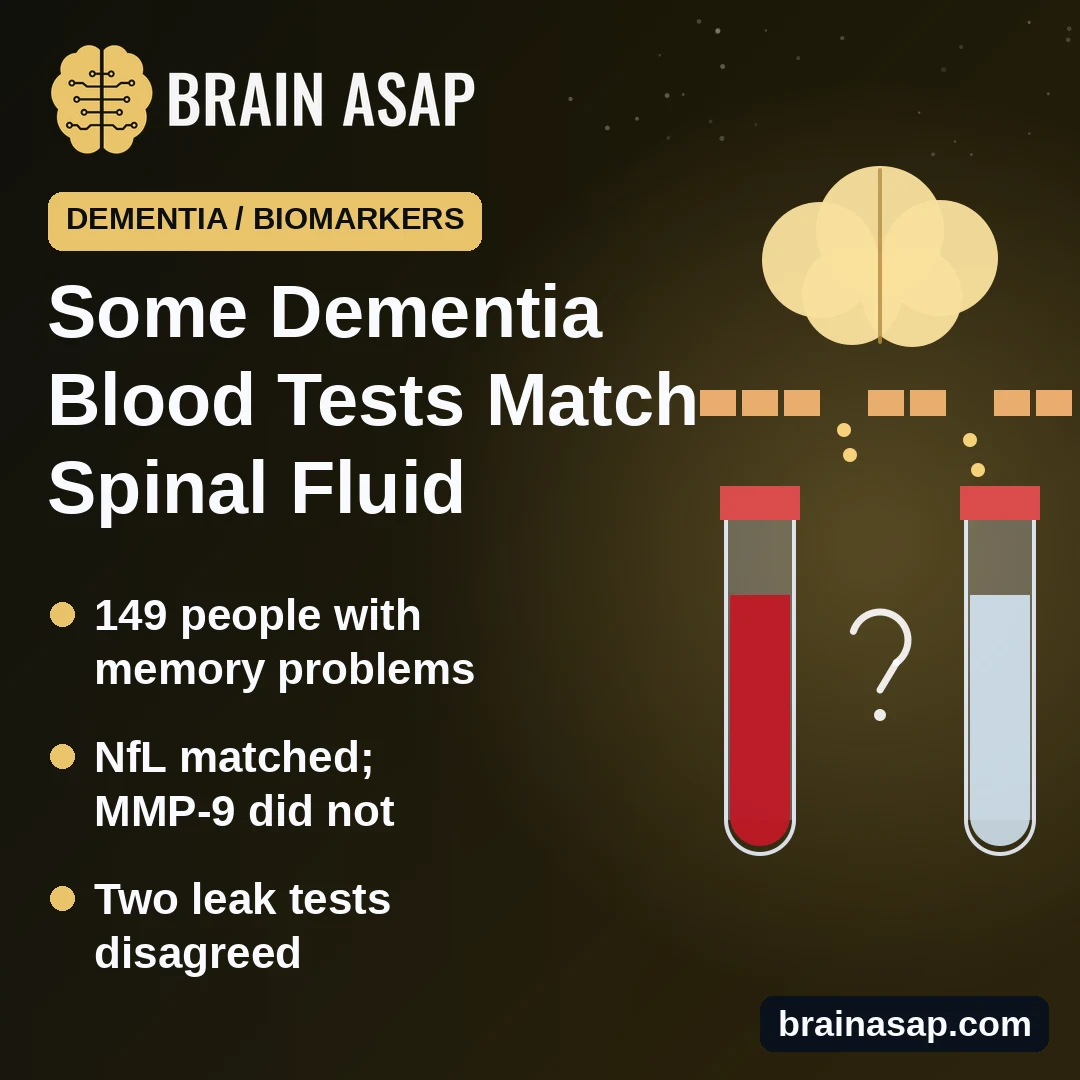
TL;DR: In 149 people with memory problems or dementia, blood levels of some brain markers tracked spinal fluid levels well, but others did not match at all. Two common measures of a leaky blood-brain barrier also did not agree with each other. Key Findings Blo…
Read article ↗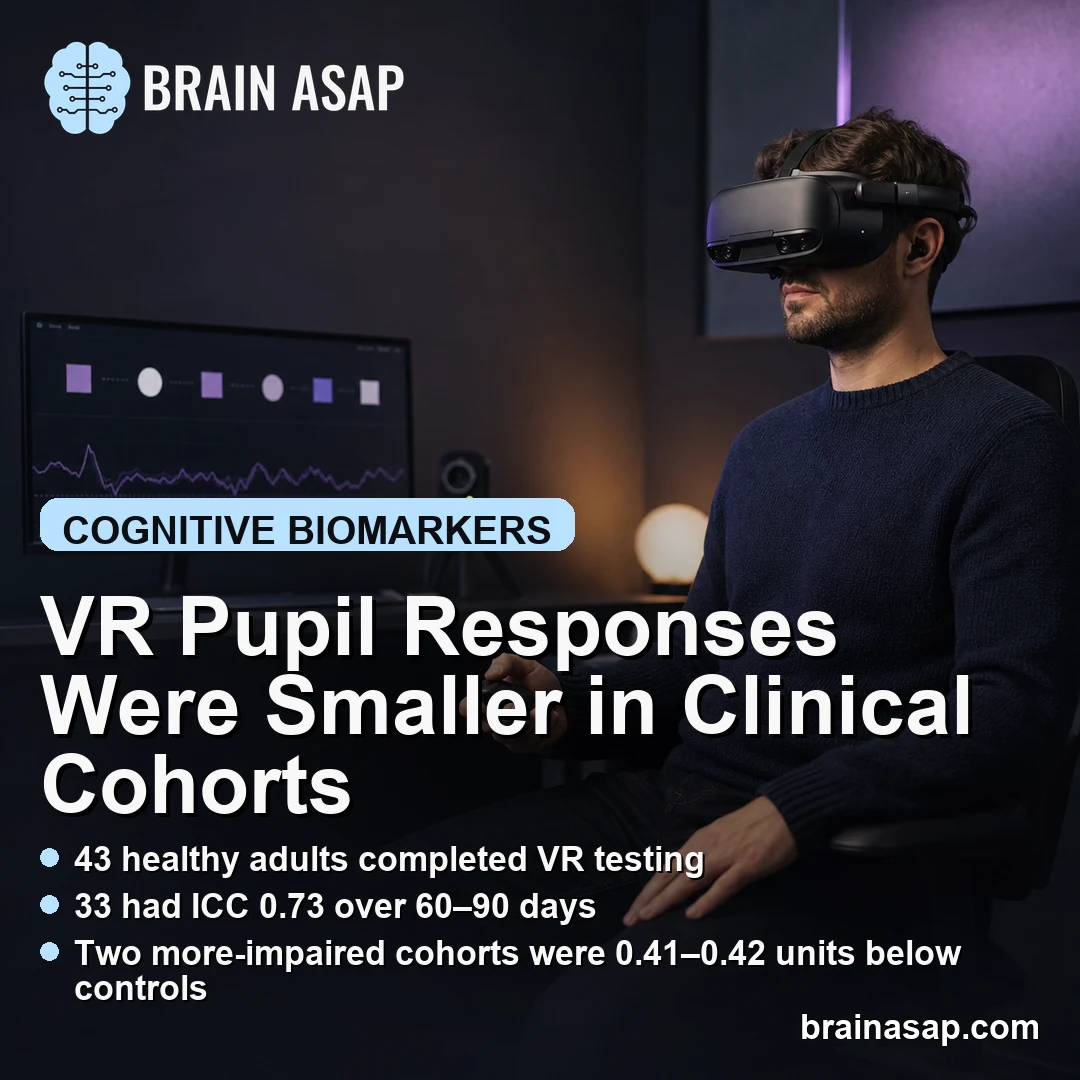
TL;DR: A 2026 medRxiv preprint found that pupil dilation measured inside a virtual reality (VR) headset increased as working-memory load rose in healthy adults, was reproducible 60–90 days later in 33 returnees, and was smaller under the highest load in cognit…
Read article ↗
TL;DR: A 2026 review in Journal of Neuroinflammation proposed that Alzheimer microglial dysfunction can be understood as checkpoint collapse, where failed regulatory controls feed three interacting lipid, iron/ferroptosis, and inflammation/complement axes. Key…
Read article ↗
TL;DR: A 2026 preprint in medRxiv reported that people living with dementia (PLwD) and carers were generally open to artificial intelligence (AI) support in structured medication reviews, but only when AI remained validated, transparent, secure, and subordinat…
Read article ↗
TL;DR: A 2026 Nature Communications paper introduced EmulatRx, a multi-agent AI framework that used real-world clinical data to help design target-trial-emulation workflows for acute and chronic diseases, including Alzheimer disease and Parkinson disease examp…
Read article ↗
TL;DR: A 2026 preprint in medRxiv analyzed plasma proteomics in Alzheimer’s disease and mild cognitive impairment and found that four continuous molecular axes described the data better than hard subtype labels. Key Findings 5,895-person AD/MCI sample: The dis…
Read article ↗
TL;DR: A 2026 preprint in medRxiv warned that a standard Alzheimer’s disease biomarker-clock analysis can create a countdown paradox, where later biomarker-clock ages appear linked to faster mild cognitive impairment onset because of the way remaining time is…
Read article ↗
TL;DR: A 2026 systematic review and meta-analysis in Journal of Medical Internet Research found that care robots showed a low-certainty reduction in neuropsychiatric symptoms, but six other pooled outcome domains did not reach statistical significance. Key Fin…
Read article ↗