
Meat Intake Linked to Lower Dementia Risk in APOE4 Carriers TL;DR: In APOE4 carriers, higher total meat intake tracked with lower observed dementia risk over 15 years, while a higher processed-to-total meat ratio moved in the unfavorable direction. Key Finding…
Read article ↗
Egypt’s 1,530-Person Alzheimer’s Cohort Captures Risks Western Studies Miss TL;DR: A DAC-Egypt cohort enrolled 1,530 adults aged 55 to 98, collected blood from 98%, and captured a rural, low-literacy, metabolically burdened population that most dementia datase…
Read article ↗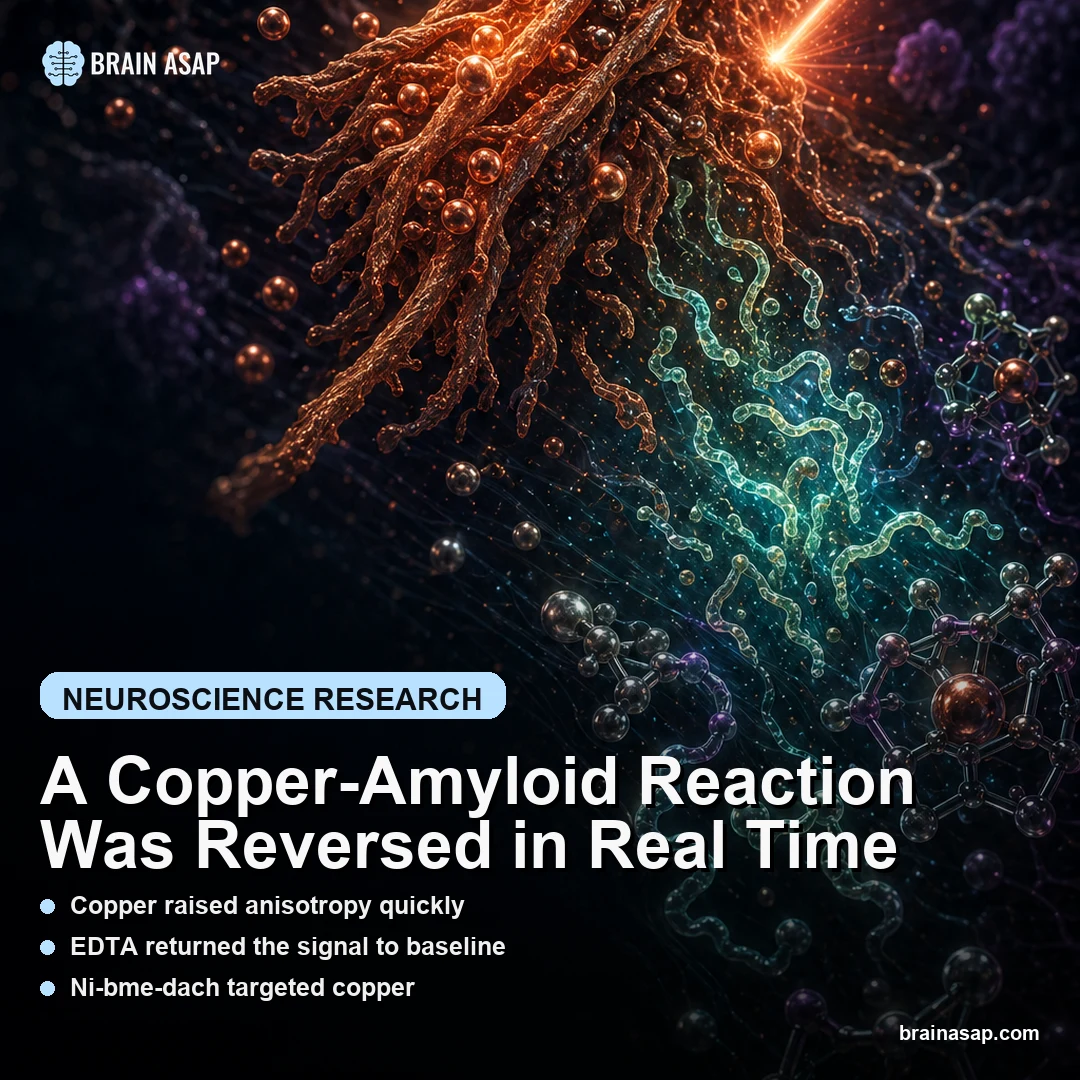
A Copper-Amyloid Reaction Was Reversed in Real Time TL;DR: Fluorescence anisotropy let researchers watch copper-driven amyloid-beta aggregation form and reverse, with Ni-bme-dach selectively restoring monomer-like behavior while EDTA acted broadly. Key Finding…
Read article ↗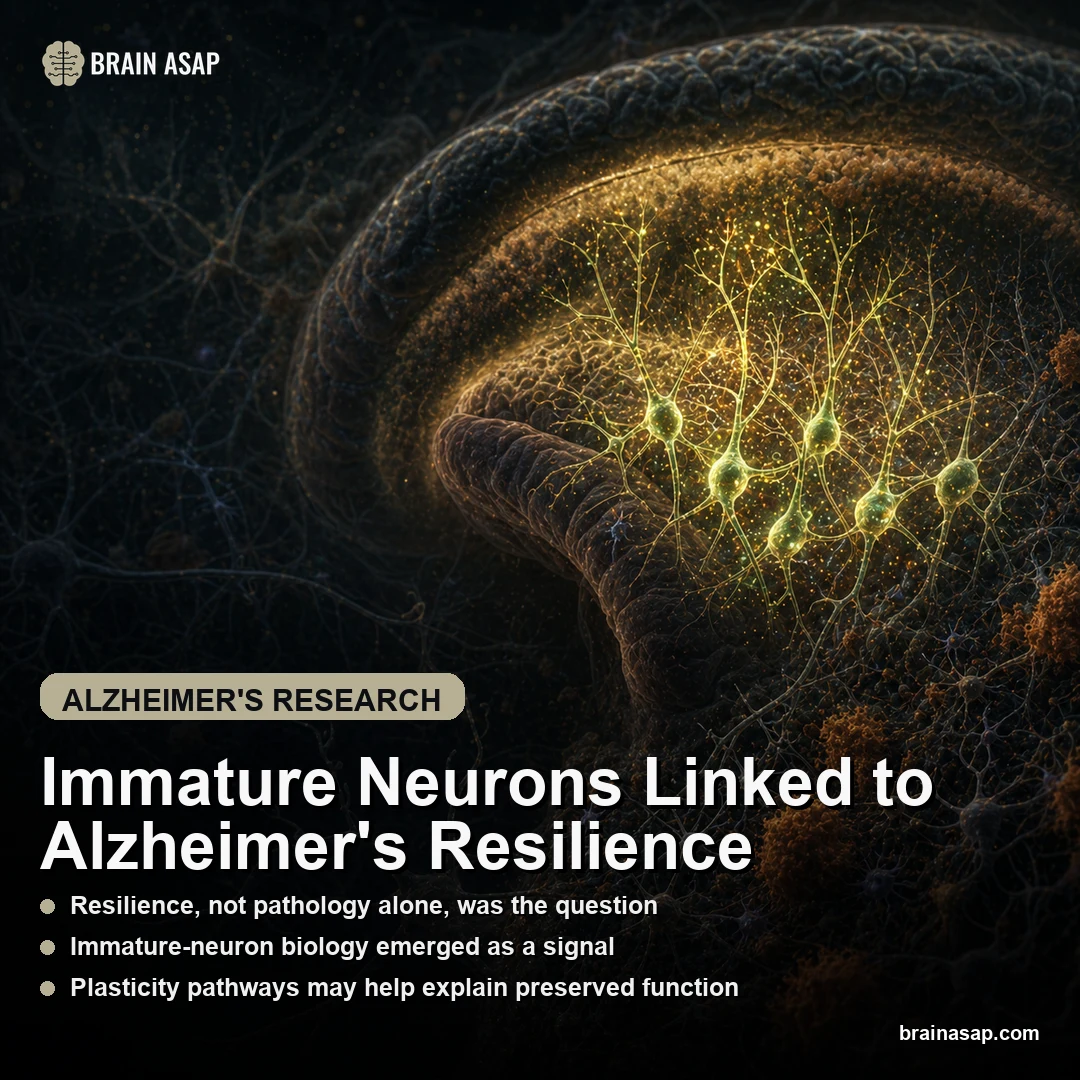
Immature Neurons Linked to Alzheimer’s Resilience TL;DR: A 2026 Cell Stem Cell study used single-nucleus RNA sequencing of aged human hippocampus tissue and found rare immature neurons in healthy, Alzheimer’s, and dementia-resilient brains. The important signa…
Read article ↗
Early Locus Coeruleus Axon Loss May Explain Smell Loss in Alzheimer’s TL;DR: Alzheimer’s-model mice lost noradrenergic locus coeruleus axons in the olfactory bulb before major plaque buildup, took 60% longer to find buried food, and improved when microglial ph…
Read article ↗
SuperAgers Reveal Brain Biology of Preserved Memory TL;DR: Octogenarians who recall words like 50-year-olds carry a distinct brain profile: preserved cortical volume, a cingulate cortex thicker than younger adults, larger entorhinal neurons, fewer inflammatory…
Read article ↗
Lifetime Cognitive Enrichment Delayed Alzheimer’s Dementia TL;DR: In 1,939 Rush Memory and Aging Project participants, higher lifetime cognitive enrichment was linked to 38% lower Alzheimer’s dementia hazard and about 5 years later dementia onset. Key Findings…
Read article ↗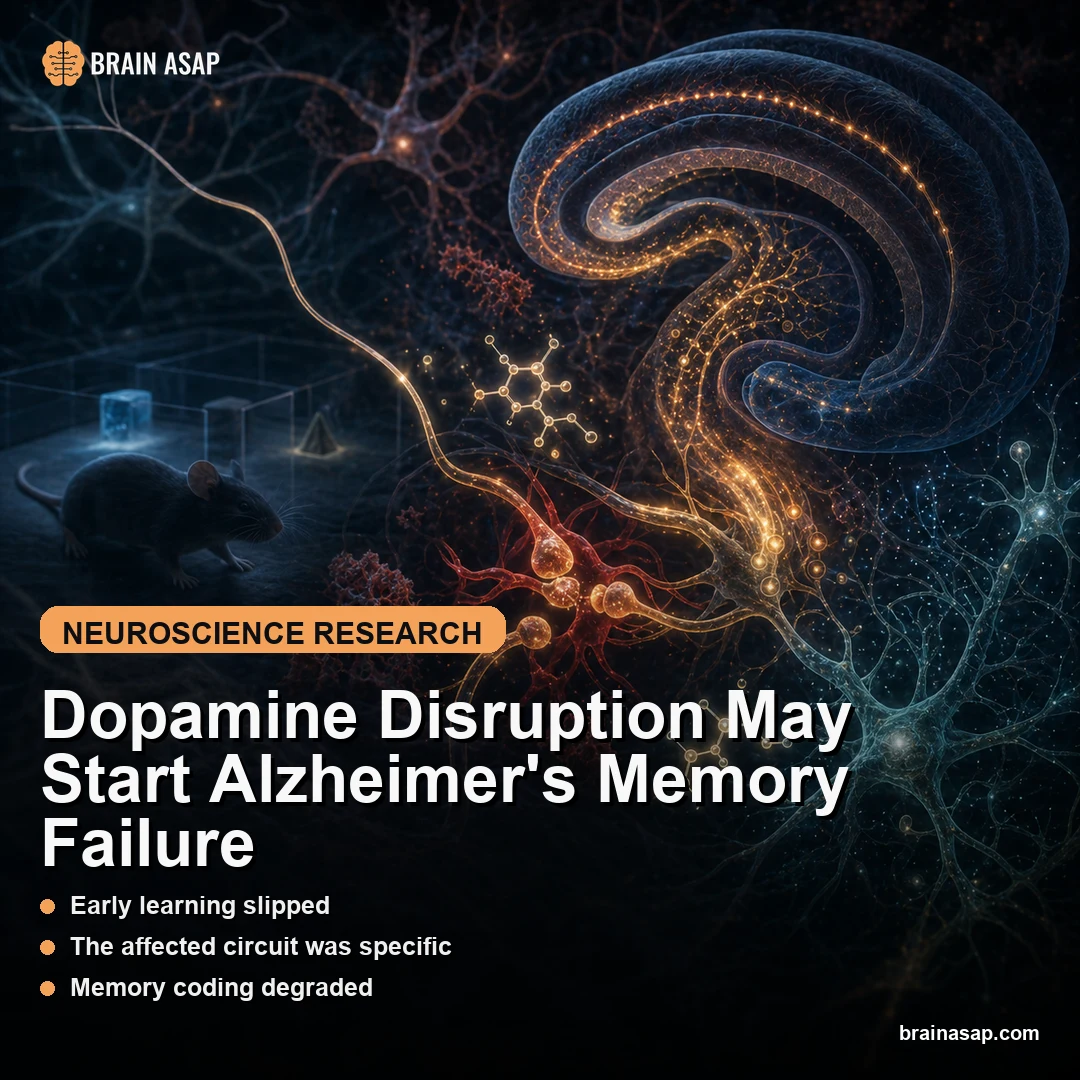
Dopamine Disruption May Start Alzheimer’s Memory Failure TL;DR: In an Alzheimer’s mouse model, early memory failure tracked a broken dopamine signal into the lateral entorhinal cortex, and both optogenetic dopamine reactivation and L-DOPA partially restored le…
Read article ↗
Alzheimer’s Treatment Needs More Than Amyloid TL;DR: A 2026 review in Science China Life Sciences argues that amyloid-beta antibodies such as lecanemab and donanemab are important progress, but Alzheimer’s treatment cannot stop at amyloid. The disease also inv…
Read article ↗
Alpha-Synuclein Testing Could Clarify Dementia Diagnosis TL;DR: In 398 memory-clinic patients, alpha-synuclein seed testing identified Lewy body dementia with 95% sensitivity and revealed hidden synuclein positivity in 15.8% of Alzheimer’s disease cases. Key F…
Read article ↗