
TL;DR: A 2026 narrative review in International Journal of General Medicine argued that apathy in Alzheimer’s disease is tied to damage across motivation circuits, including the anterior cingulate cortex, orbitofrontal cortex, striatum, locus coeruleus, and la…
Read article ↗
TL;DR: A 2026 review in International Journal of Molecular Medicine mapped how exercise and fluoxetine overlap in Alzheimer’s disease mechanisms such as mitochondrial quality control, oxidative stress, inflammation, and neuroplasticity, but clinical combinatio…
Read article ↗
TL;DR: A 2026 systematic review and meta-analysis in Journal of Alzheimer’s Disease found that choroid plexus volume, an MRI-visible structure involved in cerebrospinal-fluid regulation and immune signaling, was larger in Alzheimer’s disease than in healthy co…
Read article ↗
TL;DR: A 2026 real-world cohort study in The Journal of Prevention of Alzheimer’s Disease found that lecanemab-treated Alzheimer’s patients had lower Neuropsychiatric Inventory scores over follow-up, and 6-month symptom reductions were associated with regional…
Read article ↗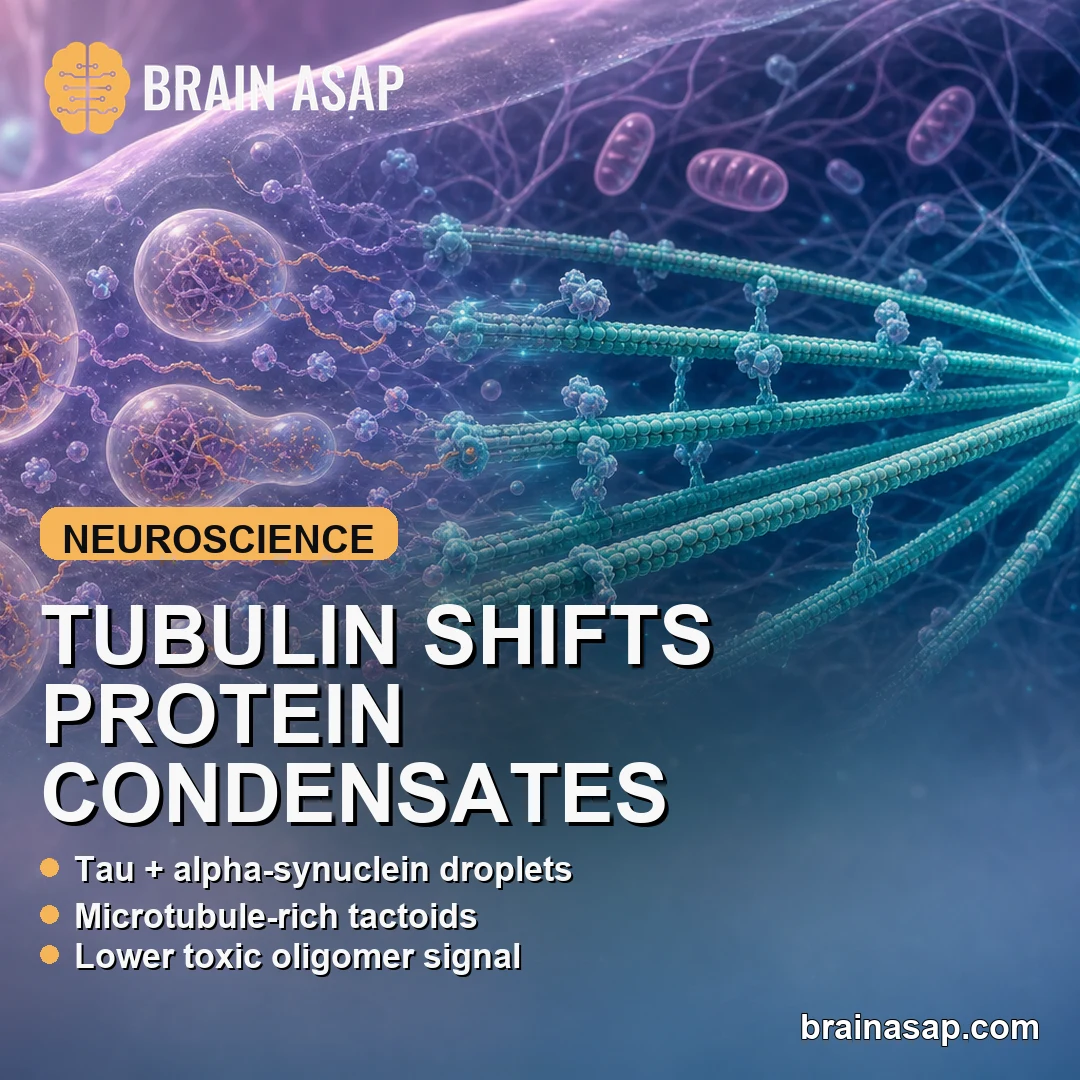
TL;DR: A 2026 study in Nature Communications reported that tubulin redirected Tau and alpha-synuclein condensates toward microtubule-building states, while tubulin loss pushed the same protein system toward toxic oligomers in cell models. Key Findings 36-hour…
Read article ↗
TL;DR: A 2026 study in Nature Communications found that proteotoxic stress can push neurons into karyoptosis, a cell-death pathway marked by nuclear lamina breakdown, nuclear-material expulsion, and dementia-linked tissue signatures. Key Findings Karyoptosis w…
Read article ↗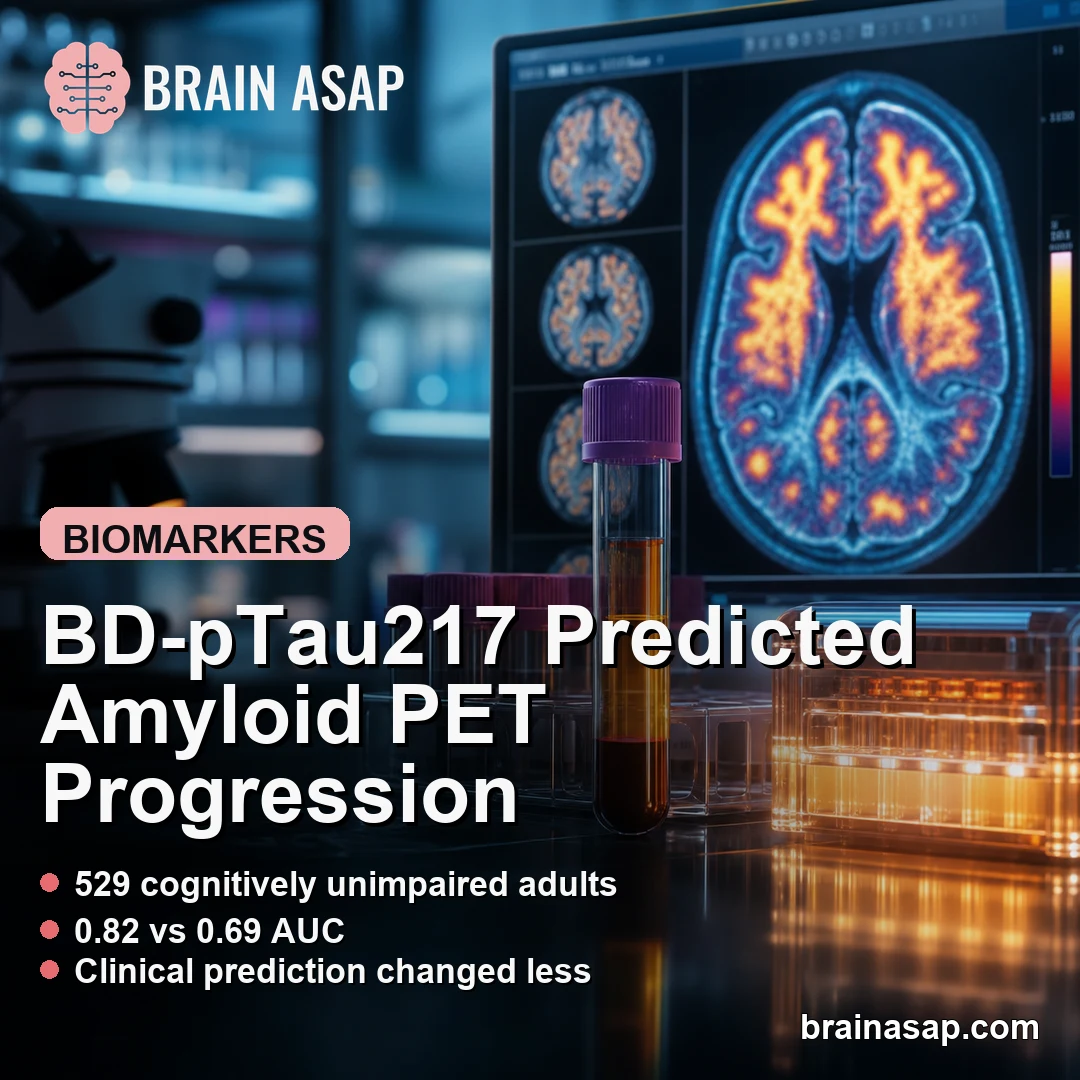
TL;DR: A 2026 ADNI analysis posted to medRxiv found that brain-derived plasma pTau217 better predicted near-term amyloid positron emission tomography (PET) positivity than total plasma pTau217 in cognitively unimpaired amyloid-negative participants. Key Findin…
Read article ↗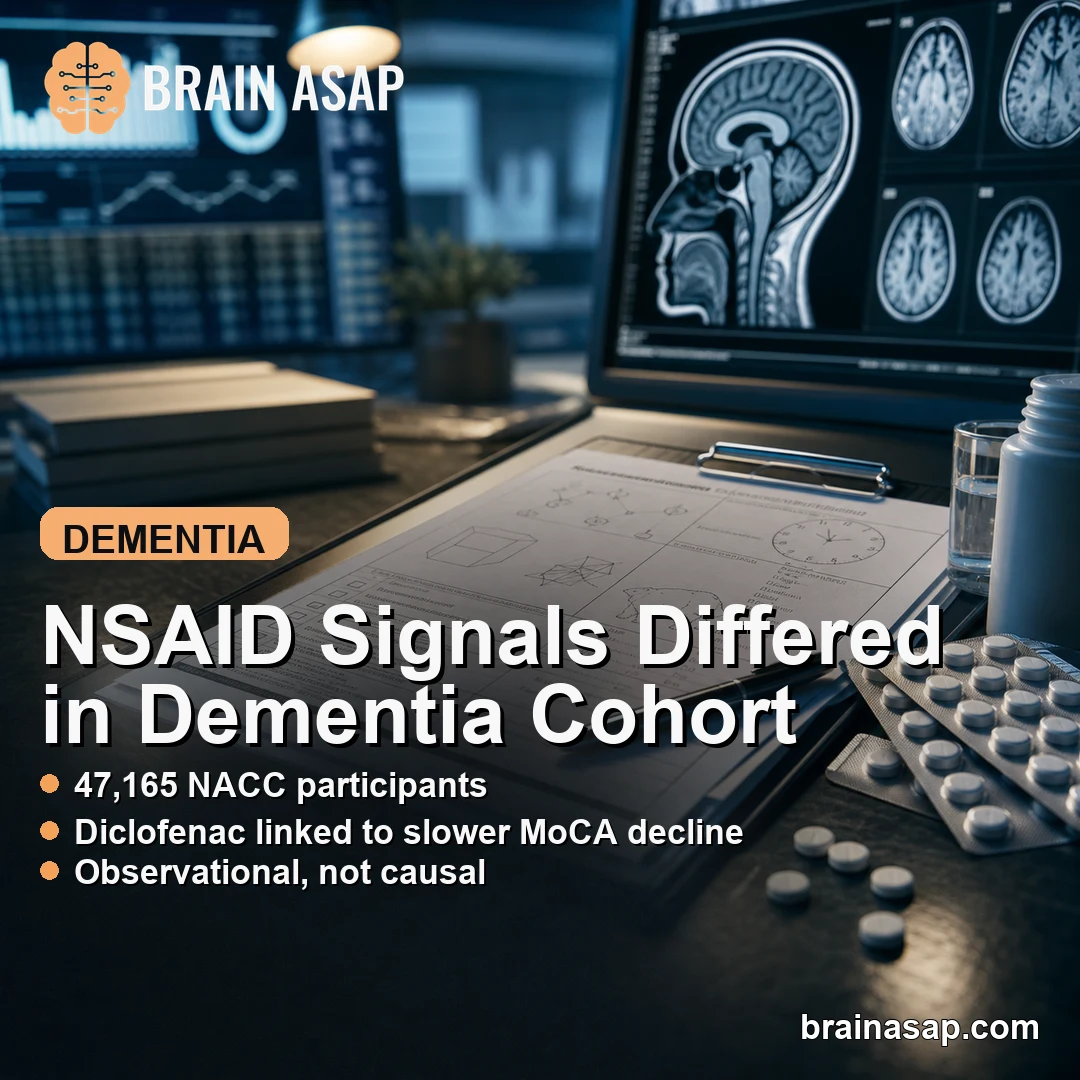
TL;DR: A 2026 retrospective analysis posted to medRxiv linked diclofenac and naproxen use in the NACC cohort to lower dementia and Alzheimer disease prevalence, while diclofenac use was also associated with slower Montreal Cognitive Assessment (MoCA) cognitive…
Read article ↗
TL;DR: A 2026 protocol posted to medRxiv describes a nationwide Japan survey designed to measure how dementia specialists handle anti-amyloid antibody therapy, biomarker testing, MRI safety monitoring, service capacity, and patient-choice tradeoffs. Key Findin…
Read article ↗
TL;DR: A 2026 mouse study in Alcohol: Clinical and Experimental Research found that chronic intermittent ethanol plus repeated forced-swim stress left mice drinking more alcohol months later and impaired reversal learning in midlife, alongside locus coeruleus…
Read article ↗