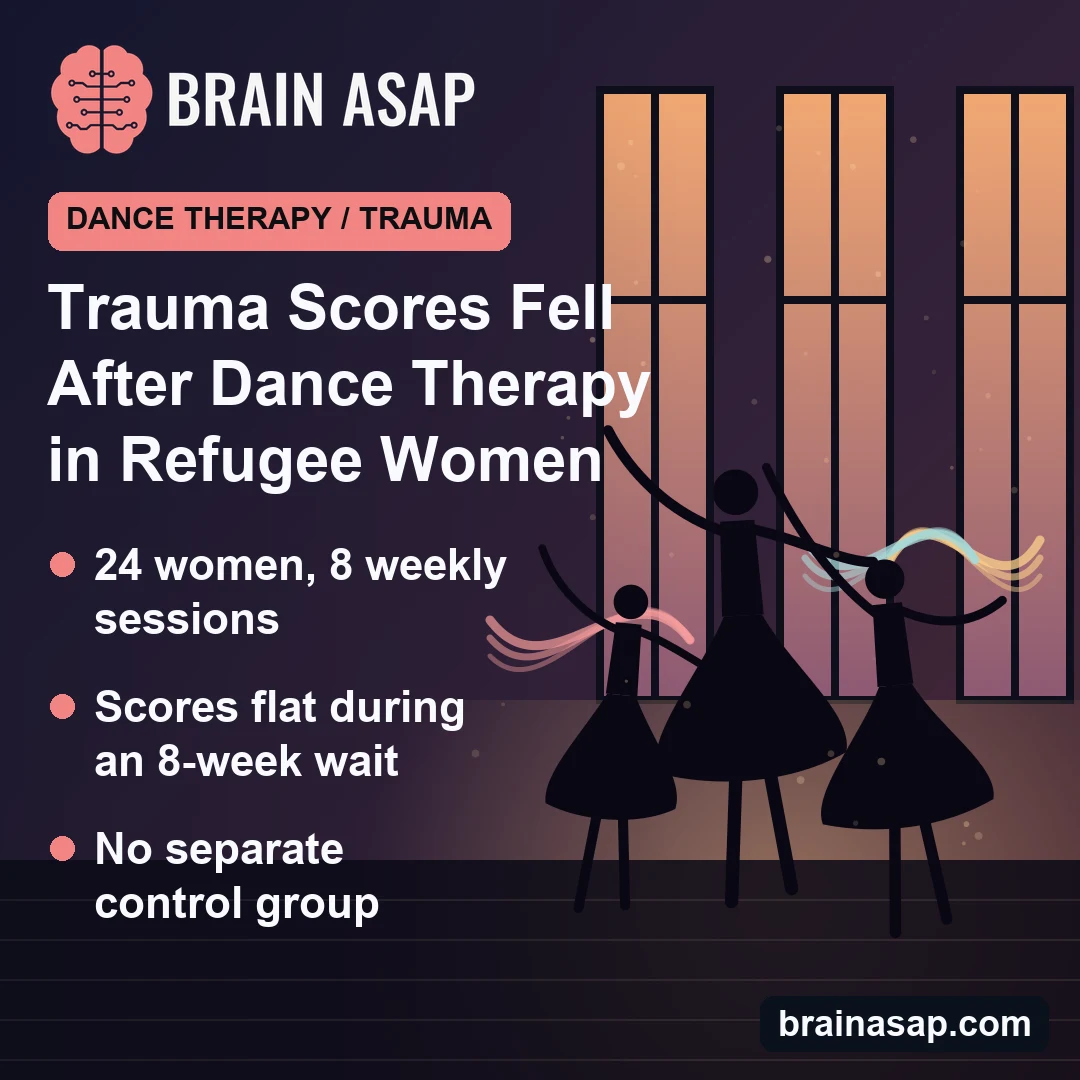
TL;DR: In a small German study of 24 refugee women with trauma symptoms, scores on three symptom questionnaires stayed flat during an 8-week wait, then dropped after 8 weekly dance movement therapy sessions. The group’s average PTSD checklist score slipped jus…
Read article ↗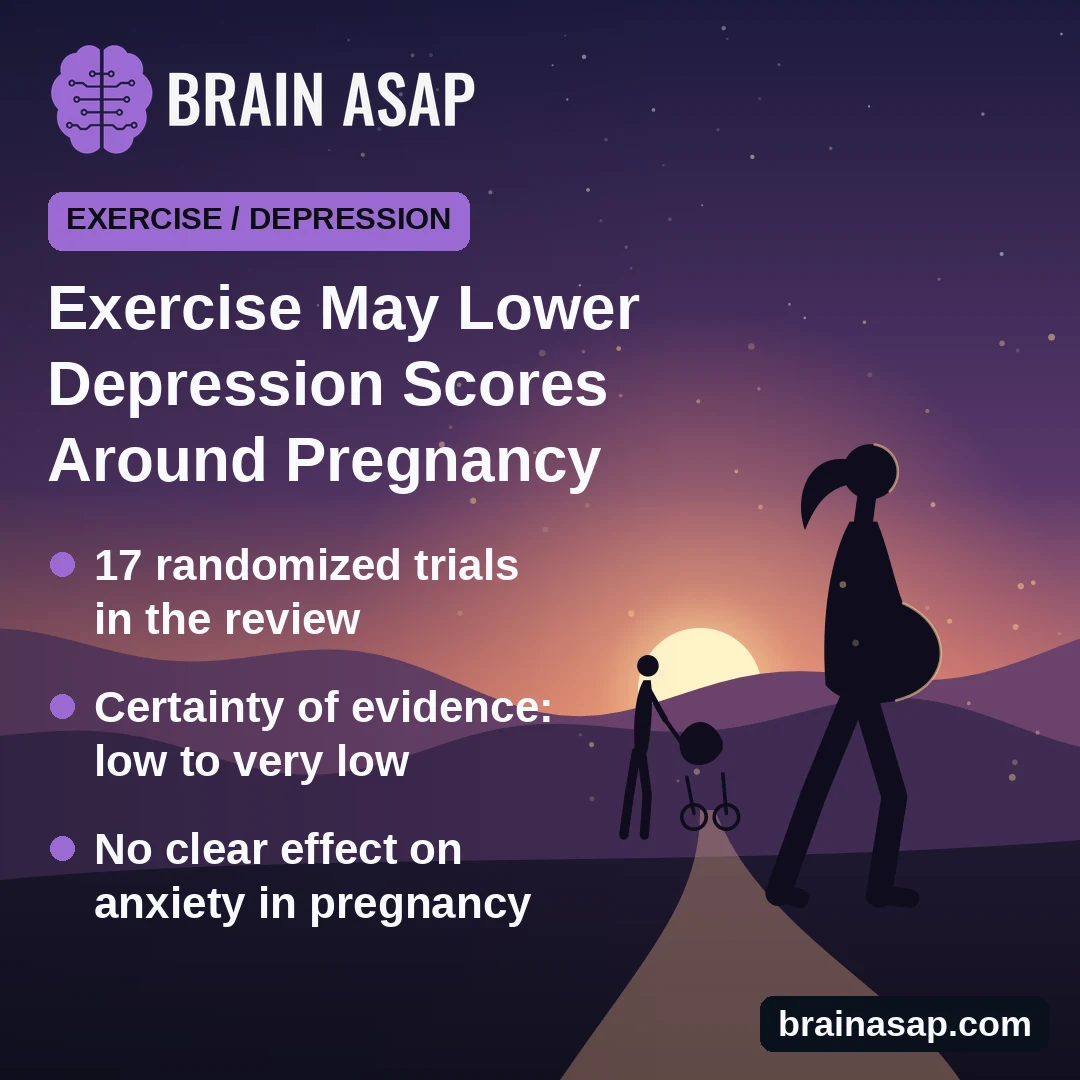
TL;DR: A review of 17 randomized trials found that women who exercised had lower depression scores than women given usual care, both during pregnancy and after birth. The evidence is rated low to very low certainty, and the studies varied a lot. For anxiety du…
Read article ↗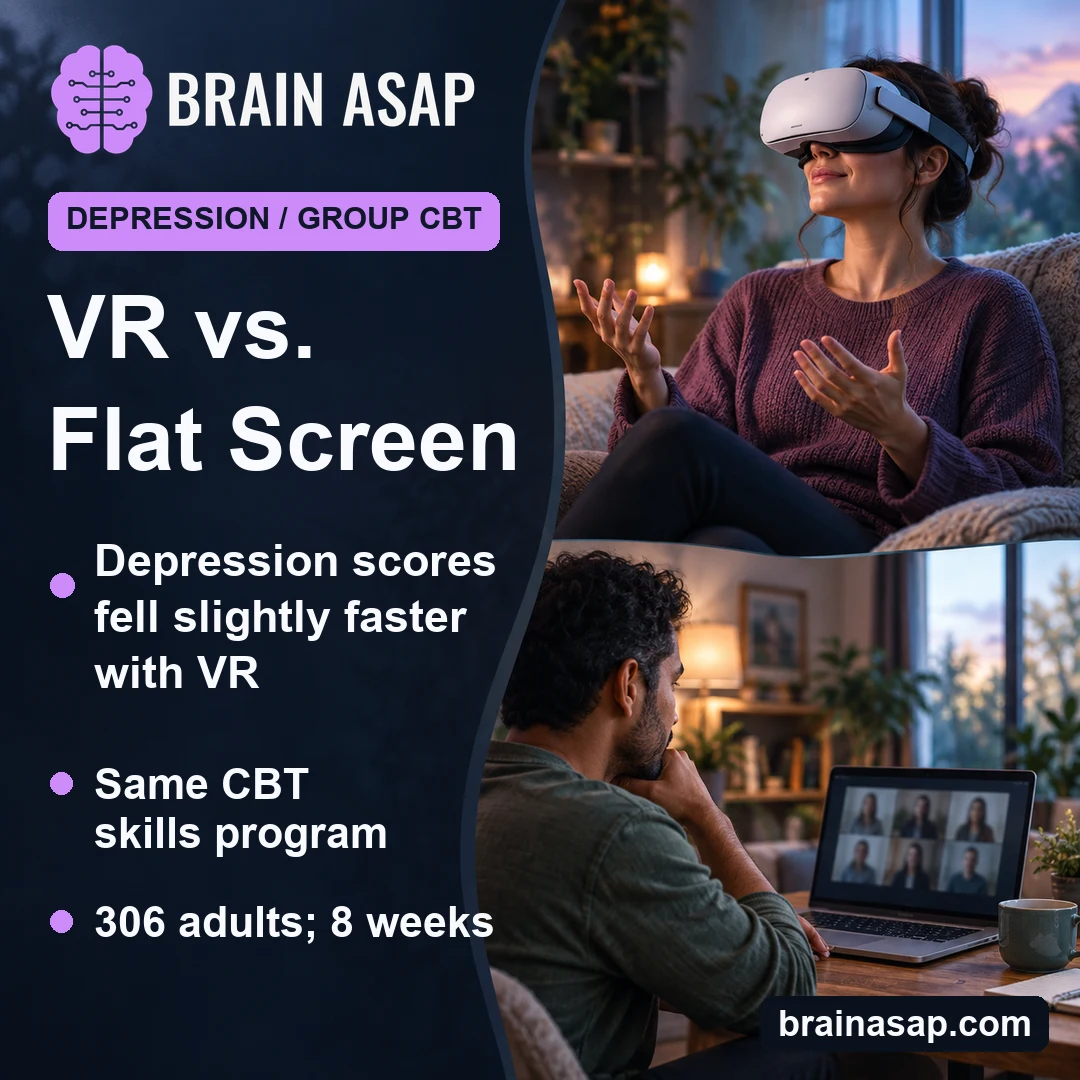
TL;DR: A 2026 randomized trial in Journal of Medical Internet Research gave adults with elevated depression symptoms the same coach-led group skills program through either a VR headset or a flat screen. Depression scores fell slightly faster in the VR group ov…
Read article ↗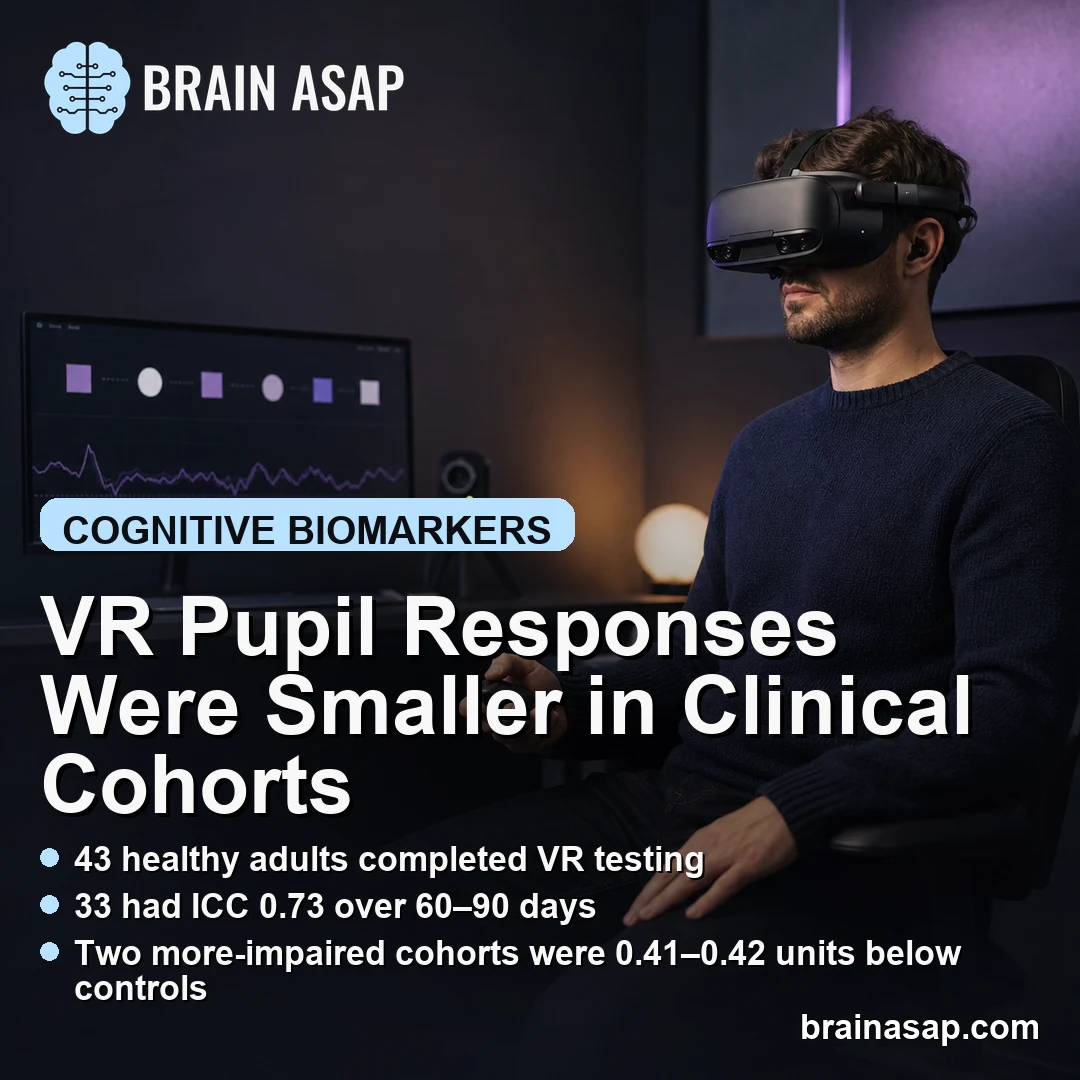
TL;DR: A 2026 medRxiv preprint found that pupil dilation measured inside a virtual reality (VR) headset increased as working-memory load rose in healthy adults, was reproducible 60–90 days later in 33 returnees, and was smaller under the highest load in cognit…
Read article ↗
TL;DR: A 2026 mouse study in Nature Communications reported that 10 daily bouts of optogenetic dentate-gyrus stimulation produced weeks-long changes in chromatin, nuclear structure, behavior, and spatial coding, while Cyclin B deletion weakened several effects…
Read article ↗
TL;DR: A 2026 randomized study in Psychological Medicine reported that 7–10 days of prucalopride improved word-learning recall and working-memory response speed versus placebo in adults with remitted recurrent depression, but the 49-person analysis did not tes…
Read article ↗
TL;DR: A 2026 Phase 2 trial in The British Journal of Psychiatry found that 10 mg emestedastat did not improve attention and working memory after six weeks in adults with major depressive disorder and objectively measured cognitive impairment. A nominal depres…
Read article ↗
TL;DR: A 2026 study in PLOS One found that emergency call takers and dispatchers who used more negatively valenced words when describing a stressful work event reported higher depression and anxiety symptoms, while arousal-related language did not predict dist…
Read article ↗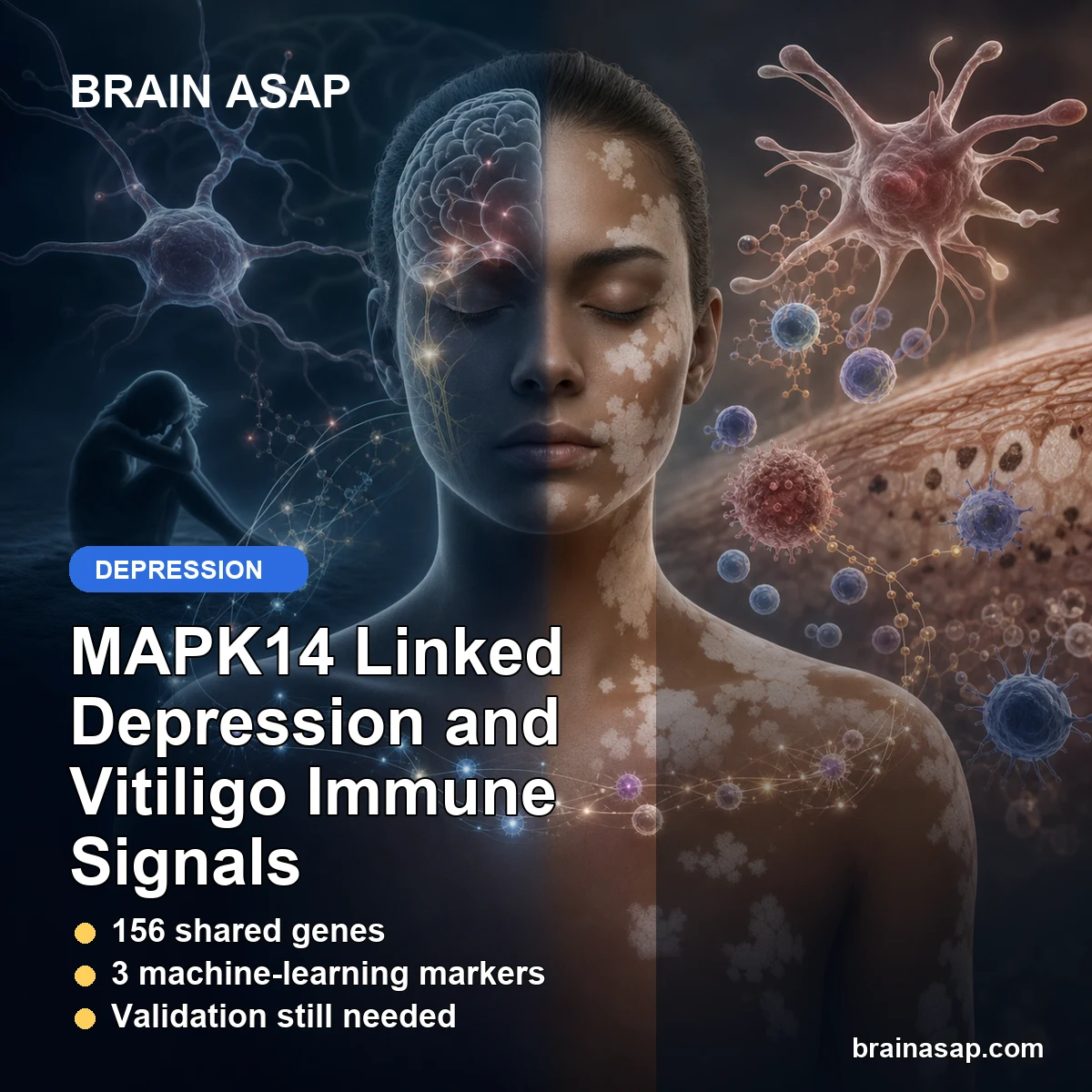
TL;DR: Major depressive disorder and vitiligo may share immune-inflammatory gene signatures. In PLOS One in 2026, the analysis frames MAPK14 as a preliminary candidate marker that still needs clinical and laboratory validation. Key Findings Two public disease…
Read article ↗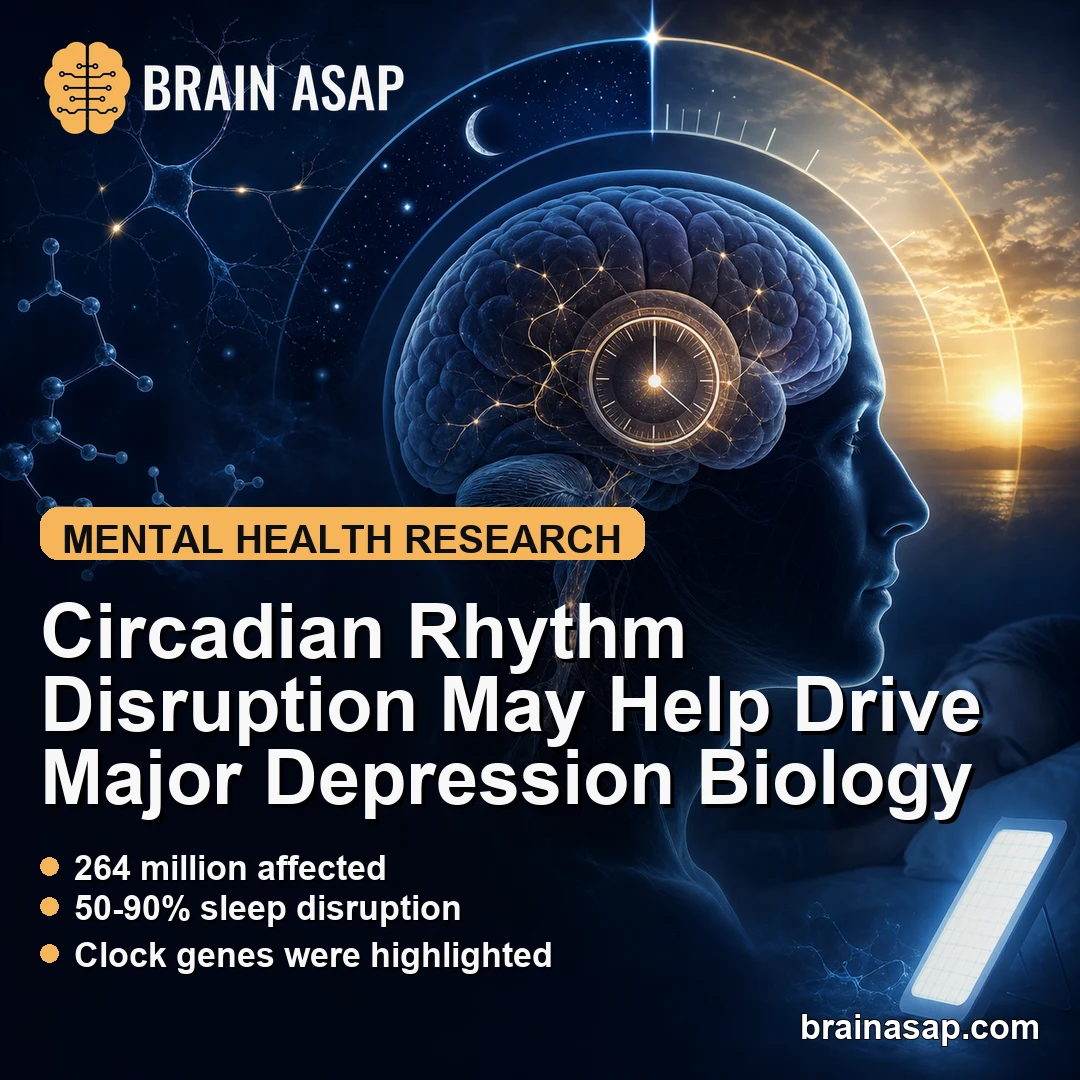
TL;DR: A 2026 review in Annals of Medicine argues that circadian rhythm disruption in major depressive disorder (MDD) reaches beyond poor sleep, linking clock-gene variation, sleep-wake timing, stress-hormone rhythms, melatonin signaling, and chronotherapy tar…
Read article ↗