TL;DR: A 2026 functional MRI (fMRI) study in Psychological Medicine found that schizophrenia, bipolar disorder, and major depressive disorder shared some thalamus connectivity disruption, but each diagnosis showed a different subcortical network pattern across…
Read article ↗
TL;DR: A 2026 mouse study in Neurochemical Research found that 28 days of unpredictable chronic mild stress increased dopamine D1 receptor binding across the striatum and raised dopamine D2 receptor binding only in selected regions, regardless of fatty acid-bi…
Read article ↗
TL;DR: A 2026 medRxiv preprint found psychomotor retardation, meaning slowed movement, speech, and thinking during depression, was linked to higher later Parkinson’s diagnosis risk in 6,327 London mental-health records. Key Findings Psychomotor retardation was…
Read article ↗
TL;DR: A 2026 randomized pilot trial in the Journal of Affective Disorders found that 30 minutes of moderate exercise before cognitive behavioral therapy (CBT) for major depressive disorder was linked to stronger therapy-process measures and higher exploratory…
Read article ↗
TL;DR: A 2026 medRxiv preprint used single photon emission computed tomography (SPECT), a brain blood-flow imaging method, and a 68-component NeuroMark template to link depression-related symptoms with frontal, subcortical, cerebellar, salience, and visual net…
Read article ↗
TL;DR: A 2026 systematic review and meta-analysis posted to medRxiv found that gamma-frequency non-invasive brain stimulation was linked to symptom improvement in schizophrenia and depressive-symptom reduction in major depressive disorder, but the evidence was…
Read article ↗
TL;DR: A 2026 study in Brain, Behavior, & Immunity – Health found that whole-body hyperthermia in adults with major depressive disorder triggered a 30-minute whole-blood RNA-seq response dominated by heat-shock genes and immune pathways, including IL-6 product…
Read article ↗
TL;DR: A 2026 systematic review and meta-analysis in Acta Neuropsychiatrica found no clear evidence that parenteral clomipramine is better than oral clomipramine for depression or obsessive-compulsive disorder, with low or very low certainty across the main ra…
Read article ↗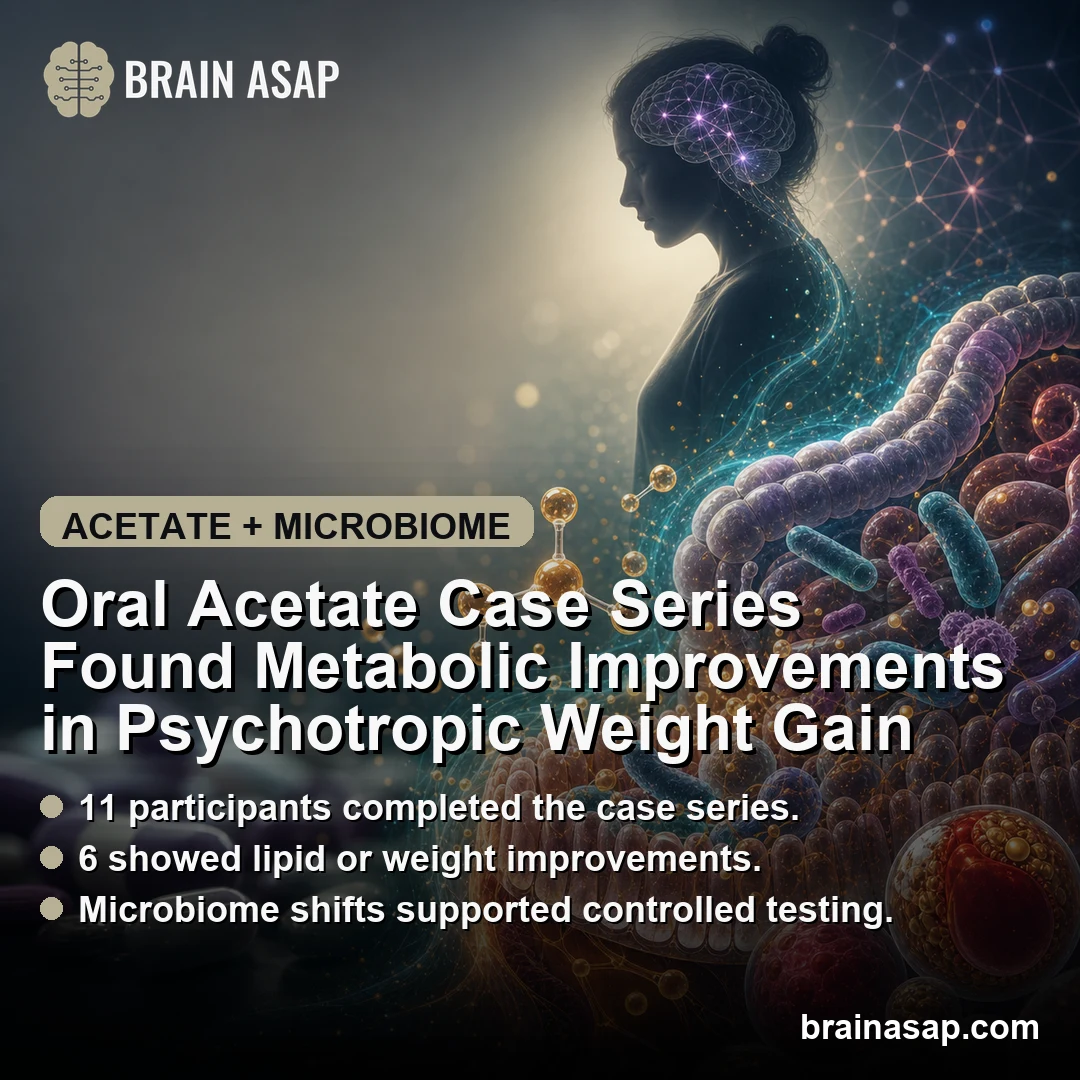
TL;DR: A 2026 case-series study in Translational Psychiatry tested delayed-release oral acetate from apple cider vinegar capsules in 11 young adults taking psychotropic medications and found high adherence, no product-related adverse events, microbiome shifts,…
Read article ↗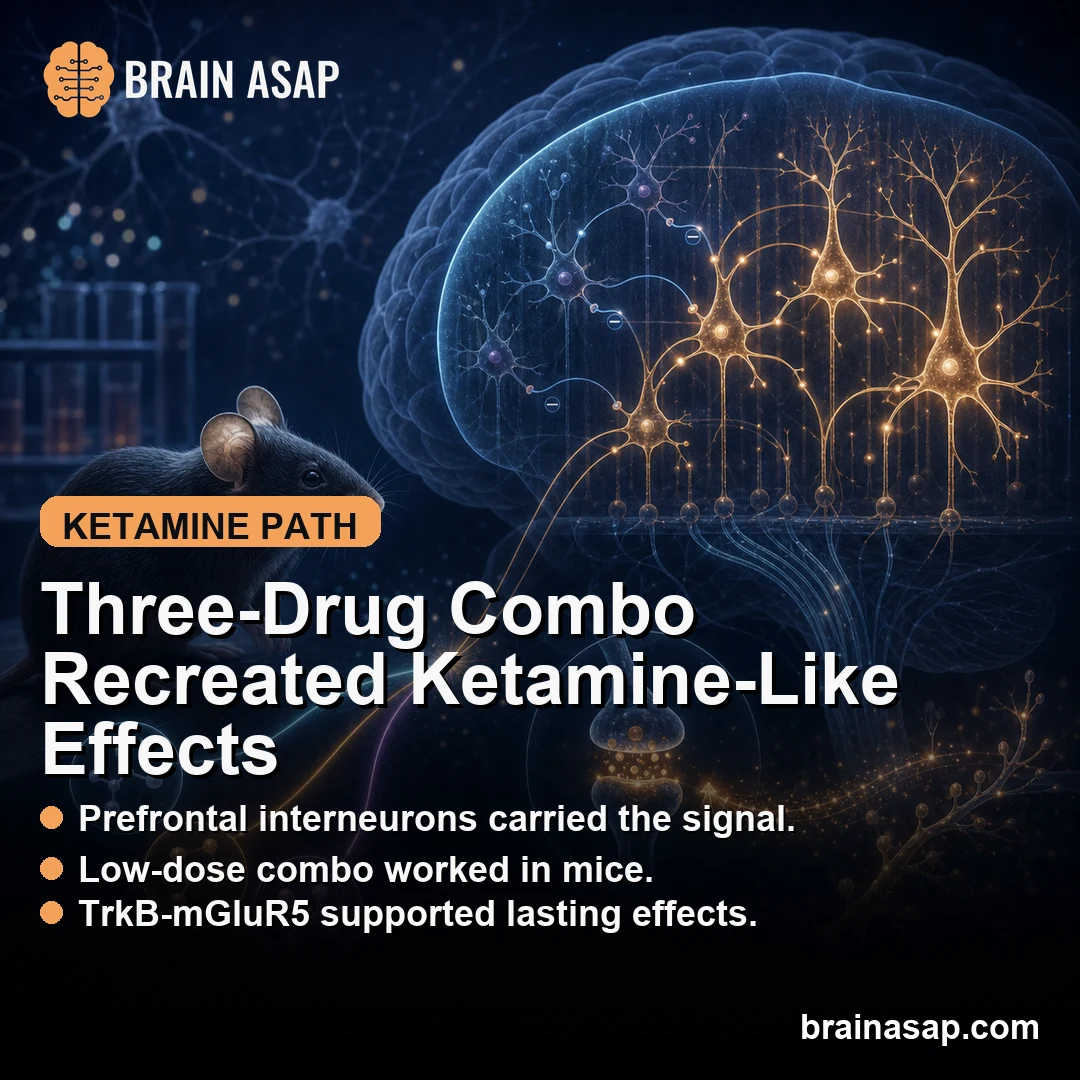
TL;DR: A 2026 mouse study in Cell traced ketamine’s rapid antidepressant-like effect to mu-opioid receptors on somatostatin-positive interneurons in the medial prefrontal cortex. Low-dose multi-GPCR targeting reproduced ketamine-like effects in mice, but the e…
Read article ↗