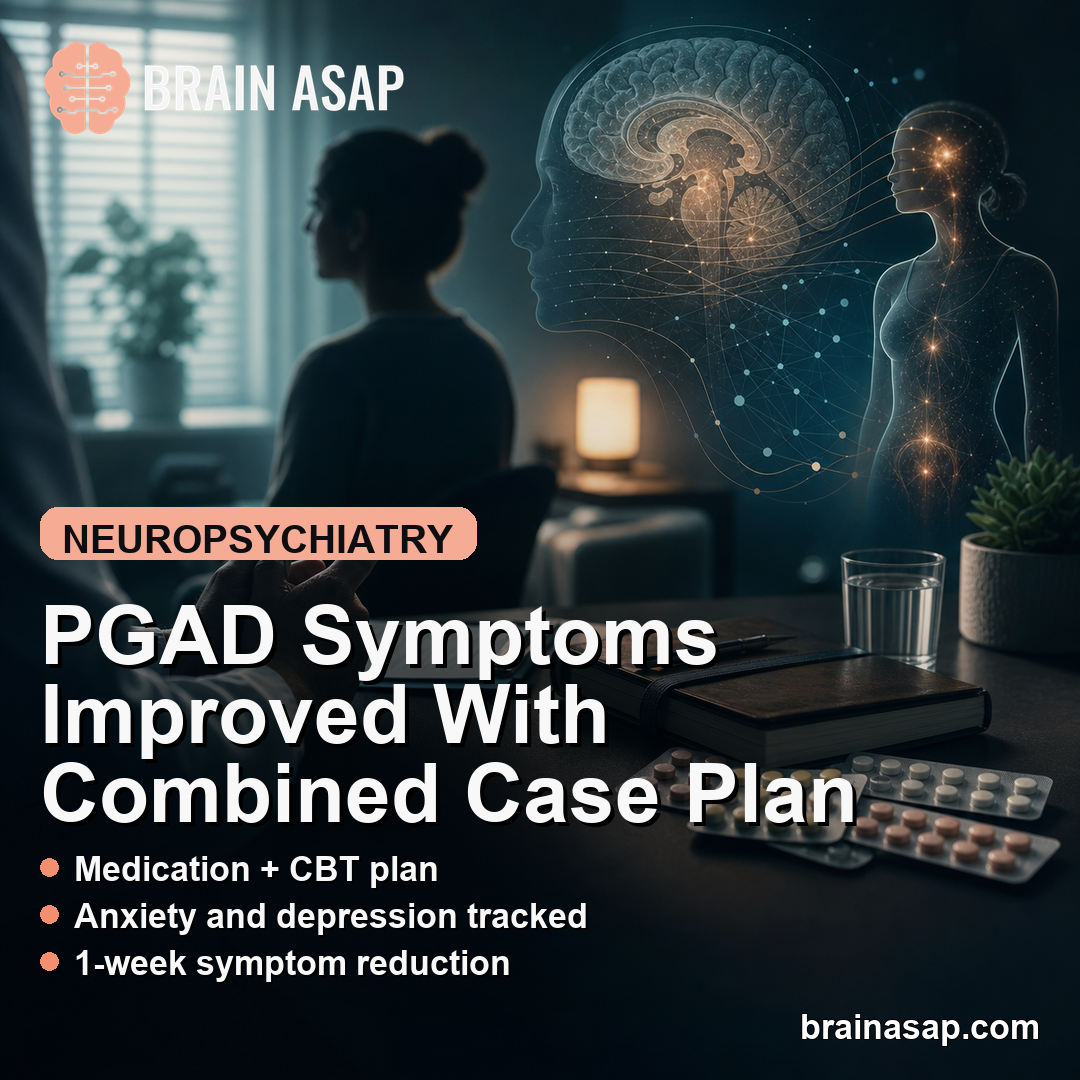
TL;DR: A 2026 study in Clinical Case Reports described persistent genital arousal disorder in a woman in her 30s, with symptom improvement after combined risperidone, sodium valproate, fluoxetine, short-term clonazepam, relaxation work, and cognitive behavioral strategies.
Key Findings
- Five-month symptom course: The patient reported spontaneous genital tingling, throbbing, and warmth without sexual desire or fantasy.
- Psychiatric burden: Hamilton Anxiety Rating Scale and Hamilton Depression Rating Scale scores were 18 and 21, consistent with moderate anxiety and depression in the report.
- Broad workup: CT showed a right parietal hyperdense focus, while brain MRI and electroencephalography were unremarkable; pelvic imaging showed a bicornuate uterus.
- Prior medication failures: Quetiapine, alprazolam, olanzapine-fluoxetine, propranolol, and clonazepam had produced minimal or temporary benefit.
- 1-week improvement: A combined medication and psychotherapy plan produced marked symptom reduction within 1 week, though symptoms worsened when valproate was temporarily replaced.
Source: Clinical Case Reports (2026) | Hassan et al.
Persistent genital arousal disorder (PGAD) involves unwanted genital arousal sensations that are not driven by sexual desire. The condition can be distressing, functionally impairing, and difficult to treat because causes can involve genital, pelvic, spinal, brain, medication, and psychological factors.
This case documents a full biopsychosocial workup and a combined treatment plan, while still showing why 1 case cannot define standard care. The clinical value comes from how the team mapped possible contributors rather than from a single medication claim.
PGAD Symptoms Persisted Without Sexual Desire for 5 Months
The patient was a married woman in her 30s with 5 months of unwanted genital tingling, throbbing, and warmth. Symptoms sometimes radiated to her leg and were worsened by sitting.
She did not describe the episodes as pain, rating them 0 on a visual analog pain scale. The report also noted no associated sexual desire, fantasy, or masturbation for relief.
- Daily function: Symptoms interfered with concentration, sleep, social activity, and usual household activities.
- Mood symptoms: Anxiety, irritability, sadness, guilt, and withdrawal developed as the condition persisted.
- Reproductive context: The patient had a history of infertility, six prior miscarriages, and another miscarriage during hospitalization.
The report described PGAD as a multifactorial condition rather than a single-symptom sexual-health complaint. That framing shaped the broad evaluation.
Workup Spanned Brain Pelvis Pregnancy and Mood Symptoms
The diagnostic workup crossed several systems. A brain CT showed a hyperdense focus in the right parietal lobe, but brain MRI was unremarkable and EEG showed no abnormal activity.
Gynecological examination did not find clitoral overexposure, vaginal engorgement, scarring, or visible anatomical abnormalities. Pelvic MRI and ultrasound found a bicornuate uterus.
- Brain region: CT raised a possible neurovascular question, but MRI and EEG did not confirm a clear neurological cause.
- Pelvic region: Imaging showed a uterine malformation, which may have contributed indirectly through reproductive stress or pelvic signaling.
- Mood region: HAM-A and HDRS scores documented clinically meaningful anxiety and depressive symptoms.
Screening for syphilis and HIV was negative. Pregnancy testing was positive, and twin pregnancy was diagnosed before the later miscarriage.
Risperidone Valproate Fluoxetine and CBT Were Combined
Several earlier medication attempts had not produced sustained benefit. The patient had tried quetiapine with alprazolam, olanzapine-fluoxetine with alprazolam, and olanzapine with propranolol and clonazepam.
The new regimen combined risperidone, sodium valproate, fluoxetine, and short-term clonazepam, alongside structured psychotherapy. The psychotherapeutic work included relaxation techniques and cognitive behavioral strategies.
- Risperidone rationale: The report discussed dopamine and serotonin receptor effects as possible ways to reduce unwanted arousal signaling.
- Valproate rationale: Sodium valproate was discussed as a mood-stabilizing and anticonvulsant agent that may influence inhibitory GABA activity.
- CBT rationale: Cognitive behavioral work targeted anxiety, distress, intrusive thoughts, and beliefs that intensified the symptom cycle.
Improvement Came Within 1 Week but Medication Changes Mattered
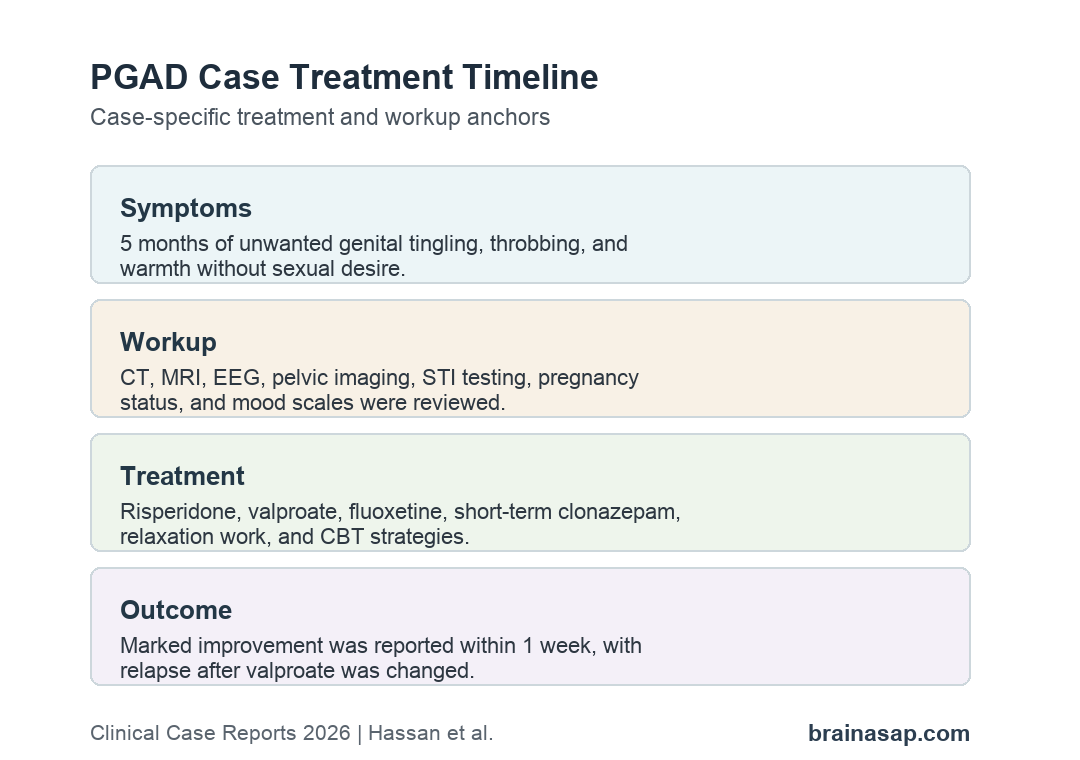
Within the first week of the combined plan, the report described significant improvement in unwanted arousal symptoms and overall functioning. Anxiety, depression, sleep disturbance, and functional impairment also improved before discharge.
Pregnancy created a treatment change. Sodium valproate was replaced with carbamazepine 200 mg for fetal-safety reasons, and initial improvement continued.
After the miscarriage, symptoms worsened again. Sodium valproate was reintroduced, and renewed improvement was reported.
- Short-term response: The rapid improvement suggests that the combined plan was clinically meaningful for this patient.
- Medication sensitivity: Symptom worsening after the medication change points toward a possible role for valproate in this case.
- Missing measurement: HAM-A and HDRS were not repeated, so the mood improvement was not quantified with follow-up scores.
1 PGAD Case Cannot Define Standard Treatment
PGAD evidence remains limited, and much of the literature comes from case reports. This report can support clinical hypotheses, but it cannot show how often the combined regimen works or which component mattered most.
Several factors could have contributed at once: neurophysiological sensitivity, reproductive stress, grief, anxiety, depression, pelvic anatomy, and medication effects. A single-patient response cannot separate those contributions cleanly.
- Best-supported point: PGAD should be evaluated across neurological, pelvic, reproductive, medication, and psychological domains.
- Clinical boundary: Risperidone and valproate should not be treated as proven PGAD therapy from one case.
- Follow-up need: Longer monitoring, repeated symptom scales, and pelvic-floor or sexual-medicine assessment would strengthen future reports.
The practical conclusion is multidisciplinary care. PGAD symptoms can be medically real, psychologically distressing, and socially isolating at the same time, so treatment planning should not force the problem into only 1 specialty.
The case also supports careful follow-up after medication changes. In this patient, symptom control appeared to shift when sodium valproate was replaced and then reintroduced, but repeated symptom scales would be needed to quantify that change.
Citation: DOI: 10.1002/ccr3.72547. Hassan et al. Unraveling Persistent Genital Arousal Disorder-A Case Report on Innovative Therapeutic Approaches. Clinical Case Reports. 2026;14:e72547.
Study Design: Single psychiatric and gynecological case report of persistent genital arousal disorder.
Sample Size: 1 woman in her 30s with 5 months of unwanted genital arousal symptoms.
Key Statistic: Marked clinical improvement was reported within 1 week after combined pharmacotherapy and psychotherapy.
Caveat: The report did not repeat anxiety or depression scales after treatment, and a single case cannot establish efficacy for any medication combination.