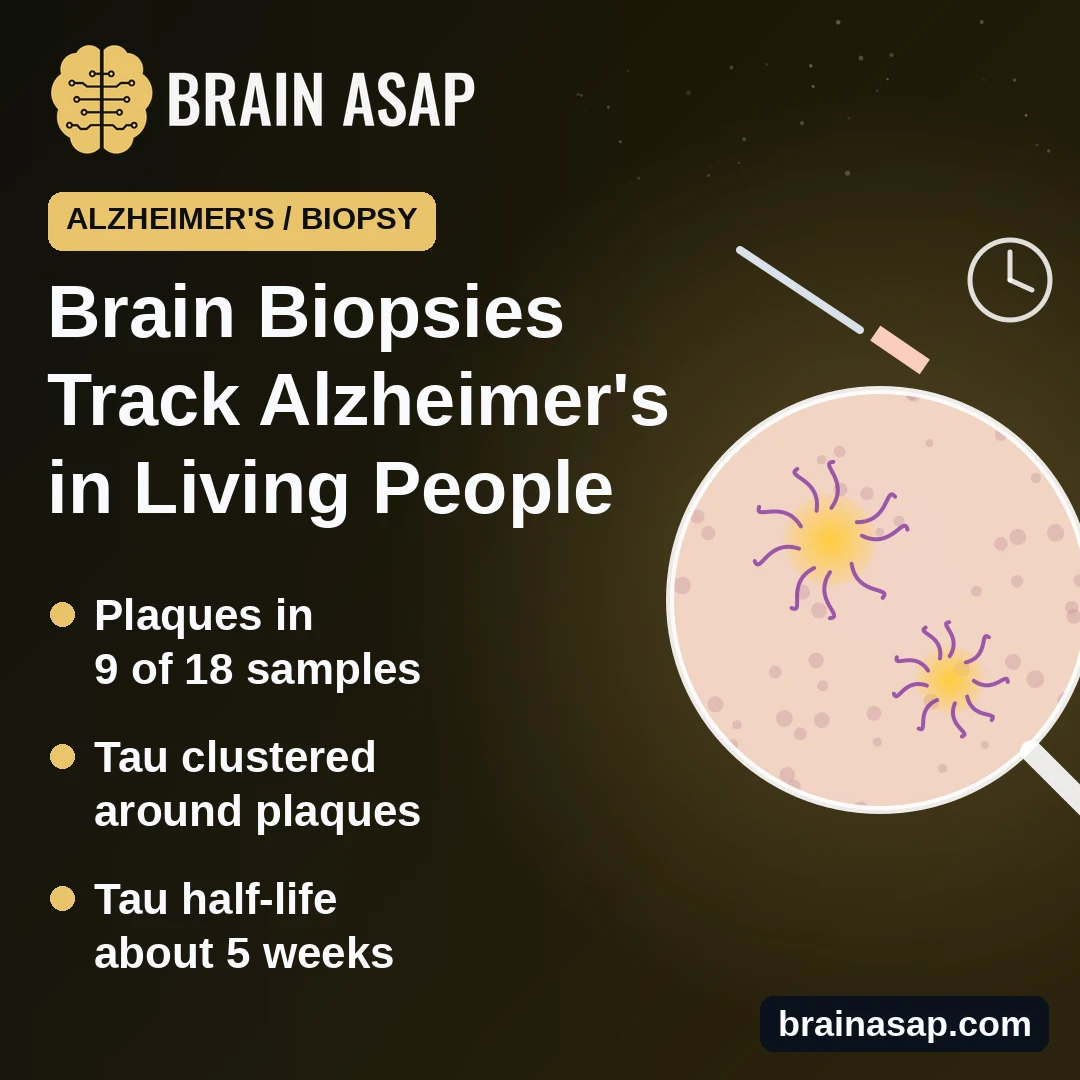
TL;DR: Tiny brain samples taken during routine shunt surgery let researchers study Alzheimer’s changes in living people. Half the samples had amyloid plaques, tau clustered around them, and brain tau had a half-life of about five weeks. Key Findings 18 living…
Read article ↗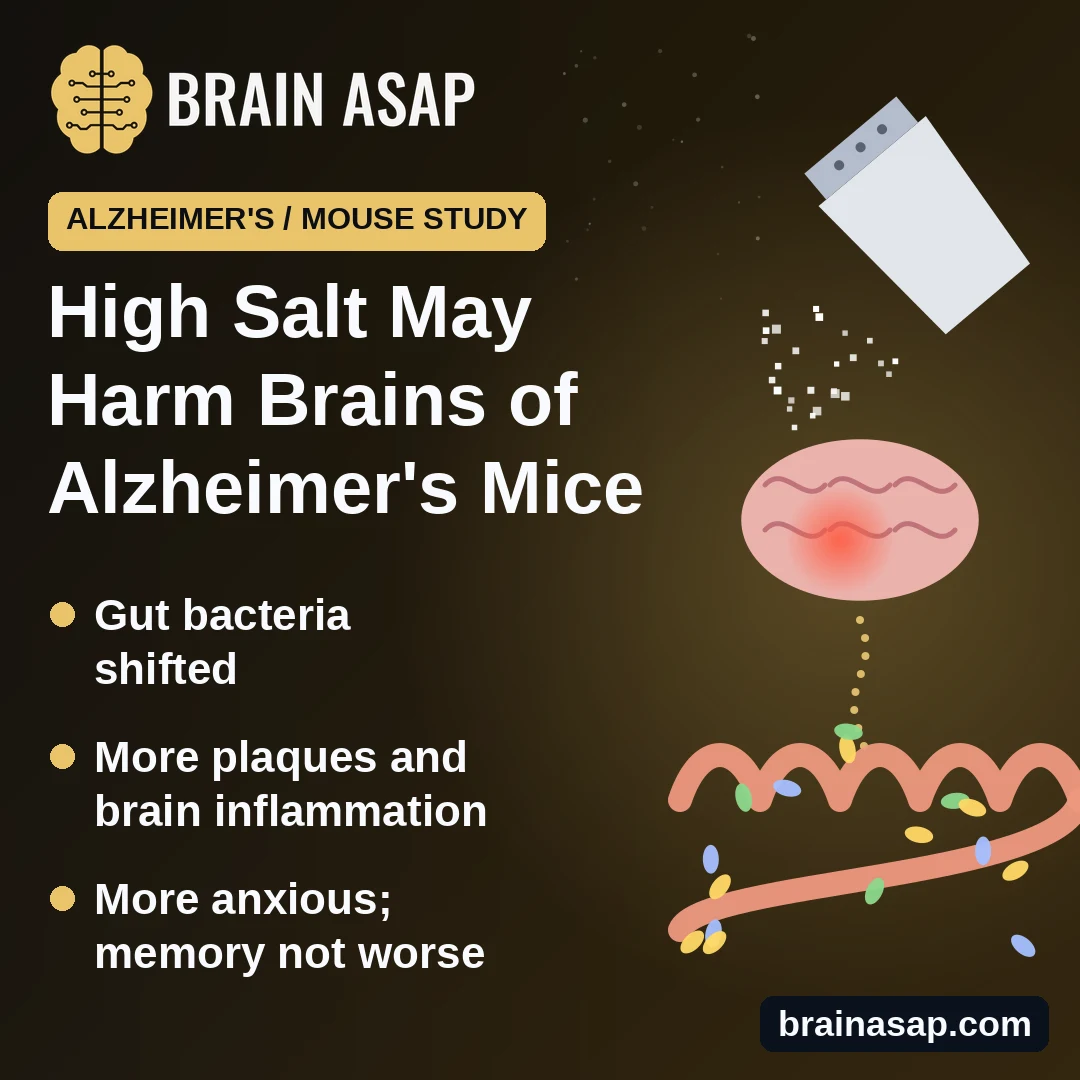
TL;DR: Alzheimer’s-model mice fed very salty chow for 6 months had altered gut bacteria, more brain inflammation and plaques, and more anxious behavior than mice on normal chow. It’s a mouse study, and the gut-to-brain link was not proven. Key Findings 8% vs 0…
Read article ↗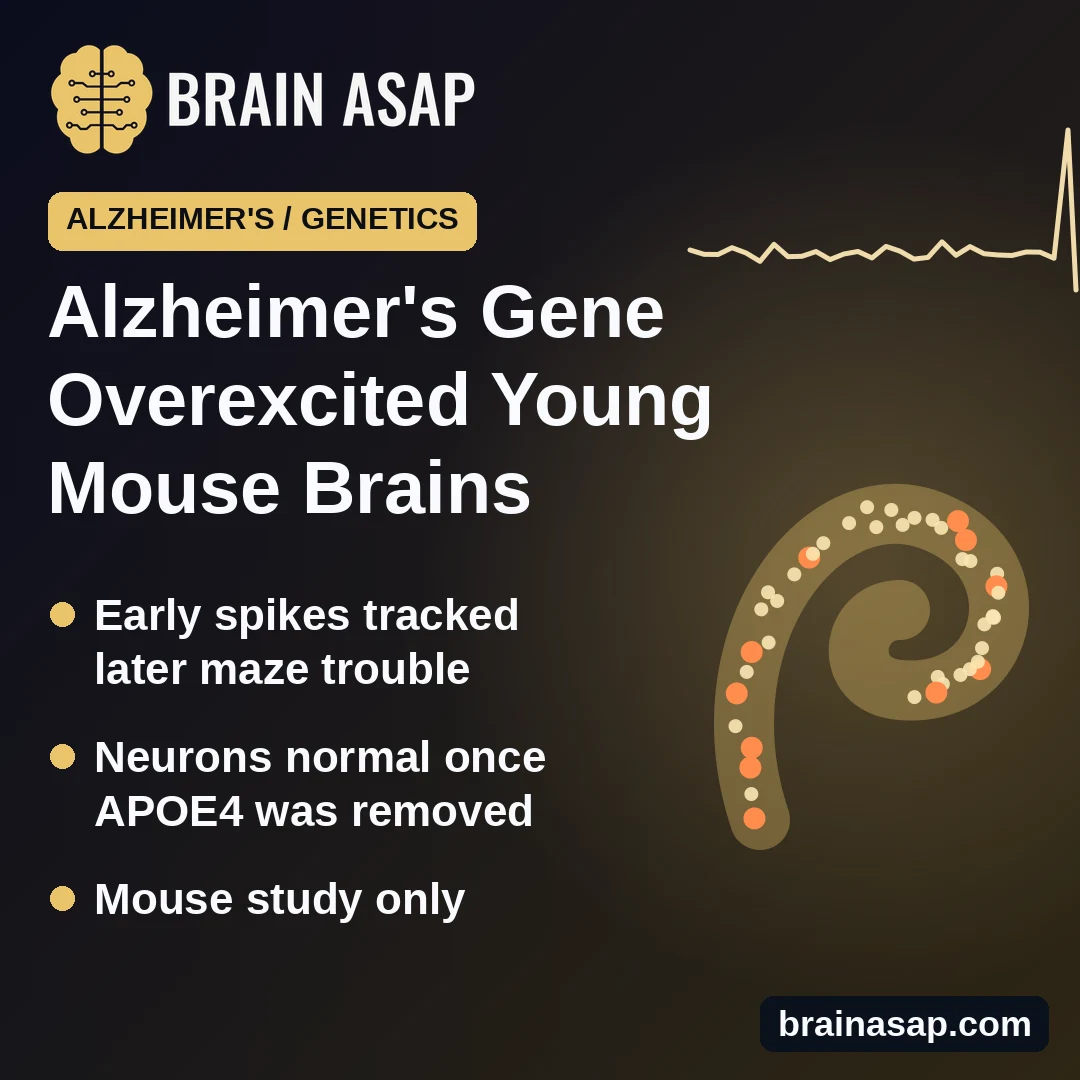
TL;DR: Young mice carrying the human APOE4 gene, the biggest genetic risk factor for Alzheimer’s, had overexcited memory circuits months before any memory trouble showed up. Removing APOE4 from their neurons returned those cells to normal. Key Findings Early w…
Read article ↗
TL;DR: A 2026 medRxiv preprint found that pupil dilation measured inside a virtual reality (VR) headset increased as working-memory load rose in healthy adults, was reproducible 60–90 days later in 33 returnees, and was smaller under the highest load in cognit…
Read article ↗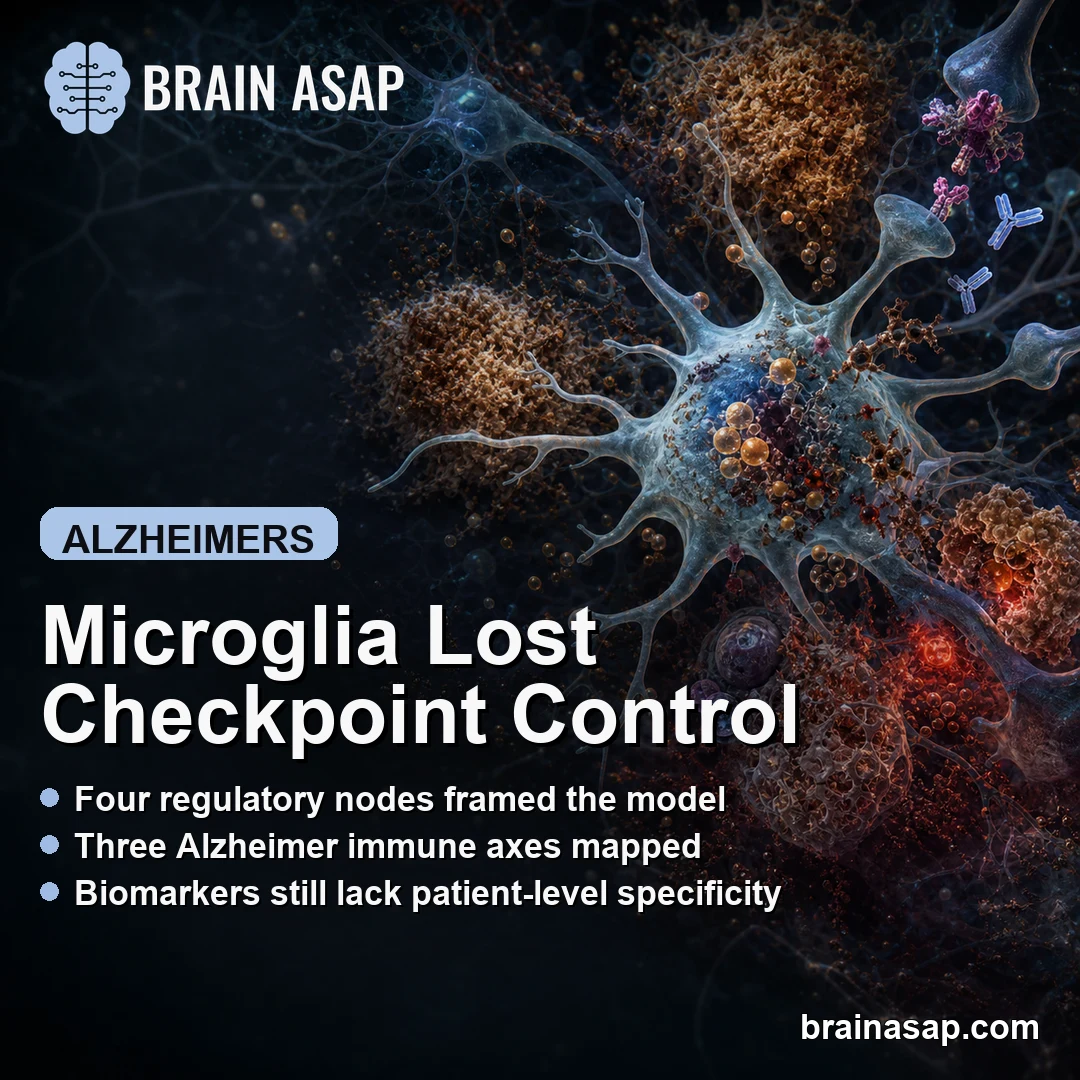
TL;DR: A 2026 review in Journal of Neuroinflammation proposed that Alzheimer microglial dysfunction can be understood as checkpoint collapse, where failed regulatory controls feed three interacting lipid, iron/ferroptosis, and inflammation/complement axes. Key…
Read article ↗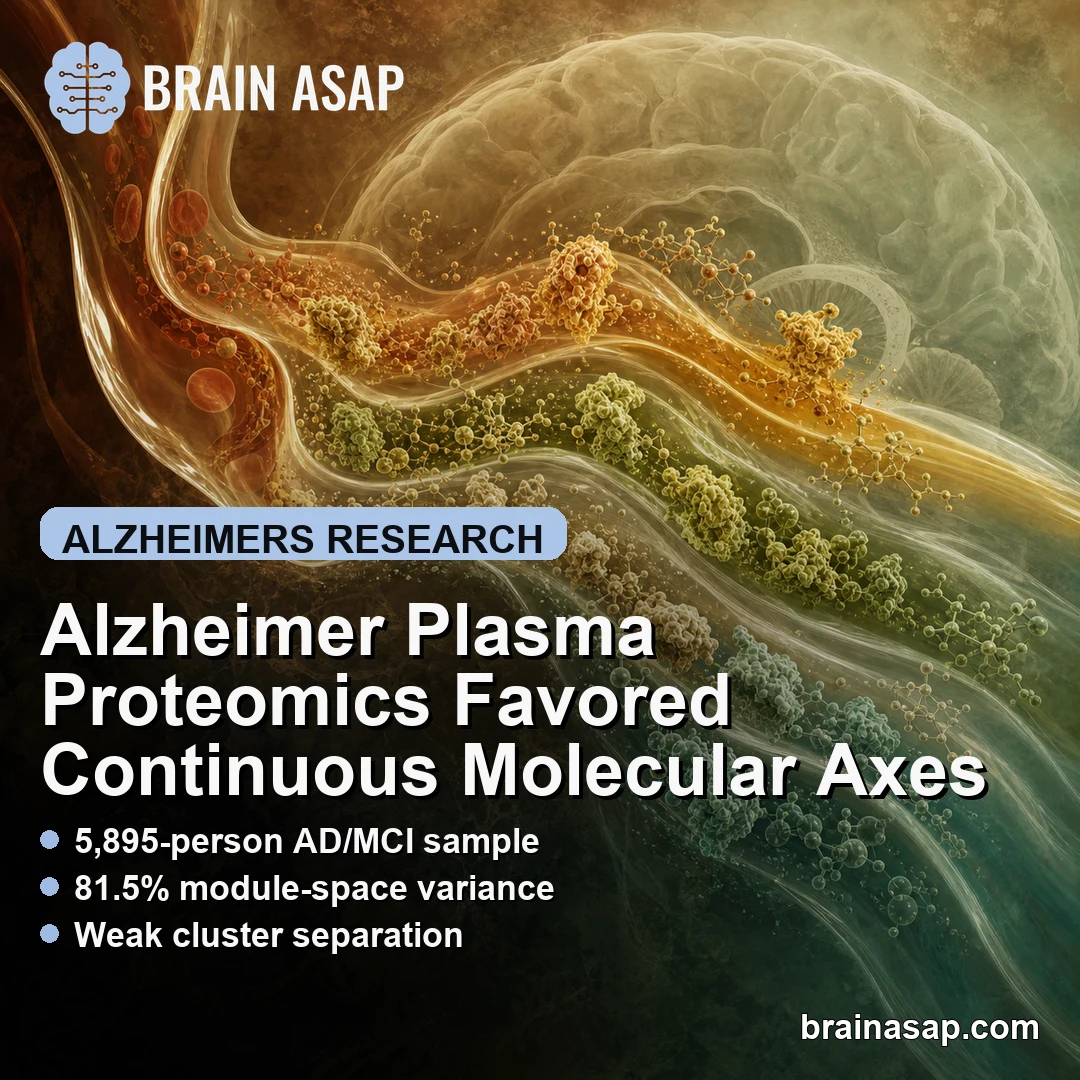
TL;DR: A 2026 preprint in medRxiv analyzed plasma proteomics in Alzheimer’s disease and mild cognitive impairment and found that four continuous molecular axes described the data better than hard subtype labels. Key Findings 5,895-person AD/MCI sample: The dis…
Read article ↗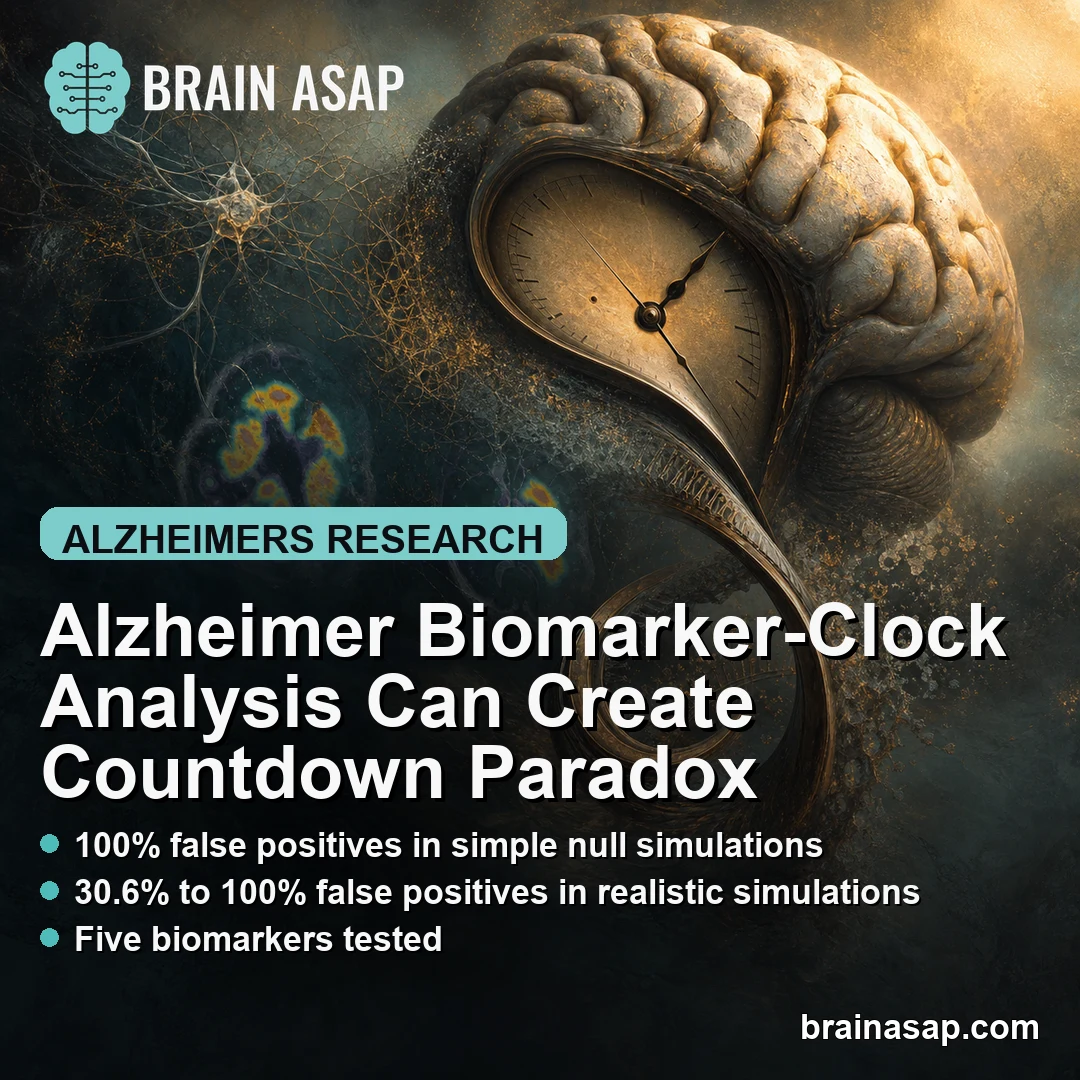
TL;DR: A 2026 preprint in medRxiv warned that a standard Alzheimer’s disease biomarker-clock analysis can create a countdown paradox, where later biomarker-clock ages appear linked to faster mild cognitive impairment onset because of the way remaining time is…
Read article ↗
TL;DR: A 2026 narrative review in International Journal of General Medicine argued that apathy in Alzheimer’s disease is tied to damage across motivation circuits, including the anterior cingulate cortex, orbitofrontal cortex, striatum, locus coeruleus, and la…
Read article ↗
TL;DR: A 2026 review in International Journal of Molecular Medicine mapped how exercise and fluoxetine overlap in Alzheimer’s disease mechanisms such as mitochondrial quality control, oxidative stress, inflammation, and neuroplasticity, but clinical combinatio…
Read article ↗
TL;DR: A 2026 systematic review and meta-analysis in Journal of Alzheimer’s Disease found that choroid plexus volume, an MRI-visible structure involved in cerebrospinal-fluid regulation and immune signaling, was larger in Alzheimer’s disease than in healthy co…
Read article ↗