TL;DR: A 2026 study in Nature Communications found that neuropsychiatric disorder risk did not map onto cognition as one general trait. Schizophrenia, bipolar disorder, ADHD, autism, and Alzheimer’s disease showed different genetic links with reaction time, fl…
Read article ↗
TL;DR: A 2026 real-world cohort study in The Journal of Prevention of Alzheimer’s Disease found that lecanemab-treated Alzheimer’s patients had lower Neuropsychiatric Inventory scores over follow-up, and 6-month symptom reductions were associated with regional…
Read article ↗
TL;DR: A 2026 narrative review in Molecular Psychiatry argues that depression in Alzheimer’s disease and Parkinson’s disease follows disease-specific brain mechanisms, while standard antidepressant evidence remains weak in these neurodegenerative populations.…
Read article ↗
TL;DR: A 2026 study in Nature Communications reported that tubulin redirected Tau and alpha-synuclein condensates toward microtubule-building states, while tubulin loss pushed the same protein system toward toxic oligomers in cell models. Key Findings 36-hour…
Read article ↗
TL;DR: A 2026 study in Nature Communications found that proteotoxic stress can push neurons into karyoptosis, a cell-death pathway marked by nuclear lamina breakdown, nuclear-material expulsion, and dementia-linked tissue signatures. Key Findings Karyoptosis w…
Read article ↗
TL;DR: A 2026 study in Open Medicine used network pharmacology, Alzheimer’s disease transcriptomic datasets, machine learning, Mendelian randomization, and molecular docking to link 6PPD-quinone, a tire-wear chemical transformation product, with inflammation,…
Read article ↗
TL;DR: A 2026 preprint in medRxiv found that brain-derived p-tau217%, a blood marker designed to isolate central nervous system tau, classified Alzheimer disease pathology better than standard plasma p-tau217 in several Alzheimer cohorts. Key Findings CNS-sele…
Read article ↗
TL;DR: A 2026 review in Drug Design, Development and Therapy argued that glucagon-like peptide-1 (GLP-1) receptor agonists, drugs that mimic a metabolic hormone involved in glucose control, have credible brain-protection mechanisms, but clinical evidence for n…
Read article ↗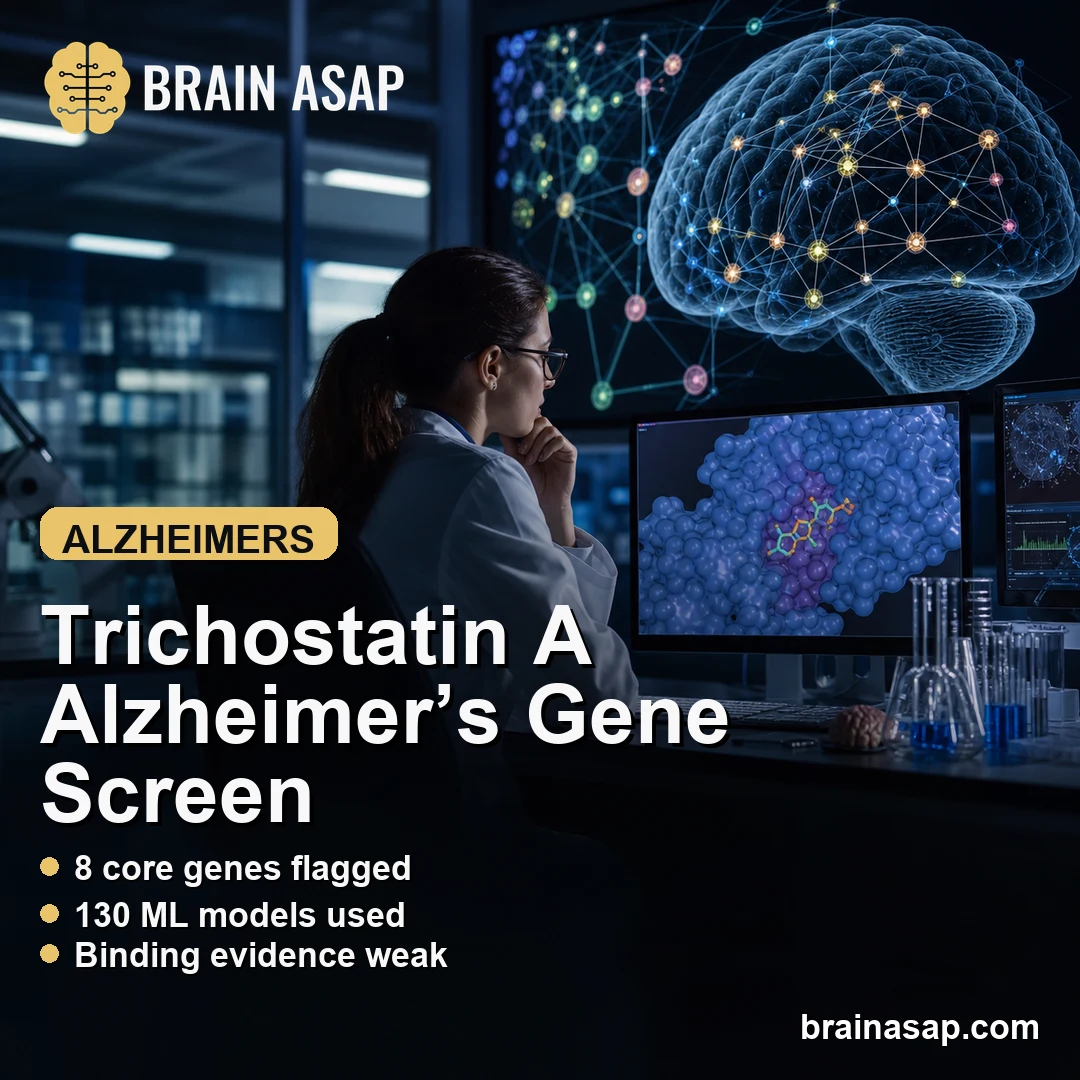
TL;DR: A 2026 computational study in PLOS One used GEO Alzheimer’s datasets, 130 machine-learning models, and molecular simulations to identify eight candidate genes that may sit in a trichostatin A-related Alzheimer’s disease network. Key Findings 949 predict…
Read article ↗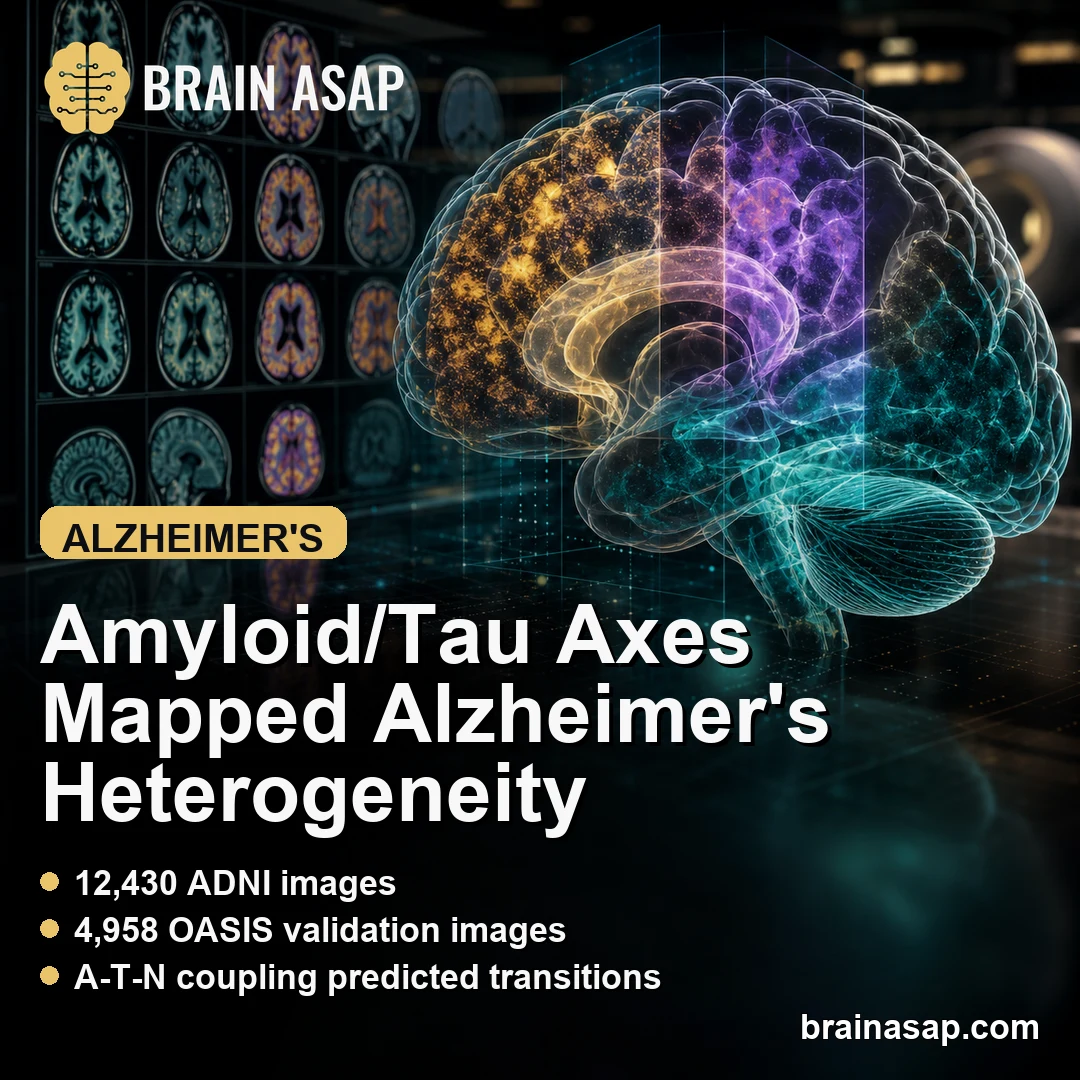
TL;DR: A 2026 preprint in medRxiv used amyloid positron-emission tomography, tau molecular imaging, and structural MRI to build individualized Alzheimer’s disease biomarker axes from ADNI and validate them in OASIS. Key Findings 12,430 ADNI images: The pipelin…
Read article ↗