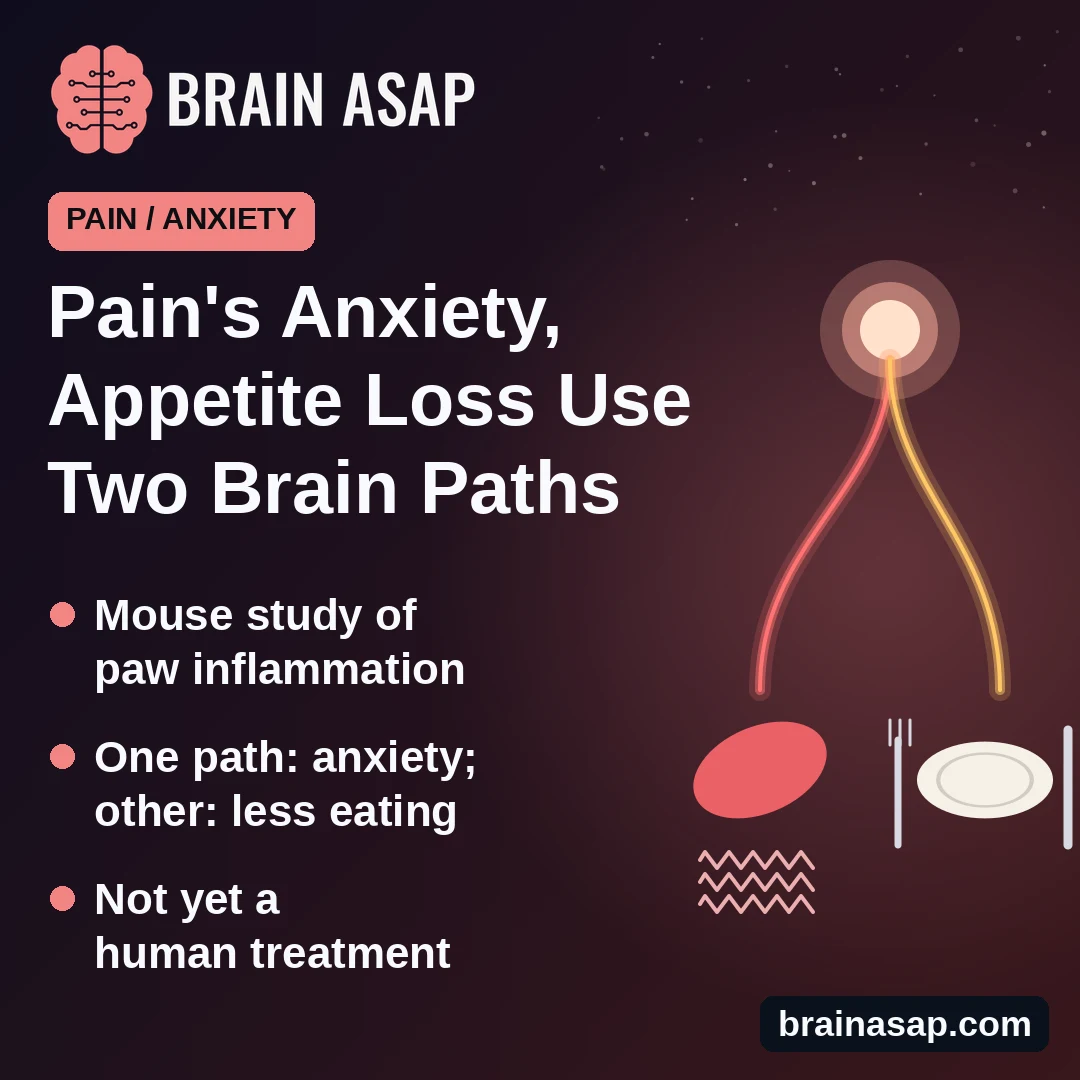
TL;DR: In mice with a painful, inflamed paw, two separate sets of neurons in a pain-and-emotion brain area seemed to drive different side effects. One set, wired to the amygdala, controlled anxiety-like behavior, while the other, wired to a reward hub, control…
Read article ↗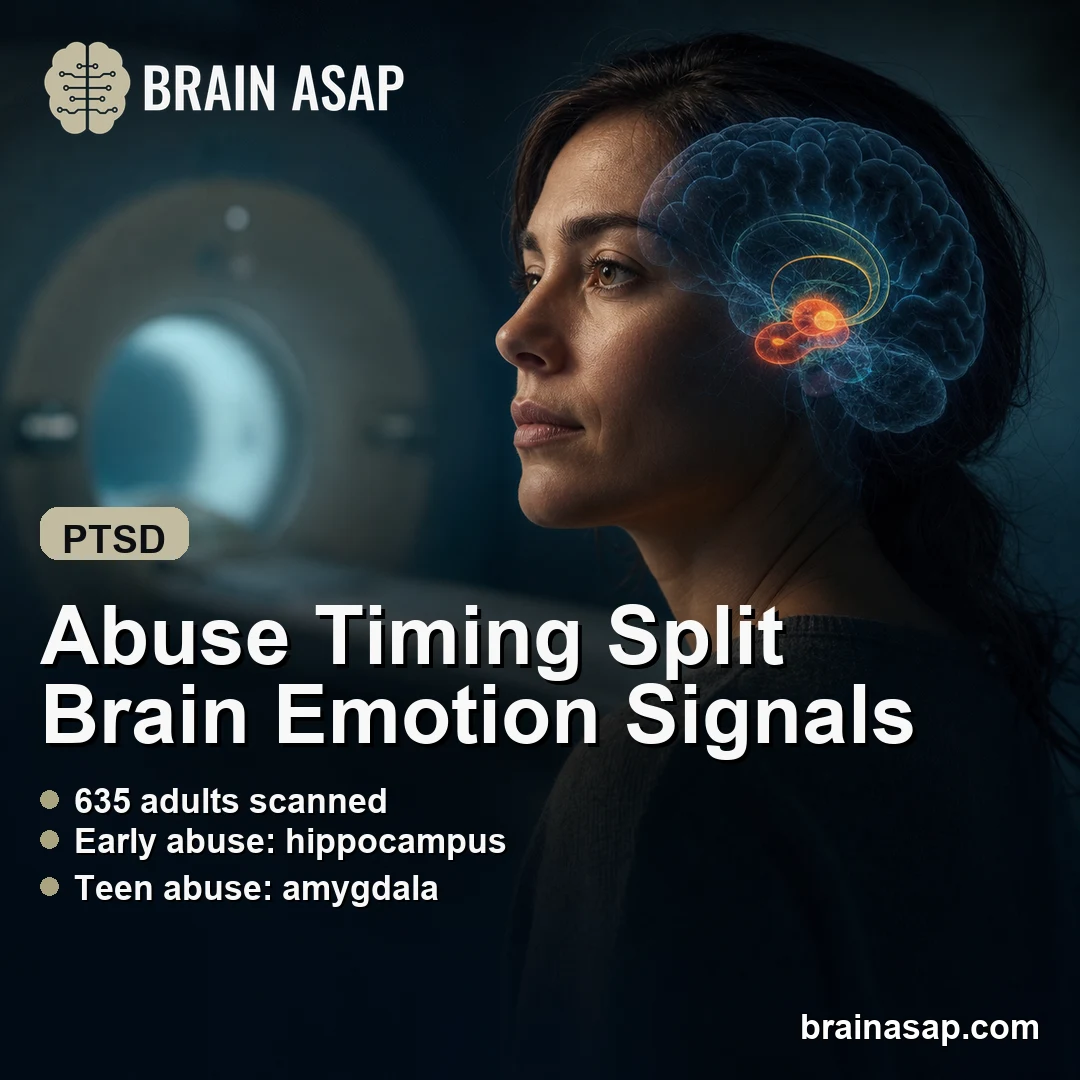
TL;DR: A 2026 fMRI study in Molecular Psychiatry linked abuse before age 13 to stronger hippocampal responses during non-conscious negative emotion processing, while abuse during adolescence was linked to stronger amygdala responses during conscious emotion vi…
Read article ↗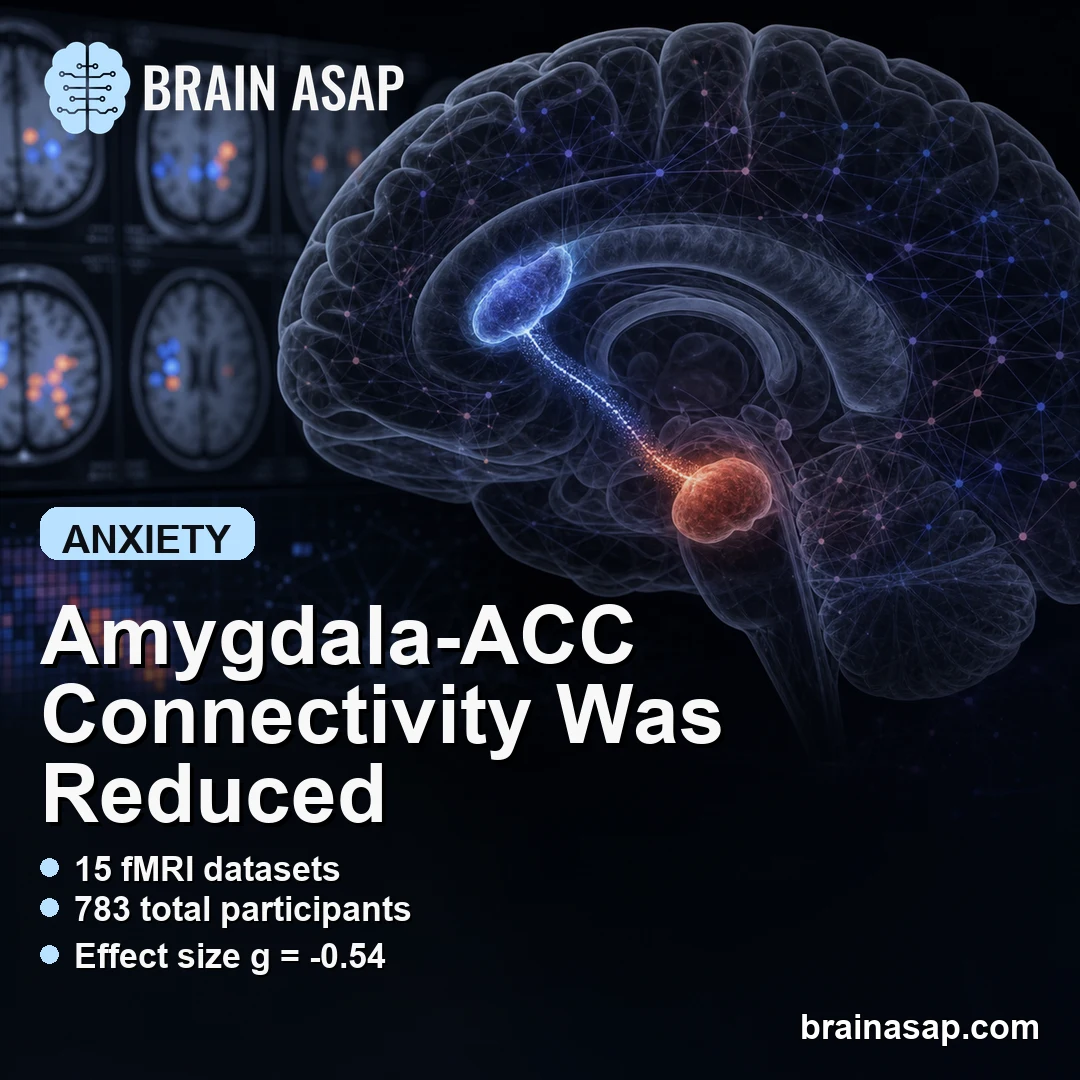
TL;DR: A 2026 meta-analysis in Psychological Medicine found that reduced resting-state connectivity between the amygdala and anterior cingulate cortex was the most robust brain-network difference in anxiety disorders. Key Findings 15 datasets: The meta-analysi…
Read article ↗
TL;DR: A 2026 medRxiv preprint from the ENIGMA Addiction Working Group used structural MRI from 2,782 people with substance use disorder (SUD) and 1,951 controls and reported that addiction-related brain differences followed cortical network hubs and neurotran…
Read article ↗
TL;DR: A 2026 functional MRI (fMRI) study in Psychological Medicine found that schizophrenia, bipolar disorder, and major depressive disorder shared some thalamus connectivity disruption, but each diagnosis showed a different subcortical network pattern across…
Read article ↗
TL;DR: A 2026 study in Nature Communications found that different brain-connectivity measures predicted different parts of associative learning: functional connectivity predicted acquisition, structural connectivity predicted extinction learning, and effective…
Read article ↗
TL;DR: A 2026 Imaging Neuroscience functional MRI (fMRI) study found that emotional pictures were recalled better than neutral pictures, but amygdala and insula activity appeared tied mainly to arousal rather than whether memories were negative or positive. Ke…
Read article ↗
TL;DR: A 2026 systematic review in European Archives of Psychiatry and Clinical Neuroscience argues that catatonia, a syndrome of freezing, mutism, and abnormal movement, may involve underweighted limbic-system circuitry linking emotional regulation with motor…
Read article ↗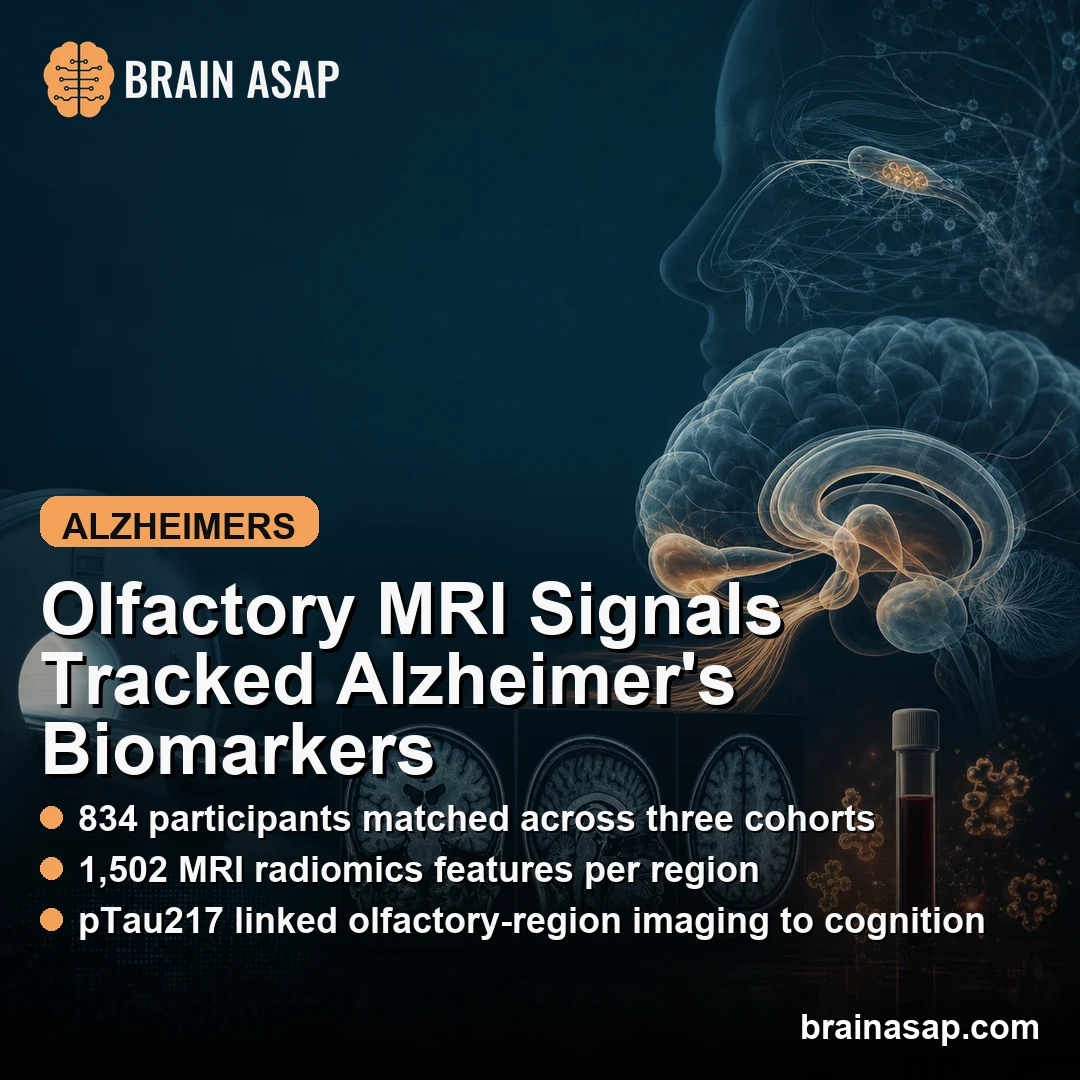
TL;DR: A 2026 article-in-press study in Alzheimer’s Research & Therapy found that olfactory-region MRI radiomics, a method that turns brain scans into quantitative texture and shape features, linked blood pTau217, a tau-related Alzheimer’s disease biomarker, w…
Read article ↗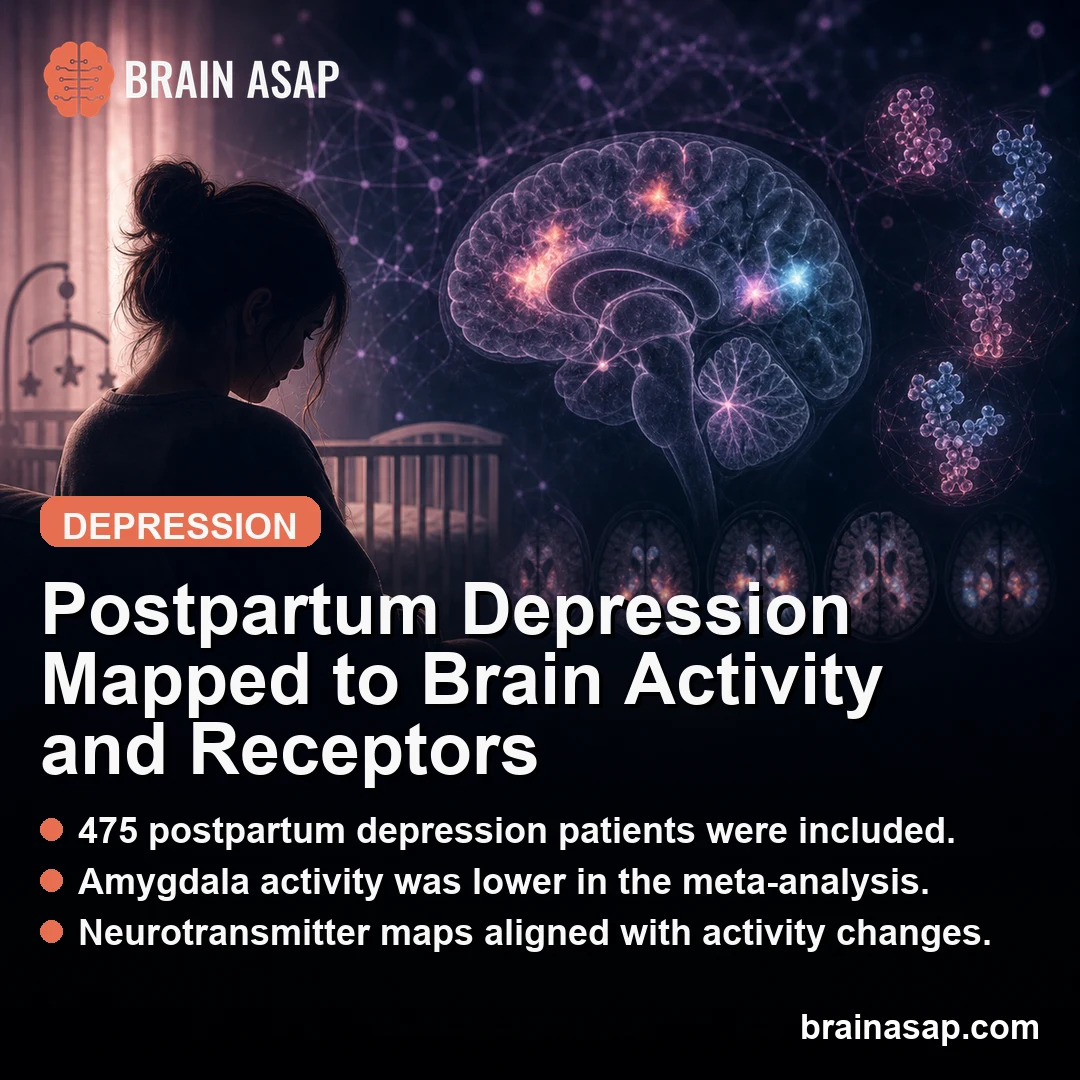
TL;DR: A 2026 meta-analysis in Psychological Medicine found postpartum depression (PPD) brain-activity differences across default-mode, limbic, and sensorimotor regions, with spatial overlap in serotonin, dopamine, and vesicular acetylcholine transporter maps.…
Read article ↗