How Insomnia Fragments REM Sleep and Causes Depression: The Neuroscience Explained
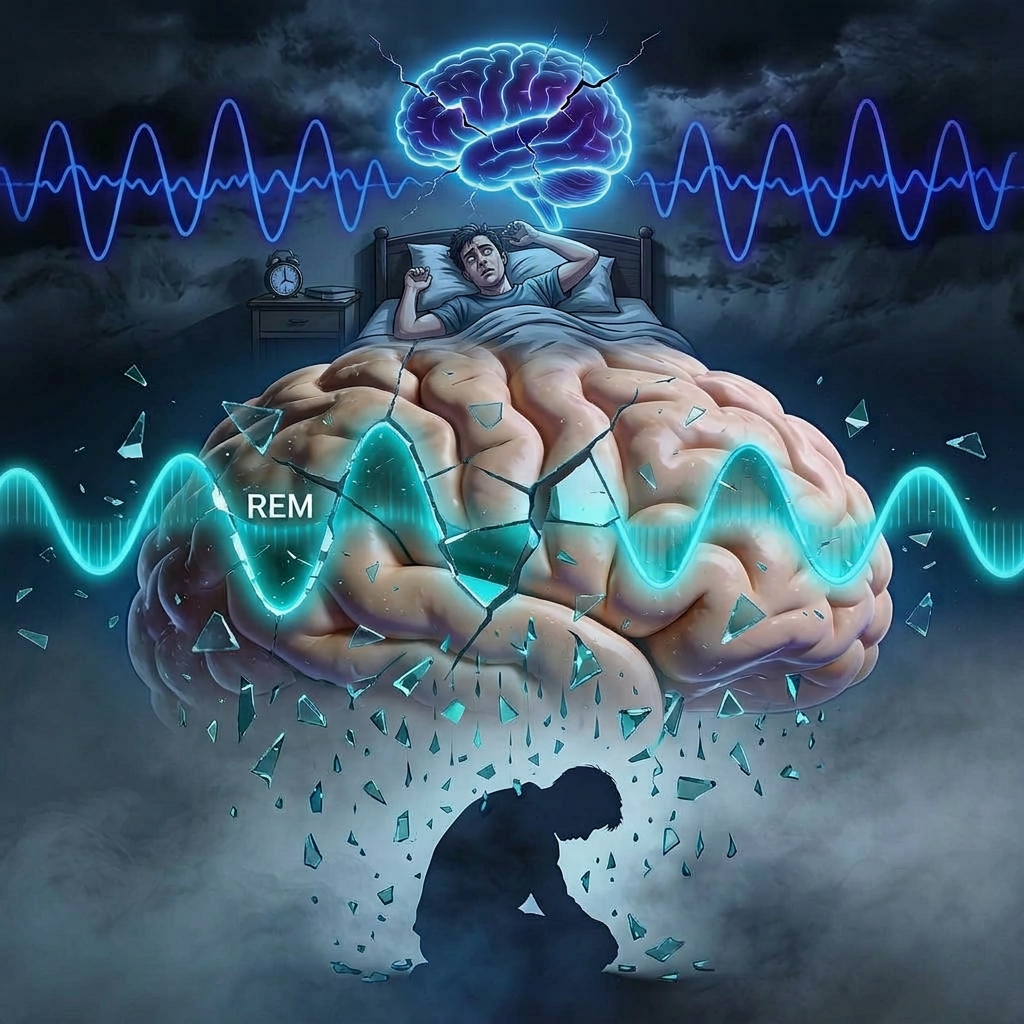
TL;DR: Chronic insomnia fragments REM sleep through persistent hyperarousal, preventing emotional memory consolidation and creating a vicious cycle that breeds depression—but cognitive-behavioral therapy for insomnia can break the cycle faster than antidepressants alone. Insomnia has a hidden mechanism. You lie awake for hours, but the real problem isn’t the wakefulness—it’s what happens to REM sleep, …
Read more

Sleep Patterns vs. Risk of Psychiatric Disorders: Depression, Schizophrenia, ADHD (2024 Study)

Insomnia and daytime napping are causally associated with an increased risk of major depressive disorder (MDD), while sleep duration influences the risk of schizophrenia and attention-deficit/hyperactivity disorder (ADHD). Highlights: Major Depressive Disorder (MDD): Insomnia and napping during the day significantly increase the risk of MDD. Schizophrenia: Longer sleep duration is associated with a higher risk …

Read more

Sleep Profiles of Different Psychiatric Traits (2024 Study)

Different psychiatric conditions exhibit varied sleep problems, with insomnia and fatigue being the most common issues. Highlights: Worst Sleep Profiles: Traits related to affect disorders, generalized anxiety, and ADHD show the worst sleep problems, including insomnia and fatigue. Milder Sleep Issues: Autism, eating disorders, and impulsivity traits are linked to milder sleep disturbances. Mania and …

Read more

How Common Are Antidepressant Withdrawal Symptoms? Estimated in 31% of Patients (2024 Review)

Antidepressant withdrawal symptoms occur in about one-third of patients stopping antidepressants, with severe symptoms in about 3% of cases – according to a new Lancet Psychiatry review. Highlights: Incidence of Symptoms: Approximately 31% of patients experience at least one discontinuation symptom after stopping antidepressants, compared to 17% for those stopping placebo. Severe Symptoms: Around 3% …

Read more

Antidepressants for Insomnia Treatment in Adults: Are They Effective? (Cochrane Review Findings)

Insomnia is a common sleep disorder affecting up to 15% of adults. While sedative medications are often prescribed, their long-term use can lead to dependence. As an alternative, antidepressants are widely used in clinical practice despite limited evidence supporting their efficacy and safety for insomnia. Key Facts: Insomnia affects up to 15% of adults, causing …

Read more

Complex Effects of Antidepressants on Sleep & Depression: What You Should Know

Depression often comes with significant sleep disturbances that can persist even after other symptoms improve. Choosing an antidepressant that alleviates sleep problems may improve outcomes. Key Facts: Sleep complaints like insomnia occur in 60-90% of depression patients. Poor sleep is associated with higher suicide risk. Sedative antidepressants like mirtazapine quickly improve sleep, while SSRIs/SNRIs may …

Read more

Kava & Valerian Combo for Stress-Related Insomnia

A new pilot study investigates using kava and valerian, two herbal remedies, to treat stress-induced insomnia. Key Facts: 24 patients with stress-induced insomnia took part in the 6-month crossover study. All patients took kava for 6 weeks, then valerian for 6 weeks, then a combination of both for 6 weeks. Both kava and valerian significantly …

Read more

Chamomile for Anxiety, Insomnia, Sleep: An Effective Natural Treatment?

Chamomile, a popular herbal tea, has frequently been associated with benefits for relaxation and sleep. A new systematic review and meta-analysis published in Phytotherapy Research comprehensively analyzes the clinical research on chamomile for anxiety, insomnia, and sleep quality. Key facts from this study: 12 randomized controlled trials with 965 total patients were included. Trials tested …

Read more

Valerian Root for Sleep & Insomnia: Does It Really Work?

Valerian root has been used for centuries as a natural remedy for sleep problems and anxiety. Recent research suggests it may be an effective option, but results are mixed. Here are some key facts: Valerian is a flowering plant native to Europe and Asia whose roots have sedative properties. The active ingredients are likely valerenic …

Read more

Insomnia & Hyperarousal: Brain Waves (EEG) Link (Beta & Gamma Power)

New research provides further evidence that insomnia is characterized by brain hyperarousal, even when controlling for symptoms of depression and anxiety. The study used electroencephalography (EEG) to measure daytime brain activity in patients with insomnia disorder compared to healthy controls. Key findings: Patients with insomnia disorder showed increased high-frequency beta and gamma brain wave activity …

Read more