Krill Oil vs Fish Oil: Which is Better for Inflammation and Oxidative Stress?

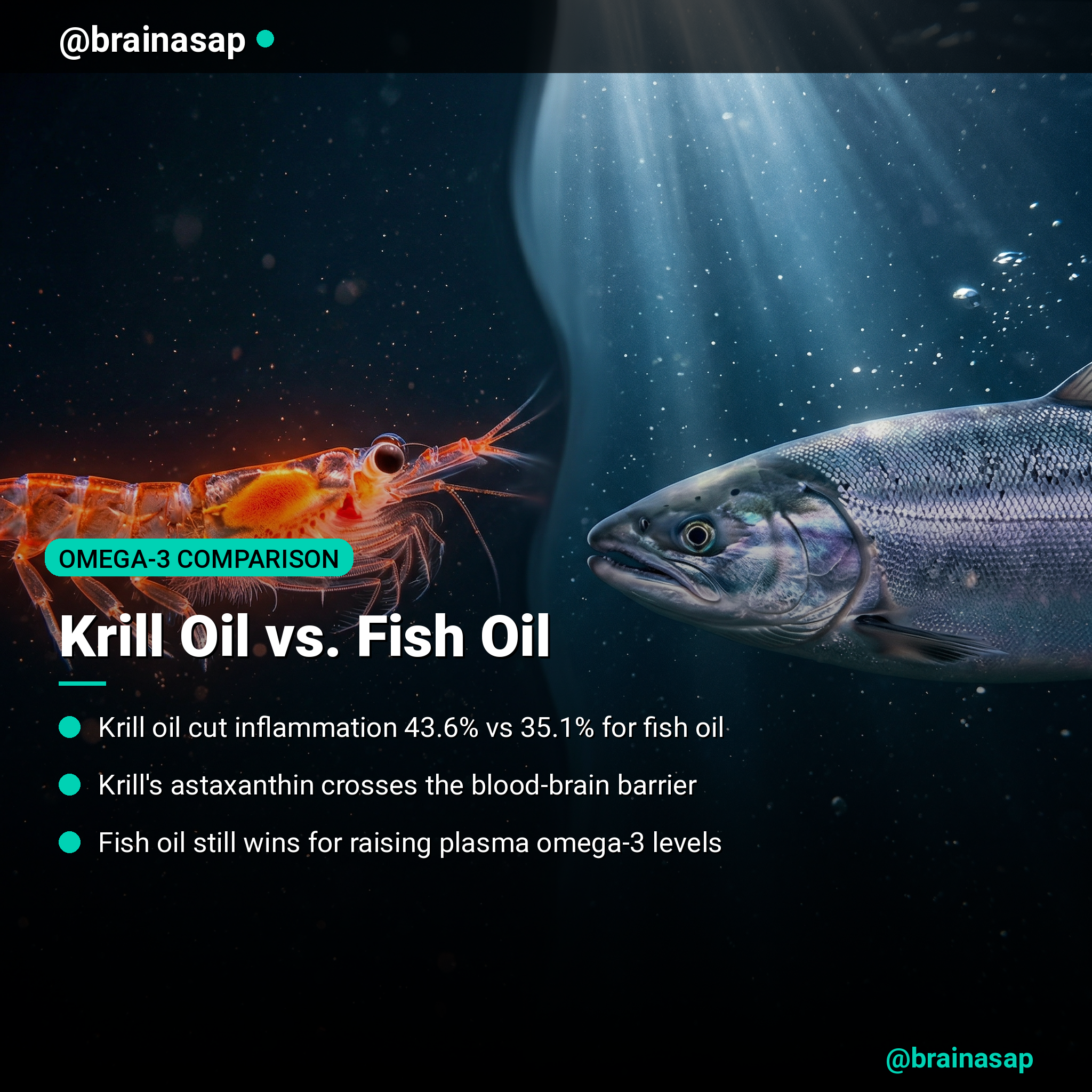
TL;DR: Krill oil has a slight edge for inflammation due to astaxanthin, but fish oil wins for raising blood omega-3 levels and long-term cardiovascular outcomes. Fish oil has dominated the omega-3 supplement market for decades. But a smaller crustacean from Antarctic waters is making a quiet challenge: krill oil. Marketing claims abound—krill oil is more …

Read more

Fish Oil Supplements: UK Biobank Study Reveals 44 Favorable Health Outcomes

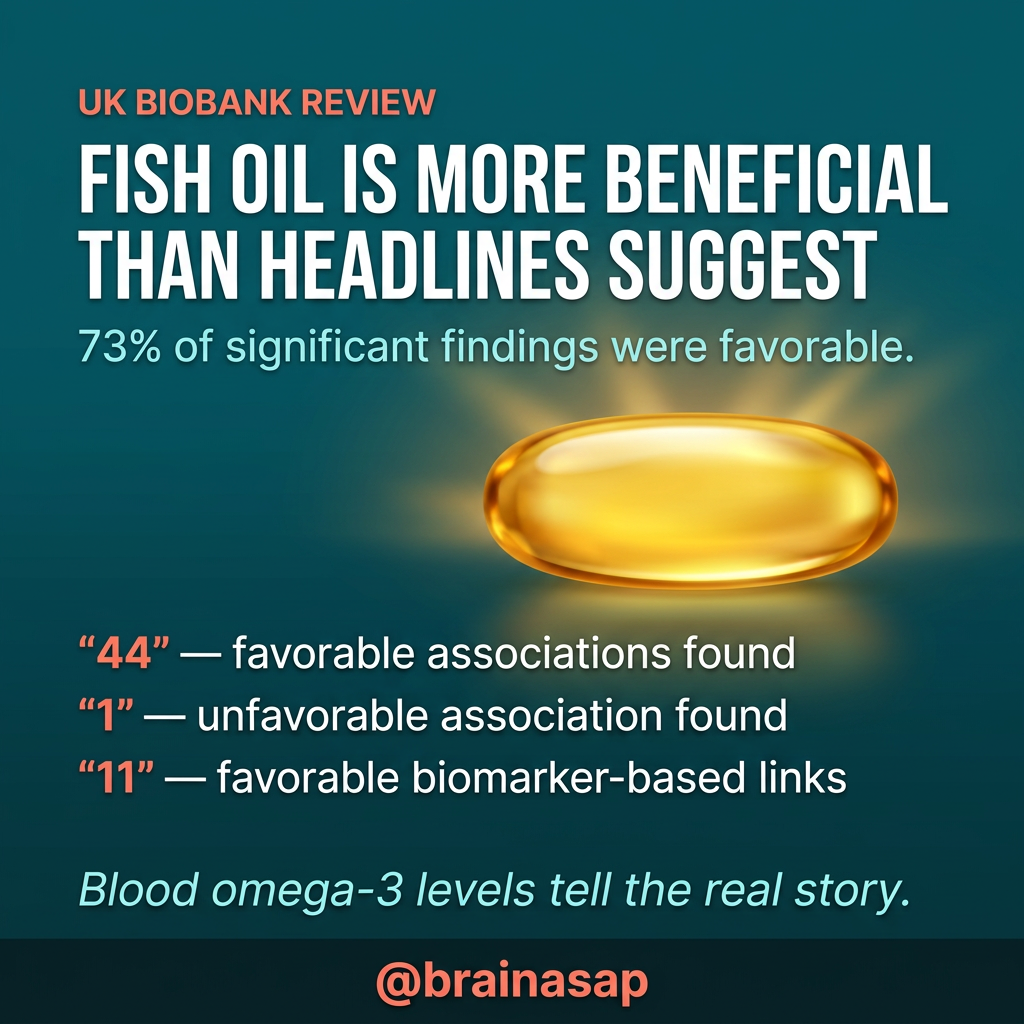
TL;DR: A comprehensive review of the UK Biobank found that fish oil supplements show favorable associations with health outcomes—not harmful ones—contradicting recent alarming headlines about atrial fibrillation risk. When a major study claims fish oil supplements increase heart arrhythmia risk, the headlines scream. But what happens when researchers dig deeper into the same dataset and …

Read more

Probiotics Alter Clock Gene Expression in Depression to Improve Mood (2024 Study)

Probiotic treatment may influence core clock gene expression and metabolites in individuals with major depressive disorder (MDD), potentially linking gut microbiota to circadian rhythms and mood regulation. Highlights: CLOCK Gene Expression: The expression level of the CLOCK gene significantly increased only in individuals receiving probiotic treatment, suggesting a direct impact of probiotics on circadian rhythms. …

Read more

Omega-3 Fatty Acids & Souvenaid® May Slow Cognitive Decline in Alzheimer’s Disease (2024 Review)

Omega-3 supplements and Souvenaid® show potential in slowing cognitive decline in Alzheimer’s patients, though the evidence remains inconclusive. Highlights: Cognitive Decline Reduction: The CDR scale showed a significant reduction in cognitive decline progression with Omega-3 supplementation (SMD = −0.4127, 95% CI: [−0.5926; −0.2327]). Mixed Cognitive Outcomes: 58% of studies reported positive cognitive effects from Omega-3 …

Read more

Prebiotics, Probiotics, Synbiotics for ADHD May Improve Symptoms in Children (2024 Review)

Probiotics and prebiotics show potential benefits in improving symptoms and quality of life in children with ADHD, but more extensive studies are needed to confirm these effects. Highlights: Positive Impact on Functioning: Lactobacillus rhamnosus GG (LGG) supplementation improved emotional, physical, social, and school functioning in children with ADHD. Reduction in Inflammation: Synbiotic 2000 reduced markers …

Read more

Shexiang Baoxin Pills (SBP) May Reduce Depression & Improve Heart Function via Anti-Inflammatory Effect (2024 Rat Study)

Shexiang Baoxin Pills (SBP) may help improve heart function and reduce depression in patients with acute myocardial infarction (AMI) by reducing inflammation. Highlights: Depression & Heart Disease Link: Patients with heart attacks often experience depression, which can worsen their heart condition. Study Purpose: This study tested the effectiveness of SBP, a traditional Chinese medicine, in …

Read more

Omega-3 Fatty Acids & Depression vs. Genetics: EPA-to-DHA Ratio (2024 Study)

Omega-3 fatty acids, particularly eicosapentaenoic acid (EPA), may reduce the risk of major depressive disorder (MDD), but causality remains uncertain due to potential pleiotropic mechanisms. Highlights: Genetic Evidence for Omega-3 & Depression: The study used two-sample Mendelian randomization to investigate the causality between genetically predicted omega-3 fatty acid levels and major depression, finding a protective …

Read more

Oleacein (Rare Compound in Olive Oil) Exerts Anti-Neuroinflammatory & Antidepressant Effects via BDNF & TRKB (2024 Study)

Oleacein, a compound found in extra virgin olive oil, shows potential as a natural treatment for depression and anxiety by reducing inflammation and boosting brain-derived neurotrophic factor (BDNF). Highlights: Oleacein & BDNF: Oleacein significantly increases BDNF expression, which is essential for brain health and neuroplasticity, both in human neuroblastoma cells and in the brains of …

Read more

Omega 3 Fatty Acids May Improve Anxiety Symptoms (2024 Meta-Analysis)

TLDR: Omega-3 supplementation shows potential for reducing anxiety symptoms, with the most significant improvement at a dose of 2 grams per day. Highlights: Dose-Dependent Effect: Each 1 gram per day of omega-3 supplementation led to a moderate decrease in anxiety symptoms, with the greatest improvement observed at 2 grams per day. Analysis: The meta-analysis included …

Read more

Quercetin Alginate Nanogels Loaded with BDNF for Depression (2023 Study)

TLDR: Quercetin-based alginate nanogels loaded with brain-derived neurotrophic factor (BDNF) can effectively cross the blood-brain barrier via intranasal delivery, providing a promising treatment for depressive disorders. Highlights: Nanogels: Quercetin nanogels protect BDNF from oxidative damage, exhibit rapid brain distribution, and significantly enhance bioavailability compared to oral administration. Efficacy: BDNF-Quercetin nanogels delivered via intranasal route show …

Read more