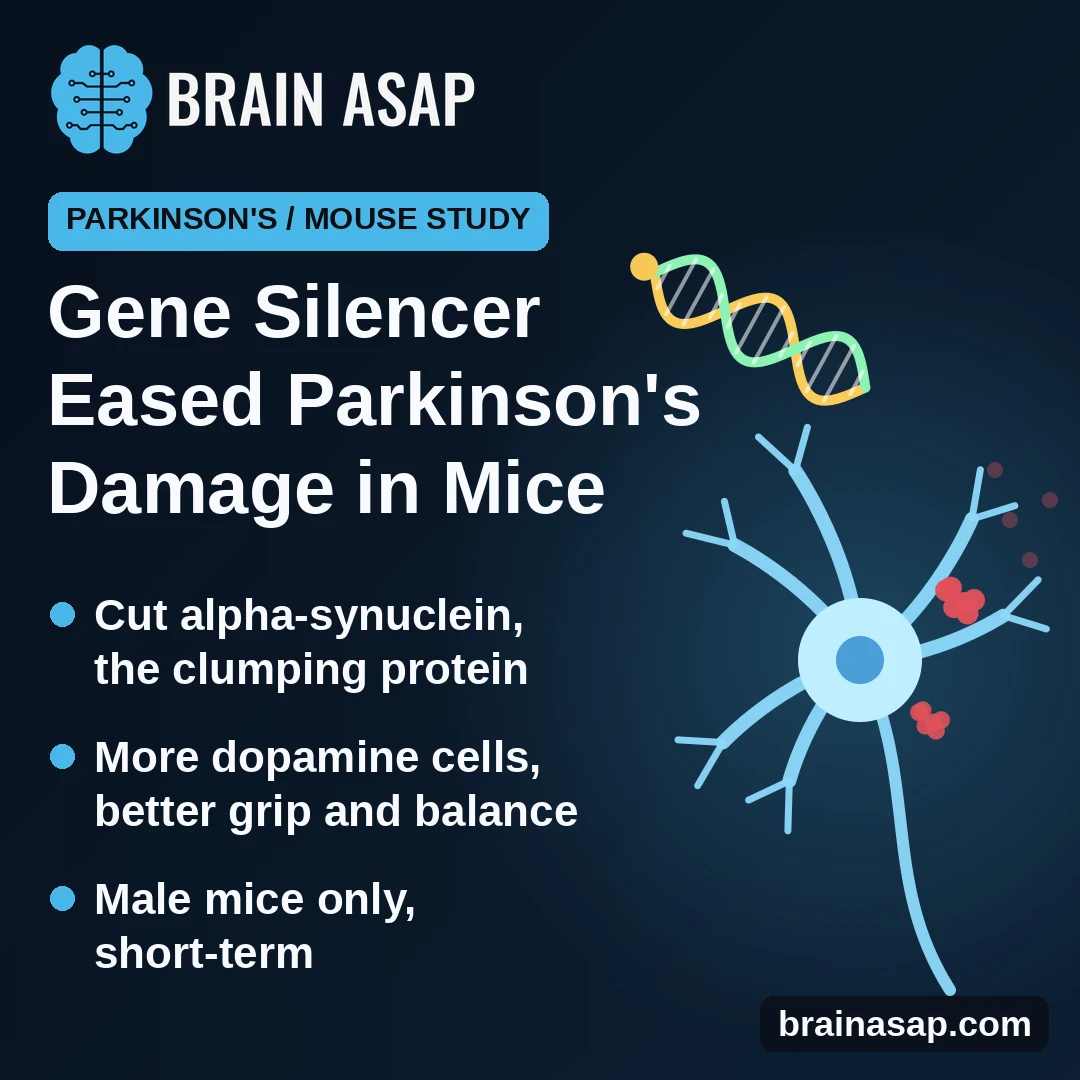
TL;DR: In mice, a new type of gene-silencing molecule lowered levels of alpha-synuclein, the protein that clumps in Parkinson’s. Mice given it kept more dopamine-making brain cells and did better on grip and balance tests than untreated mice with the same dise…
Read article ↗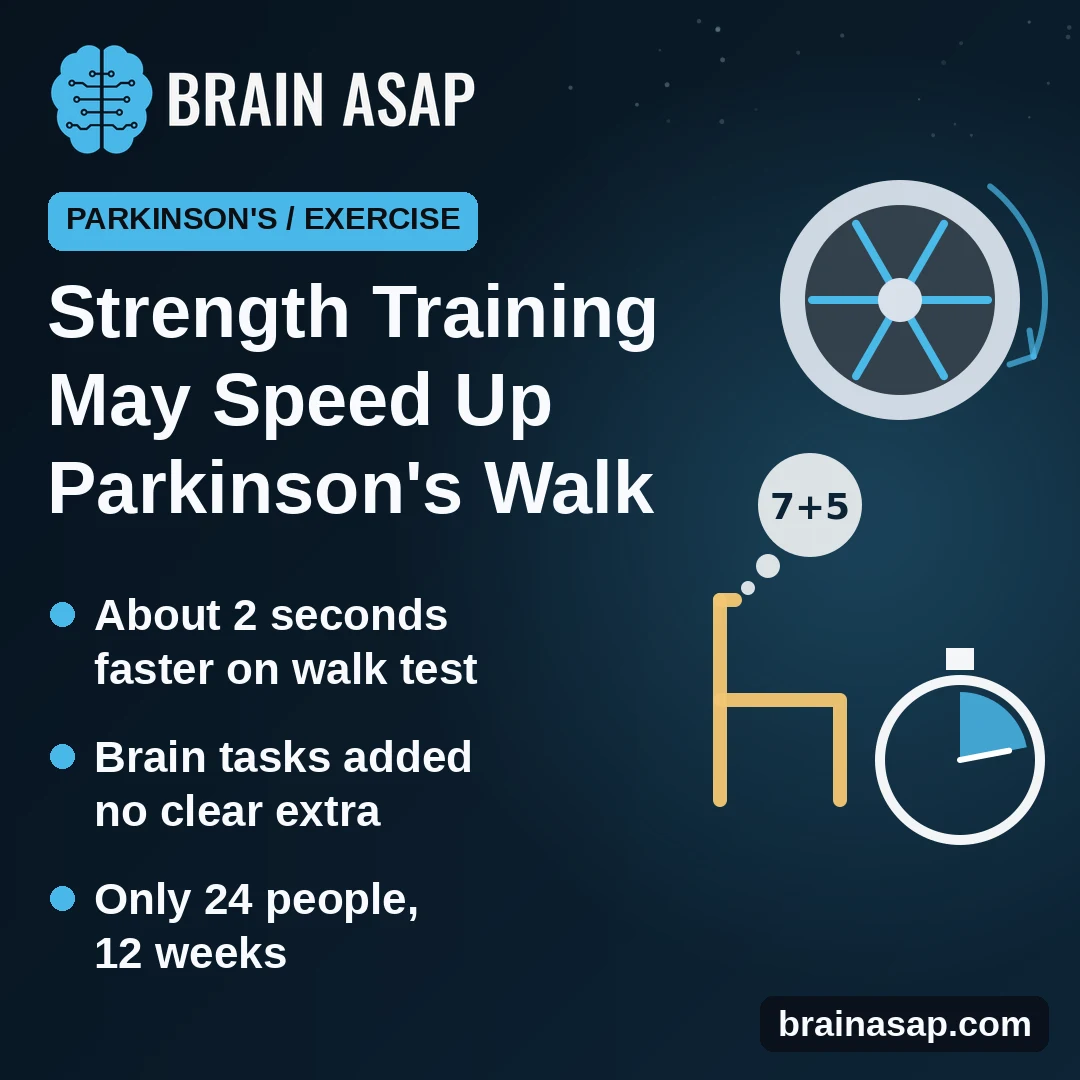
TL;DR: In a small Spanish trial, people with early Parkinson’s who did 12 weeks of strength training, with or without added thinking tasks, got faster on a walking test and stronger on a chair-stand test than people who did not exercise. Adding the thinking ta…
Read article ↗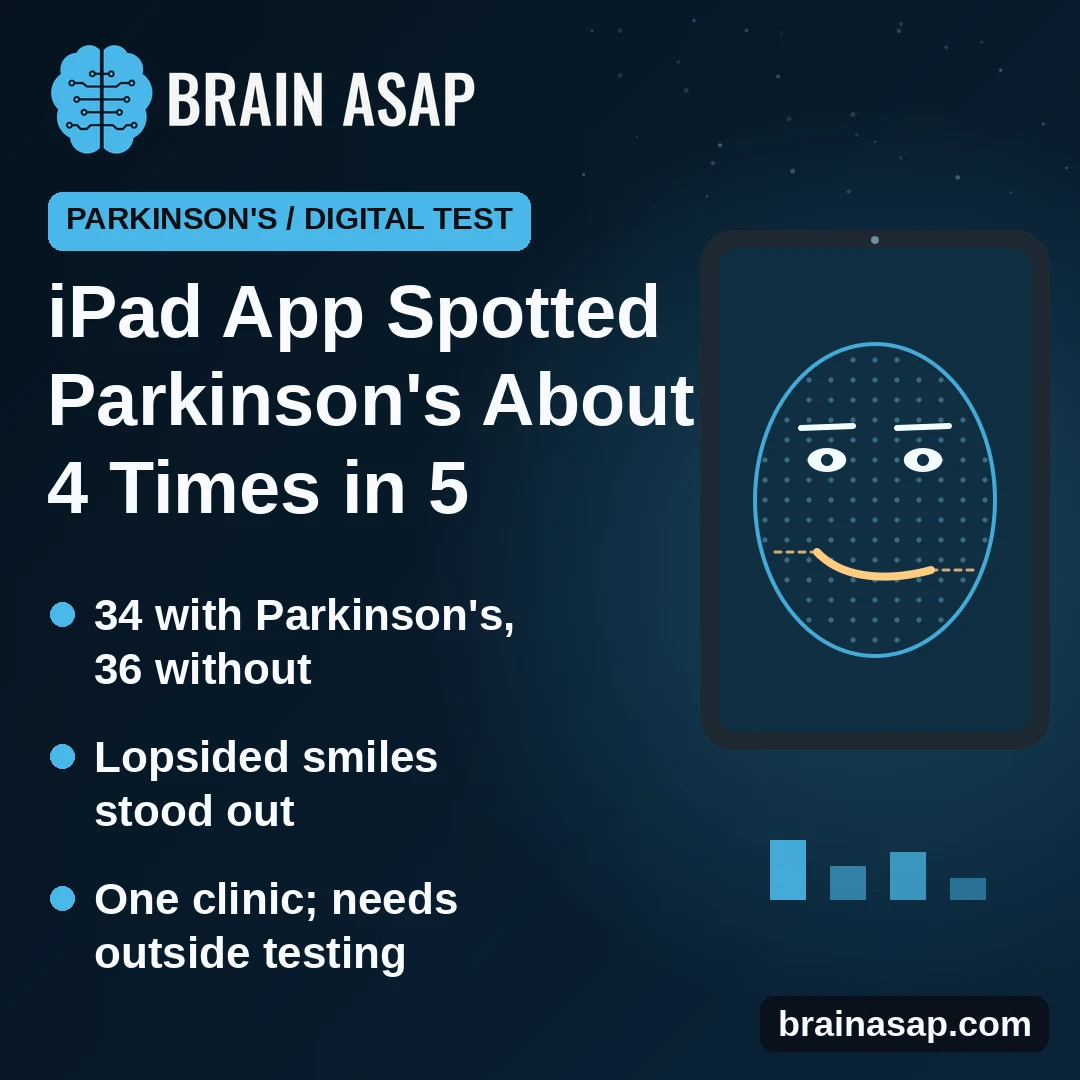
TL;DR: An iPad app that tracks 52 facial movements told apart people with Parkinson’s from people without it about 4 times in 5 in a 70-person study. Lopsided expressions mattered as much as smaller ones. Key Findings 34 people with Parkinson’s, 36 without: Ea…
Read article ↗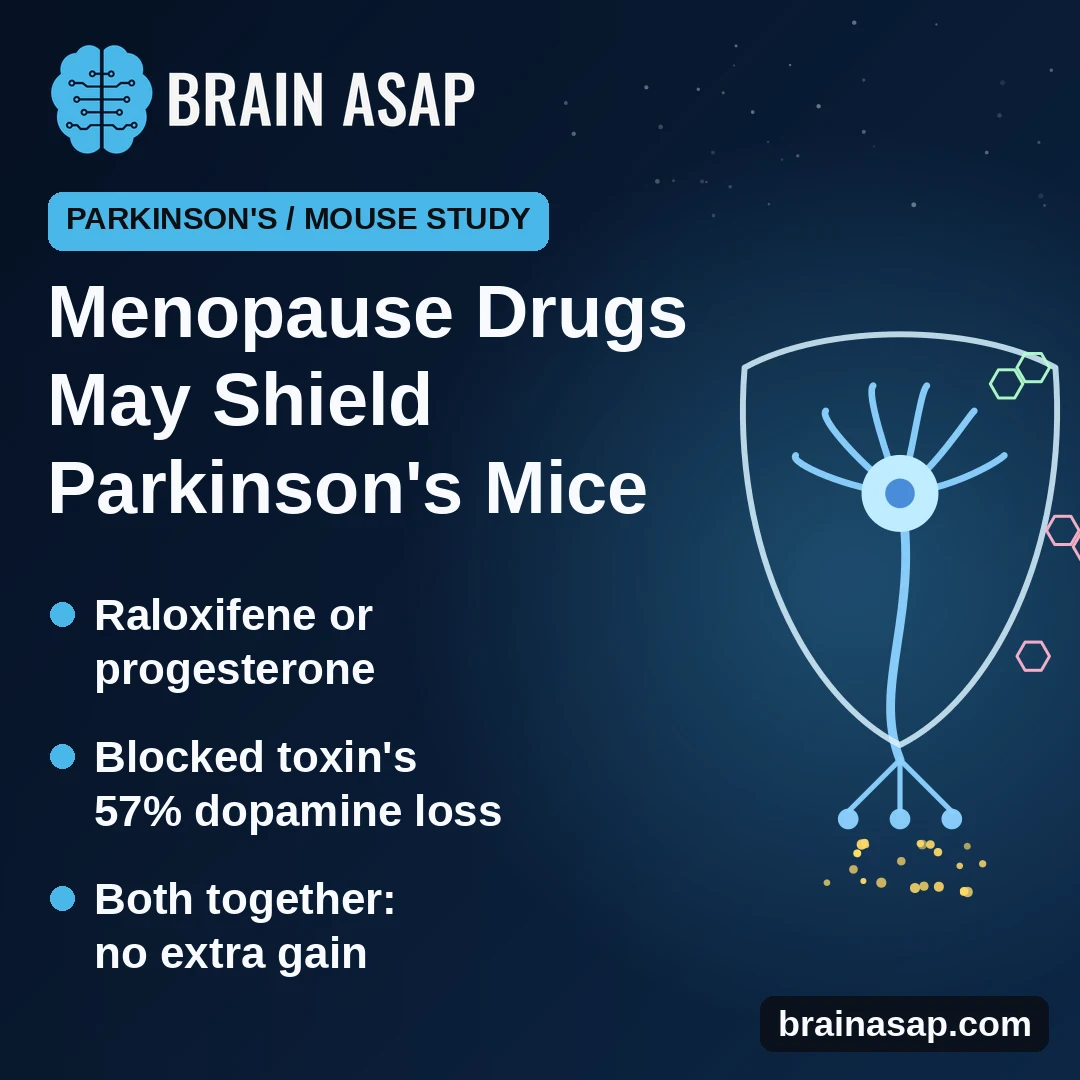
TL;DR: In female mice without ovaries, a model of menopause, the osteoporosis drug raloxifene and the hormone progesterone each protected brain dopamine from a toxin that mimics Parkinson’s. Giving both together worked no better than either alone. Key Findings…
Read article ↗
TL;DR: In 86 people from one hospital in China, those with Parkinson’s and mild thinking problems showed changes in how water moves through parts of the hippocampus, a memory center. The hippocampus was not measurably smaller, suggesting a diffusion scan may p…
Read article ↗
TL;DR: Healthy adults normally react a bit slower to a spot that recently caught their attention, a habit that helps attention move on. A single dose of a drug that boosts dopamine, and another that blocks it, both weakened this habit compared with placebo. Ke…
Read article ↗
TL;DR: A single long-read DNA test covering 564 genes found 17 of 20 known disease-causing changes in 18 people with Parkinson’s or inherited repeat disorders. It missed three large or repetitive changes, so it needs more work before it could replace several s…
Read article ↗
TL;DR: Ambroxol, an old cough medicine, can boost a key brain enzyme in lab studies, but a review of 20 clinical reports found no proven benefit in Gaucher disease or GBA1-linked Parkinson’s. In a randomized trial of people with GBA1-linked Parkinson’s, ambrox…
Read article ↗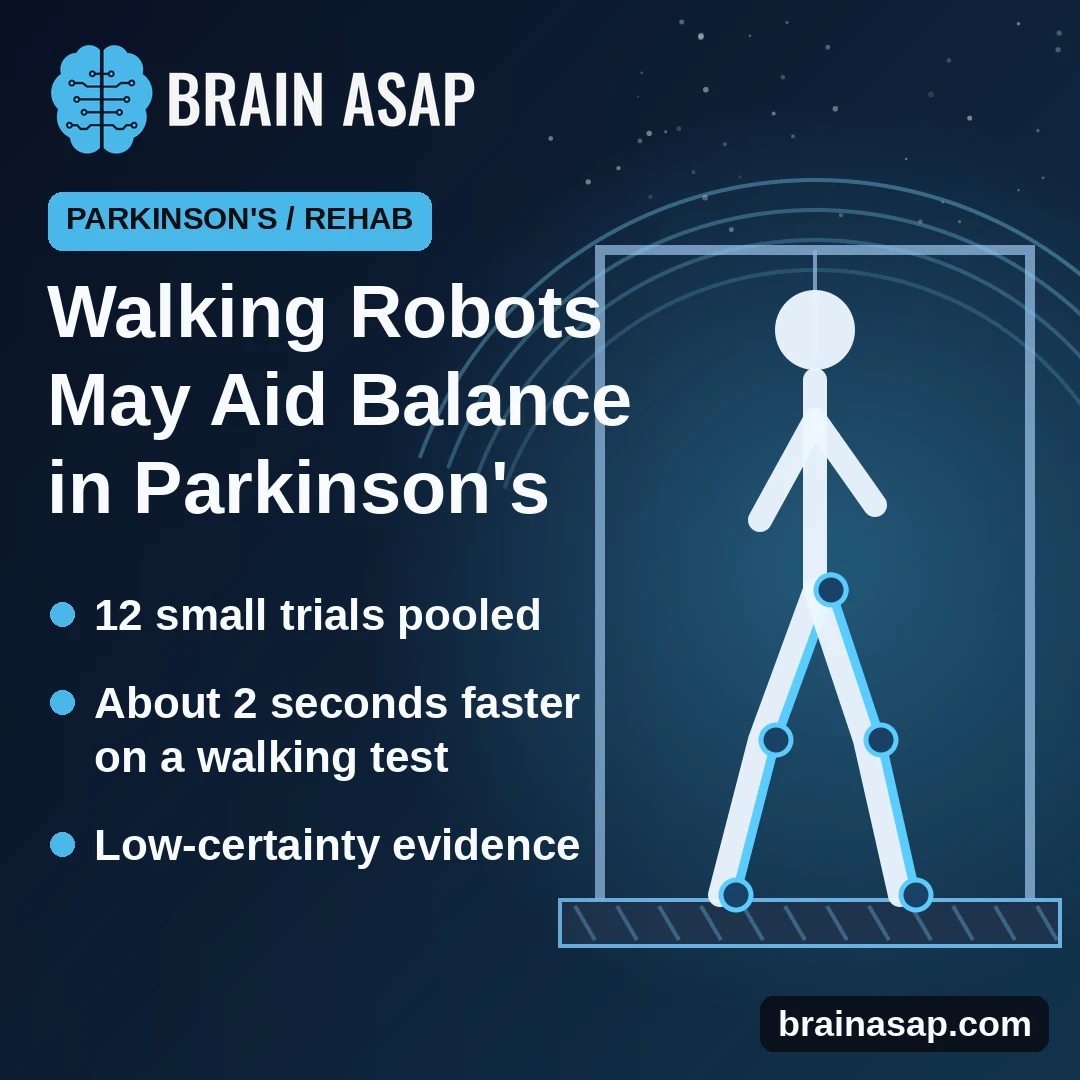
TL;DR: Across 12 small trials, people with Parkinson’s who trained on walking robots scored a bit better on balance and a timed walking test than people who got other therapy. The evidence is low quality, so the true benefit may be smaller. Key Findings 12 ran…
Read article ↗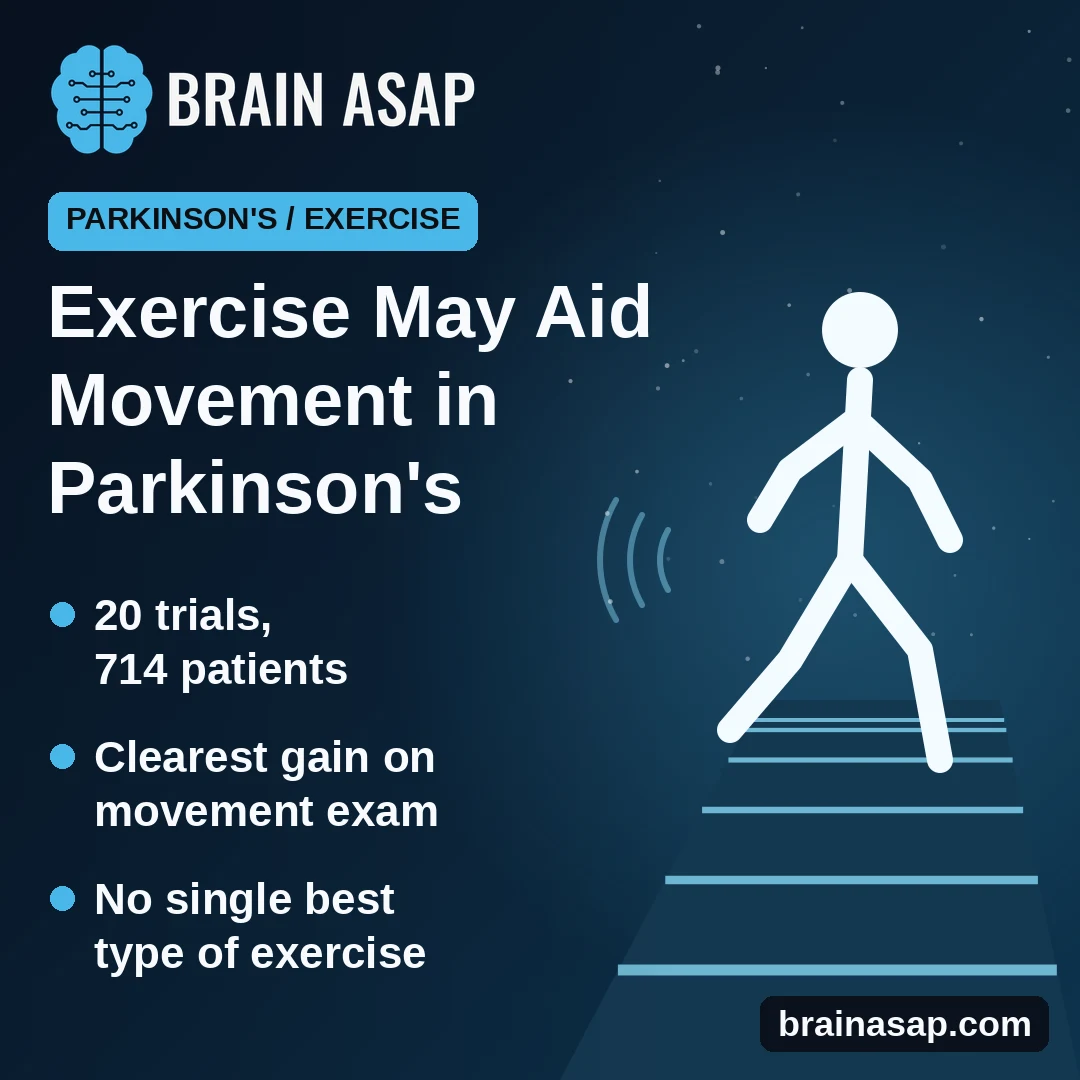
TL;DR: Pooling 20 small trials in Parkinson’s disease, structured exercise improved movement-exam scores, freezing while walking and one balance test compared with usual care. The strongest evidence was for the movement exam, and no one type of exercise stood…
Read article ↗