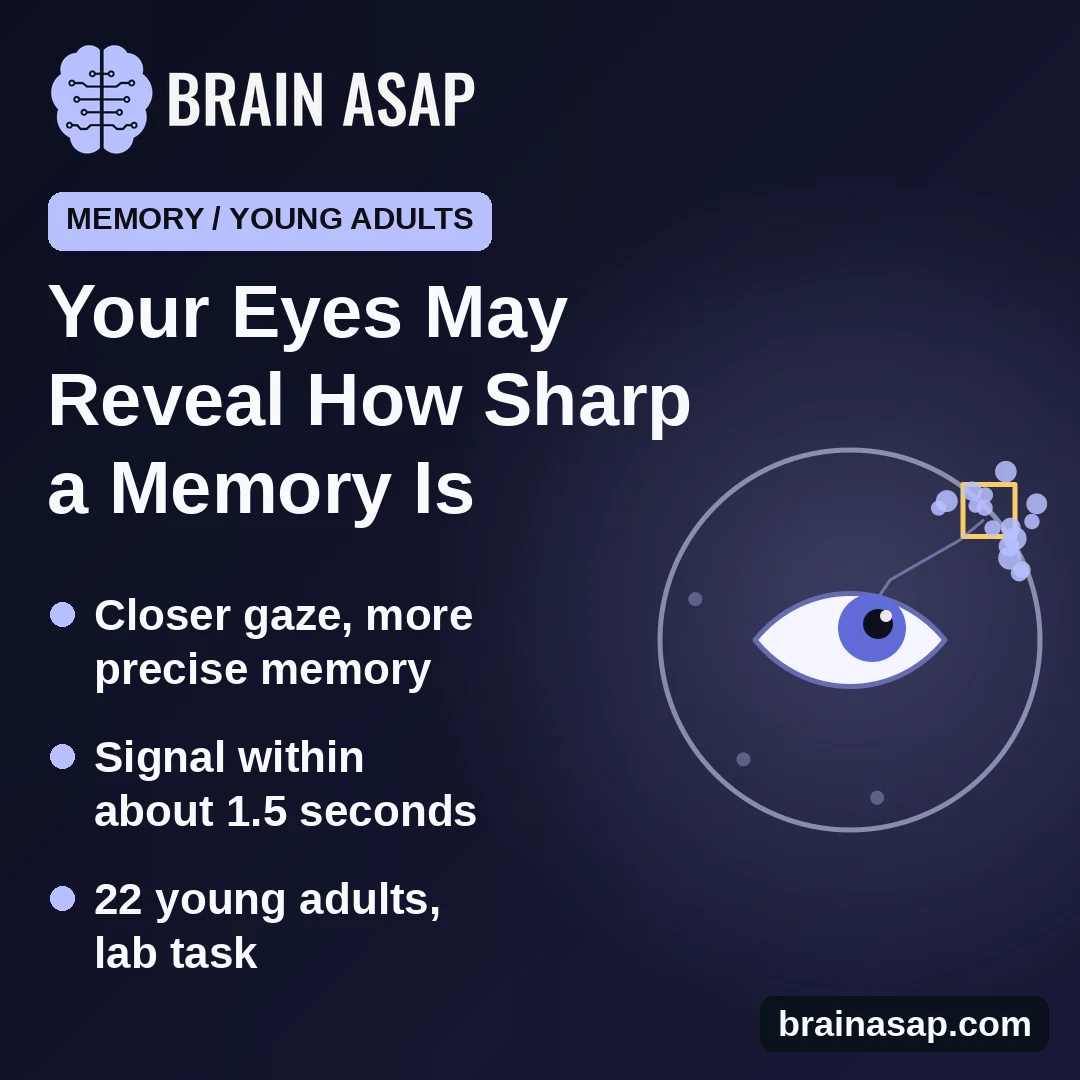
TL;DR: When 22 young adults tried to recall where they had seen everyday objects, their eyes drifted toward the right spot before they answered. The closer their gaze, the more precise their memory turned out to be. Key Findings Eyes found the spot: Gaze lande…
Read article ↗
TL;DR: A 2026 Journal of Global Health analysis of Global Burden of Disease 2021 data estimated that 162.86 million people had substance use disorders in 2021, with age-standardized rates down since 1990 but major inequality across sex, age, region, and develo…
Read article ↗
TL;DR: A 2026 study in European Archives of Psychiatry and Clinical Neuroscience found that more than half of 184 young adults entering an early-psychosis supported employment and education trial were not in work, school, or training, even though nearly all ha…
Read article ↗
TL;DR: A 2026 qualitative study in iScience found that a 10-week Arts on Prescription program helped unemployed young adults with anxiety, depression, or stress report better mood, stronger routines, and less isolation, but some activities also caused stress,…
Read article ↗
TL;DR: A 2026 study in Cognitive, Affective, & Behavioral Neuroscience found that lower frontal midline theta, an EEG marker of cognitive-control engagement, partly explained why young adults with higher negative emotionality performed worse on a Go/No-Go inhi…
Read article ↗
TL;DR: A 2026 BMC Psychiatry study found that antipsychotic dose was not associated with Montreal Cognitive Assessment (MoCA), a brief cognitive screening test, in clinically stable schizophrenia patients under 40, while higher symptom scores and longer illnes…
Read article ↗
Higher ethylene oxide (EtO) exposure is significantly associated with an increased risk of stroke in U.S. adults, particularly those under 50 years old. Highlights: Higher levels of EtO are linked to increased stroke rates, with individuals in the top 25% of e…
Read article ↗