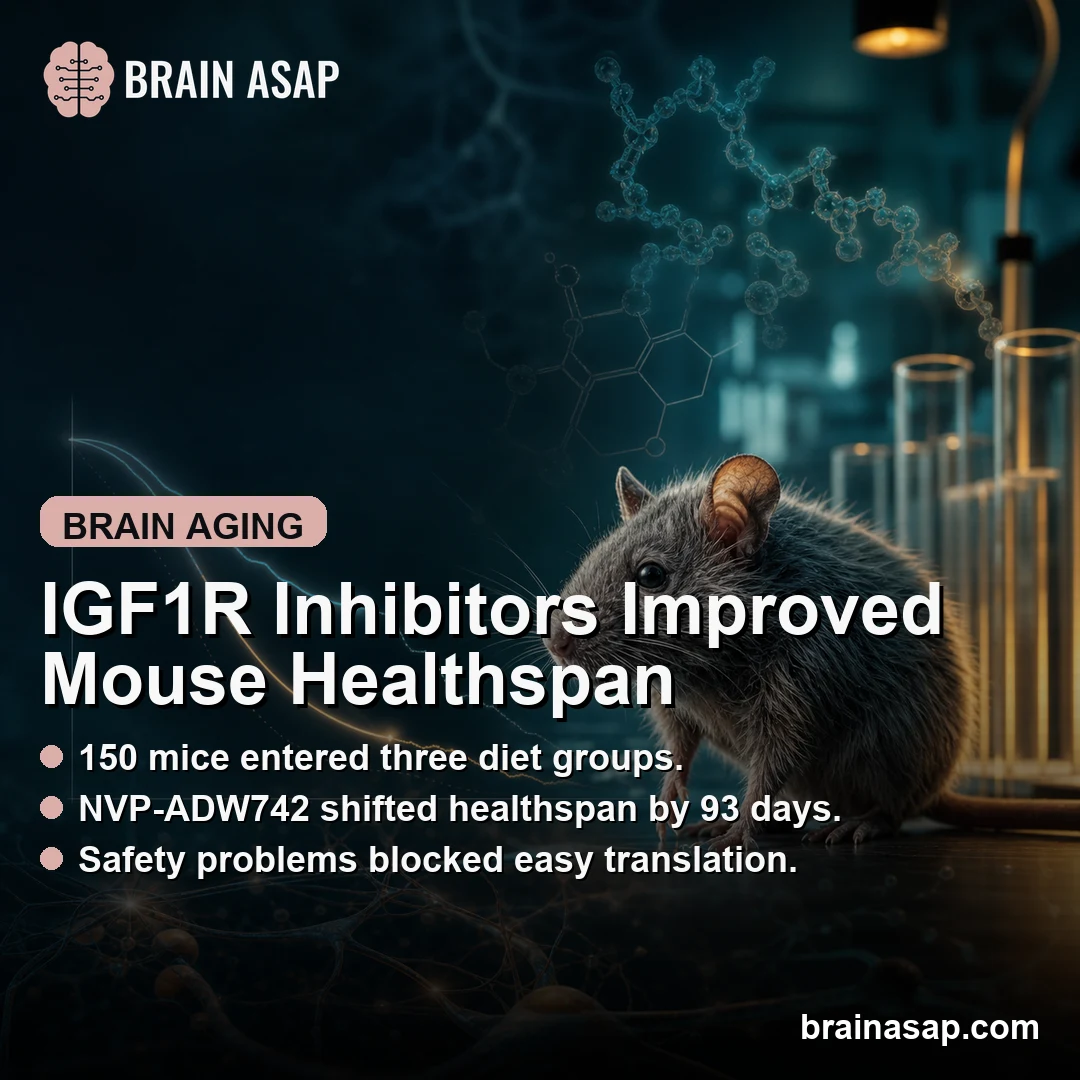
TL;DR: A 2026 mouse preprint in bioRxiv reported that small-molecule IGF1R inhibitors, drugs that block insulin-like growth factor 1 receptor signaling, protected several healthspan measures in aging mice, but the tested compounds also carried major safety and…
Read article ↗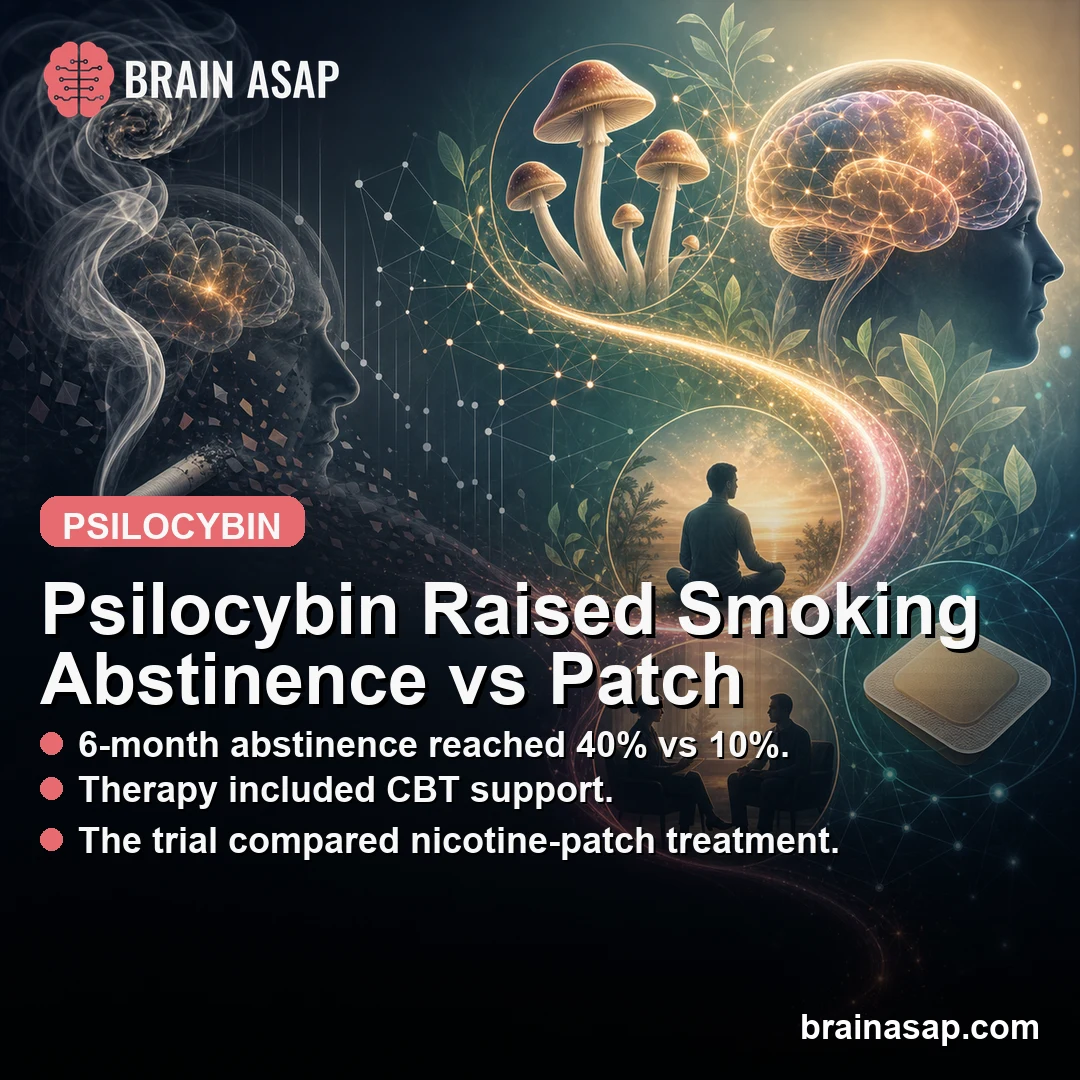
TL;DR: A 2026 randomized clinical trial in JAMA Network Open found that one supervised 30 mg/70 kg psilocybin dose plus cognitive behavioral therapy produced 40.5% six-month smoking abstinence versus 10.0% with a nicotine patch plus the same therapy. Key Findi…
Read article ↗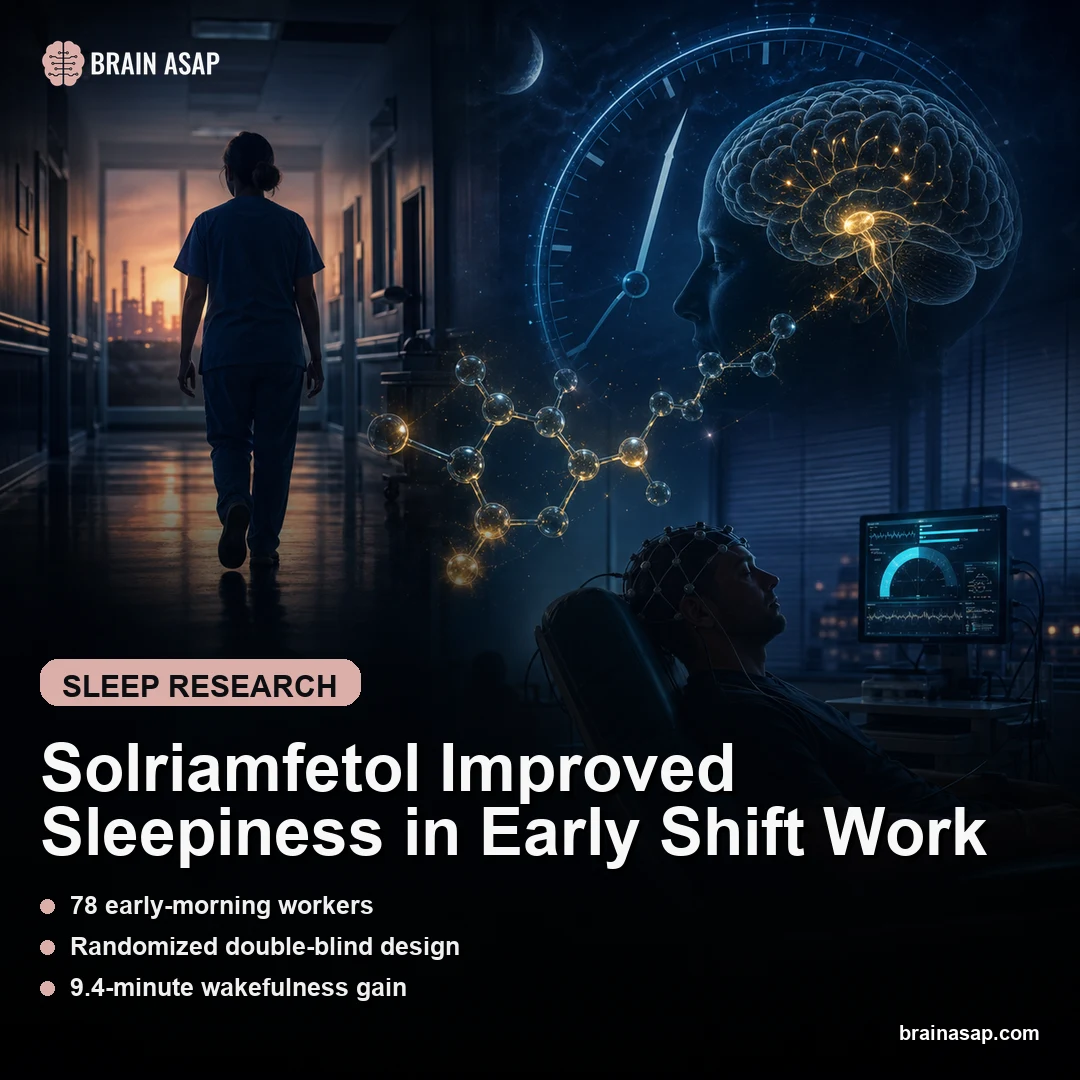
TL;DR: A 2026 study in NEJM Evidence found that solriamfetol added 9.4 minutes of objective wakefulness in early-morning shift work disorder after 4 weeks, without a higher overall adverse-event rate than placebo. Key Findings 78 early-morning workers: Partici…
Read article ↗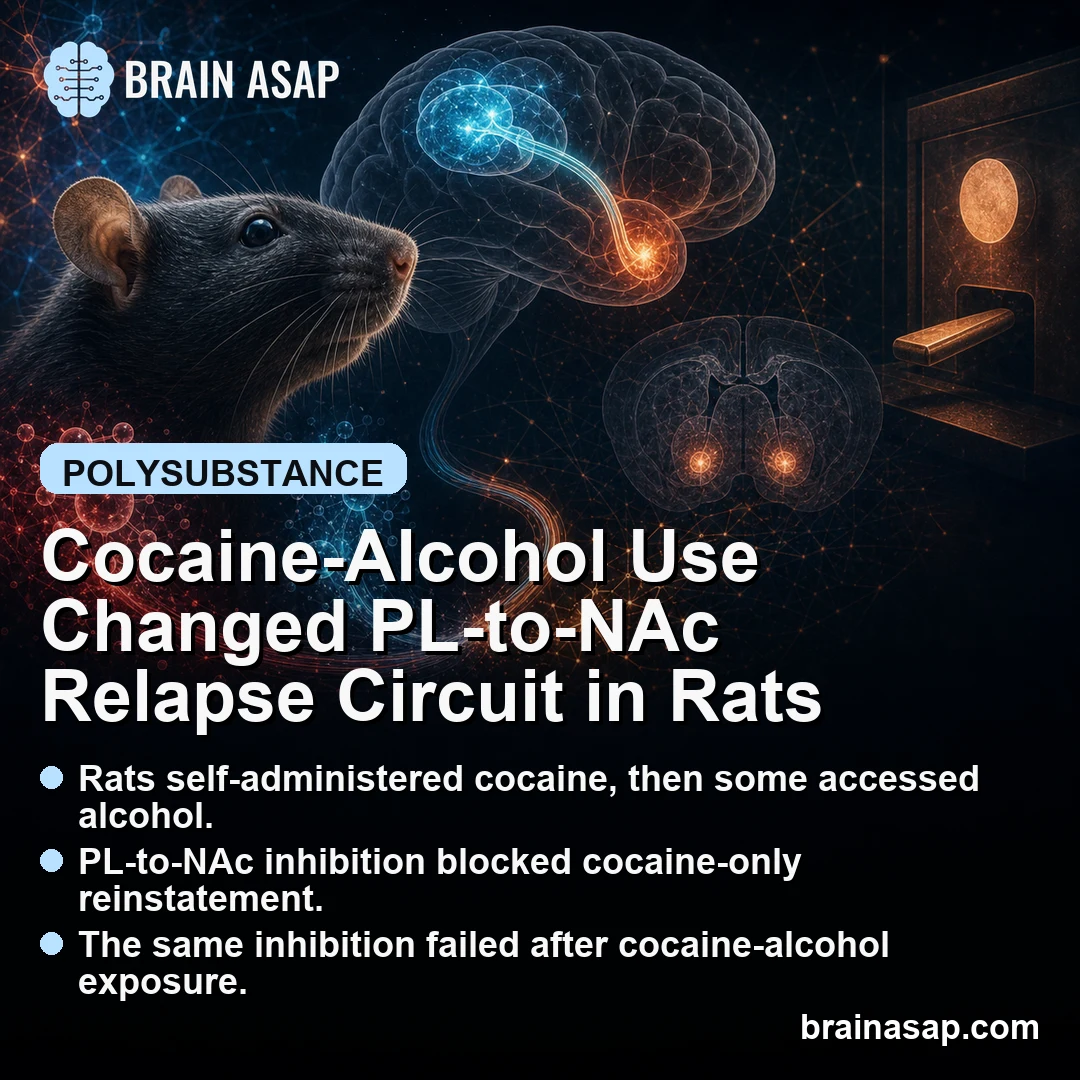
TL;DR: A 2026 rat study in Neuropsychopharmacology found that chemogenetically inhibiting a prelimbic cortex to nucleus accumbens core pathway blocked cue-triggered cocaine seeking after cocaine alone, but did not block relapse-like behavior after sequential c…
Read article ↗
TL;DR: A 2026 preprint in medRxiv trained machine-learning models on Danish electronic health records and found that an XGBoost model predicted clozapine initiation within 365 days with an AUROC of 0.81 in patients with schizophrenia or schizoaffective disorde…
Read article ↗
TL;DR: A 2026 study in O&G Open found that cannabis exposure 2–7 years after a first pregnancy was not associated with incident hypertension after adjustment in the nuMoM2b Heart Health Study. Key Findings No adjusted hypertension association: Cannabis exposur…
Read article ↗
TL;DR: A 2026 in vitro study in Molecular and Clinical Oncology found that amitriptyline reduced C6 glioma cell viability and PD-L1 checkpoint expression, but the same drug weakened the cell-killing effect of radiation when combined with temozolomide. Key Find…
Read article ↗
TL;DR: A 2026 systematic review and meta-analysis in Drug and Alcohol Review estimated high adolescent substance-use exposure in South Africa, with lifetime alcohol use at 35.09%, tobacco at 25.47%, and cannabis at 10.47% across community and school-based stud…
Read article ↗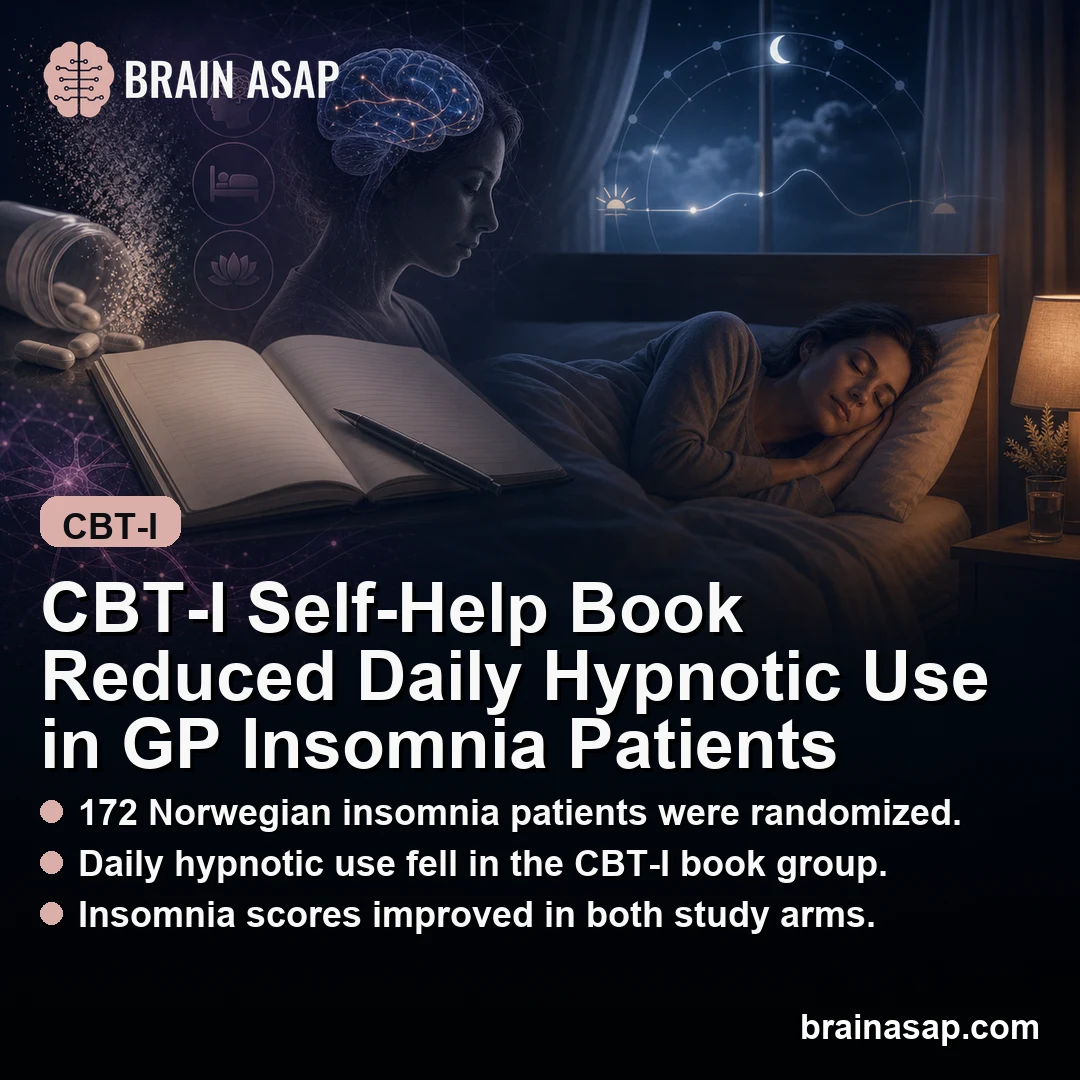
TL;DR: A 2025 randomized trial in Scandinavian Journal of Primary Health Care found that a self-help book based on cognitive behavioral therapy for insomnia (CBT-I), a structured non-drug insomnia treatment, reduced daily hypnotic sleep-medication use and anxi…
Read article ↗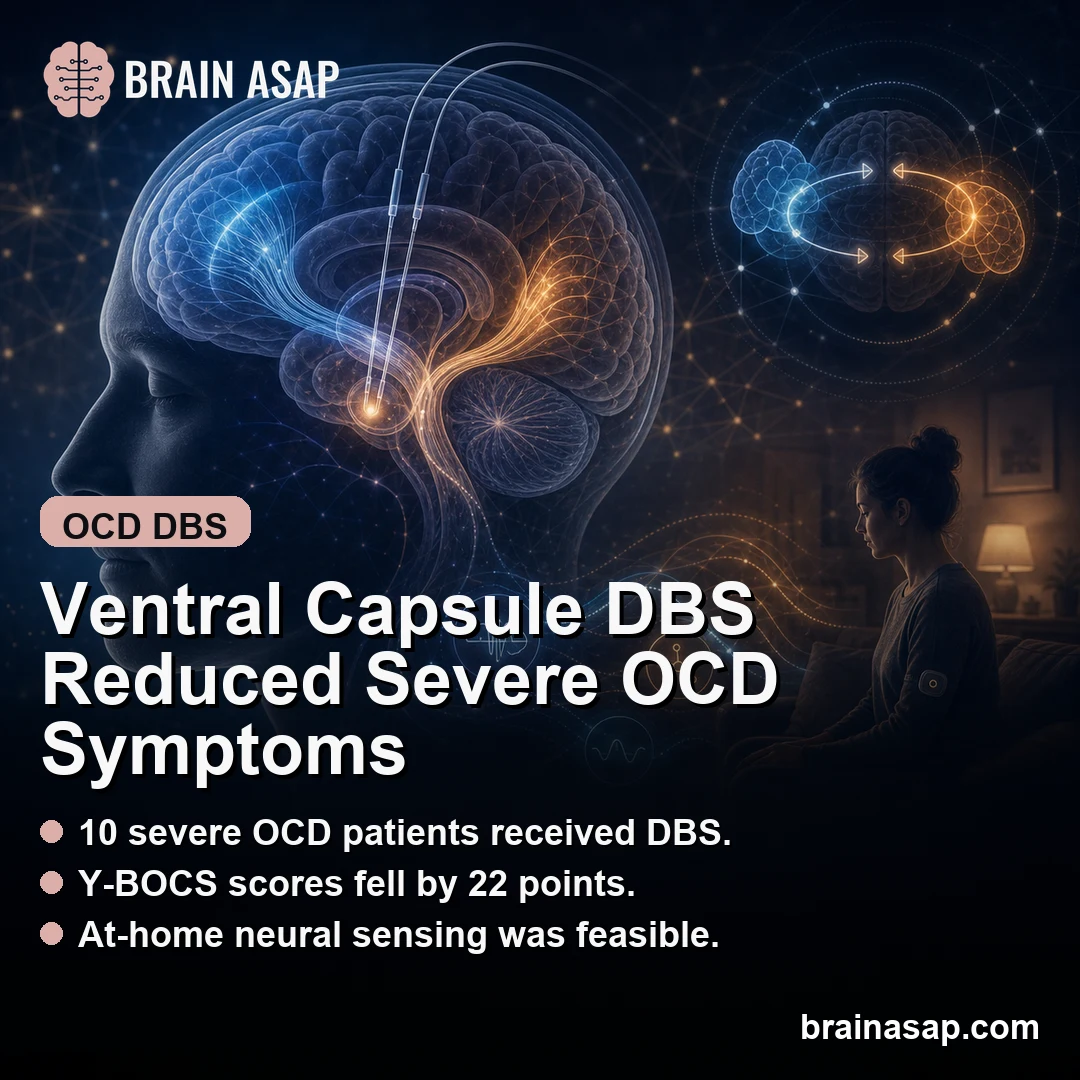
TL;DR: A 2026 medRxiv preprint reported that ventral capsule deep brain stimulation (DBS), an implanted brain-stimulation treatment, reduced severe treatment-resistant obsessive-compulsive disorder (OCD) symptoms by 22 Yale-Brown Obsessive-Compulsive Scale (Y-…
Read article ↗