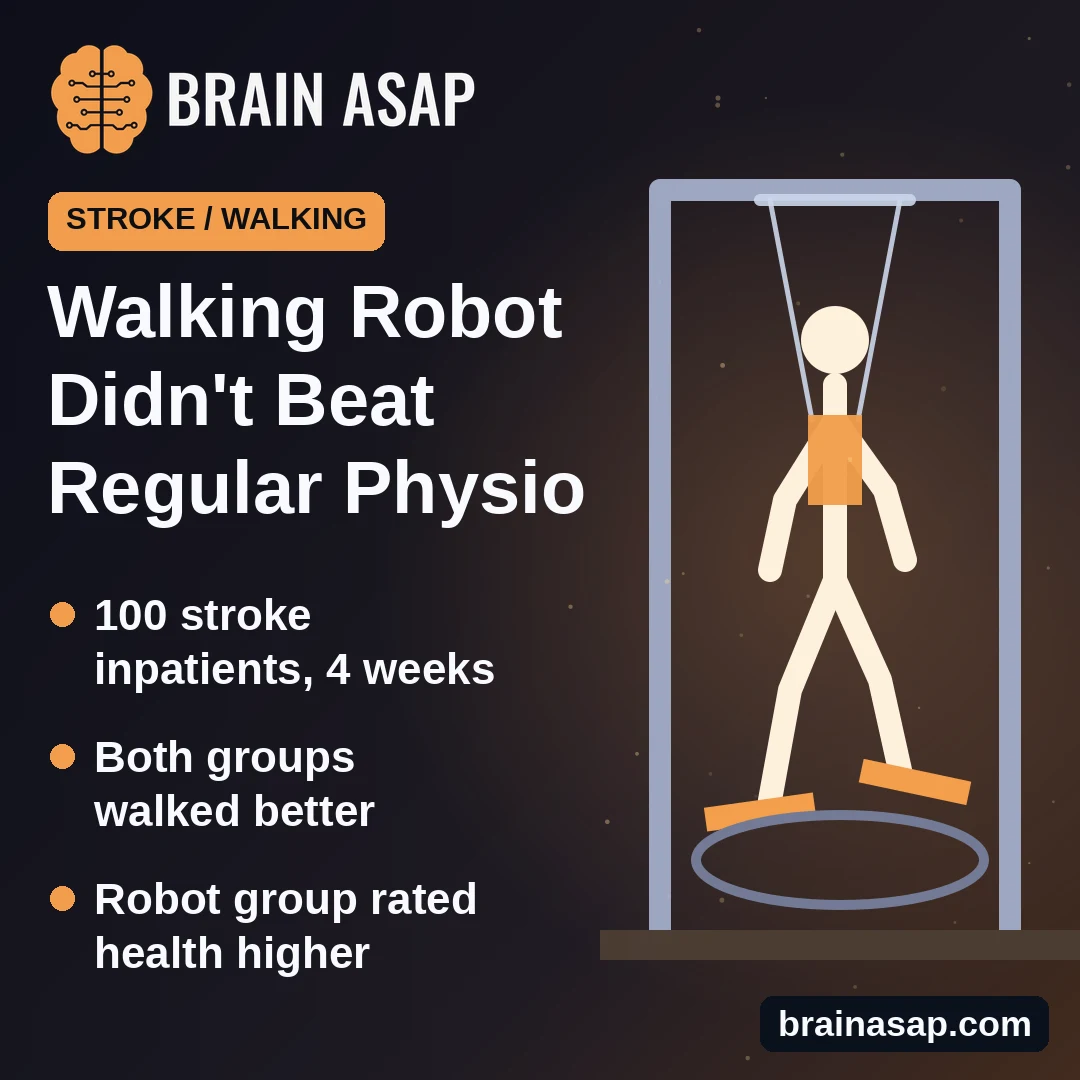
TL;DR: In a 4-week trial of 100 stroke rehab inpatients, walking practice on a robot showed no clear advantage over regular physiotherapy for walking independence or daily activities. Both groups improved, and the robot group rated their own health higher. Key…
Read article ↗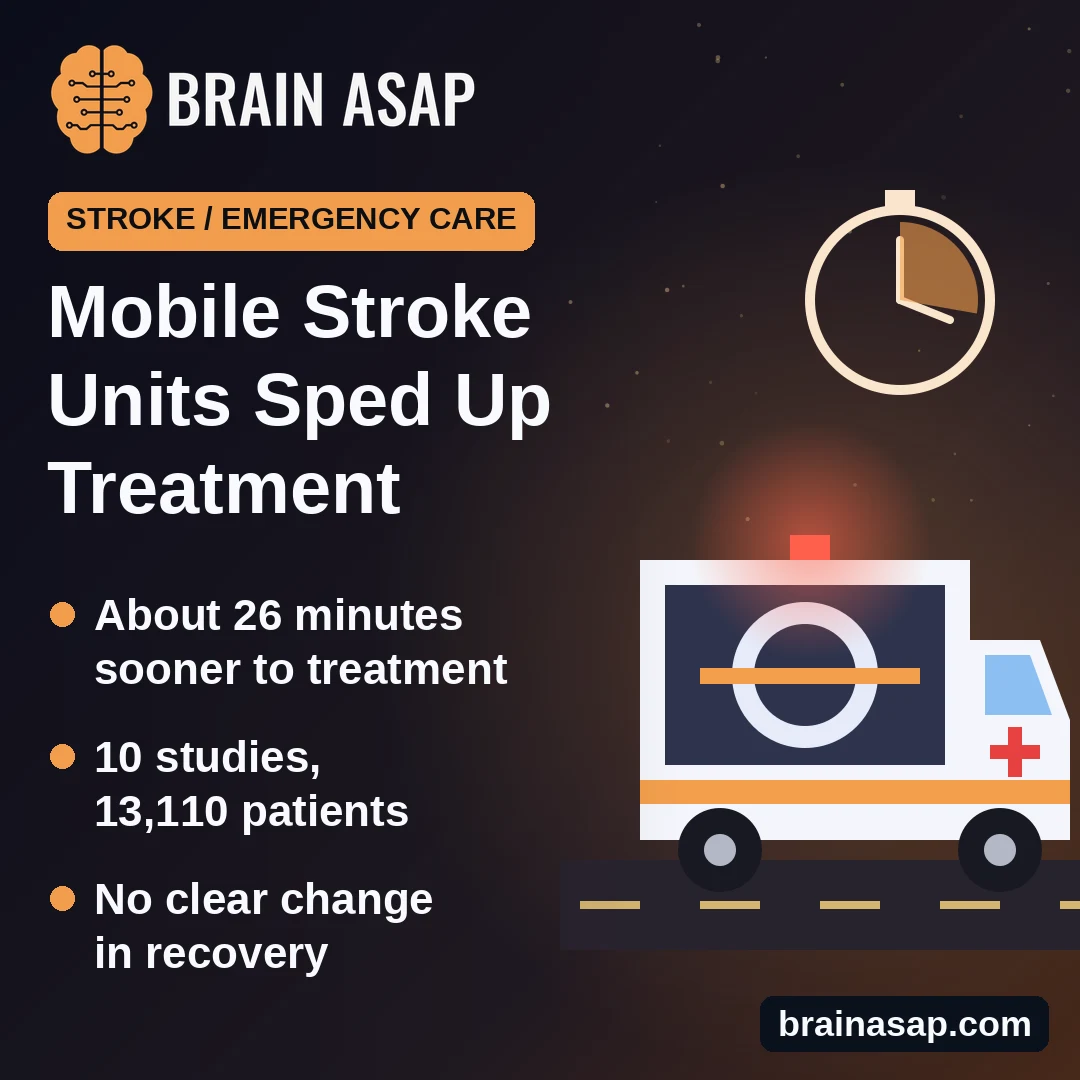
TL;DR: Across 10 studies and 13,110 stroke patients, ambulances carrying their own CT scanner got clot-busting treatment started about 26 minutes sooner than regular ambulances. The review found no clear difference in recovery or safety, though it may have bee…
Read article ↗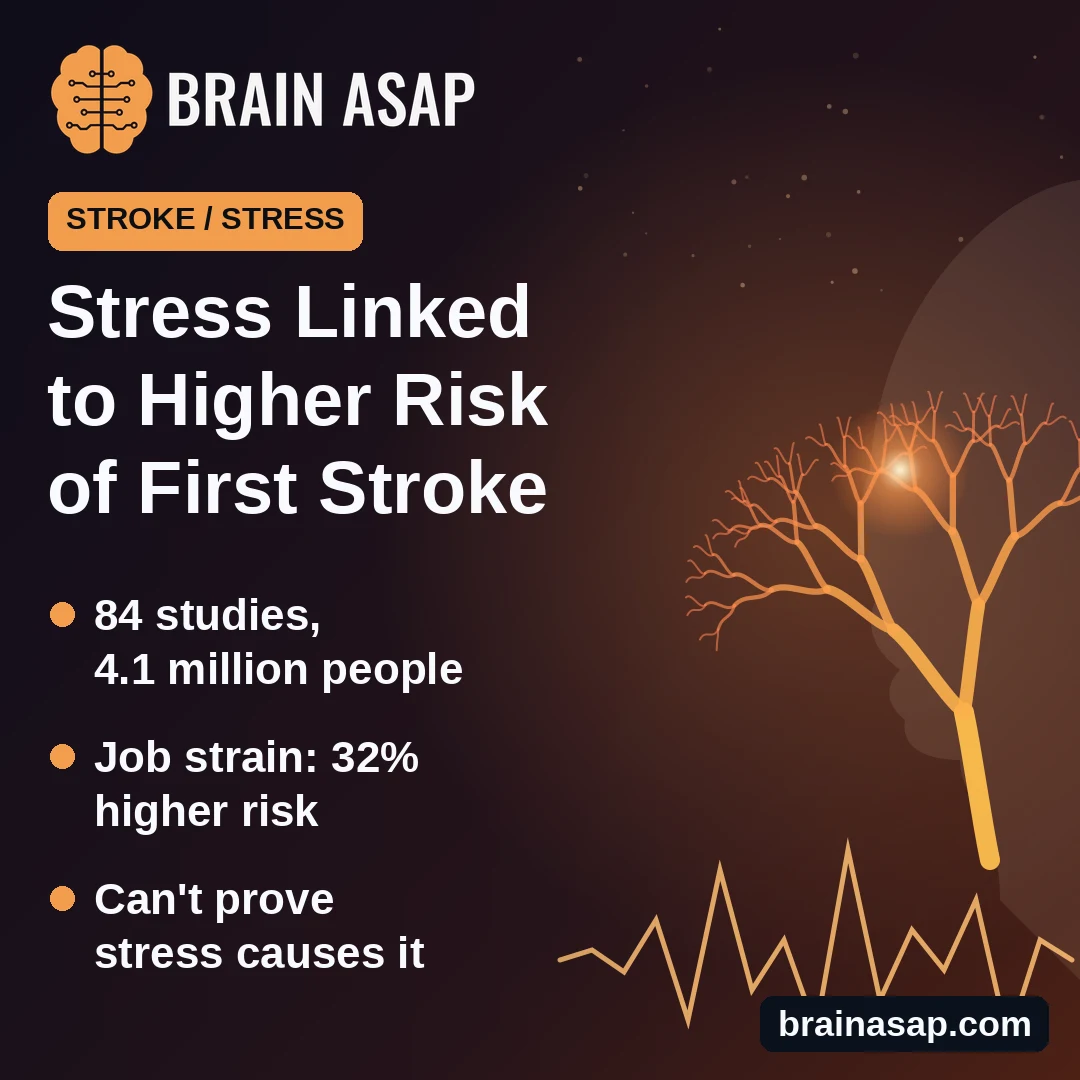
TL;DR: In a review of 84 studies covering 4.1 million people, those with psychological distress or job strain had roughly 30% higher risk of a first stroke. The studies were observational, so they cannot show that stress itself causes strokes. Key Findings 84…
Read article ↗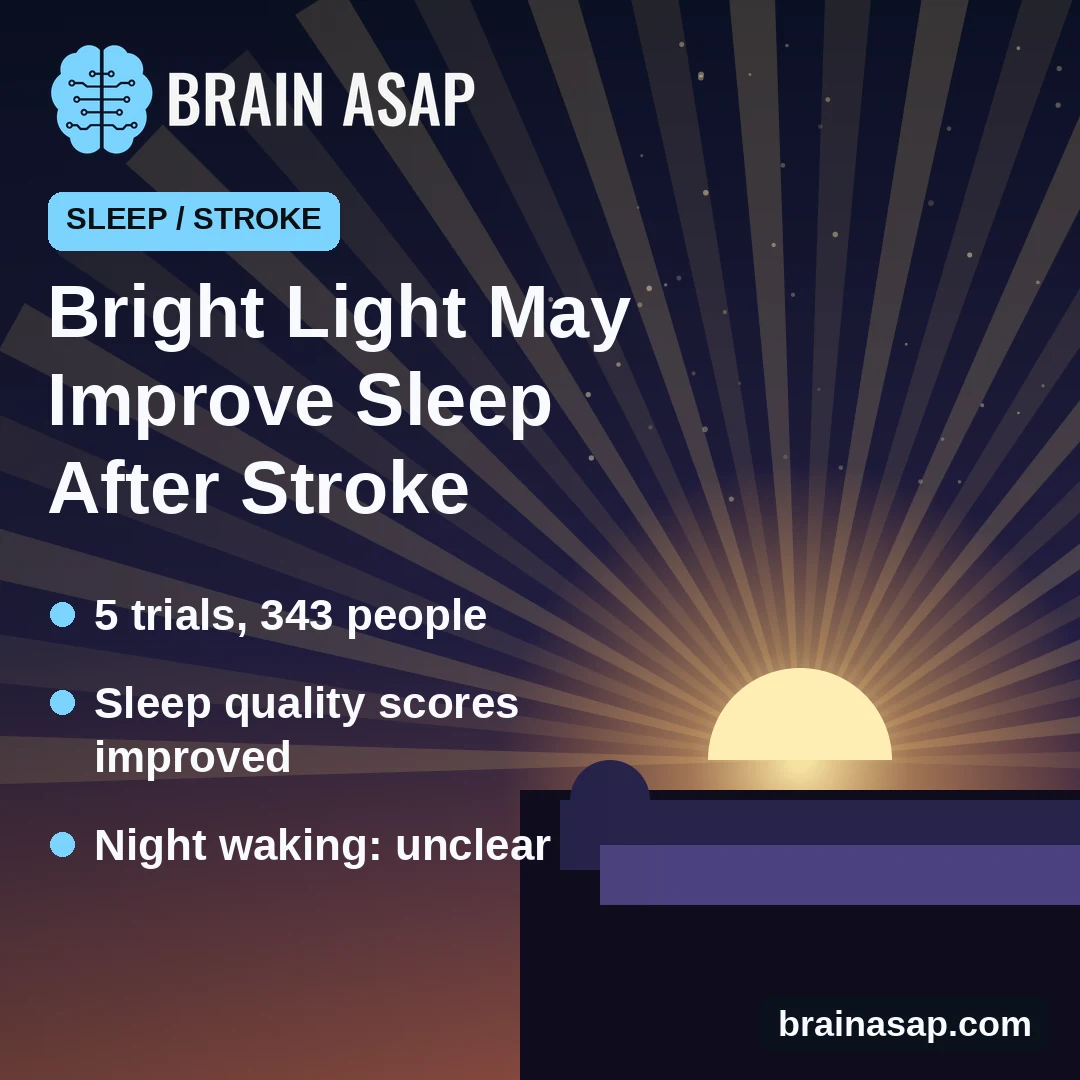
TL;DR: Across 5 small trials of 343 people after stroke, people who sat in bright morning light reported better sleep quality than comparison groups. But measured time awake at night showed no clear change, so the benefit may be more about how sleep feels. Key…
Read article ↗
TL;DR: A 2026 medRxiv preprint found that stroke thrombectomy operators often had a preferred device technique, but that preference did not reliably match the technique with the highest first-pass reperfusion rate. Key Findings Stroke thrombectomy cohort: The…
Read article ↗
TL;DR: A 2026 preprint posted on medRxiv reported that resting-state electroencephalography (EEG) neural slowing after stroke tracked secondary thalamic degeneration measured on structural MRI, even though the sampled patients did not have direct thalamic lesi…
Read article ↗
TL;DR: A 2026 randomized trial in Physiotherapy Research International found that adding active 5 Hz repetitive transcranial magnetic stimulation (rTMS) over the dorsolateral prefrontal cortex to dual-task stroke rehabilitation produced larger gains in Timed U…
Read article ↗
TL;DR: A 2026 prospective mild-stroke cohort study in Circulation linked basilar artery dolichoectasia and wider cranial arteries to lacunar stroke and cerebral small-vessel disease, while large-artery stenosis did not show the same association. Key Findings 2…
Read article ↗
TL;DR: A 2026 secondary analysis in PLOS One found that low-intensity focused ultrasound and repetitive transcranial magnetic stimulation (rTMS) had similar short-term post-stroke motor endpoint scores, while change-from-baseline Fugl-Meyer gains were larger w…
Read article ↗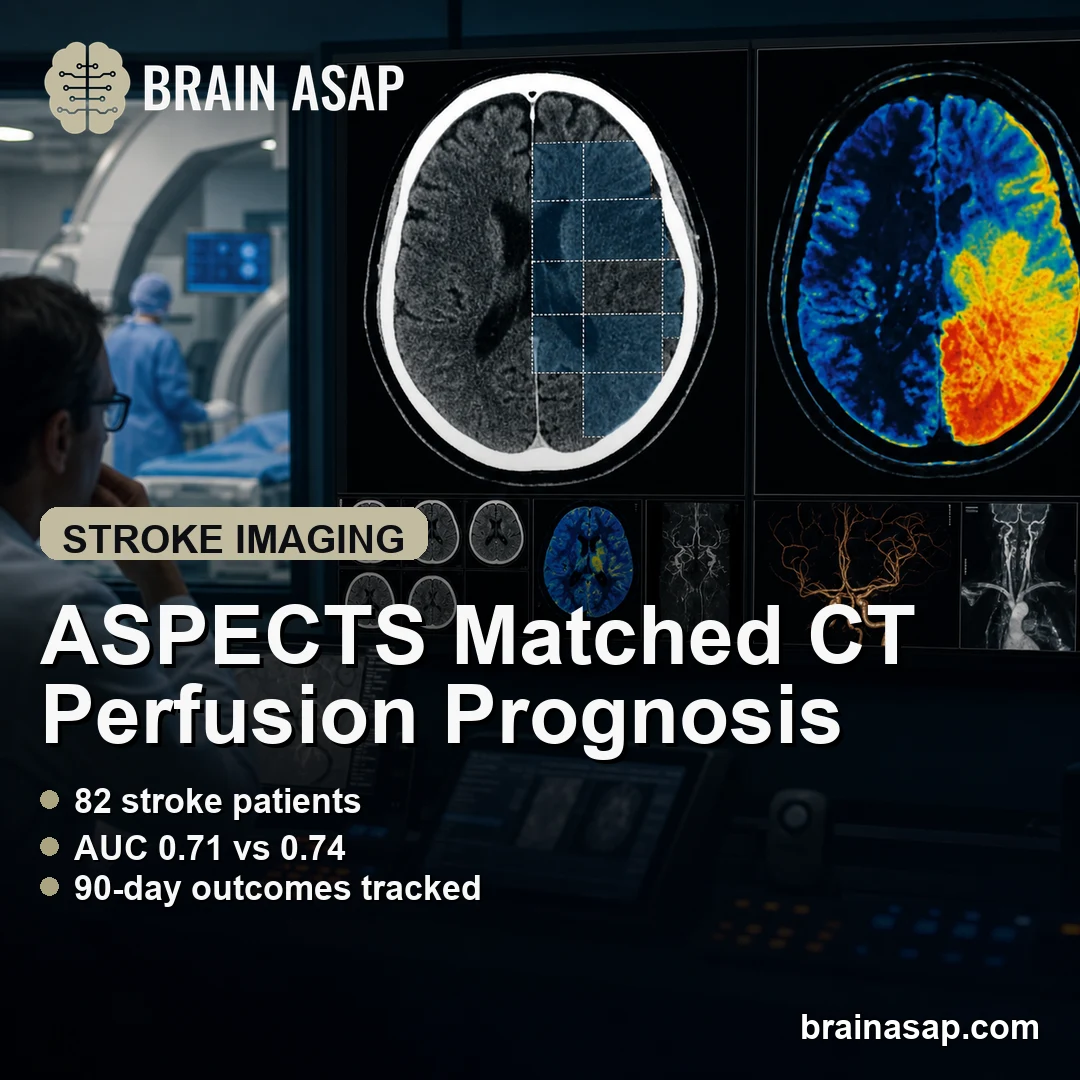
TL;DR: A 2026 study in the International Journal of General Medicine found that rapid ASPECTS scoring on non-contrast CT and CT perfusion core-infarct volume predicted 90-day outcomes similarly in 82 acute ischemic stroke patients treated with endovascular the…
Read article ↗