TL;DR: A 2026 preprint posted on medRxiv reported that resting-state electroencephalography (EEG) neural slowing after stroke tracked secondary thalamic degeneration measured on structural MRI, even though the sampled patients did not have direct thalamic lesi…
Read article ↗
TL;DR: A 2026 randomized trial in Physiotherapy Research International found that adding active 5 Hz repetitive transcranial magnetic stimulation (rTMS) over the dorsolateral prefrontal cortex to dual-task stroke rehabilitation produced larger gains in Timed U…
Read article ↗
TL;DR: A 2026 prospective mild-stroke cohort study in Circulation linked basilar artery dolichoectasia and wider cranial arteries to lacunar stroke and cerebral small-vessel disease, while large-artery stenosis did not show the same association. Key Findings 2…
Read article ↗
TL;DR: A 2026 secondary analysis in PLOS One found that low-intensity focused ultrasound and repetitive transcranial magnetic stimulation (rTMS) had similar short-term post-stroke motor endpoint scores, while change-from-baseline Fugl-Meyer gains were larger w…
Read article ↗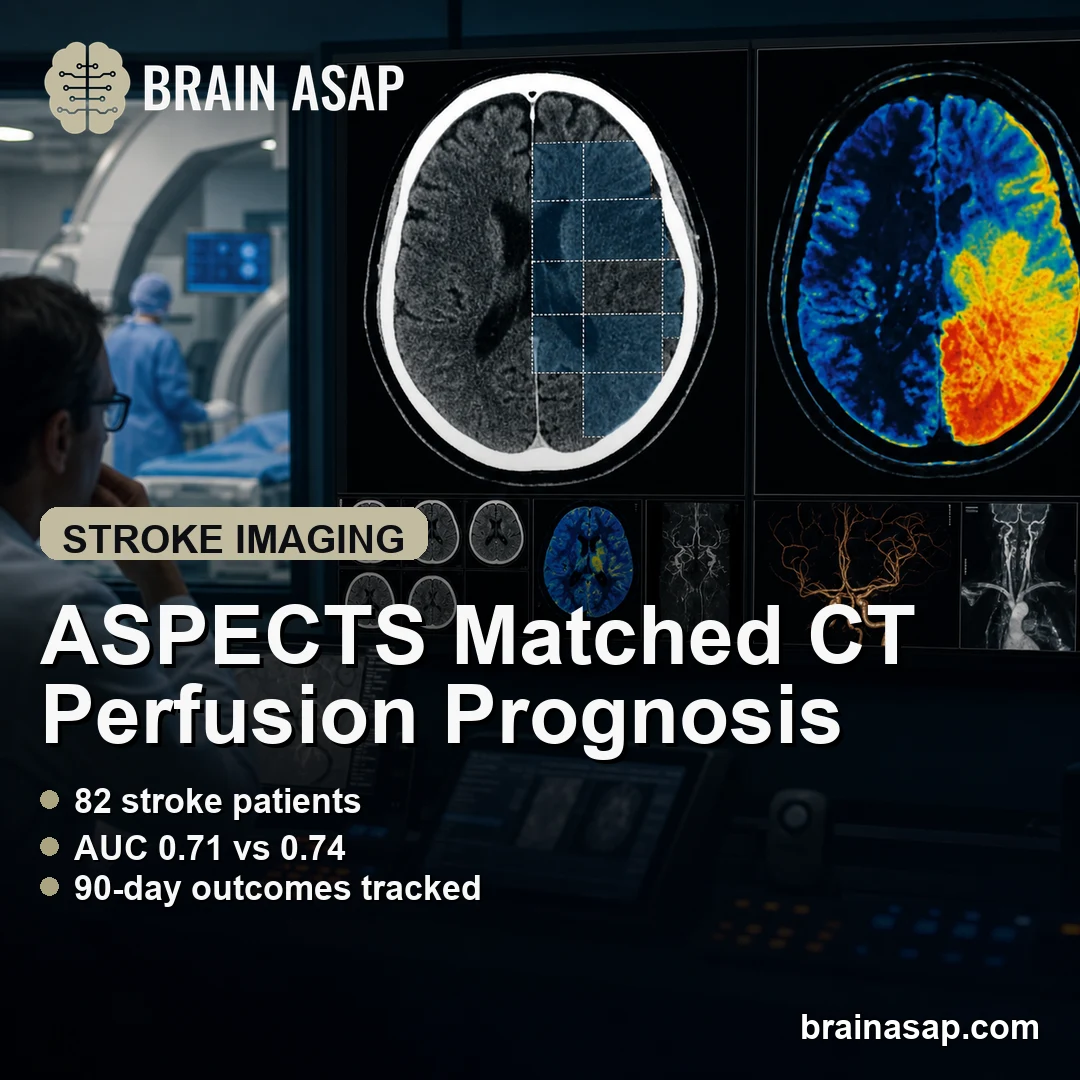
TL;DR: A 2026 study in the International Journal of General Medicine found that rapid ASPECTS scoring on non-contrast CT and CT perfusion core-infarct volume predicted 90-day outcomes similarly in 82 acute ischemic stroke patients treated with endovascular the…
Read article ↗
TL;DR: A 2026 preprint in medRxiv from a Dutch comprehensive stroke center found that ischemic stroke patients with a migration background were more likely to arrive outside the treatment time window and less likely to receive endovascular thrombectomy than pa…
Read article ↗
TL;DR: A 2026 narrative review in Journal of Central Nervous System Disease found that glucagon-like peptide-1 receptor agonists have promising stroke-prevention and animal-model evidence, but human data do not yet support routine use as an acute ischemic stro…
Read article ↗
TL;DR: A 2026 systematic review posted on medRxiv found that transcranial direct current stimulation (tDCS), a weak noninvasive brain-stimulation method, added to cognitive training produced a small short-term cognitive benefit across 27 trials, but the effect…
Read article ↗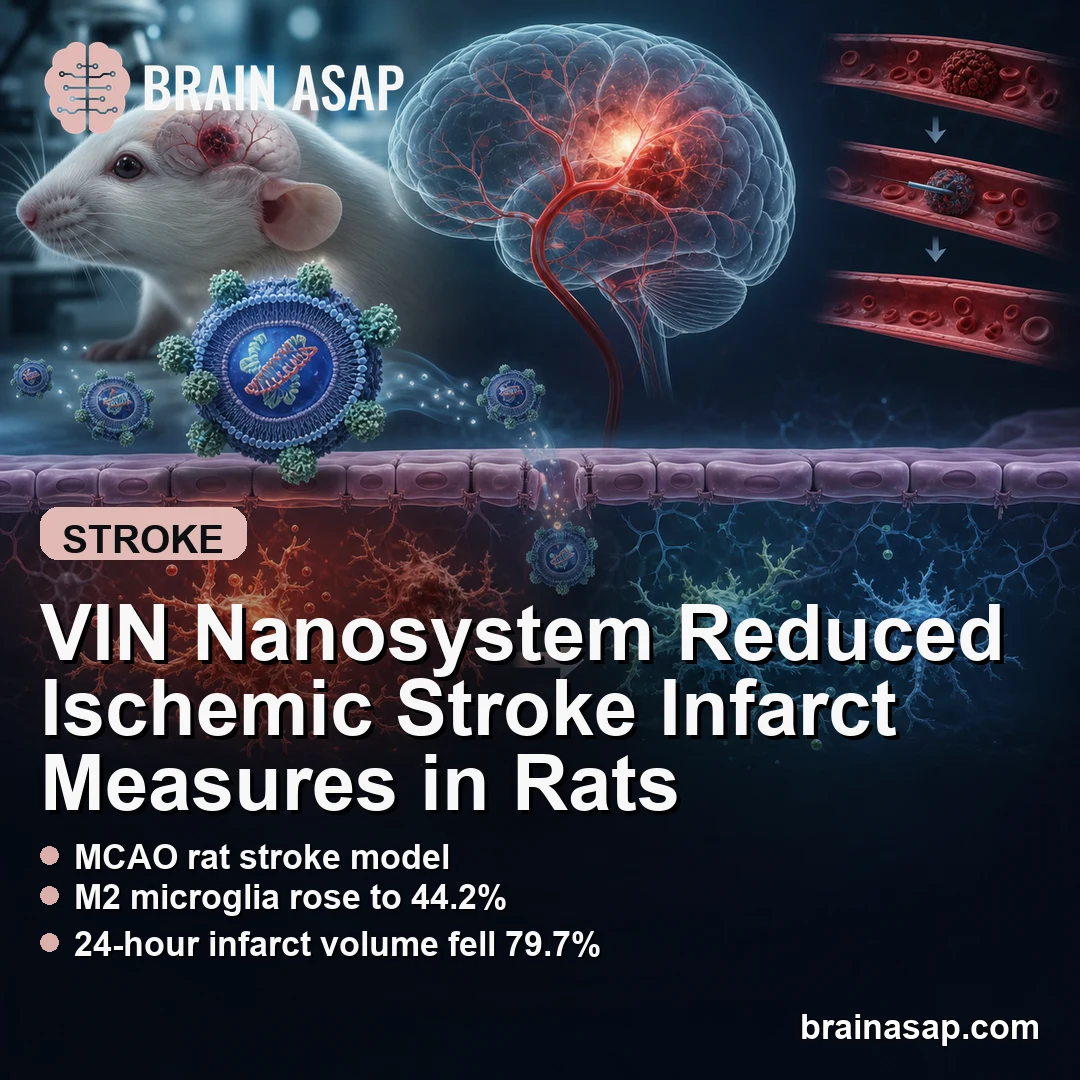
TL;DR: A 2026 rat and cell study in Journal of Materials Science: Materials in Medicine reported that an engineered VIN nanosystem shifted microglia toward an anti-inflammatory state and reduced ischemic-stroke infarct measures in MCAO rats. Key Findings CXCR4…
Read article ↗
TL;DR: A 2026 medRxiv preprint found that a composite cerebral small vessel disease (cCSVD) score from routine T1 MRI predicted 3-month cognitive recovery after stroke better than any single small-vessel marker in a 65-person cohort. Key Findings Recovery wind…
Read article ↗