TL;DR: Researchers in Munich tested 28 people who hear a near-constant low hum that the people around them usually can't. For most of them, the tests didn't support either of two hearing explanations: unusually sensitive hearing for deep sounds, or hearing sou…
Read article ↗
TL;DR: In 144 Norwegian tinnitus patients, an online program of retraining therapy and CBT was linked to less tinnitus distress after 6 months, most in severe cases. With no comparison group, the program can’t take full credit. Key Findings 144 patients: A 6-h…
Read article ↗
TL;DR: A 2026 study in The Journal of the Acoustical Society of America found that seeing a video tied to the sound source, such as motion from a train, drum, keyboard, bird, or canoe paddle, made faint sounds easier to detect through noise. Closing the eyes r…
Read article ↗
TL;DR: A 2026 mouse study in The Journal of Physiology found that damaging noise temporarily disrupted sound-offset responses in a brainstem hearing circuit, but those timing responses partly recovered within 24 hours through rapid circuit adaptation. Key Find…
Read article ↗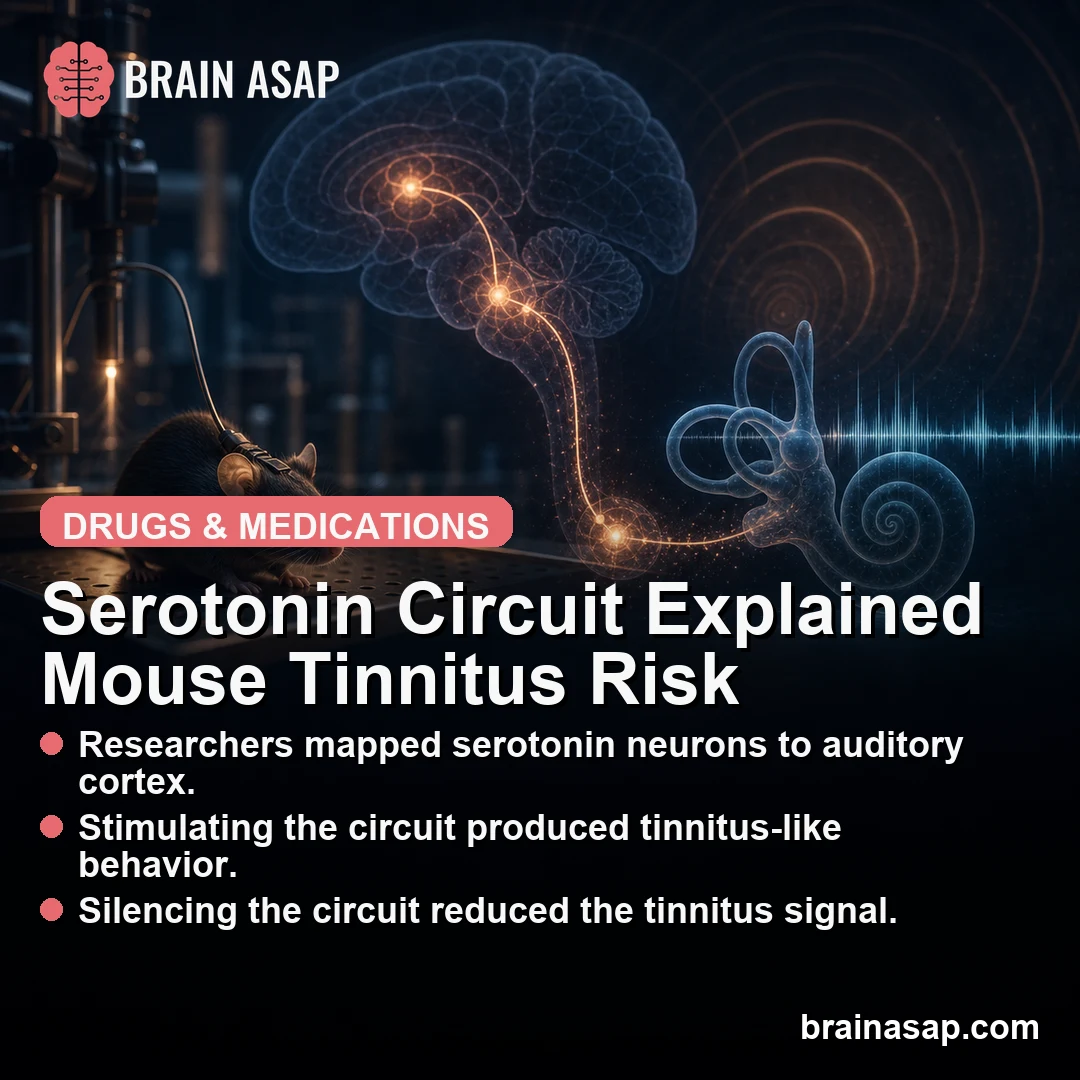
TL;DR: A 2026 study in PNAS from Oregon Health & Science University and Anhui University used optogenetics in mice to map a specific serotonin-producing brain circuit that runs straight to the auditory system, showed that activating this circuit produced tinni…
Read article ↗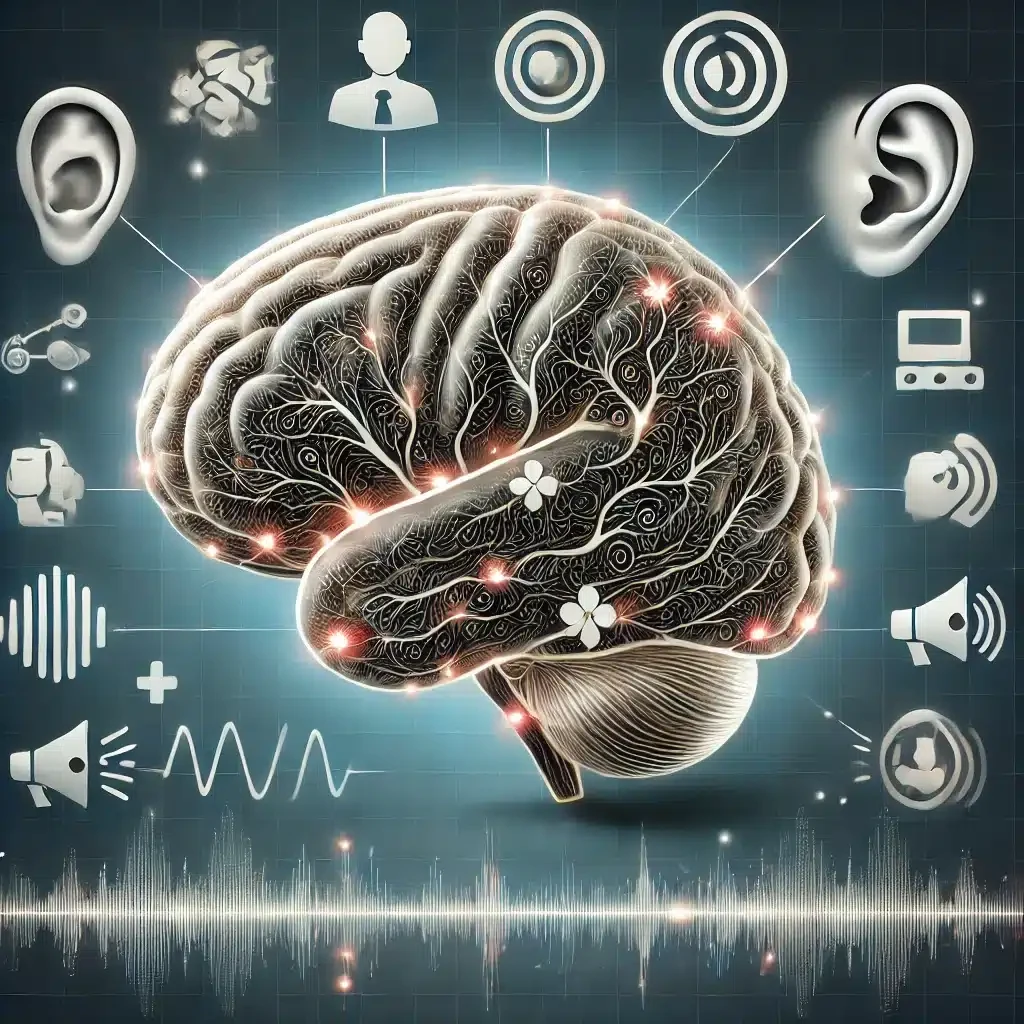
TLDR: Patients with noise-induced hearing loss (NIHL) exhibit significant changes in the white matter (WM) microstructure of their brains, particularly affecting the auditory and language pathways. Highlights: A study compared 122 patients with varying degrees…
Read article ↗
Transcranial magnetic stimulation (TMS) is showing promise as a non-invasive treatment approach for tinnitus in some patients. Research indicates it may be able to reduce tinnitus loudness and annoyance by modulating brain activity. However, significant questi…
Read article ↗
Hearing loss affects over 5% of the global population, reducing people’s ability to interpret sounds and communicate effectively. While hearing aids and cochlear implants can assist with certain types of hearing loss, they have limitations. Exciting research i…
Read article ↗
Hearing loss is a major health issue that affects people of all ages. It can be caused by loud noise, aging, disease, or certain medications and often cannot be reversed. Unlike humans, some animals like birds, fish, and frogs are able to regenerate the sensor…
Read article ↗
Tinnitus, a persistent ringing or buzzing in the ears, affects millions of people worldwide. A new study tested a combination therapy of trigeminal nerve stimulation and tailored sound therapy that shows promise for reducing tinnitus symptoms and improving qua…
Read article ↗