Focused Ultrasound (FUS): An Effective Treatment for Depression in Rat Study
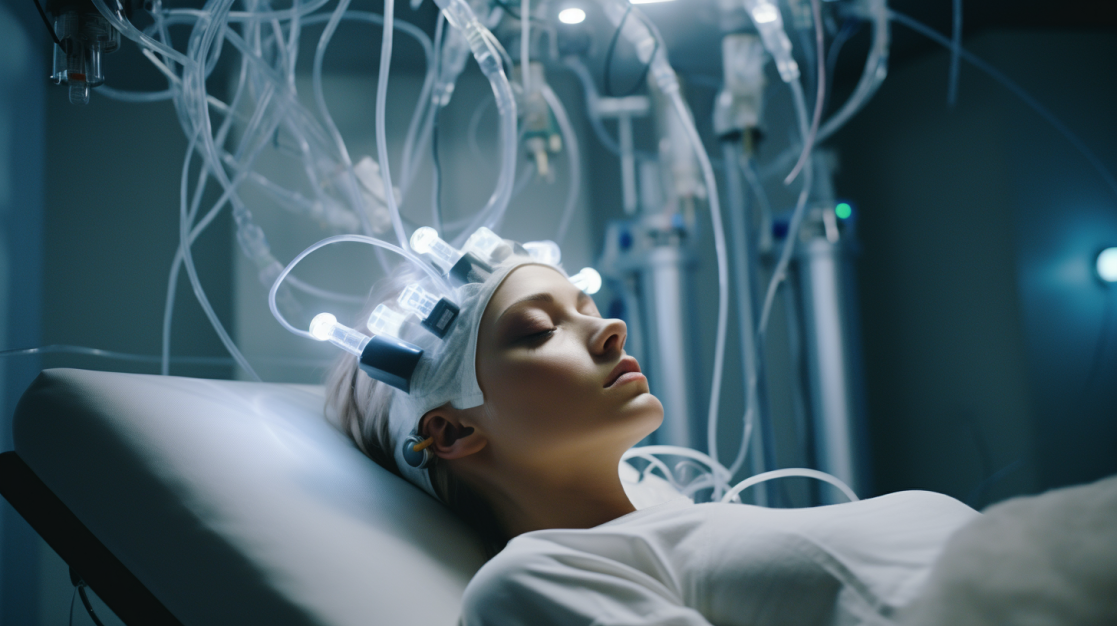
New research demonstrates that repeated focused ultrasound treatments can have antidepressant-like effects in rats. The non-invasive technique was able to improve performance on a common test of depressive behaviors. While not a silver bullet solution, focused ultrasound represents an exciting potential alternative for depression treatment. Key Facts: Focused ultrasound (FUS) uses targeted sound waves to …
Read more

Transcranial Ultrasound Stimulation: Benefits & Future Applications

Our brains contain around 100 billion neurons communicating through an intricate web of connections. This complex circuitry controls everything we think, feel, and do. But sometimes things can go wrong, leading to neurological disorders like epilepsy, Parkinson’s disease, depression and Alzheimer’s. An exciting new approach called transcranial ultrasound stimulation (TUS) is showing great promise as …

Read more

Focused Ultrasound (FUS): A Transformative Noninvasive Brain Treatment

Focused ultrasound (FUS) is an exciting noninvasive brain treatment technology that is revolutionizing how we approach neurological and psychiatric diseases. This incisionless technique uses precisely targeted sound waves to therapeutically stimulate or ablate brain tissue. The Big Picture: FUS uses focused, high-intensity sound waves to precisely treat diseased brain regions without incisions. It has FDA …

Read more

Brain-Computer Interfaces: Advances, Applications, Ethics (2023)

Invasive brain-computer interfaces (BCIs) allow for direct communication between the brain and external devices, offering immense potential for restoring lost functions and even enhancing brain capabilities. Recent advances are bringing this emerging technology closer to widespread clinical use. Invasive BCIs involve surgically implanted electrodes to record from or stimulate the brain. This allows for much …

Read more

TACS for Schizophrenia: Early Promise of Transcranial Alternating Current Stimulation

Schizophrenia is a severe mental disorder affecting about 1% of the population worldwide. It is characterized by hallucinations, delusions, disorganized thinking and behavior, and impaired cognitive functioning. Current treatments with antipsychotic medications are helpful but have significant limitations, especially for cognitive deficits and negative symptoms like social withdrawal and lack of motivation. This has driven …

Read more

TDCS for Trichotillomania: Brain Stimulation Shows Promise for Hair Pulling Disorder in 25-Year-Old Female

A new case study provides initial evidence that transcranial direct current stimulation (tDCS) may be an effective treatment option for trichotillomania, also known as hair pulling disorder. The study tested an intensified, repeated tDCS protocol targeting the supplementary motor area and dorsolateral prefrontal cortex in a 25-year-old woman with trichotillomania. After 16 sessions over 20 …

Read more

Transcranial Brain Stimulation for Insomnia & Sleep: TES & TMS Efficacy

Insomnia is a highly prevalent sleep disorder affecting up to 35% of the general population – and can significantly impair quality of life. Researchers have been investigating new non-pharmacological treatment options like transcranial electric stimulation (TES) and repetitive transcranial magnetic stimulation (rTMS) to treat insomnia symptoms. A new meta-analysis published in Frontiers in Psychiatry reviewed …

Read more

Neuralink Brain-Machine Interface: High-Bandwidth Connection to Neurons?

Neuralink, a neurotechnology company founded by Elon Musk, has developed a novel brain-machine interface system with unprecedented electrode density and bandwidth. In a recent white paper, Neuralink scientists describe their progress towards a scalable, high-performance implantable device for interfacing with the brain. The key facts: Neuralink’s device has over 3,000 electrodes per array, an order …

Read more

Neuralink & Brain-Computer Interfaces: Future Uses to Consider

Neuralink, a neurotechnology company founded by Elon Musk in 2016, is developing an innovative brain-machine interface (BMI) device that aims to enhance brain function and revolutionize neurosurgery. Early testing on animals shows promise, but human trials are still needed to determine safety and efficacy. If proven viable, Neuralink’s technology could transform treatment for neurological disorders. …

Read more

Rewiring the Brain with Precision: Future Neuromodulation Tactics

Neuromodulation techniques that stimulate the nervous system through electric current are revolutionizing the treatment of neurological and psychiatric disorders like depression, movement disorders, and chronic pain. These techniques allow for precisely targeted treatment of specific brain regions. Key facts: Neuromodulation techniques include invasive methods like deep brain stimulation (DBS) as well as non-invasive methods like …

Read more