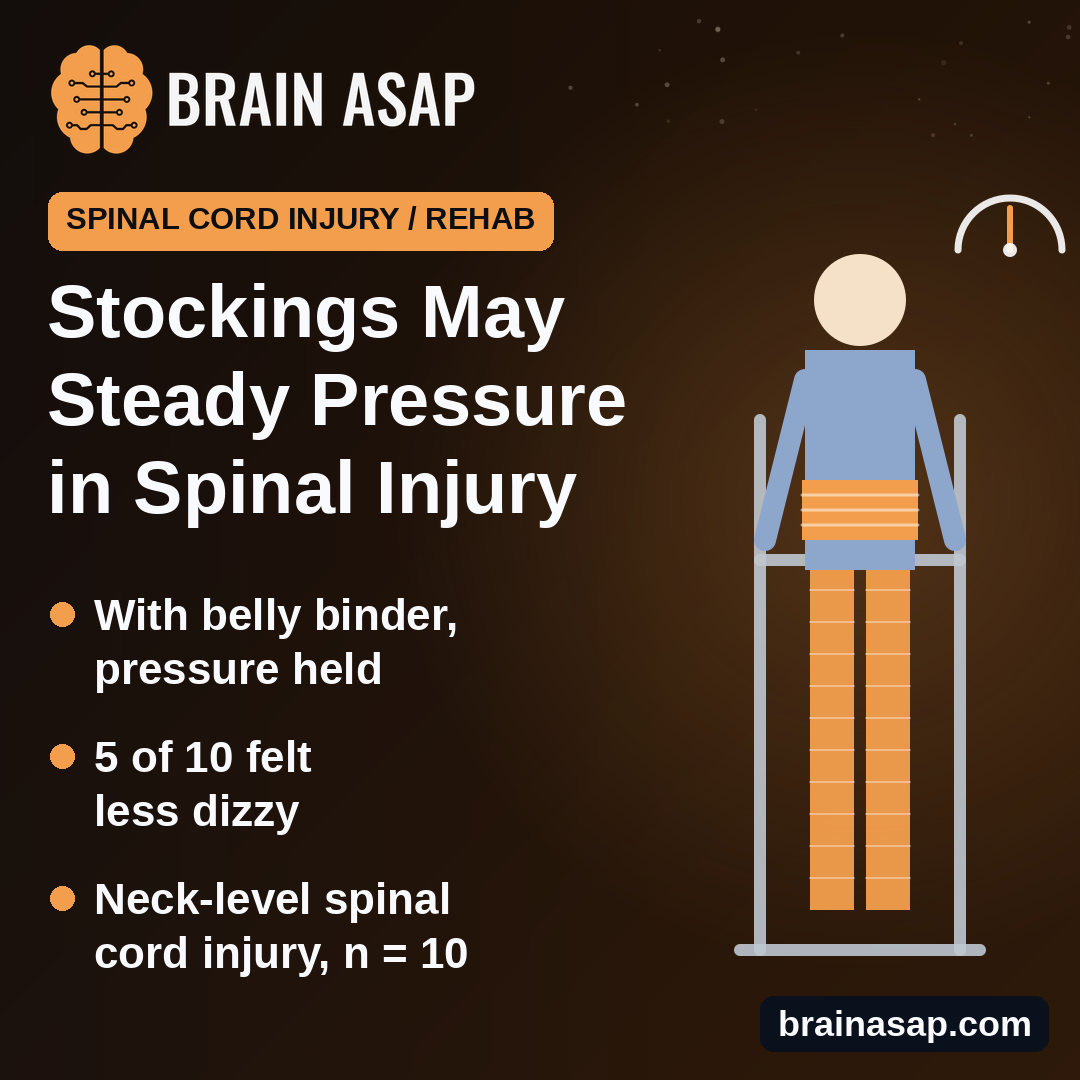
TL;DR: In 10 young adults with a neck-level spinal cord injury, standing upright in a frame made blood pressure drop. Wearing compression stockings and a belly binder kept blood pressure from falling, and the five people who felt faint said they felt better.
Key Findings
- Standing lowered blood pressure: Pressure and pulse pressure fell significantly when upright without compression.
- Compression held it steady: With stockings and binder, pressure did not differ significantly from sitting.
- Felt better: 5 of 10 had dizziness or similar symptoms upright and reported improvement with compression.
- Heart-pressure reflex better preserved: Reflex measures dropped less with compression.
Source: Frontiers in Neuroscience (2026) | Svacinova et al.
Standing up is an important part of rehab after a spinal cord injury. It helps bones, muscles, breathing and mood. But for people with injuries in the neck, being raised upright can make blood pressure crash, bringing dizziness, blurred vision or fainting.
Researchers in Brno, Czechia, tested whether simple compression gear can keep blood pressure up during standing.
Why Blood Pressure Drops After a Neck Injury
The nerves that tighten blood vessels when we stand run down the spinal cord. After a complete injury in the neck, those signals are cut off below the injury. Leg muscles no longer squeeze blood back to the heart, and belly muscles no longer help with breathing pressure, so blood pools in the legs and abdomen when upright. This drop, called orthostatic hypotension, affects about three-quarters of people with neck-level injuries.
Ten People Stood Up With and Without Compression
The study included 10 young adults (9 men, 1 woman) with complete spinal cord injuries at the C5 to C7 level, 2 to 12 years after injury. Each person did three phases:
- Sitting: 10 minutes in their wheelchair.
- Standing without compression: 8 to 10 minutes upright in a standing frame.
- Standing with compression: The same, wearing over-the-knee compression stockings and an abdominal binder.
The two standing phases were done in random order, with rest between them. Blood pressure was recorded beat by beat with a finger cuff.
Compression Kept Blood Pressure Close to Sitting Levels
Without compression, standing caused significant drops in upper and lower blood pressure numbers and in pulse pressure, a rough sign of how much blood the heart pumps each beat. With compression, blood pressure did not differ significantly from sitting, and pulse pressure was preserved.
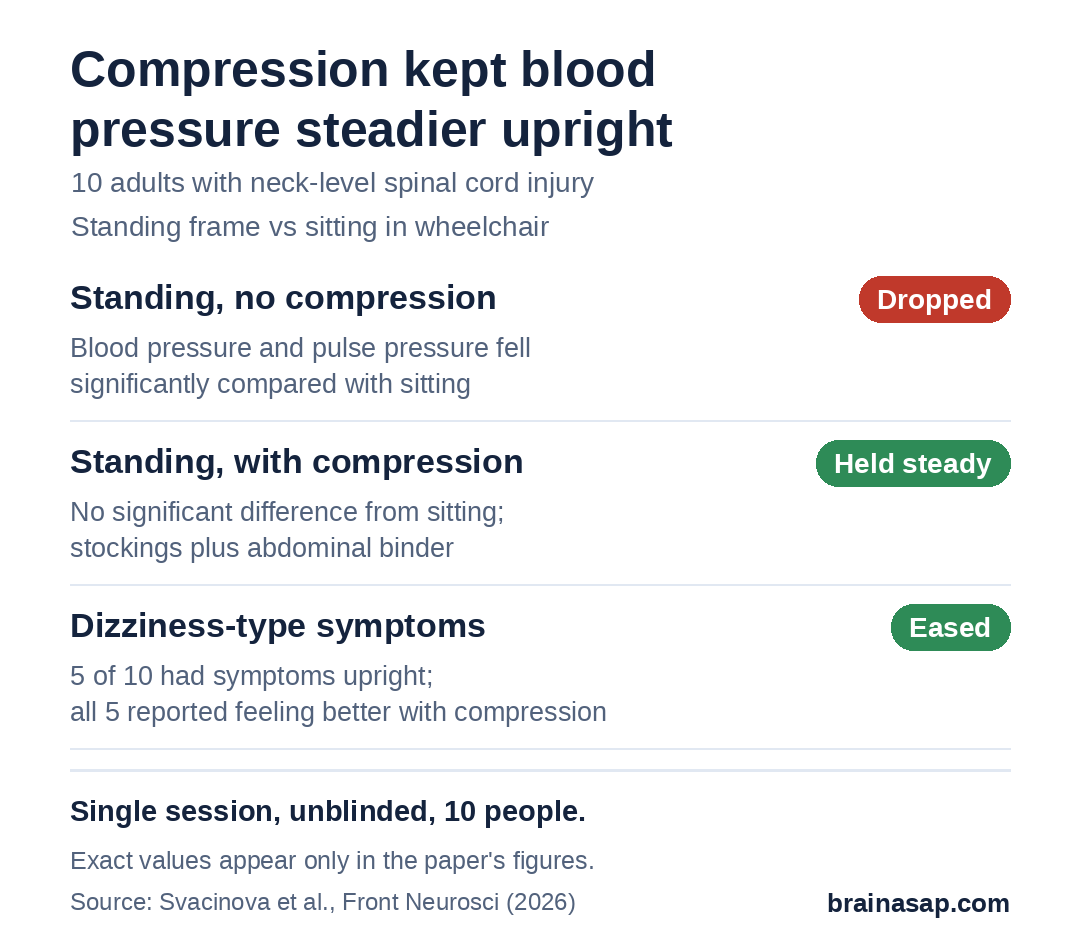
Half the group had lightheadedness, dizziness or blurred vision when upright, and those symptoms came back reliably each time. All five said they felt clearly better with the compression gear on.
Measures of the baroreflex, the automatic heart-rate response that buffers blood pressure swings, also fell less when people wore compression, suggesting the body kept more reserve to handle further drops.
A Very Small, Short Test
- Ten people: Mostly young men from one center.
- Single session: No test of long-term or daily use.
- Not blinded: People knew when they wore compression, which could affect how they felt.
- Varied time since injury: 2 to 12 years.
Compression Gear Is a Simple Help for Standing Rehab
For people with neck-level spinal cord injuries and their therapists, the study supports a low-cost, drug-free step: wearing compression stockings and an abdominal binder during standing sessions may keep blood pressure steadier and reduce dizziness.
Larger studies over weeks of rehab could show whether this lets people stand longer and get more benefit from therapy.
Citation: DOI: 10.3389/fnins.2026.1922241. Svacinova J, Ondrusova K, Novakova Z, Javorka M, Novakova M. Compression aids improve cardiovascular control during verticalization in patients after cervical spinal cord injury. Front Neurosci. 2026;20:1922241.
Study Design: Within-subject physiology study with randomized order of standing conditions.
Sample Size: 10 adults with complete cervical (C5 to C7) spinal cord injury.
Key Statistic: No significant difference in systolic or diastolic blood pressure between sitting and standing when compression aids were worn; significant drops without them.
Caveat: Very small, single-session, unblinded study.