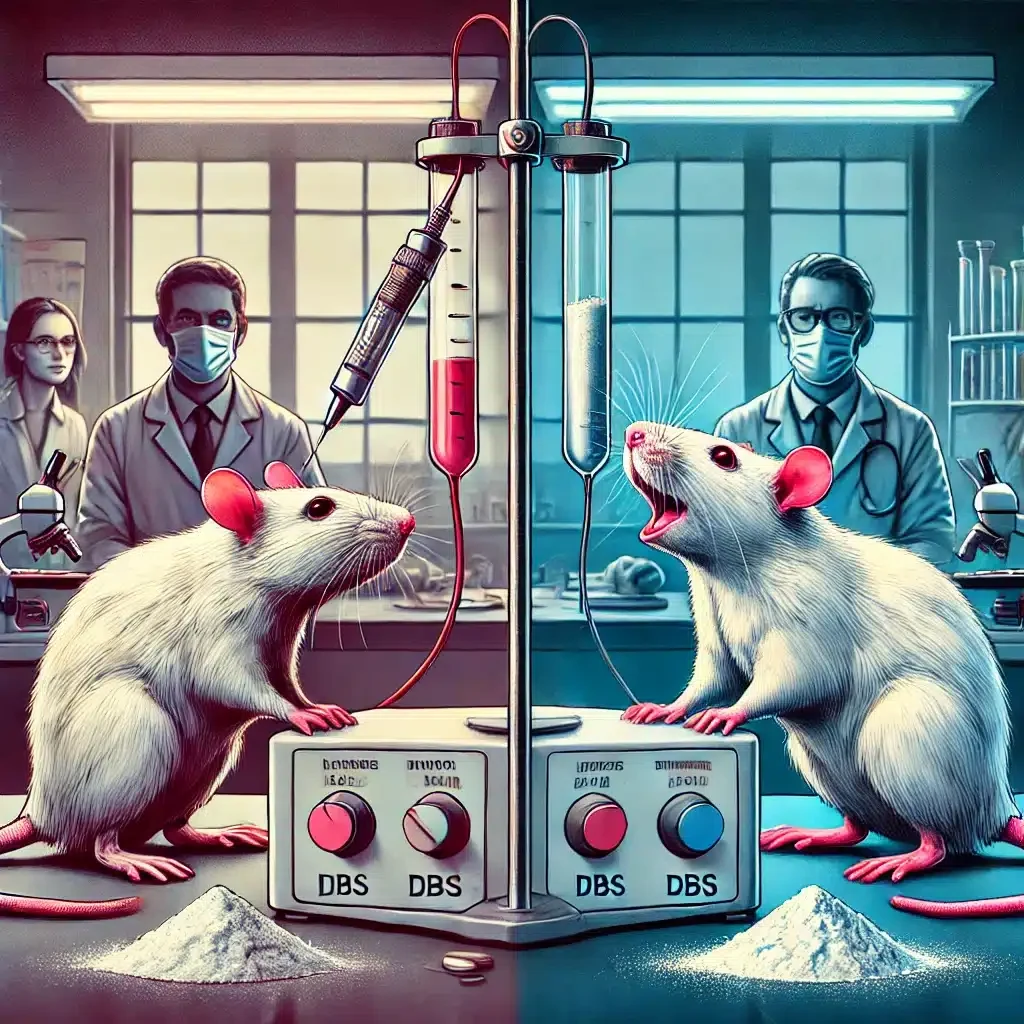
Deep brain stimulation (DBS) in the nucleus accumbens reduces cocaine seeking in male rats but is ineffective in female rats, regardless of their estrous cycle phase. Highlights: No FDA-Approved Treatments: There are currently no FDA-approved treatments for co…
Read article ↗
Low intensity focused ultrasound (LIFU) is an exciting new non-invasive brain stimulation technology that allows precise neuromodulation of deep brain structures without surgery. Early research shows LIFU can safely and reversibly modulate targeted areas of th…
Read article ↗
Our brains contain around 100 billion neurons communicating through an intricate web of connections. This complex circuitry controls everything we think, feel, and do. But sometimes things can go wrong, leading to neurological disorders like epilepsy, Parkinso…
Read article ↗
Invasive brain-computer interfaces (BCIs) allow for direct communication between the brain and external devices, offering immense potential for restoring lost functions and even enhancing brain capabilities. Recent advances are bringing this emerging technolog…
Read article ↗
Deep brain stimulation (DBS) is an effective but not perfect therapy. A large new study found that over 4-7 years, a majority of patients experienced adverse events, though most were not severe. Key facts: 86% of 123 DBS patients experienced adverse events ove…
Read article ↗
Deep brain stimulation (DBS), a surgical procedure that implants electrodes in the brain to deliver electrical stimulation, may offer hope for people with severe depression that has not responded to multiple treatments. However, larger and more rigorous studie…
Read article ↗
Deep brain stimulation (DBS) is an emerging experimental therapy that has shown promise in treating patients with severe, treatment-resistant depression (TRD). Early research indicates DBS may help patients who have failed to respond to medications, psychother…
Read article ↗
Obsessive-compulsive disorder (OCD) is a challenging psychiatric illness affecting 2% of the population. While some patients respond to therapy and medications, others continue to suffer from severe, treatment-resistant symptoms. Exciting new research shows th…
Read article ↗
Deep brain stimulation (DBS) of a brain region called the ventral capsule/ventral striatum (VC/VS) may provide long-term relief for people with severe, treatment-resistant obsessive-compulsive disorder (OCD), according to a new retrospective study. Key finding…
Read article ↗
Tardive dyskinesia is a disorder caused by taking certain psychiatric drugs long-term. It involves uncontrollable body movements that can severely impact a person’s quality of life. Deep brain stimulation is a promising new treatment option for severe, drug-re…
Read article ↗