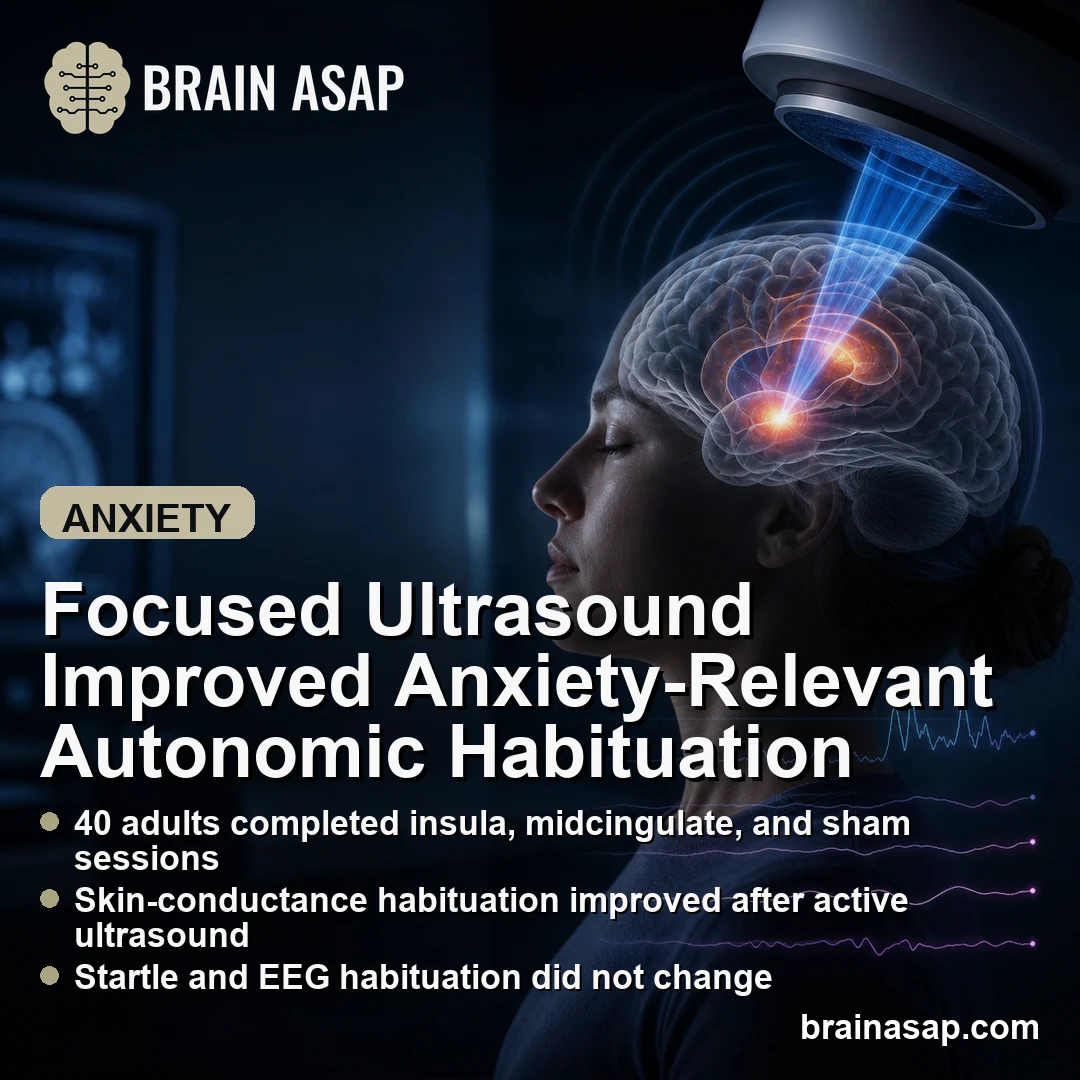
TL;DR: A 2026 human study in Biological Psychiatry: Global Open Science found that low-intensity focused ultrasound aimed at salience-network hubs improved early skin-conductance habituation to repeated startle sounds, while eye-blink and EEG habituation did n…
Read article ↗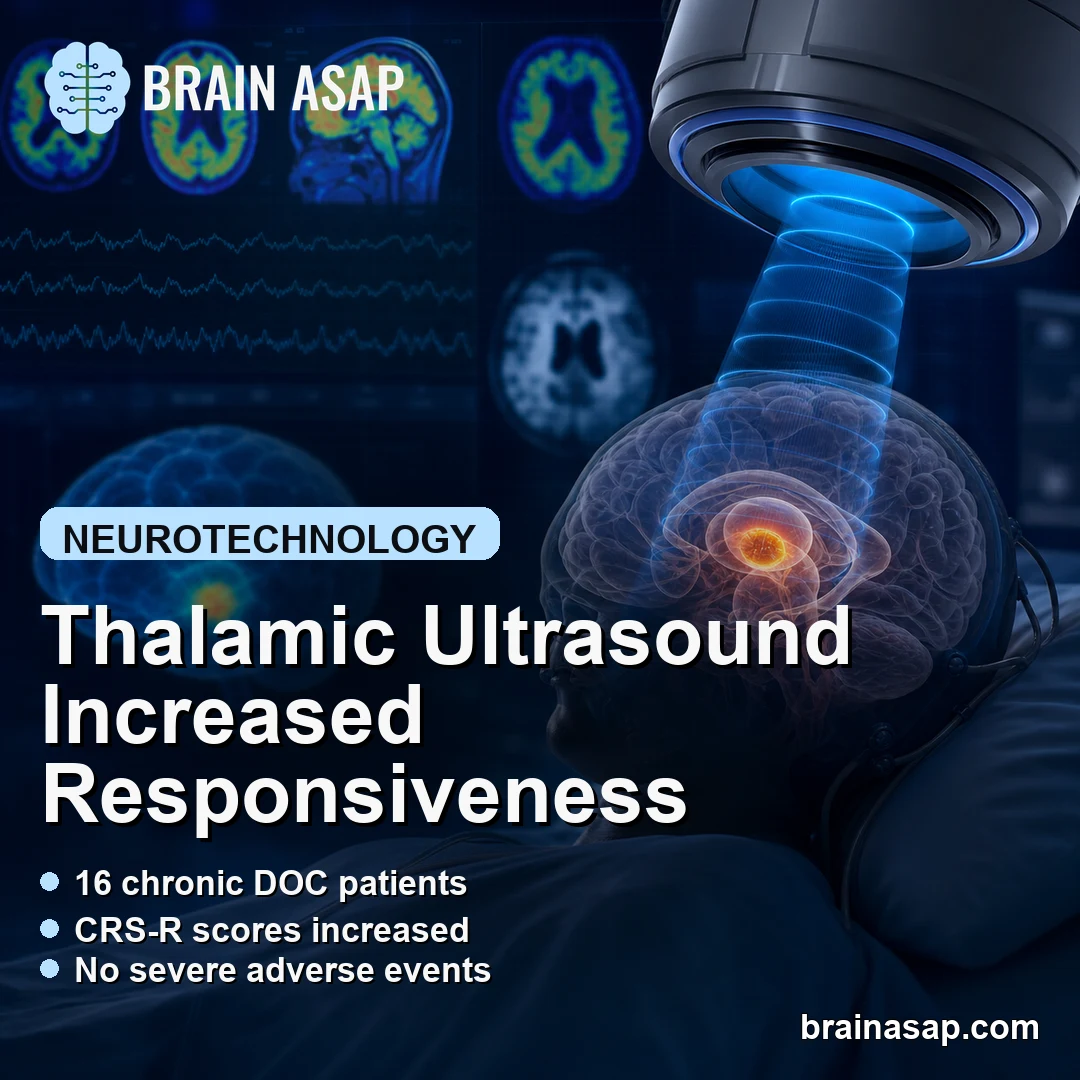
TL;DR: A 2026 preprint in medRxiv reported that one session of left central thalamus focused ultrasound increased behavioral responsiveness scores in 16 adults with chronic disorders of consciousness, with no severe adverse events reported. Key Findings 16 chr…
Read article ↗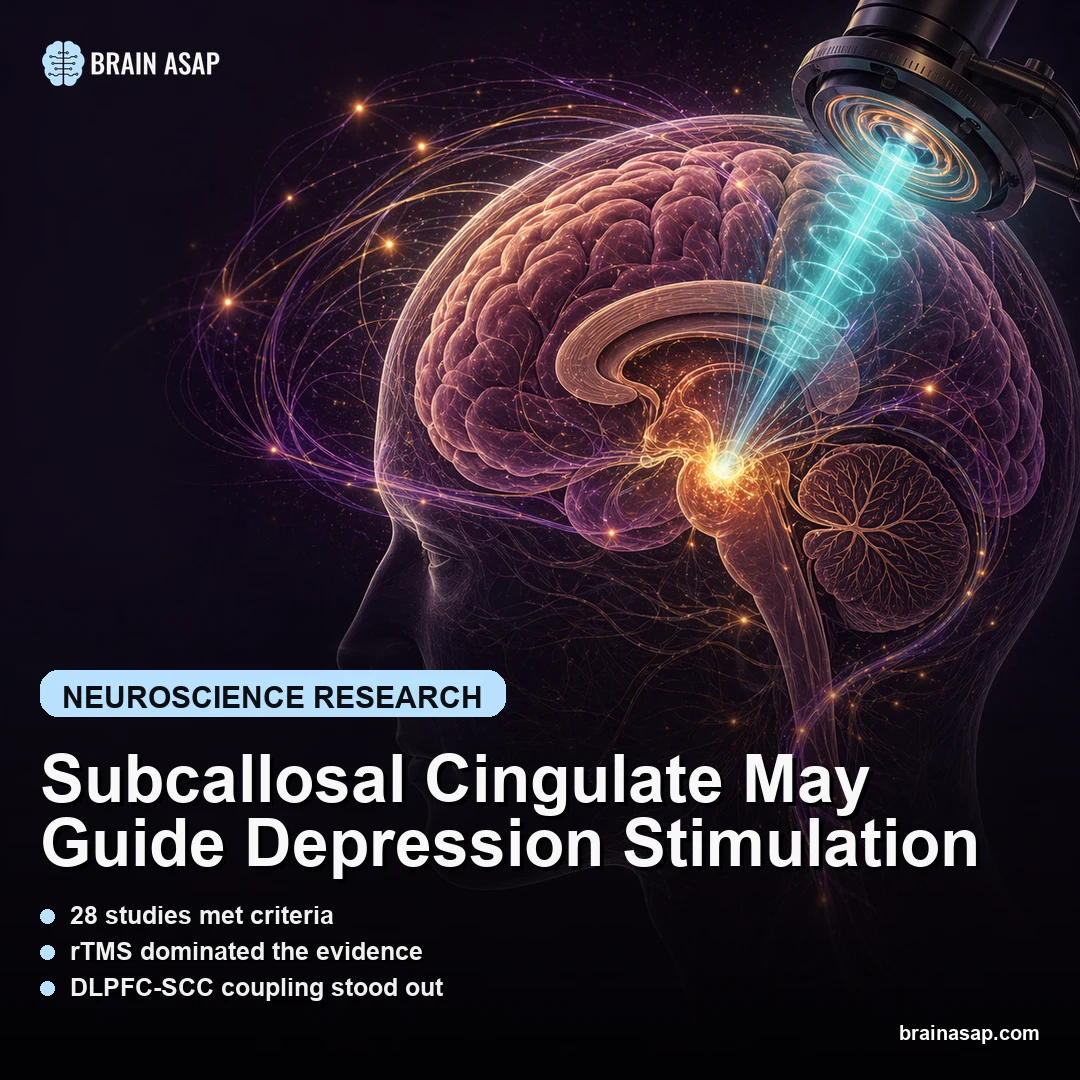
TL;DR: A 2026 systematic review in Translational Psychiatry found that depression brain-stimulation studies repeatedly linked treatment response to subcallosal cingulate connectivity, but inconsistent methods still limit its use as a treatment-selection biomar…
Read article ↗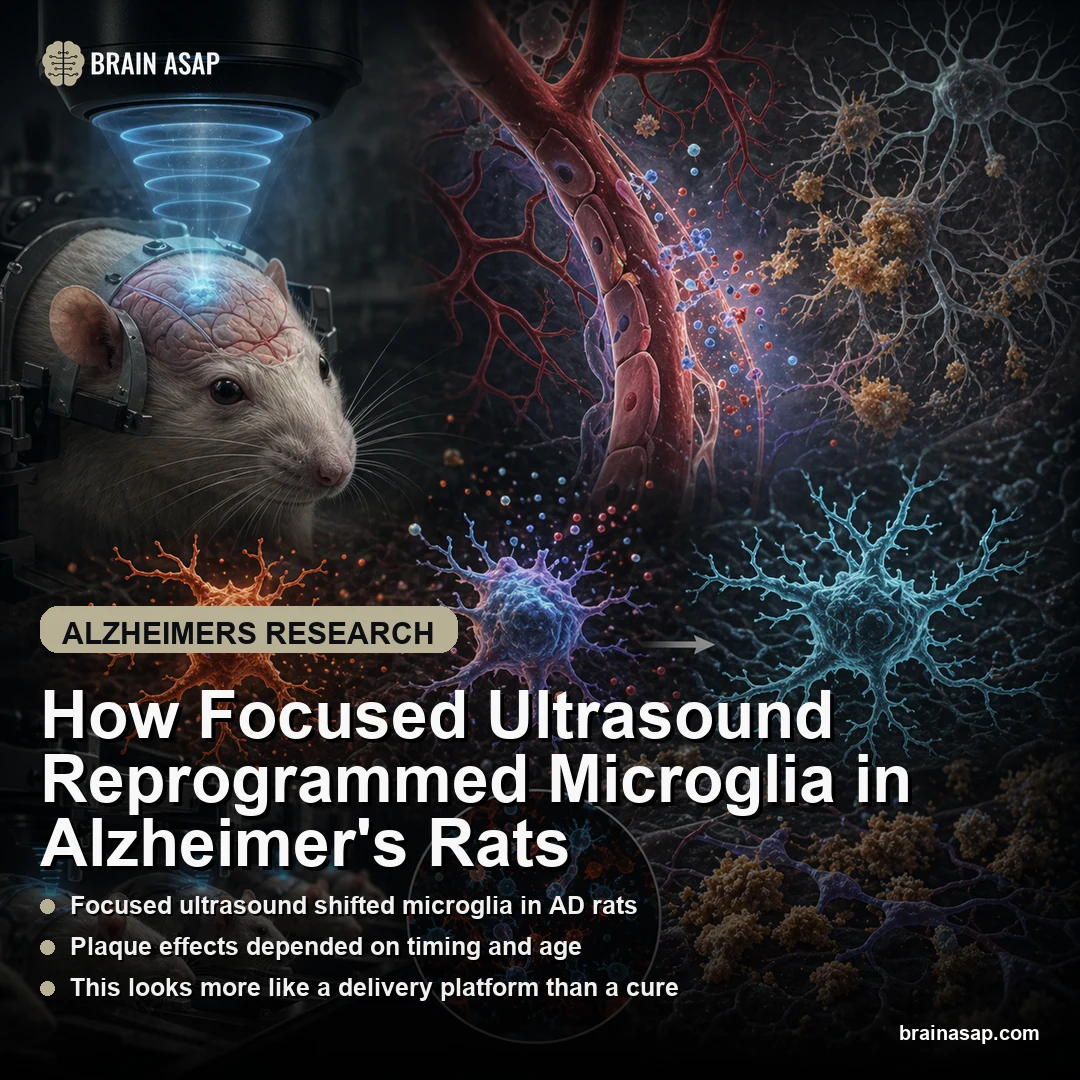
How Focused Ultrasound Reprogrammed Microglia in Alzheimer’s Rats TL;DR: In TgF344-AD rats, repeated low-intensity focused ultrasound triggered a short-lived inflammatory response, then left behind a more durable microglial metabolic shift in early disease wit…
Read article ↗
Focused ultrasound is emerging as a potentially revolutionary new tool for precisely stimulating the brain without surgery. This novel approach could transform how we diagnose and treat everything from depression and OCD to Alzheimer’s and stroke. Key Facts: F…
Read article ↗
Low intensity focused ultrasound (LIFU) is an exciting new non-invasive brain stimulation technology that allows precise neuromodulation of deep brain structures without surgery. Early research shows LIFU can safely and reversibly modulate targeted areas of th…
Read article ↗
A new study published in Frontiers in Psychiatry provides promising evidence that focused ultrasound stimulation of the prefrontal cortex can alleviate depressive behaviors in mice by suppressing inflammatory responses. Key facts: Researchers stimulated the pr…
Read article ↗
New research demonstrates that repeated focused ultrasound treatments can have antidepressant-like effects in rats. The non-invasive technique was able to improve performance on a common test of depressive behaviors. While not a silver bullet solution, focused…
Read article ↗
Our brains contain around 100 billion neurons communicating through an intricate web of connections. This complex circuitry controls everything we think, feel, and do. But sometimes things can go wrong, leading to neurological disorders like epilepsy, Parkinso…
Read article ↗
Focused ultrasound (FUS) is an exciting noninvasive brain treatment technology that is revolutionizing how we approach neurological and psychiatric diseases. This incisionless technique uses precisely targeted sound waves to therapeutically stimulate or ablate…
Read article ↗