
TL;DR: A 2026 Molecular Psychiatry ENIGMA mega-analysis found that medication status in bipolar disorder was linked to subtle differences in subcortical brain volume, with antiepileptic and antipsychotic exposure most consistently tied to smaller hippocampal a…
Read article ↗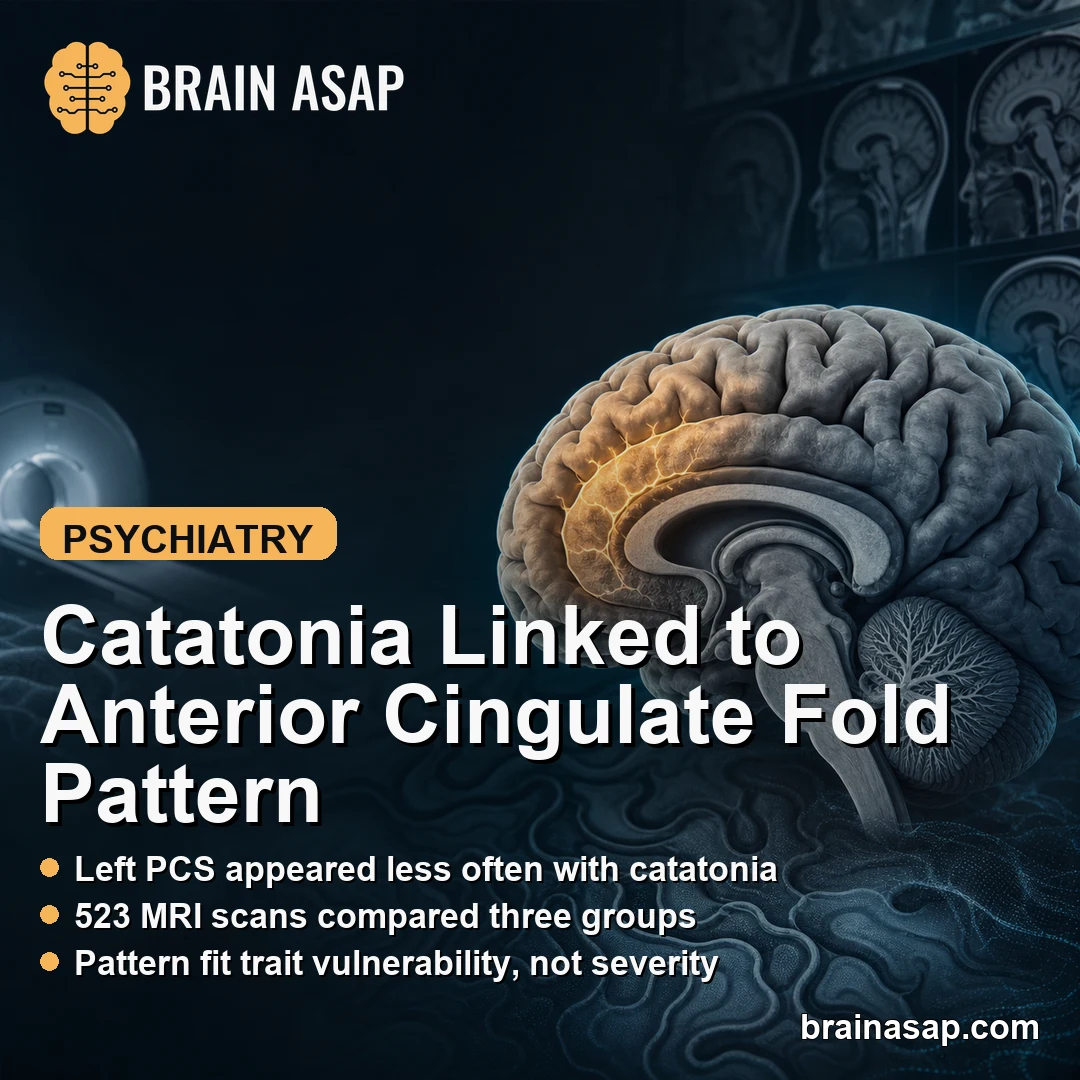
TL;DR: A 2026 MRI preprint on medRxiv found that patients with catatonia were less likely to have a left paracingulate sulcus (PCS), a stable anterior cingulate cortex fold, than psychiatric patients without catatonia. Key Findings 523 MRI scans: Researchers c…
Read article ↗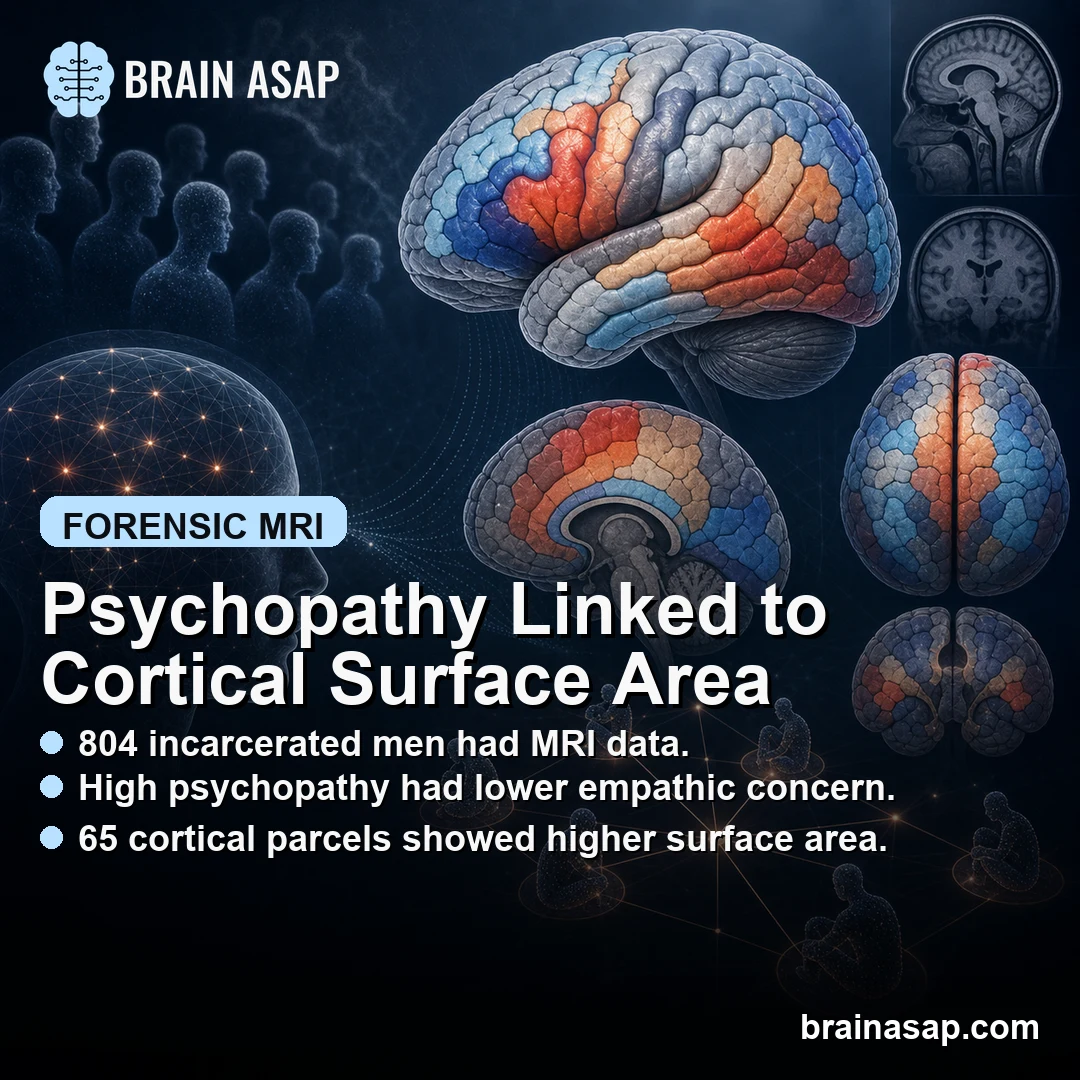
TL;DR: A 2026 study in Biological Psychiatry: Global Open Science linked higher psychopathy in MRI data from 804 incarcerated men to lower empathic concern and broader cortical surface area, while empathy scores themselves were not directly tied to cortical th…
Read article ↗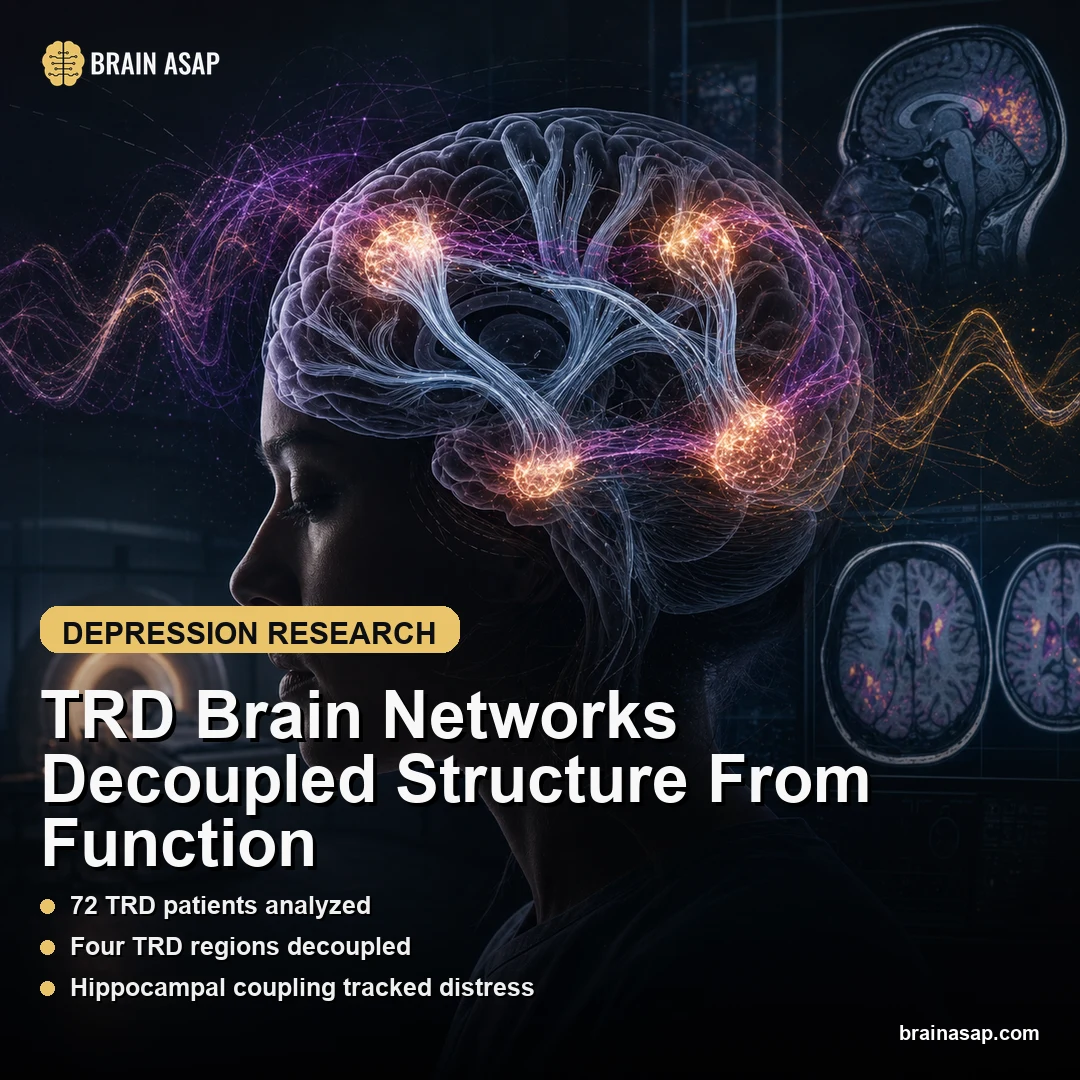
TL;DR: A 2026 study in npj Mental Health Research found that a 308-person multimodal MRI study found treatment-resistant depression carried a distinct structure-function decoupling pattern, and machine-learning models separated TRD from non-resistant depressio…
Read article ↗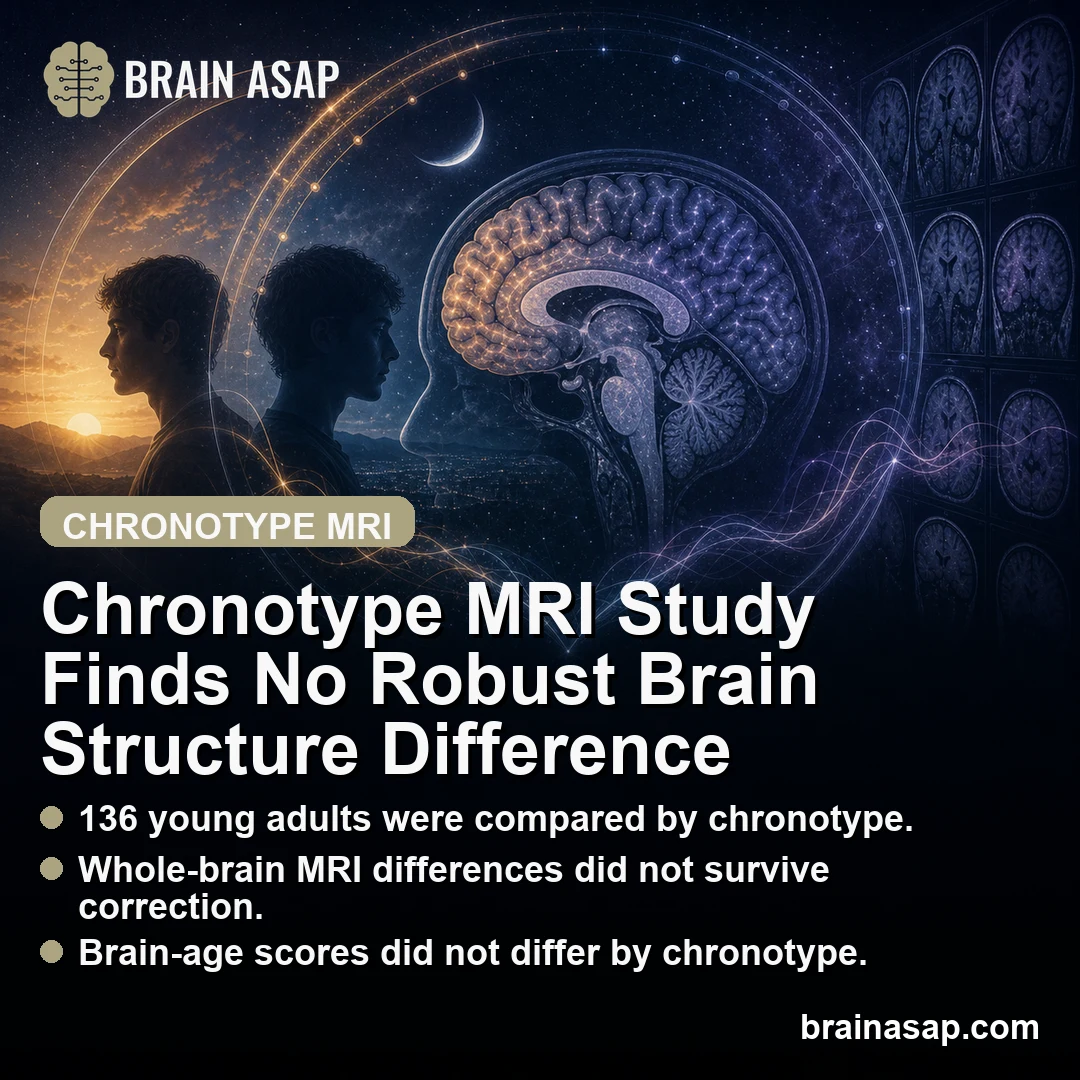
TL;DR: A 2026 MRI study in Brain Imaging and Behavior of 136 healthy young adults found no robust whole-brain gray matter, white matter, cortical thickness, or brain-age differences between early and late chronotypes. Key Findings 136 young adults: The study c…
Read article ↗
TL;DR: A 2026 preprint UK Biobank neuroimaging study in medRxiv found that the comorbidity group showed widespread lower cortical volume, subcortical differences, and white matter microstructure alterations, while several alterations appeared unique to the chr…
Read article ↗
TL;DR: A 2026 Alzheimer’s & Dementia: Diagnosis, Assessment & Disease Monitoring study found that orbitofrontal and frontoinsular visual rating scales on MRI helped distinguish possible from probable behavioral variant frontotemporal dementia. Key Findings bvF…
Read article ↗
TL;DR: A 2026 article-in-press study in Alzheimer’s Research & Therapy found that olfactory-region MRI radiomics, a method that turns brain scans into quantitative texture and shape features, linked blood pTau217, a tau-related Alzheimer’s disease biomarker, w…
Read article ↗
TL;DR: A 2026 review in BMC Psychiatry found 441 primary MRI and electroencephalogram (EEG), a scalp recording of brain electrical activity, mental-health biomarker studies, but most were small, cross-sectional, and concentrated in depression, making routine c…
Read article ↗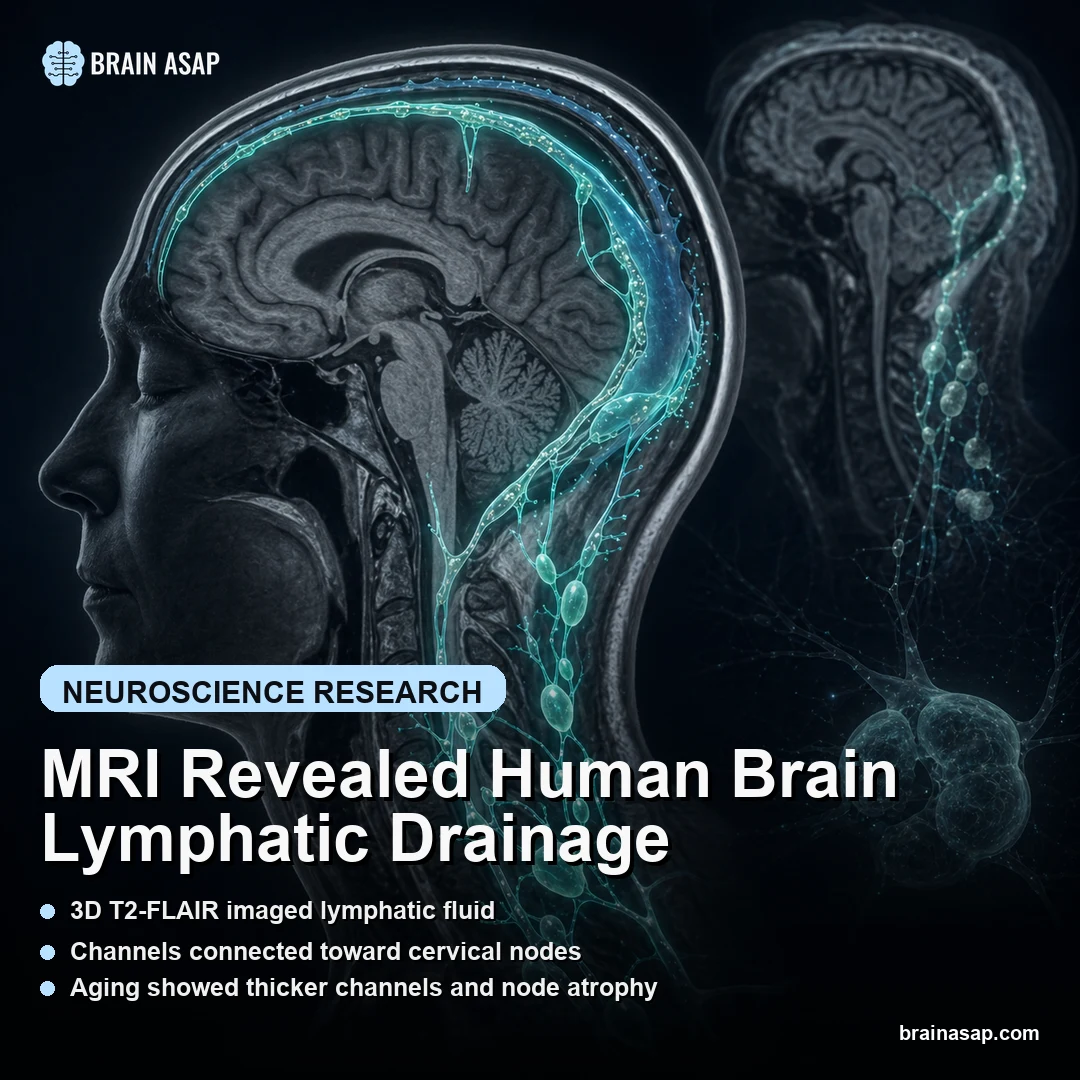
TL;DR: A 2022 study in Nature Communications used non-contrast 3D T2-FLAIR MRI, a scan that suppresses ordinary cerebrospinal-fluid brightness, to map possible brain-border drainage routes toward cervical lymph nodes, but FLAIR brightness alone does not prove…
Read article ↗