
TL;DR: A 2026 review in International Journal of Nanomedicine argued that depression nanomedicine should move beyond blood-brain-barrier delivery alone and be judged by target engagement, neuroimmune-barrier-plasticity effects, safety, manufacturability, and p…
Read article ↗
TL;DR: A 2026 narrative review in Molecular Psychiatry argues that depression in Alzheimer’s disease and Parkinson’s disease follows disease-specific brain mechanisms, while standard antidepressant evidence remains weak in these neurodegenerative populations.…
Read article ↗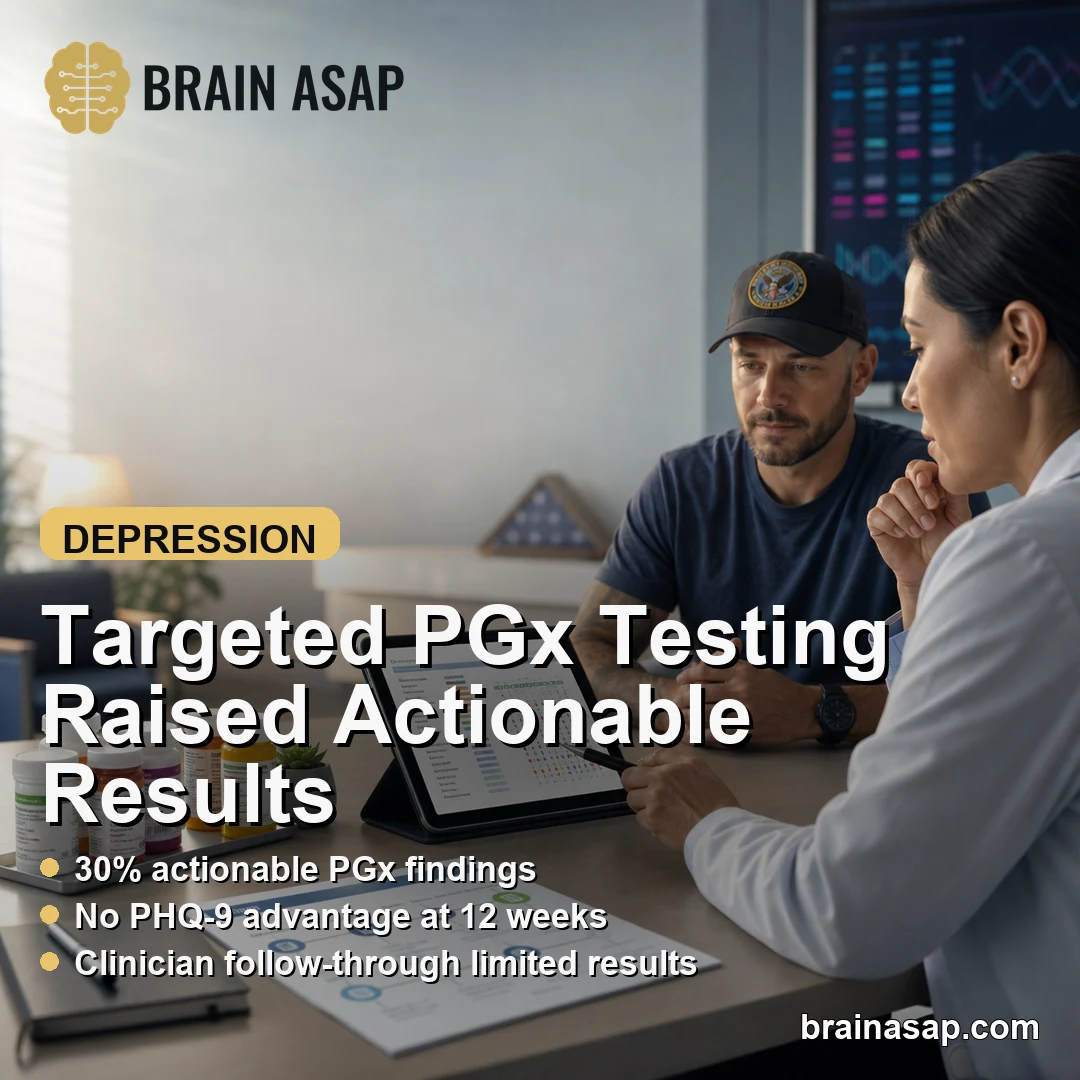
TL;DR: A 2026 study in The Pharmacogenomics Journal tested pharmacogenomic (PGx) depression care, meaning medication guidance based on drug-gene interactions; targeting Veterans already taking antidepressants with common PGx interactions raised the actionable-…
Read article ↗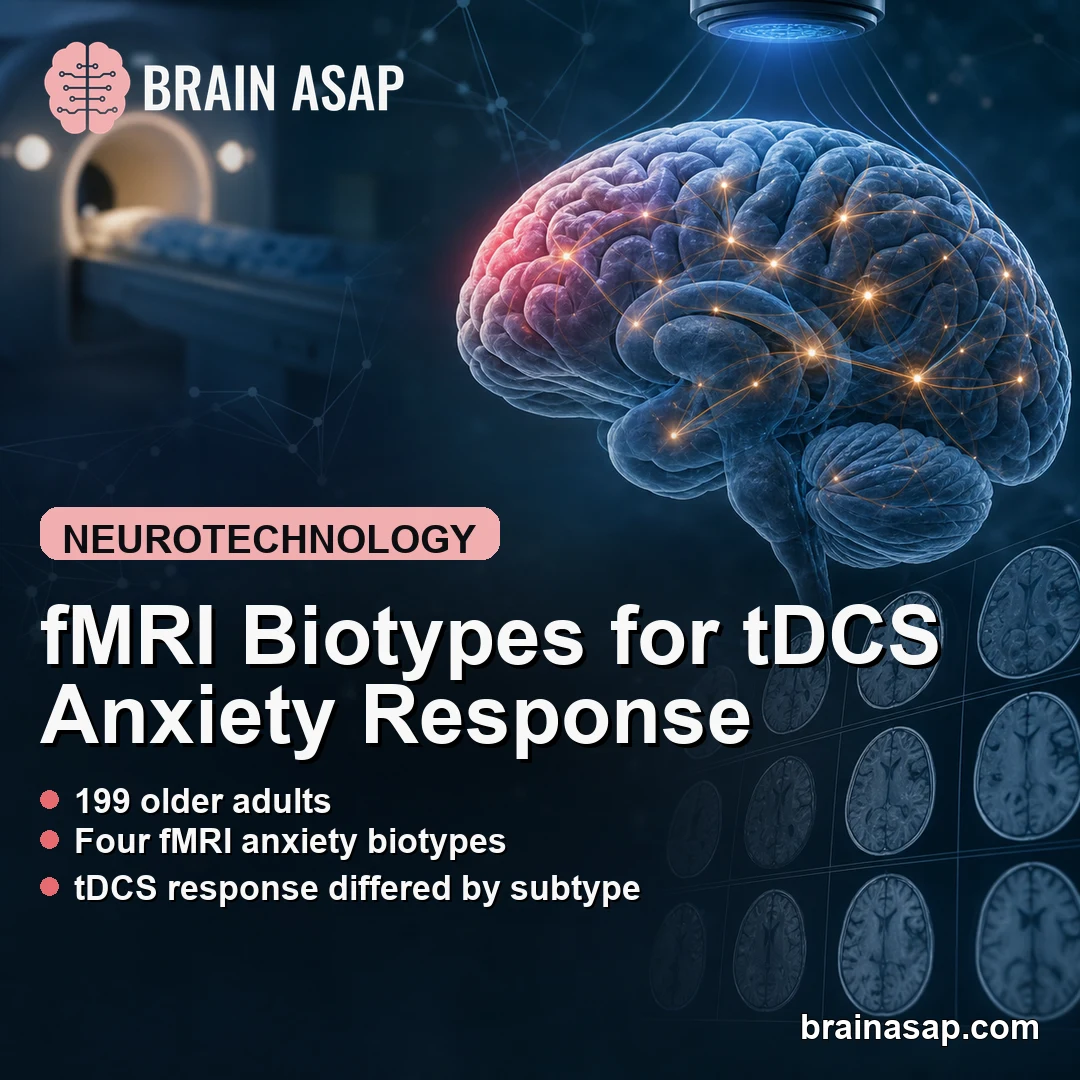
TL;DR: A 2026 preprint on medRxiv used resting-state functional MRI (fMRI), a brain-connectivity scan taken while people are not doing a task, to divide older adults at Alzheimer’s risk into anxiety biotypes that responded differently to frontal-lobe tDCS stim…
Read article ↗
TL;DR: A 2026 study in Psychological Medicine found that cognitive reserve in non-affective first-episode psychosis was higher with greater genetic predisposition to educational attainment and lower with earlier psychosis onset or family history of psychosis.…
Read article ↗
TL;DR: A 2026 study in The British Journal of Psychiatry found that serious mental illness labels shifted often in real-world psychiatric records: 64% of patients with schizophrenia, bipolar disorder, or severe major depression received multiple diagnoses over…
Read article ↗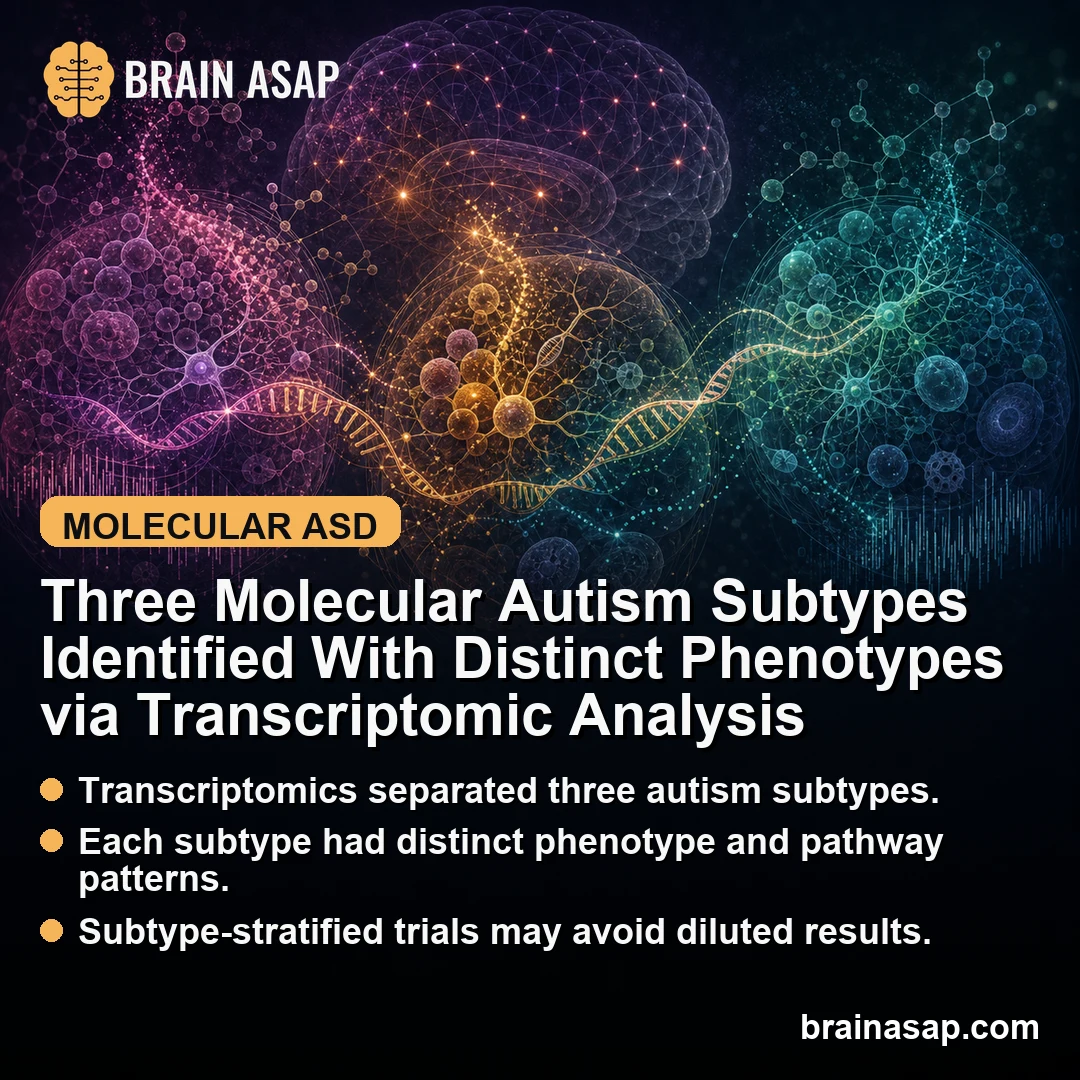
TL;DR: A 2026 Communications Biology transcriptomic analysis identified three molecular subtypes of autism spectrum disorder, each linked to a distinct phenotypic profile and biological pathway pattern. Key Findings Three molecular subtypes emerged from transc…
Read article ↗
TL;DR: Across 4,000+ people, the relationship between brain activity and cognitive control flipped direction depending on whether researchers compared people to each other or tracked the same person over time. The finding is called nonergodicity — and it means…
Read article ↗
TL;DR: A 2026 review in BMC Psychiatry found 441 primary MRI and electroencephalogram (EEG), a scalp recording of brain electrical activity, mental-health biomarker studies, but most were small, cross-sectional, and concentrated in depression, making routine c…
Read article ↗
TL;DR: A 2026 medRxiv preprint on schizophrenia reported that illness insight tracked with resting-state functional MRI (fMRI) flexibility, a measure of how dynamically brain regions reconfigure their connectivity, and that these brain-dynamics patterns aligne…
Read article ↗