TL;DR: A 2026 functional MRI (fMRI) study in Psychological Medicine found that schizophrenia, bipolar disorder, and major depressive disorder shared some thalamus connectivity disruption, but each diagnosis showed a different subcortical network pattern across…
Read article ↗
TL;DR: A 2026 review in Current Opinion in Psychiatry found that earlier clozapine use in schizophrenia, especially after early nonresponse or relapse, was linked to better relapse prevention and stronger response rates than repeated nonclozapine antipsychotic…
Read article ↗
TL;DR: A 2026 systematic review and meta-analysis posted to medRxiv found that gamma-frequency non-invasive brain stimulation was linked to symptom improvement in schizophrenia and depressive-symptom reduction in major depressive disorder, but the evidence was…
Read article ↗
TL;DR: A 2026 preprint in medRxiv used 18F-DOPA positron emission tomography (PET) to estimate dopamine synthesis and storage, and found that caudate dopamine synthesis decreased as schizophrenia patients moved from active psychosis into early psychotic remiss…
Read article ↗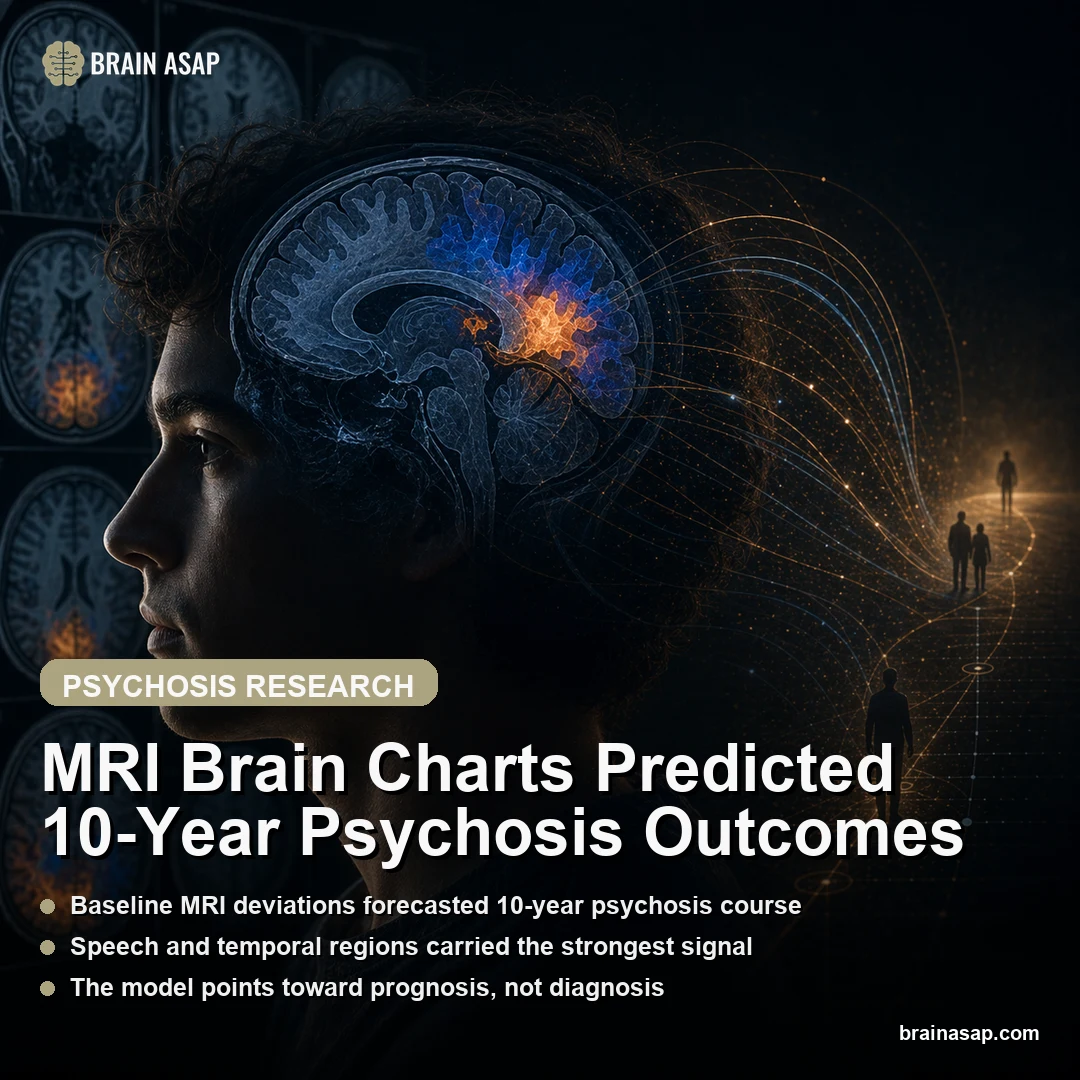
TL;DR: A 2026 study in The British Journal of Psychiatry found that in first-episode psychosis, MRI deviations from age-matched brain norms at illness onset helped predict which patients would carry heavier symptom burdens and poorer functioning for years afte…
Read article ↗
TL;DR: A 2026 post-hoc analysis in International Clinical Psychopharmacology found that lurasidone 40 mg/day improved all 5 Positive and Negative Syndrome Scale (PANSS) symptom domains in acute schizophrenia over 6 weeks, with the largest effect on positive sy…
Read article ↗
TL;DR: A 2026 preprint in medRxiv trained machine-learning models on Danish electronic health records and found that an XGBoost model predicted clozapine initiation within 365 days with an AUROC of 0.81 in patients with schizophrenia or schizoaffective disorde…
Read article ↗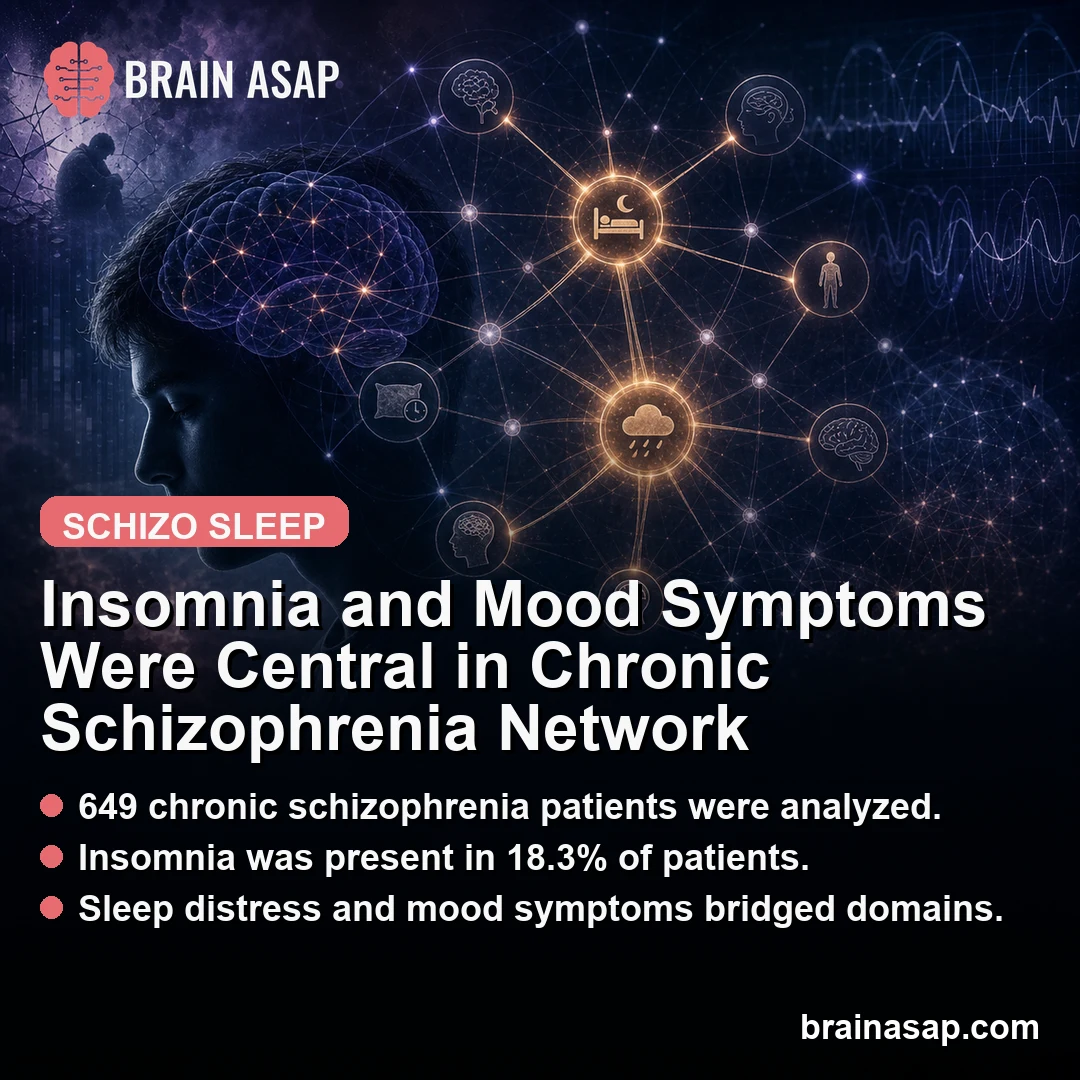
TL;DR: A 2026 network analysis study in European Archives of Psychiatry and Clinical Neuroscience found that insomnia was present in 18.3% and childhood trauma in 49.5% of patients, while daytime dysfunction and sleep-related distress were central nodes, while…
Read article ↗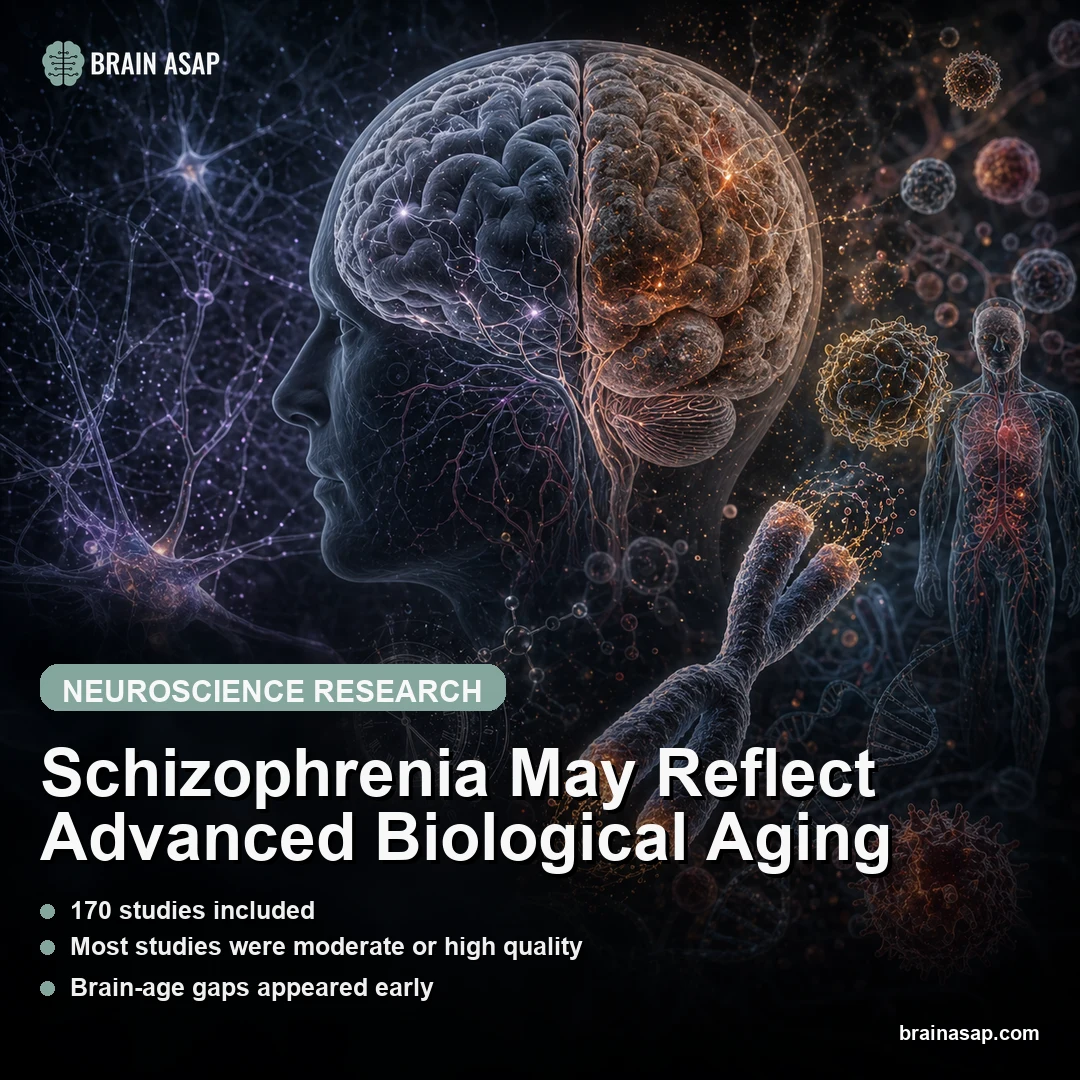
TL;DR: A 2026 systematic review in The British Journal of Psychiatry linked schizophrenia to a multisystem advanced-aging phenotype, including older-appearing brain scans, shorter telomeres, inflammation, and higher dementia risk. Key Findings 170 studies incl…
Read article ↗
TL;DR: A 2026 medRxiv preprint on schizophrenia reported that illness insight tracked with resting-state functional MRI (fMRI) flexibility, a measure of how dynamically brain regions reconfigure their connectivity, and that these brain-dynamics patterns aligne…
Read article ↗