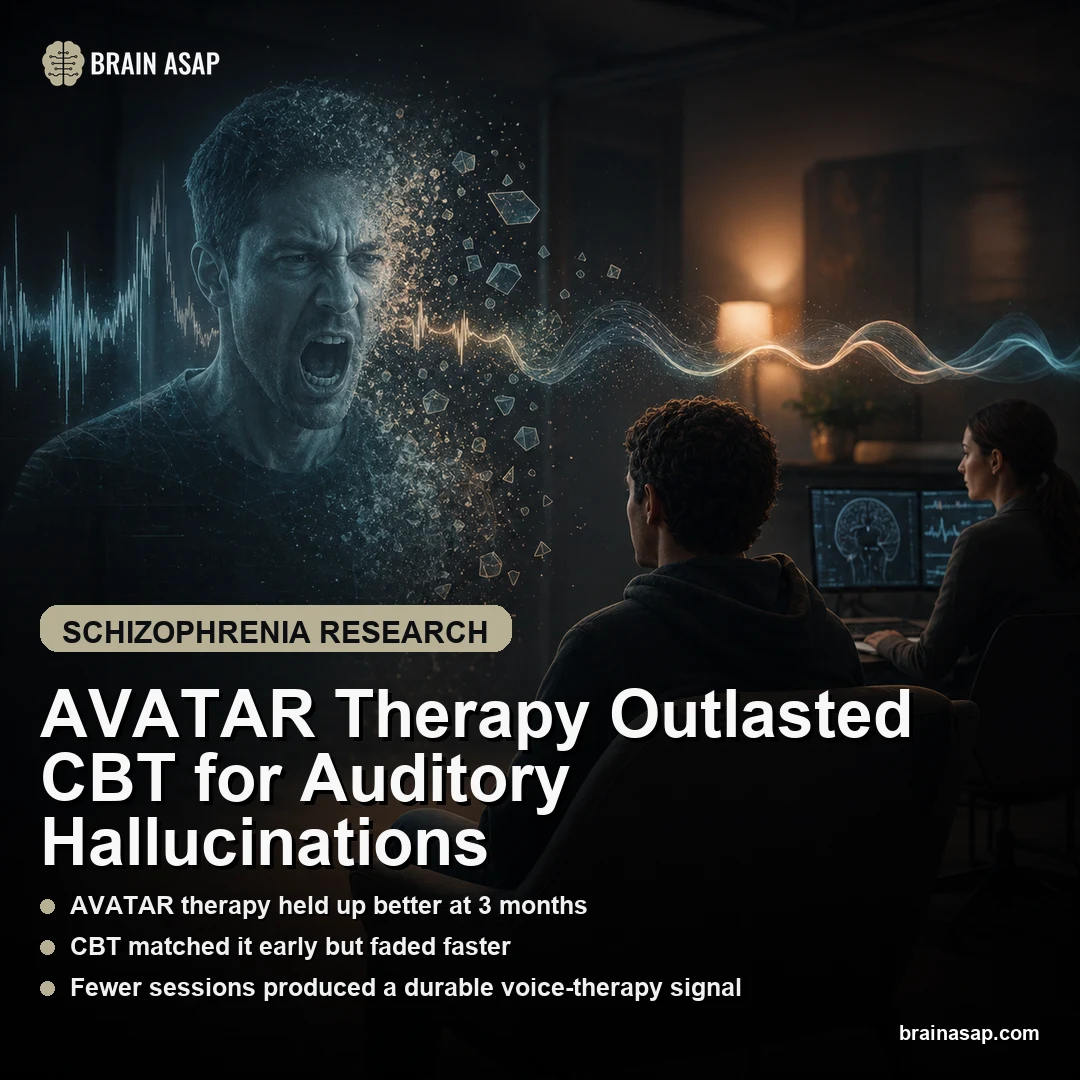
AVATAR Therapy Outlasted CBT for Auditory Hallucinations TL;DR: AVATAR therapy matched CBT on voice severity right after treatment, then pulled ahead at 3 months — with roughly half the sessions. A 26-trial meta-analysis, 2,273 patients. Key Findings No clear…
Read article ↗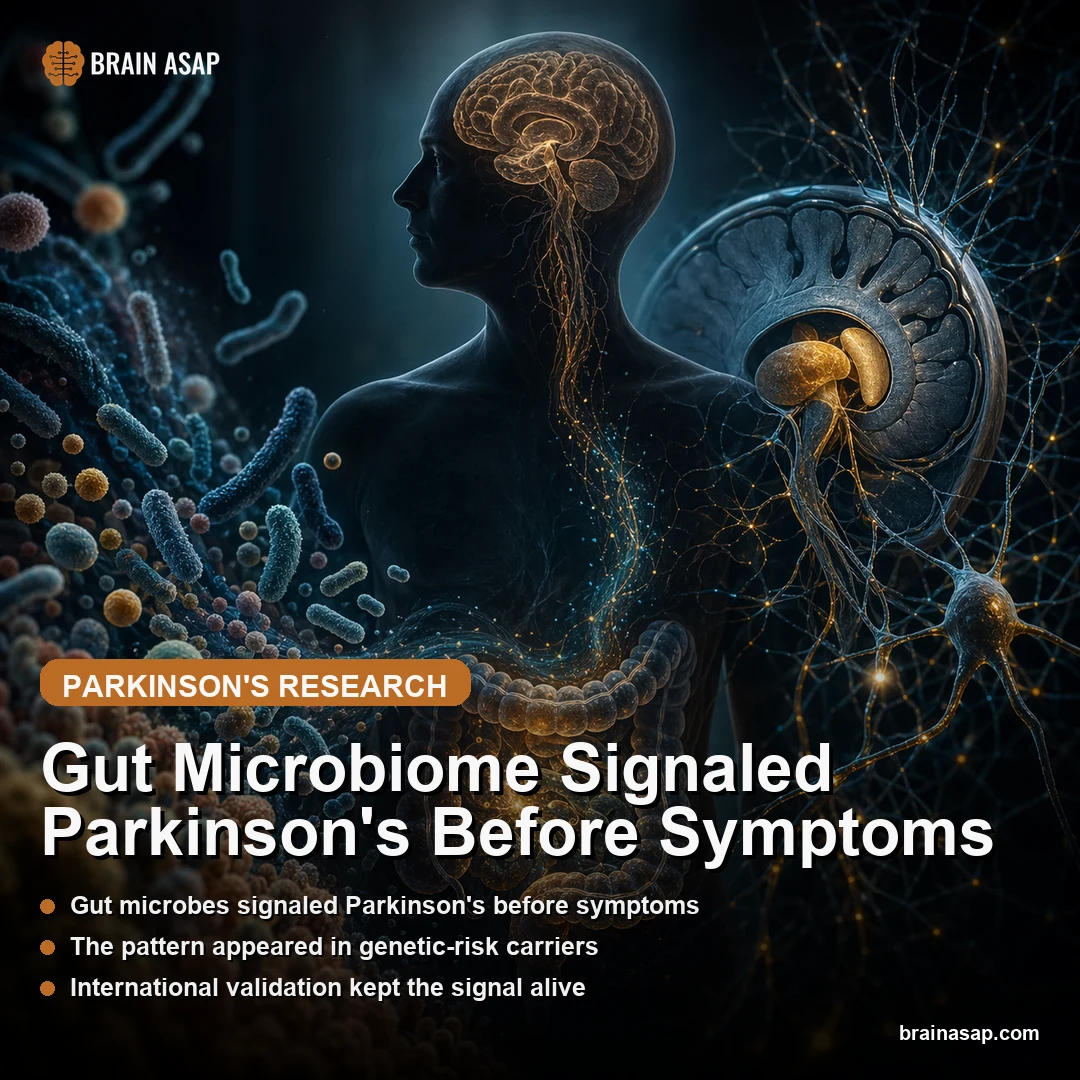
Gut Microbiome Signal Appeared Before Parkinson’s Symptoms in GBA1 Carriers TL;DR: In people carrying a genetic risk factor for Parkinson’s but not yet symptomatic, about 25% of their gut microbiome signature already looked intermediate between healthy control…
Read article ↗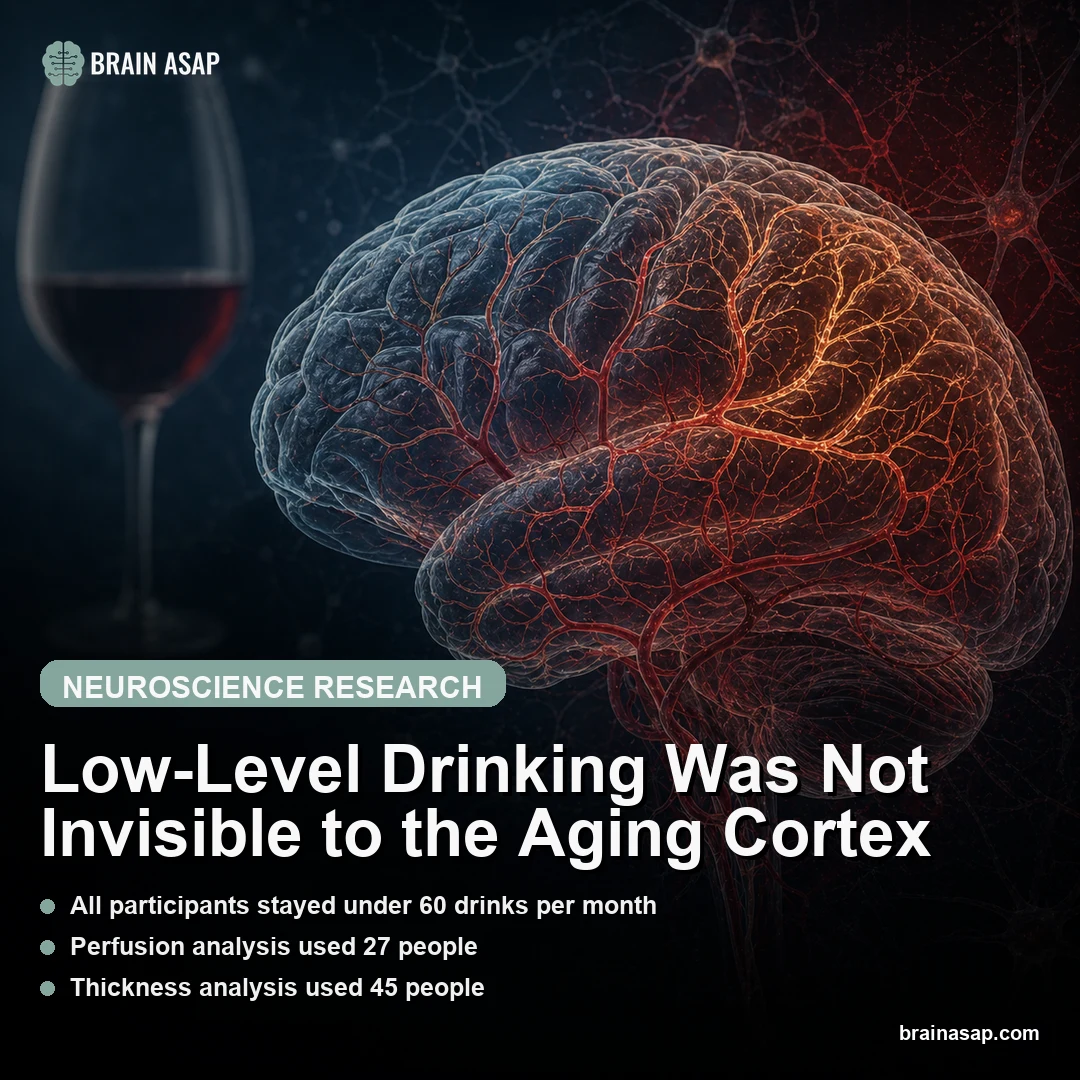
Low-Level Drinking Was Not Invisible to the Aging Cortex TL;DR: Even drinking within low-risk guidelines was linked to lower cortical blood flow and thinner cortex when lifetime exposure met advancing age. Key Findings All participants stayed under 60 drinks p…
Read article ↗
EPA Rewired Brain Vessels After Repetitive Brain Injury TL;DR: Fish-oil-derived EPA looked less like a simple neuroprotective supplement and more like a lipid signal that changed brain-vessel repair after repetitive mild traumatic brain injury. Key Findings EP…
Read article ↗
Mediterranean Diet Linked Mitochondrial Microproteins TL;DR: Mediterranean diet adherence tracked with higher mitochondrial microproteins Humanin and SHMOOSE in older adults, pointing to a possible mitochondrial route for healthy-aging benefits. Key Findings H…
Read article ↗
Dopamine Disruption May Start Alzheimer’s Memory Failure TL;DR: In an Alzheimer’s mouse model, early memory failure tracked a broken dopamine signal into the lateral entorhinal cortex, and both optogenetic dopamine reactivation and L-DOPA partially restored le…
Read article ↗
C4A Broke Away From C1Q in First-Episode Psychosis TL;DR: In cerebrospinal fluid from people with first-episode psychosis, the usual positive relationship between C4A and C1Q disappeared, while C4A’s broader immune-network pattern shifted sharply in a way C4B…
Read article ↗
Alzheimer’s Treatment Needs More Than Amyloid TL;DR: A 2026 review in Science China Life Sciences argues that amyloid-beta antibodies such as lecanemab and donanemab are important progress, but Alzheimer’s treatment cannot stop at amyloid. The disease also inv…
Read article ↗
Alpha-Synuclein Testing Could Clarify Dementia Diagnosis TL;DR: In 398 memory-clinic patients, alpha-synuclein seed testing identified Lewy body dementia with 95% sensitivity and revealed hidden synuclein positivity in 15.8% of Alzheimer’s disease cases. Key F…
Read article ↗
Hormone Therapy Linked to 44% Improvement in Menopause Mood Symptoms TL;DR: Menopausal hormone therapy tracked with a 44.59% improvement in mood-symptom scores after about 107 days, across both peri- and postmenopausal women — and the gains were broadly simila…
Read article ↗