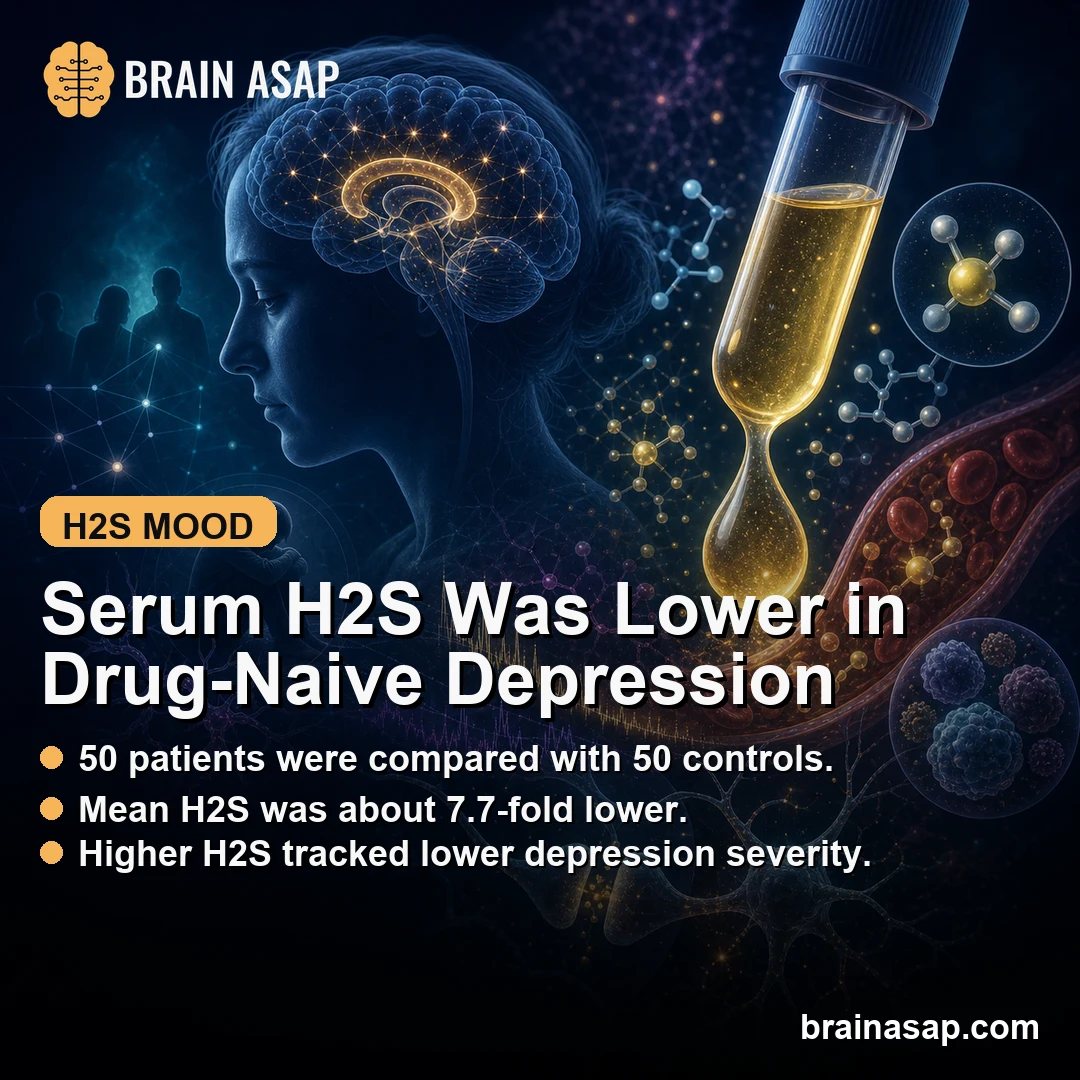
TL;DR: A 2026 medRxiv preprint found that serum hydrogen sulfide (H2S) levels, a blood measure tied to brain signaling and inflammation biology, were about 7.7-fold lower in drug-naive major depressive disorder patients than in matched controls. Key Findings 1…
Read article ↗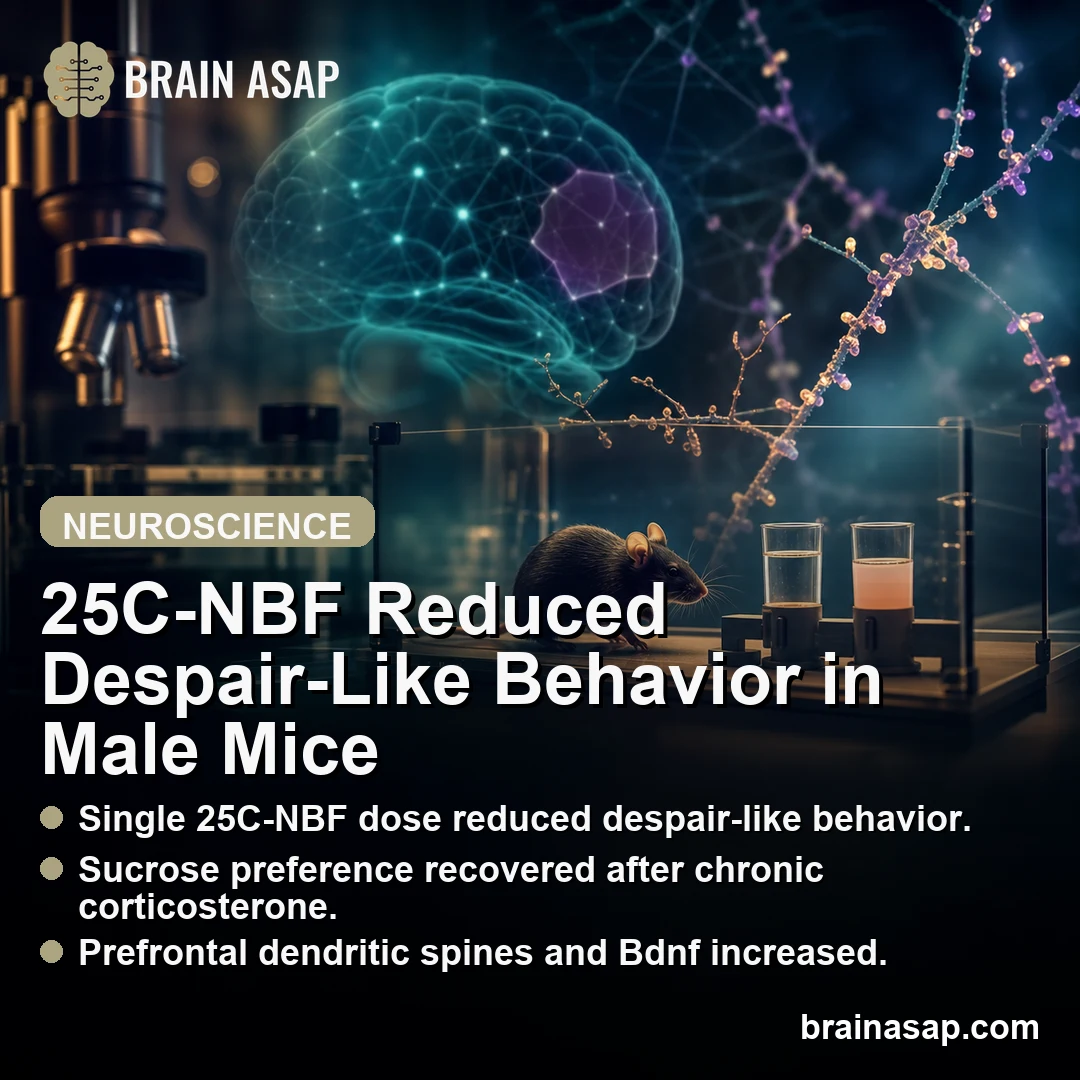
TL;DR: A 2026 mouse and rat study in Molecular Psychiatry reported that 25C-NBF, a selective serotonin 2A receptor agonist from the 2C-X phenethylamine series, produced rapid antidepressant-like effects, increased dendritic spines and Bdnf expression in the pr…
Read article ↗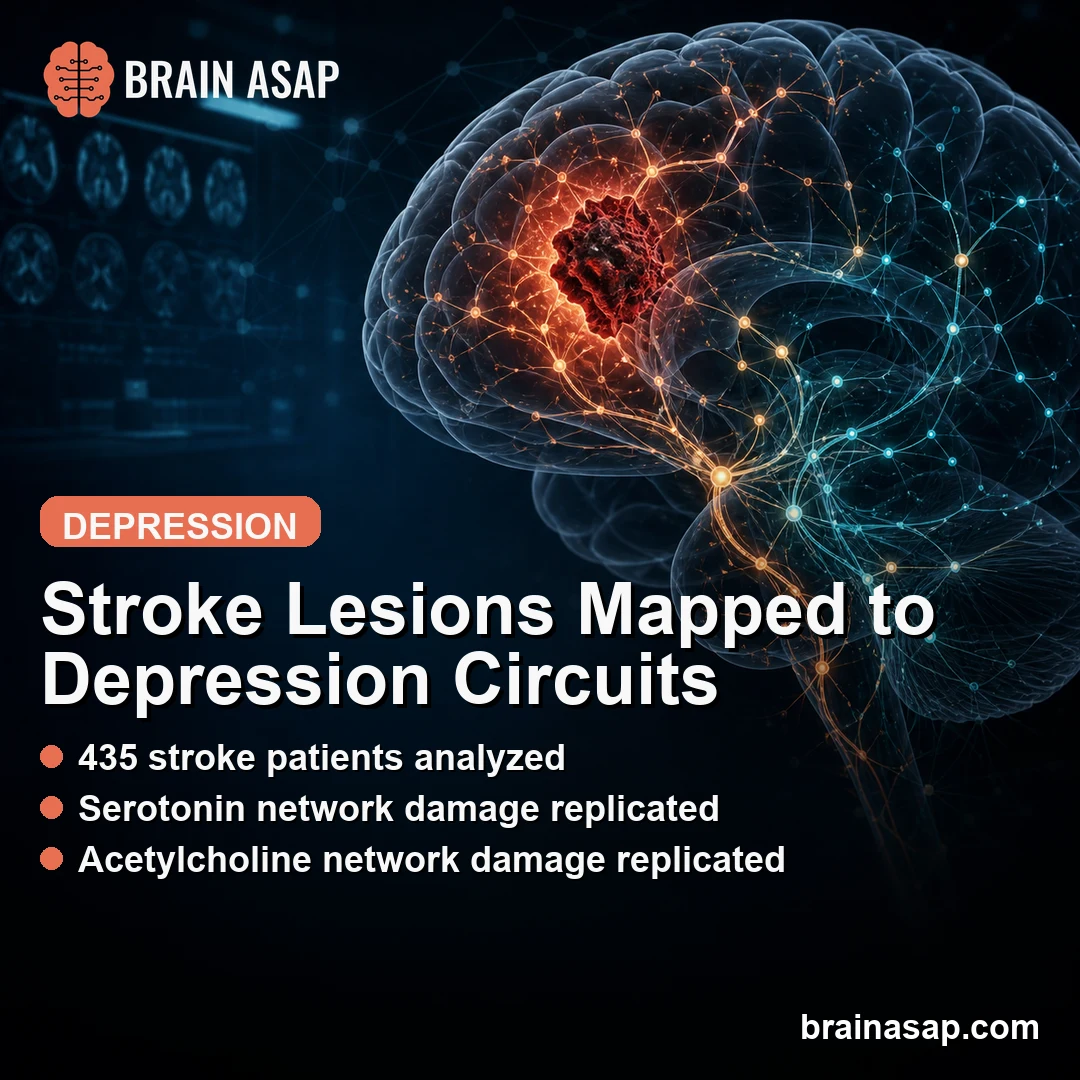
TL;DR: A 2026 medRxiv preprint linked post-stroke depressive symptoms to stroke damage in serotonin-transporter and acetylcholine-transporter weighted brain networks, suggesting depression risk after stroke may depend partly on which neurochemical circuits a l…
Read article ↗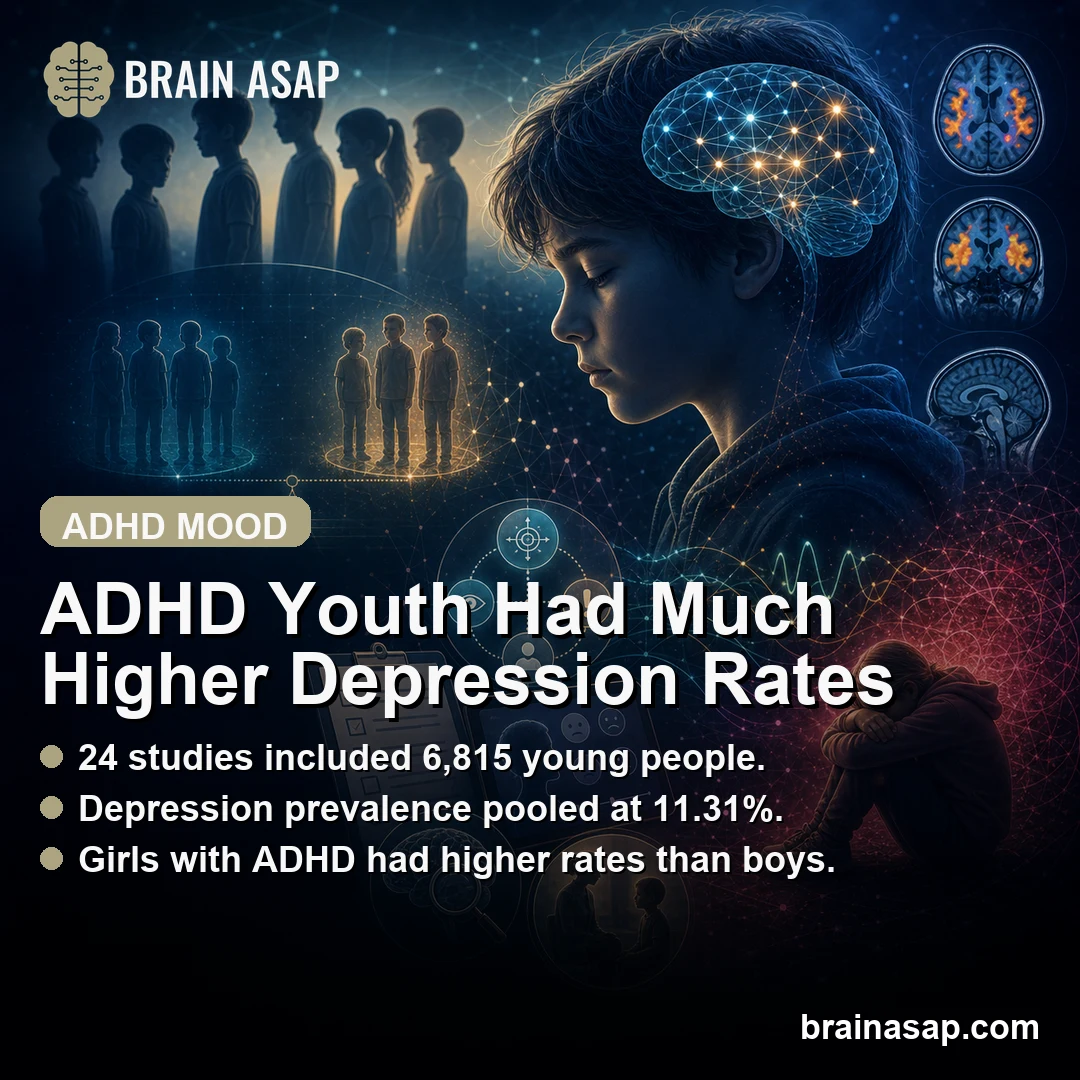
TL;DR: A 2025 meta-analysis in the Journal of Attention Disorders pooled 24 studies (N=6,815) and estimated that 11.31% of children and adolescents with ADHD had co-occurring depression — about six times the rate seen in neurotypical peers in head-to-head case…
Read article ↗
TL;DR: A 2026 systematic review in Translational Psychiatry found that depression brain-stimulation studies repeatedly linked treatment response to subcallosal cingulate connectivity, but inconsistent methods still limit its use as a treatment-selection biomar…
Read article ↗
TL;DR: A 2026 meta-analysis in Psychological Medicine found postpartum depression (PPD) brain-activity differences across default-mode, limbic, and sensorimotor regions, with spatial overlap in serotonin, dopamine, and vesicular acetylcholine transporter maps.…
Read article ↗
TL;DR: A 2026 review in BMC Psychiatry found 441 primary MRI and electroencephalogram (EEG), a scalp recording of brain electrical activity, mental-health biomarker studies, but most were small, cross-sectional, and concentrated in depression, making routine c…
Read article ↗
TL;DR: A 2026 study in Brain, Behavior, & Immunity – Health found that depression symptoms, alcohol use, and alcohol use disorder (AUD) symptoms were not associated with C-reactive protein (CRP), a blood inflammation marker, or a pro-inflammatory cytokine inde…
Read article ↗
TL;DR: A 2026 study in The Journals of Gerontology, Series A: Biological Sciences and Medical Sciences measured a monocyte-specific DNA methylation clock (MonoDNAmAge) in 440 women with and without HIV, and found that accelerated monocyte epigenetic aging was…
Read article ↗
ECT Looks Safer in the Long Run Than Its Reputation TL;DR: A British Journal of Psychiatry review argues that modern population-level studies do not support a long-term increase in dementia or major cardiovascular risk after electroconvulsive therapy and inste…
Read article ↗