Body Roundness Index Flagged Depression Risk in Dementia TL;DR: Body roundness index, not BMI, flagged a dementia subgroup with more than threefold higher odds of depressive symptoms. Key Findings Highest BRI tripled odds: Among people with dementia, those in…
Read article ↗
Esketamine Lost the Cost-Effectiveness Race in Hong Kong TL;DR: A 5-year Hong Kong model found esketamine plus an antidepressant bought only a small quality-adjusted survival gain at US$29,061 per patient, leaving it behind cheaper third-line options like comb…
Read article ↗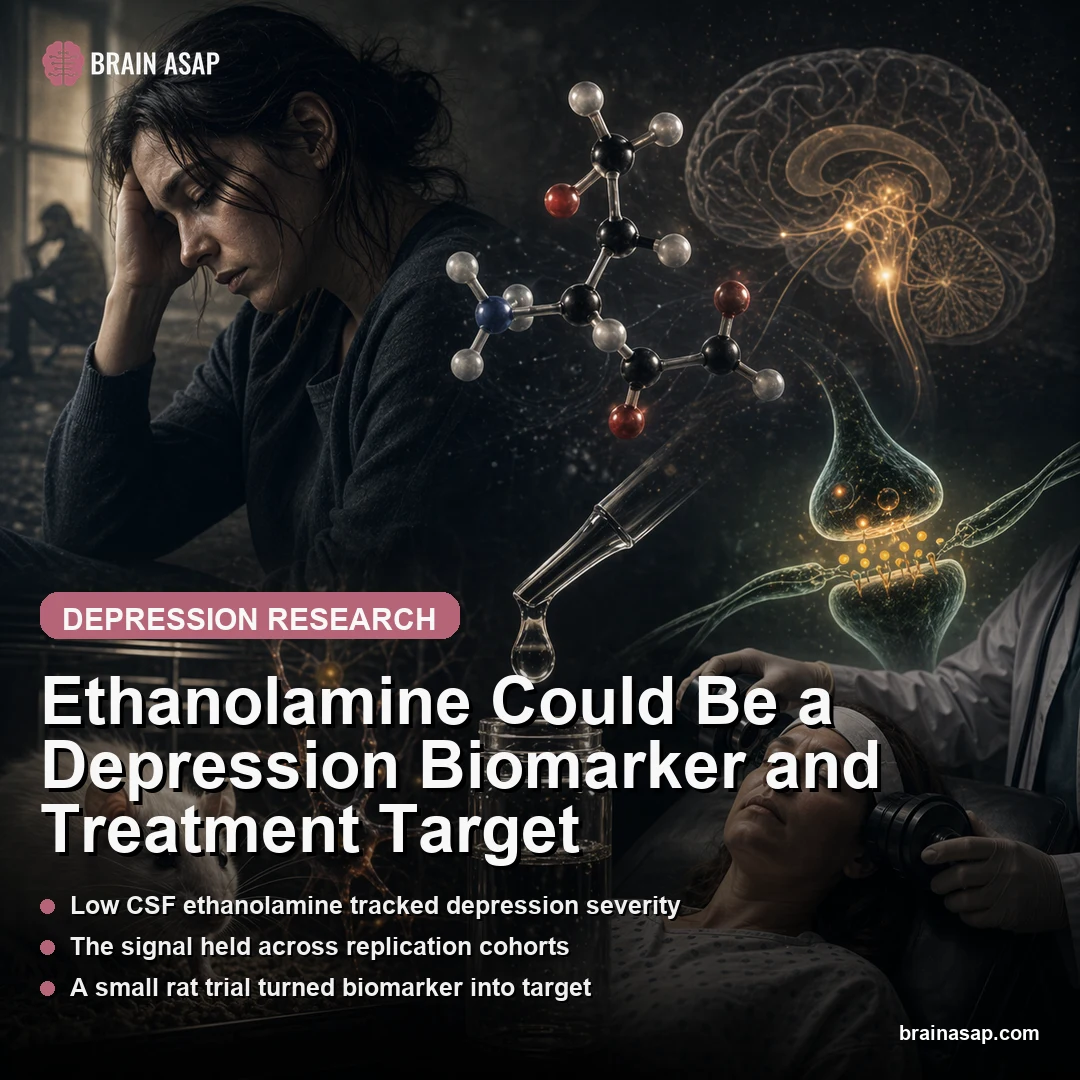
Ethanolamine Looked Like a Depression Biomarker and Treatment Target TL;DR: In a 380-person cerebrospinal fluid dataset, patients with active major depression had lower ethanolamine levels than controls, those levels rose after electroconvulsive therapy, and p…
Read article ↗
TL;DR: A 2026 randomized trial in The British Journal of Psychiatry found 6 ketamine infusions improved severe treatment-resistant depression, but curated music added no measurable benefit; higher mystical-experience scores still predicted the next session’s d…
Read article ↗
DLPFC-sgACC Circuit Signal Predicted rTMS Remission TL;DR: Before starting rTMS, patients who later remitted from depression showed lower alpha-band connectivity flowing from the DLPFC to the subgenual cingulate — pointing toward a measurable EEG marker that c…
Read article ↗
Ketamine Restored Reward Bias Across Species TL;DR: Ketamine restored reward-learning bias in both treatment-resistant depression and chronically stressed rats while leaving basic discrimination unchanged. Key Findings Reward bias increased: Ketamine significa…
Read article ↗
Childhood Trauma Made Teen Depression Networks More Random TL;DR: In 343 adolescents with major depression, childhood trauma was linked to less efficient brain-network organization, partial normalization after treatment, and an fMRI-based model that predicted…
Read article ↗
Depression Genetics Points to Altered DLPFC Cell Types TL;DR: A Nature Genetics study mapped more than 200,000 cells from the dorsolateral prefrontal cortex and found depression-linked regulatory changes concentrated in deep-layer excitatory neurons and a micr…
Read article ↗
Hormone Therapy Linked to 44% Improvement in Menopause Mood Symptoms TL;DR: Menopausal hormone therapy tracked with a 44.59% improvement in mood-symptom scores after about 107 days, across both peri- and postmenopausal women — and the gains were broadly simila…
Read article ↗
Semaglutide Linked to 42% Fewer Psychiatric Hospital Episodes TL;DR: In Swedish registry data covering nearly 100,000 people with depression or anxiety, psychiatric hospital visits and sickness absence were 42% lower during semaglutide treatment periods — with…
Read article ↗