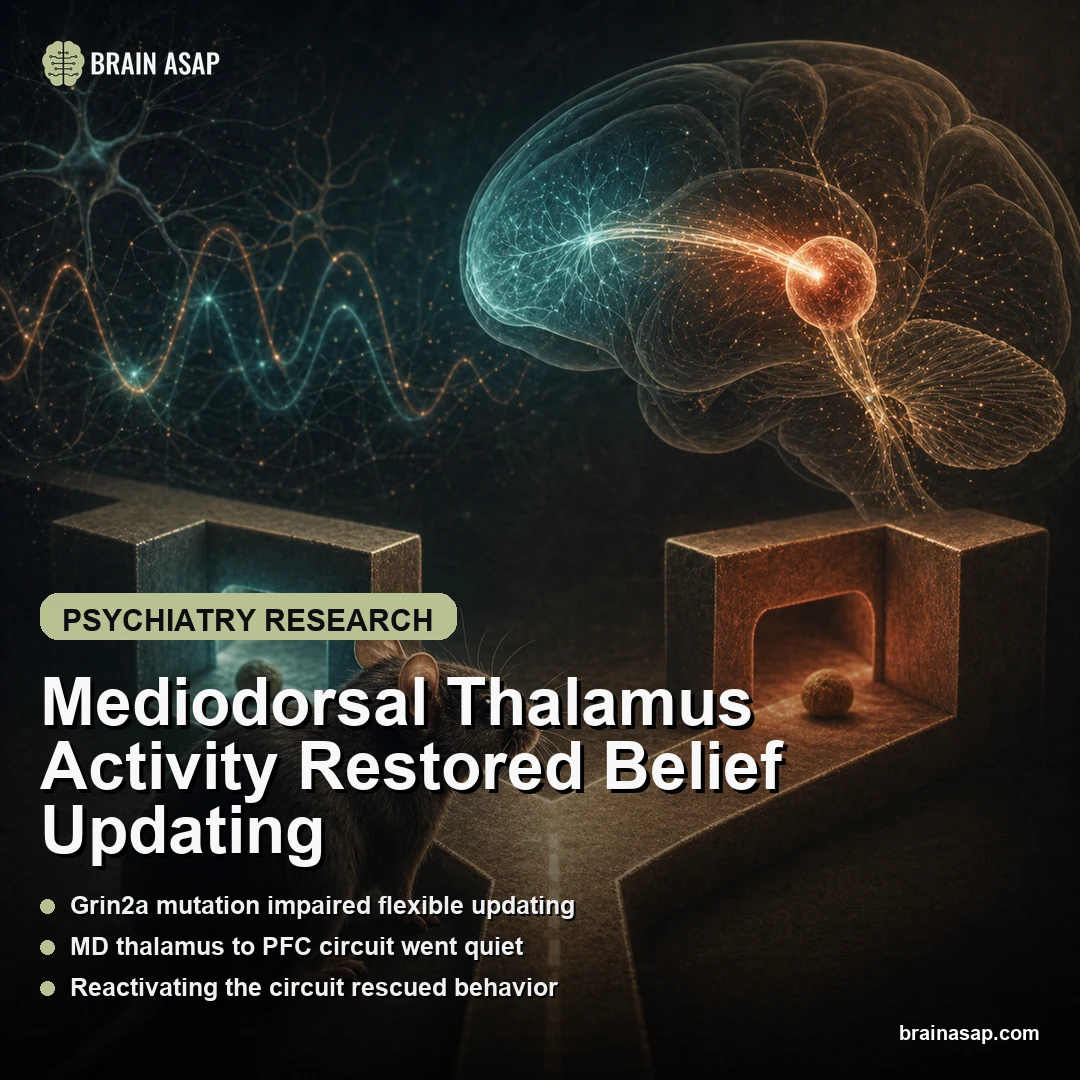
Mediodorsal Thalamus Activity Restored Belief Updating TL;DR: A Nature Neuroscience mouse study linked a schizophrenia-risk Grin2a mutation to weaker mediodorsal thalamus activity, impaired belief updating, and behavioral rescue when researchers reactivated th…
Read article ↗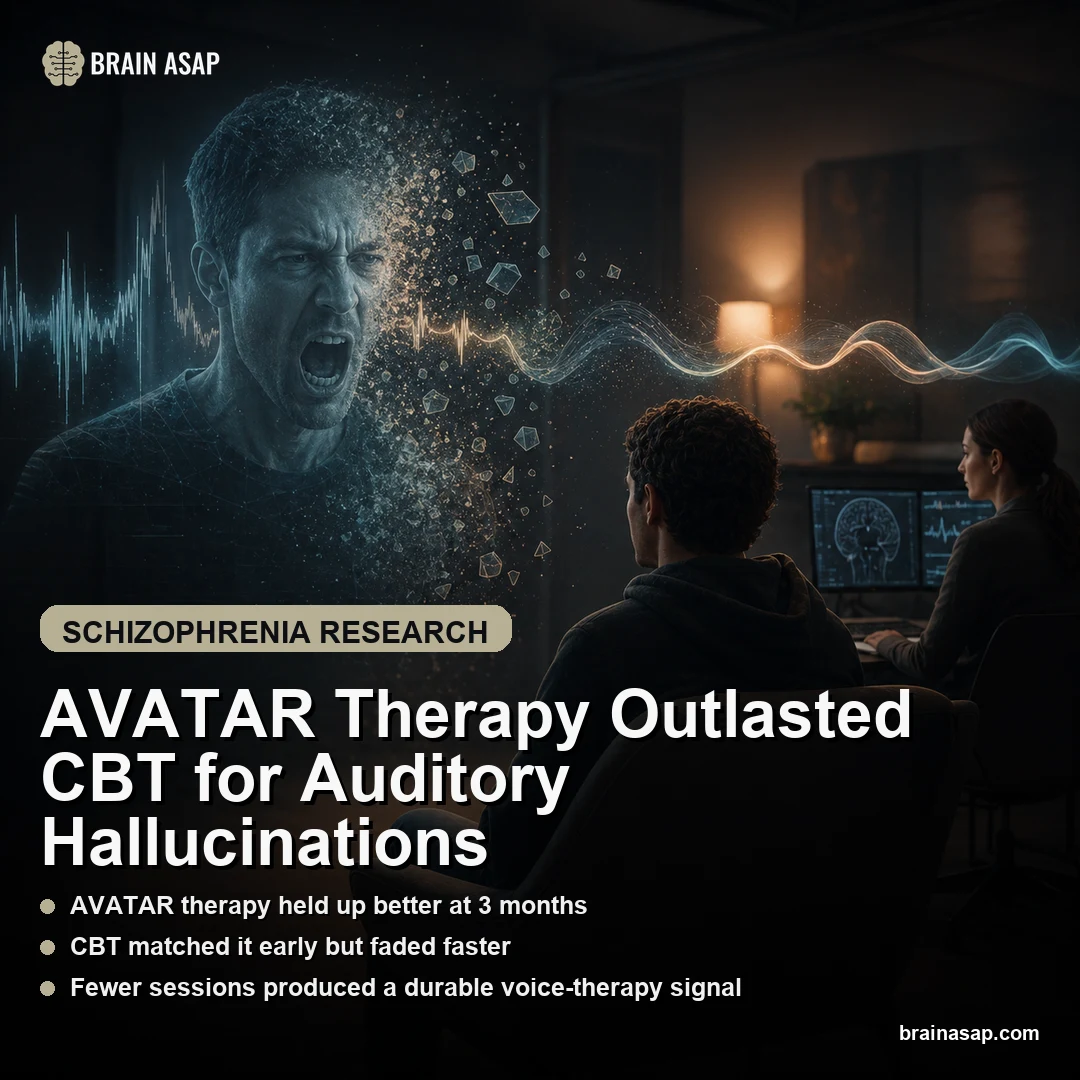
AVATAR Therapy Outlasted CBT for Auditory Hallucinations TL;DR: AVATAR therapy matched CBT on voice severity right after treatment, then pulled ahead at 3 months — with roughly half the sessions. A 26-trial meta-analysis, 2,273 patients. Key Findings No clear…
Read article ↗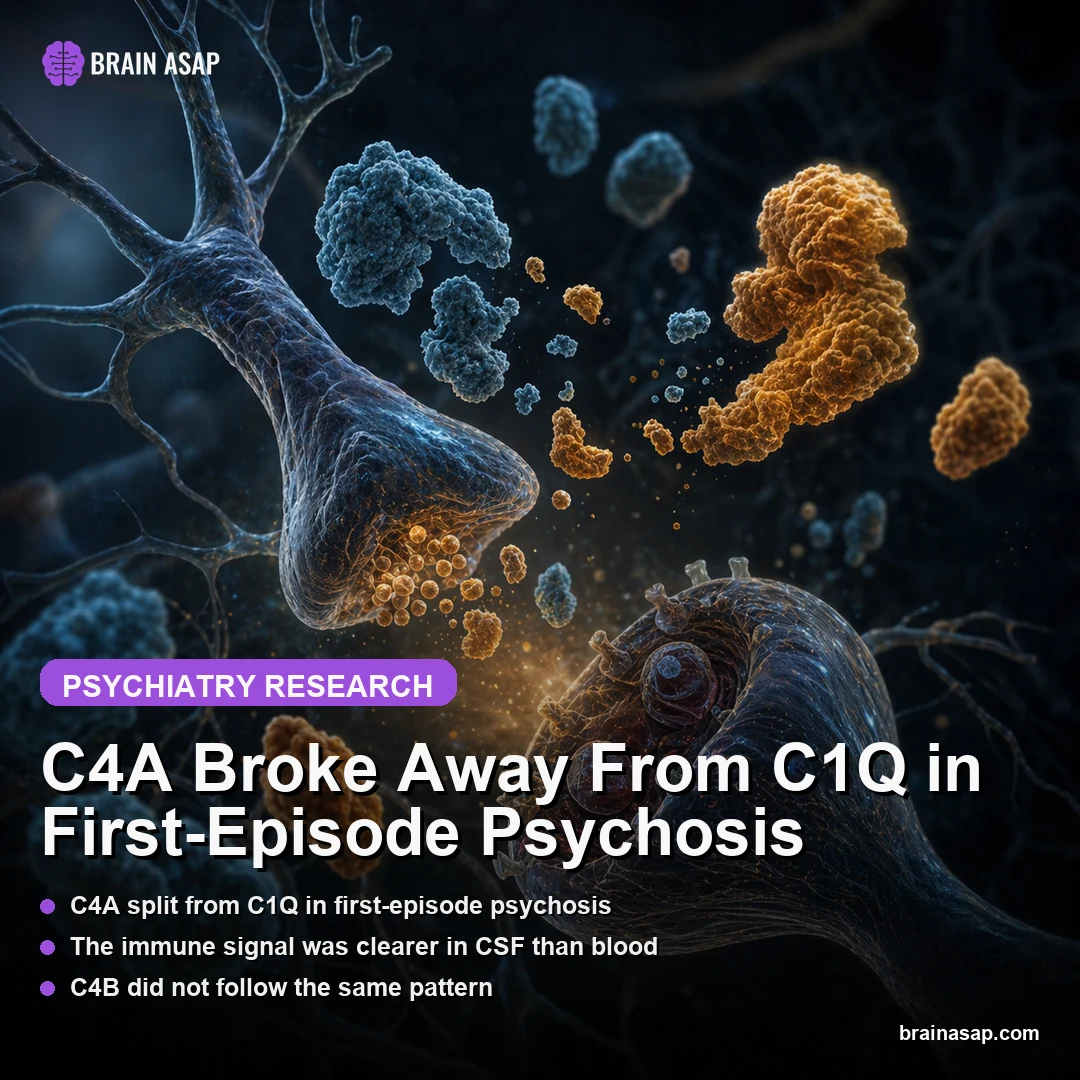
C4A Broke Away From C1Q in First-Episode Psychosis TL;DR: In cerebrospinal fluid from people with first-episode psychosis, the usual positive relationship between C4A and C1Q disappeared, while C4A’s broader immune-network pattern shifted sharply in a way C4B…
Read article ↗
Insomnia and daytime napping are causally associated with an increased risk of major depressive disorder (MDD), while sleep duration influences the risk of schizophrenia and attention-deficit/hyperactivity disorder (ADHD). Highlights: Major Depressive Disorder…
Read article ↗
A study on Tibetans living at high altitudes identified novel risk genes for schizophrenia (SCZ) related to hypoxia, suggesting a unique genetic signature for SCZ in this population. Highlights: Whole-exome sequencing of 47 SCZ cases and 53 controls in Tibetan…
Read article ↗
A new study uses AutoML and blood DNA methylation data to identify novel gene biomarkers for diagnosing schizophrenia (SCZ) with high accuracy. Highlights: Biomarker Discovery: AutoML identified three schizophrenia-specific gene methylation biomarkers: IGF2BP1…
Read article ↗
The naturally occurring peptide BPC 157 shows potential to treat stroke, schizophrenia symptoms, and spinal cord injury in animal models. Key facts: BPC 157 rapidly counteracted stroke damage and led to full recovery of memory, coordination and movement in rat…
Read article ↗
A new study conducted in rural South India has found that people whose parents are blood relatives (consanguineous marriage) have an increased risk of developing schizophrenia compared to the general population. Key Facts: Researchers recruited 120 patients wi…
Read article ↗
Schizophrenia is a severe mental illness characterized by hallucinations, delusions, disorganized thinking and behavior. While antipsychotic medications can help manage symptoms, their long-term effects on brain structure are not fully understood. A new study…
Read article ↗
Schizophrenia is a severe mental disorder affecting about 1% of the population worldwide. It is characterized by hallucinations, delusions, disorganized thinking and behavior, and impaired cognitive functioning. Current treatments with antipsychotic medication…
Read article ↗