Vigorous Exercise Predicted Lower Dementia Risk in UK Biobank Accelerometer Data
Vigorous activity linked to lower dementia risk in UK Biobank accelerometer data

Vigorous Activity Linked to Lower Dementia Risk in UK Biobank TL;DR: In UK Biobank accelerometer data, the vigorous share of daily movement accounted for 32% of dementia’s population-attributable fraction versus just 8% for total activity volume — suggesting brief breathless bursts carry brain-health information that step counts miss. Key Findings Dementia favored intensity over volume: …
Read more

Body Roundness Index Predicted Depression Symptoms in Dementia

Body Roundness Index Flagged Depression Risk in Dementia

Body Roundness Index Flagged Depression Risk in Dementia TL;DR: Body roundness index, not BMI, flagged a dementia subgroup with more than threefold higher odds of depressive symptoms. Key Findings Highest BRI tripled odds: Among people with dementia, those in the highest body-roundness quartile had more than threefold greater odds of depressive symptoms than those in …

Read more

Esketamine Was Not “Cost-Effective” for Treatment-Resistant Depression in Hong Kong

Esketamine Lost the Cost-Effectiveness Race in Hong Kong

Esketamine Lost the Cost-Effectiveness Race in Hong Kong TL;DR: A 5-year Hong Kong model found esketamine plus an antidepressant bought only a small quality-adjusted survival gain at US$29,061 per patient, leaving it behind cheaper third-line options like combination therapy. Key Findings Seven third-line strategies modeled: A Markov cohort model followed adults with treatment-resistant depression in …

Read more

Hearing Aids Beat PSAPs for Speech-in-Noise Listening

Hearing Aids Beat PSAPs Where Real-World Listening Gets Hard

Hearing Aids Beat PSAPs Where Real-World Listening Gets Hard TL;DR: Hearing aids beat personal sound amplifiers where listening gets hardest: high-frequency sound, speech in noise, and daily user satisfaction. Key Findings Hearing aids won the crossover test: Adults with sensorineural hearing loss used either a hearing aid or a PSAP for 3 months, then switched …

Read more

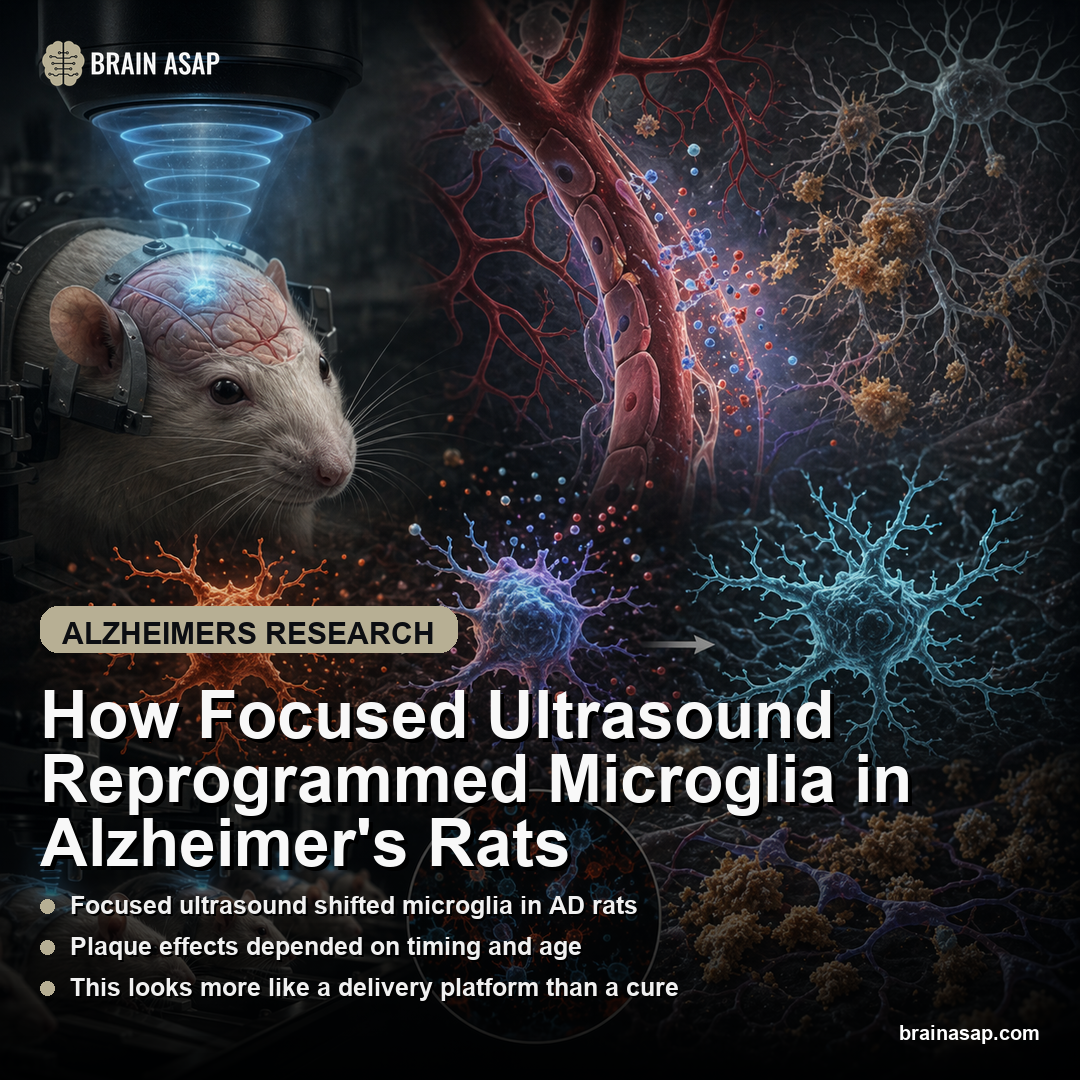
Focused Ultrasound Reprogrammed Microglia in Alzheimer’s Rats

How Focused Ultrasound Reprogrammed Microglia in Alzheimer's Rats

How Focused Ultrasound Reprogrammed Microglia in Alzheimer’s Rats TL;DR: In TgF344-AD rats, repeated low-intensity focused ultrasound triggered a short-lived inflammatory response, then left behind a more durable microglial metabolic shift in early disease without clearly improving Alzheimer’s pathology on its own. Key Findings 450 kPa across a 12 x 6 mm target: The team skull-corrected …

Read more

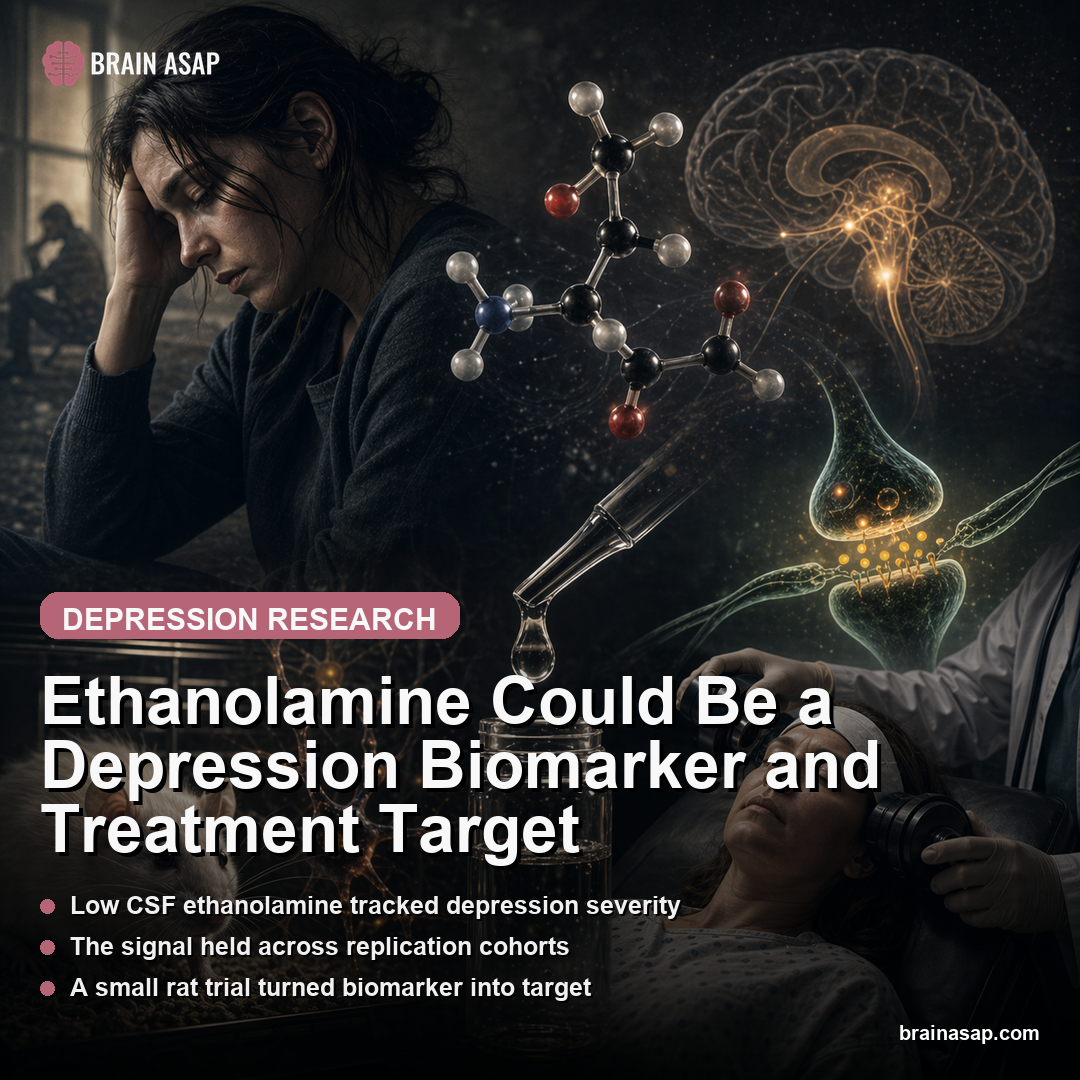
Low CSF Ethanolamine Linked to Major Depression, Levels Increase After ECT

Ethanolamine Could Be a Depression Biomarker and Treatment Target

Ethanolamine Looked Like a Depression Biomarker and Treatment Target TL;DR: In a 380-person cerebrospinal fluid dataset, patients with active major depression had lower ethanolamine levels than controls, those levels rose after electroconvulsive therapy, and parallel rat experiments suggested the molecule may be more than just a marker. Key Findings 380-person cerebrospinal fluid (CSF), the fluid …

Read more

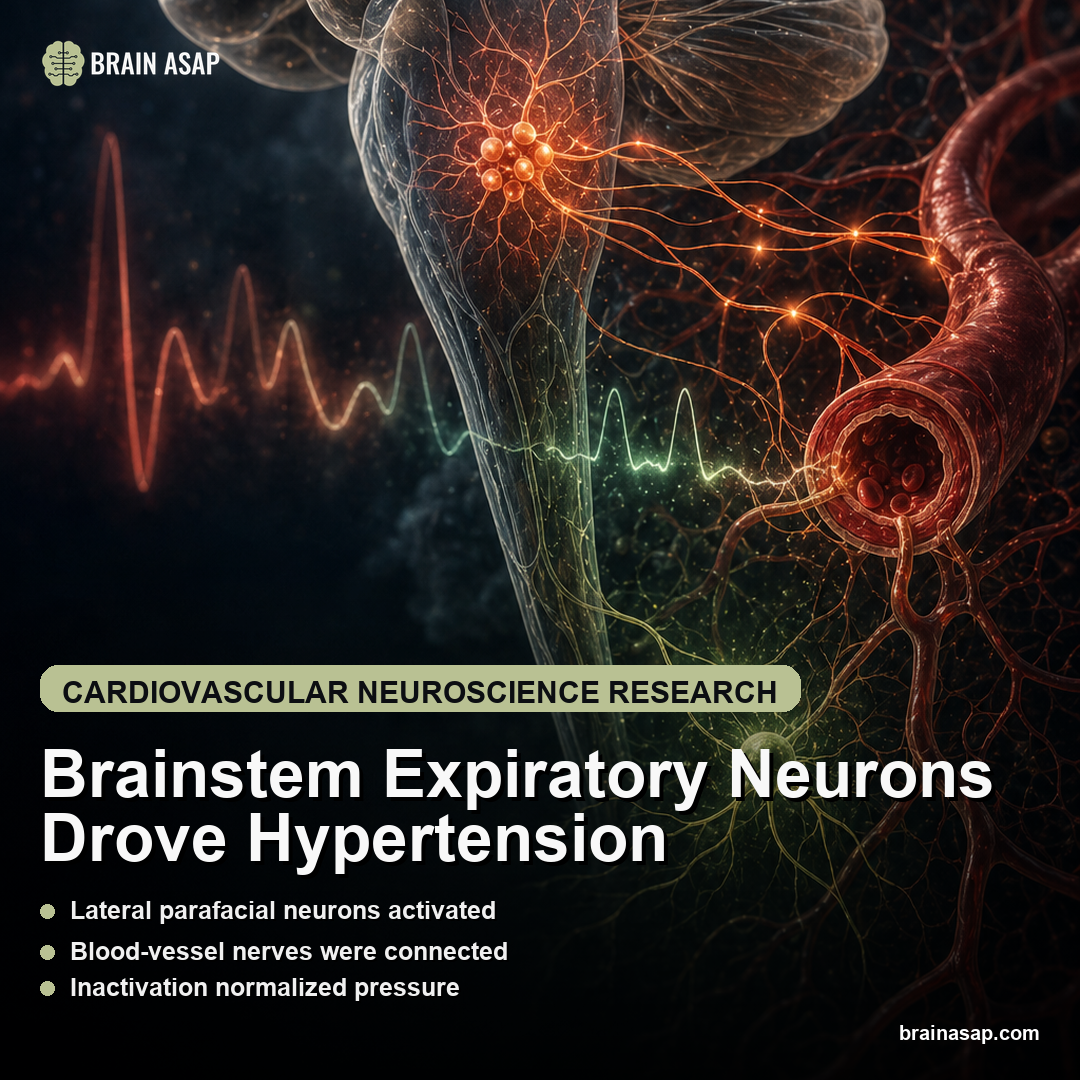
Brainstem Expiratory Neurons Drove Neurogenic Hypertension

Brainstem Expiratory Neurons Drove Hypertension

Brainstem Expiratory Neurons Drove Hypertension TL;DR: A brainstem region involved in forceful exhalation also appears to drive blood-vessel constriction, making it a possible target for some forms of neurogenic hypertension. Key Findings A forced-exhalation region joined the pressure mechanism: The lateral parafacial region, normally recruited for strong expiration, was active under hypertensive conditions. Blood-vessel nerves …

Read more

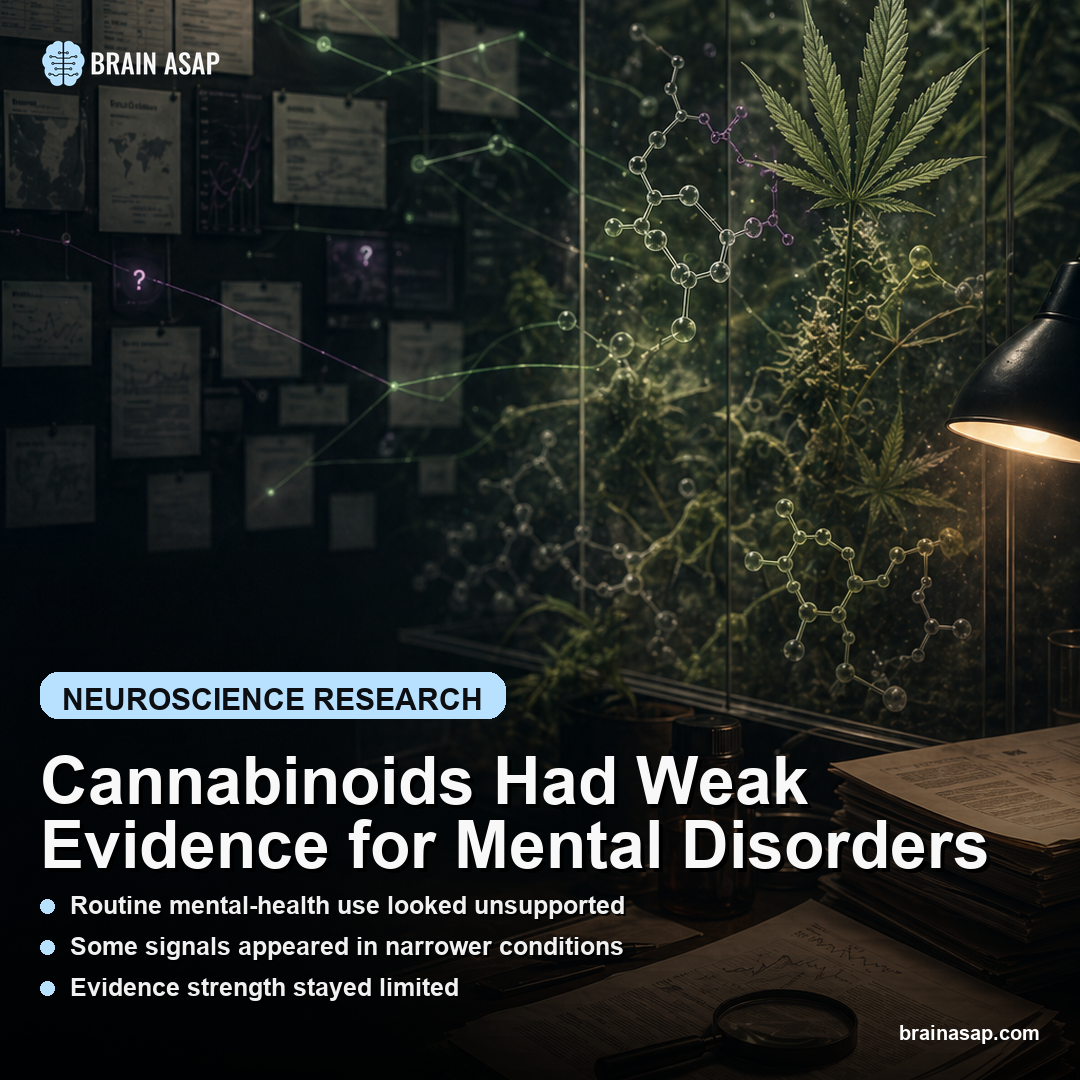
Medical Cannabis for Anxiety, PTSD, and Sleep: Cannabinoid Evidence Remains Weak

Cannabinoids Had Weak Evidence for Mental Disorders

Cannabinoids Had Weak Evidence for Mental Disorders TL;DR: A Lancet Psychiatry review of randomized trials found little support for routine cannabinoid treatment in common mental disorders, despite possible weak signals in a few narrower conditions. Key Findings 54 randomized controlled trials were reviewed: The analysis covered 2,477 participants across mental disorders and substance-use disorders. Routine …

Read more

Autonomy-Frustrating Memories Increased COVID Conspiracy Beliefs

Old Autonomy Wounds Made COVID Conspiracies Stickier

Old Autonomy Wounds Made COVID Conspiracies Stickier TL;DR: COVID conspiracy beliefs became stronger when restrictive situations reactivated memories of lost autonomy, suggesting that misinformation can feel persuasive because it repairs an old sense of being controlled. Key Findings 141 Quebec adults linked restriction to later belief: In Study 1, participants read a mask-rule scenario, described …

Read more

Ketamine Effective for Treatment-Resistant Depression: No Added Benefit from Music

Ketamine Improved Severe Depression Without Music Support

TL;DR: A 2026 randomized trial in The British Journal of Psychiatry found 6 ketamine infusions improved severe treatment-resistant depression, but curated music added no measurable benefit; higher mystical-experience scores still predicted the next session’s depression outcome. Key Findings MADRS fell 11.8 points by week 4: Scores dropped from 31.5 to 19.7 (d = 1.2, p …

Read more